avatarTim Ward, Mature Flâneur

Free AI web copilot to create summaries, insights and extended knowledge, download it at here

3015

Abstract

dmedium.com/v2/resize:fit:800/1*FNmPZ6PNfvxbl9URC3Ap0A.jpeg"><figcaption>Who is going to hit this septic tank? It’s not near a road.</figcaption></figure><p id="7685">Of course, when there is road construction going on, there’s usually a conapolooza around it. Cones will start a mile or so before any roadwork, and then, for good measure, continue on long after the work is past. Best of all, quite often I would pass orange signs announcing highway work in progress followed by lines of cones. But no actual workers are on the road.</p><figure id="35ac"><img src="https://cdn-images-1.readmedium.com/v2/resize:fit:800/1*[email protected]"><figcaption>No workers in sight.</figcaption></figure><p id="f2eb">When there are workers present, there’s usually several watching and one working. That’s far from unique in New Zealand, of course. But most other places don’t surround the workers completely with cones.</p><figure id="94b7"><img src="https://cdn-images-1.readmedium.com/v2/resize:fit:800/1*5GTDPYwpGZwgPfTD-b_njg.jpeg"><figcaption>One man working, three men watching. Do you think they have enough cones on the job?</figcaption></figure><p id="2e27">At first, I found the surfeit of cones baffling. Then annoying. Then amusing. I started taking pictures, and in photographing them, began to appreciate them as artistic expressions of New Zealand’s culture of safety. I figure that orange cones send the message to all drivers that someone is looking out for you on the road ahead. <i>Coning = Caring.</i> You are never alone, even on the most isolated highway. If there’s danger on the road ahead, fear not, there will always be a line of cones to guide you safely on your journey.</p><figure id="66a6"><img src="https://cdn-images-1.readmedium.com/v2/resize:fit:800/1*3FQbUe6qK49e-ypfxgPuRg.jpeg"><figcaption>The author has achieved Zen Cone.</figcaption></figure><p id="d822">That was meant to be the end of my rant about cones in New Zealand. Then I arrived in Christchurch, which was struck by a major earthquake in 2010, with an aftershock earthquake in 2011 that was even more lethal. Almost 200 people died. Thousands lost their homes, and some 80 buildings in the main business district were destroyed — including the cathedral.</p><figure id="8129"><img src="https://cdn-images-1.readmedium.com/v2/resize:fit:800/1*[email protected]"><figcaption></figcaption></figure><figure id="979d"><img src="https://cdn-images-1.readmedium.com/v2/resize:fit:800/1*[email protected]"><figcaption></figcaption></figure><figure id="9c61"><img src="https://cdn-images-1.readmedium.com/v2/resize:fit:800/1*[email protected]"><figcaption></figcaption></figure><figure id="9cd4"><img src="https://cdn-images-1.readmedium.com/v2/resize:fit:800/1*[email protected]"><figcaption>My photos taken in the Christchurch Earthquake Museum.</figcaption></figure><p id="bc00">It’s been the worst disaster of the century for New Zealand. More than a decade later,

Options

the city is still rebuilding. And that means of course, a multitude of cones spread liberally throughout the city:</p><figure id="2380"><img src="https://cdn-images-1.readmedium.com/v2/resize:fit:800/1*[email protected]"><figcaption></figcaption></figure><figure id="a9aa"><img src="https://cdn-images-1.readmedium.com/v2/resize:fit:800/1*[email protected]"><figcaption></figcaption></figure><p id="8050">Even pedestrians get the comfort of warning cones on the sidewalks so that they don’t trip on anything or stumble into a fence.</p><figure id="9147"><img src="https://cdn-images-1.readmedium.com/v2/resize:fit:800/1*[email protected]"><figcaption></figcaption></figure><figure id="80a0"><img src="https://cdn-images-1.readmedium.com/v2/resize:fit:800/1*[email protected]"><figcaption></figcaption></figure><p id="9d50">But perhaps the greatest homage to cones is paid in the Christchurch Earthquake Museum, which has this orange cone artwork in the lobby. It. Seems to be a luminous homage to cones.</p><figure id="4ac4"><img src="https://cdn-images-1.readmedium.com/v2/resize:fit:800/1*[email protected]"><figcaption></figcaption></figure><p id="e07c">Most striking to me is the photo next to the <i>conocopia</i> art work. It shows a single cone on a badly damaged footbridge. That’s a cone truly working hard to keep people safe.</p><p id="874c">In truth, New Zealand is a risky place to live: floods, earthquakes, volcanic eruptions — it takes a certain gusty acceptance of danger to make your home on these islands, danger over which one has no control. So maybe I have to cut New Zealander’s some slack about excessive coning. I’ve come to realize that if they want to lessen the risks in life that they <i>can</i> control with a perimeter of orange, they have a good reason to do so.</p><p id="e1b1">****</p><p id="f6d5">Good news — My new book, <a href="https://www.collectiveinkbooks.com/changemakers-books/our-books/mature-flaneur-slow-travel-europe"><b>Mature Flâneur</b></a><b> is </b>now available. You can order it in your favorite independent book store — And for my B.C. friends, <a href="https://www.banyen.com">Banyen Books </a>in <b>Vancouver</b> is stocking it! — or click this link for other options:</p><div id="ee90" class="link-block"> <a href="https://www.collectiveinkbooks.com/changemakers-books/our-books/mature-flaneur-slow-travel-europe"> <div> <div> <h2>Mature Flâneur from Changemakers Books</h2> <div><h3>In the aftermath of the pandemic, author Tim Ward and his wife, Teresa, decided to leave their home and professional…</h3></div> <div><p>www.collectiveinkbooks.com</p></div> </div> <div> <div style="background-image: url(https://miro.readmedium.com/v2/resize:fit:320/0*tS2lNE9eS4nu9Zal)"></div> </div> </div> </a> </div></article></body>

Mature Flâneur Down Under

One Weird Quirk of the Kiwis: Orange Traffic Cones

New Zealand has a strange obsession
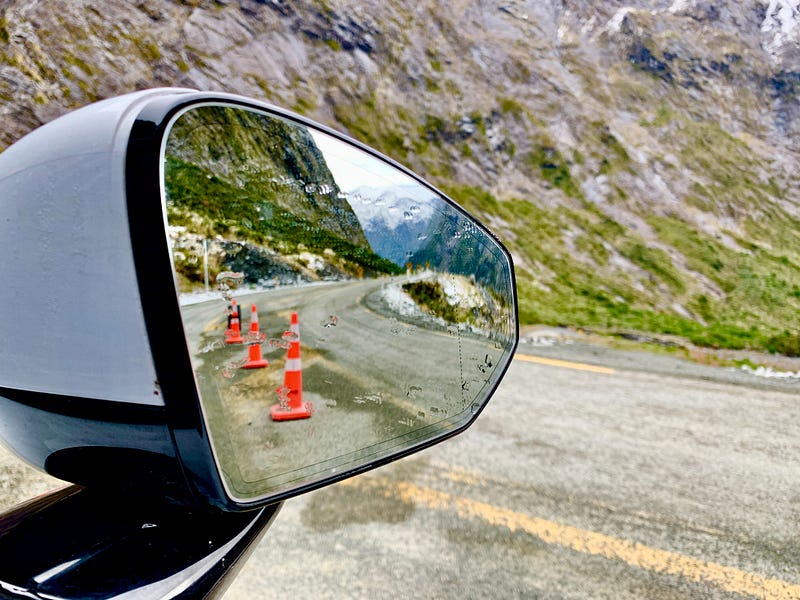
What purpose do these cones serve? All photos by Tim Ward

Like every nationality, Kiwis have their share of quirks. At first these quirks may irk a visitor. But after awhile, the quirks become perks for appreciating the ways in which a country works.
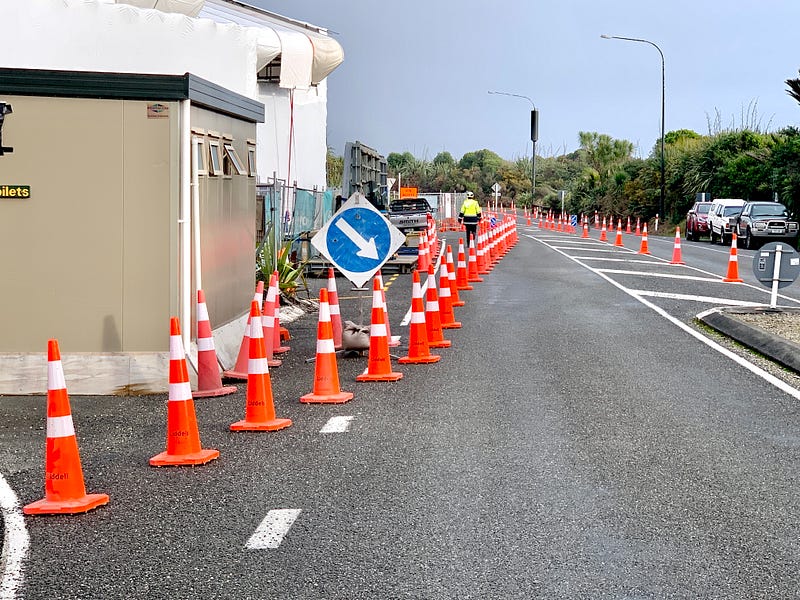
Note the line of cones behind the first line of cones.

New Zealand’s obsession with orange traffic cones really bugged me for awhile. They are spread so liberally across the nations highways, I would swear each district must have a cone quota: a minimum number of cones that must be on the roads at any given time.
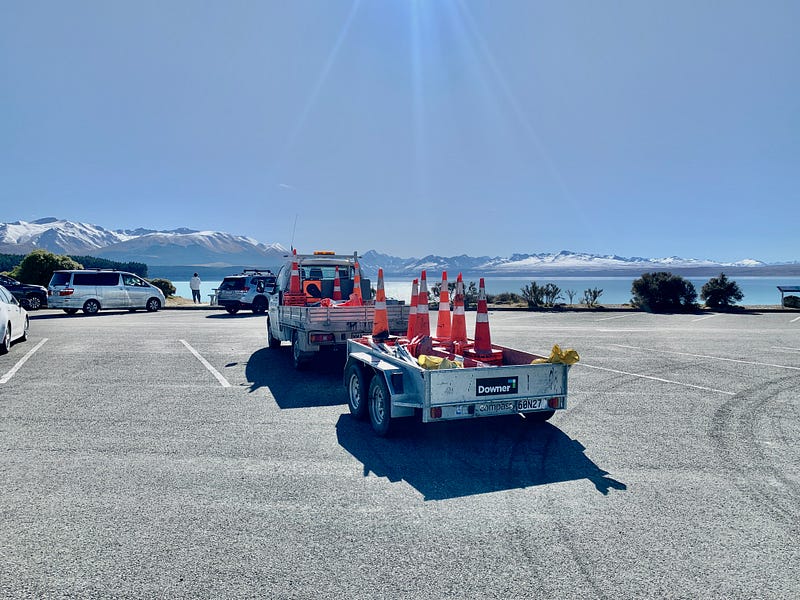
Emergency cone-laying vehicle, ready for action near Mount Cook

The most common feature of — let’s call it “coning” — is lining cones up so close together one could barely ride a bicycle between them. It’s as if the highway crews fear that drivers will deliberately steer through a line of cones, rather than get the message the line is not to be crossed. In some places, there are even bars connecting cones just in case someone is tempted to squeeze between them.
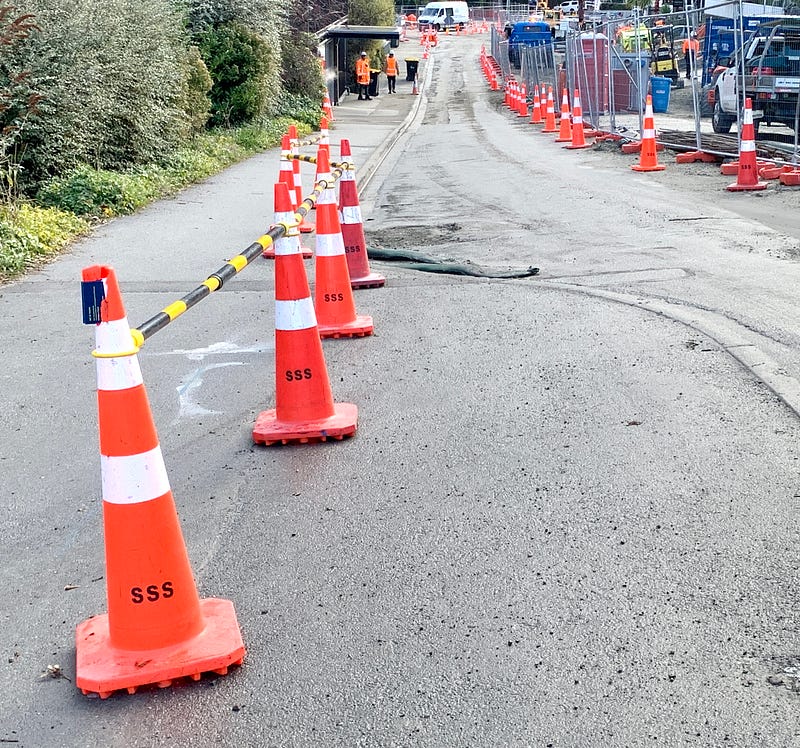
Limbo, anyone?

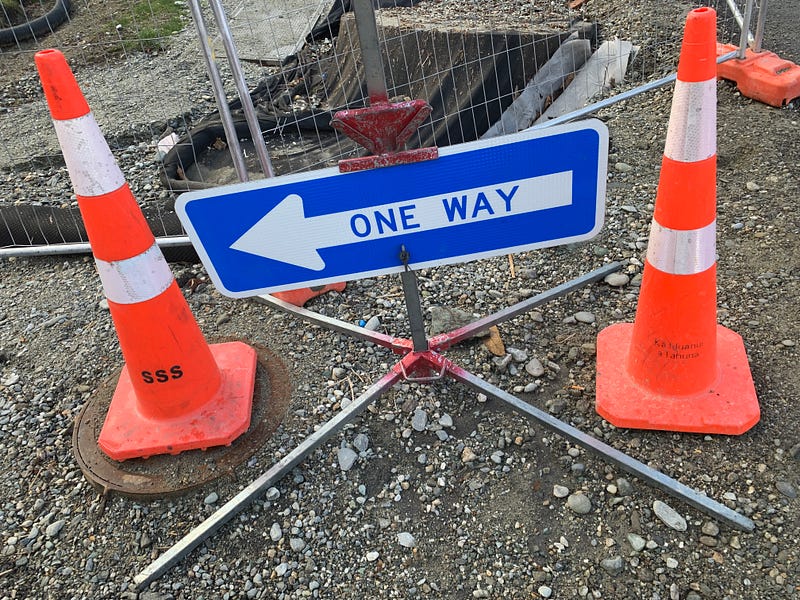
Another excessive coning practice is marking highly visible warning signs with cones, as if the big, bright warning signs might themselves be struck by…who? Kiwi drivers who are as blind in the daytime as kiwi birds?
The third case of coning I find hard to explain is to mark minor obstructions on the roadsides, like for example small fallen rocks. I’ve seen cones next to rocks so small it would have been easier to move them to the side than lay down a cone. Perhaps the Department of Coning is not allowed to infringe upon the work of the Department of Moving Small Rocks?
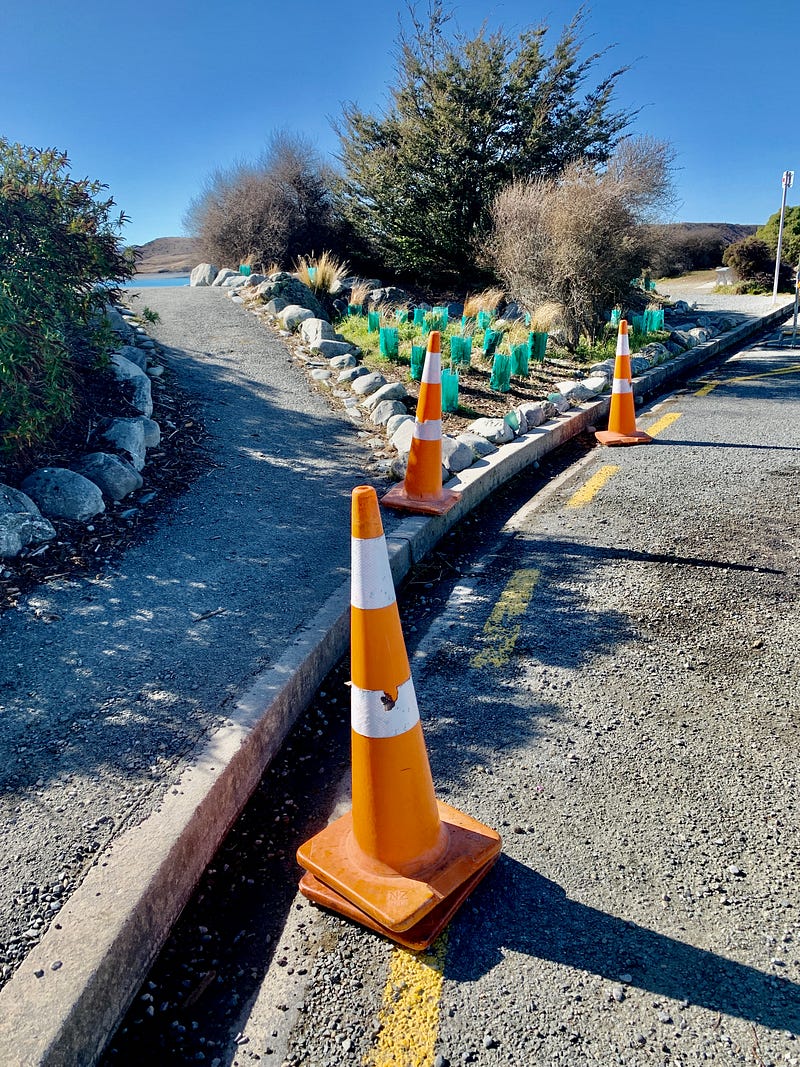
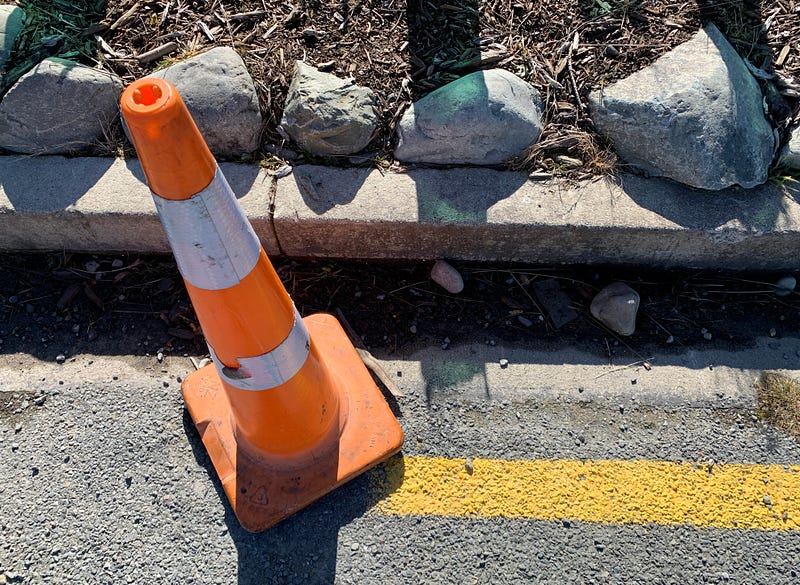
What exactly is the hazard here? The curb?
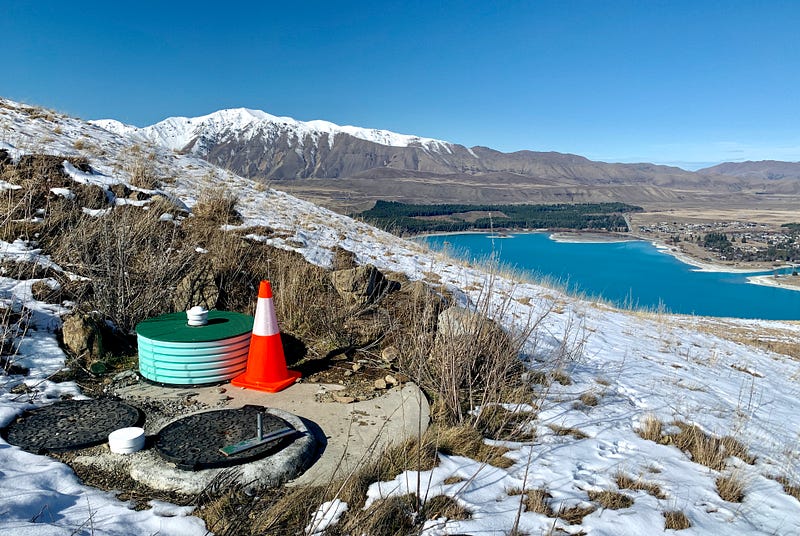
Who is going to hit this septic tank? It’s not near a road.

Of course, when there is road construction going on, there’s usually a conapolooza around it. Cones will start a mile or so before any roadwork, and then, for good measure, continue on long after the work is past. Best of all, quite often I would pass orange signs announcing highway work in progress followed by lines of cones. But no actual workers are on the road.
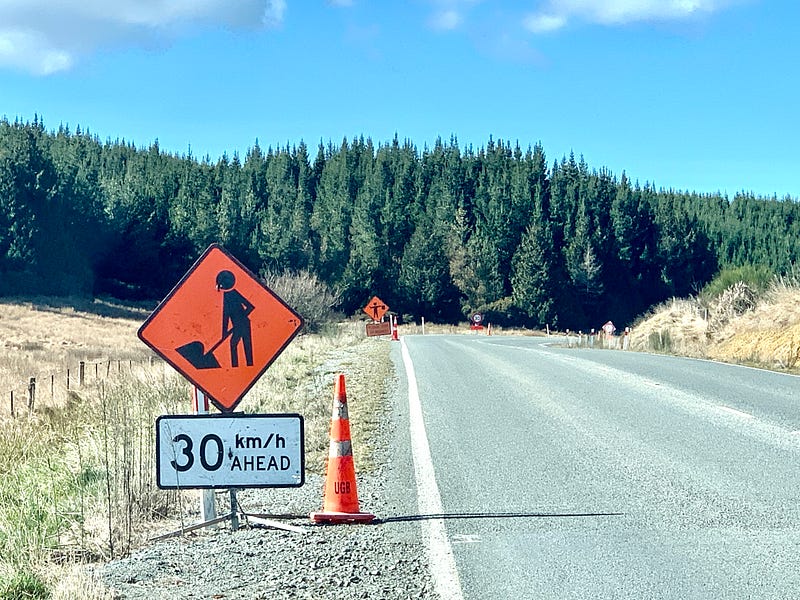
No workers in sight.

When there are workers present, there’s usually several watching and one working. That’s far from unique in New Zealand, of course. But most other places don’t surround the workers completely with cones.
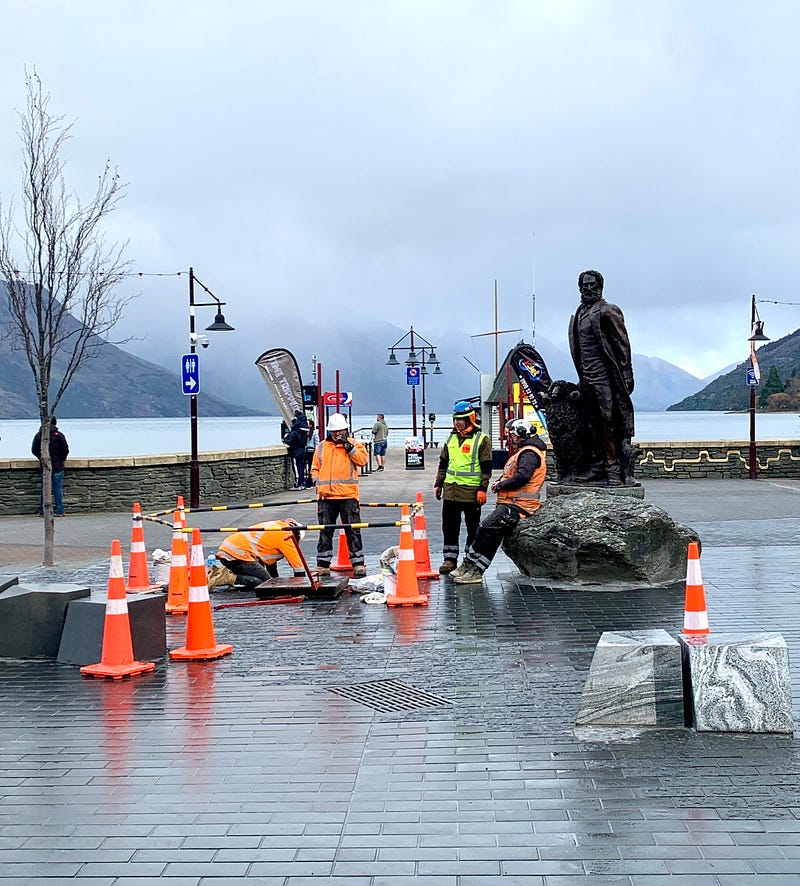
One man working, three men watching. Do you think they have enough cones on the job?

At first, I found the surfeit of cones baffling. Then annoying. Then amusing. I started taking pictures, and in photographing them, began to appreciate them as artistic expressions of New Zealand’s culture of safety. I figure that orange cones send the message to all drivers that someone is looking out for you on the road ahead. Coning = Caring. You are never alone, even on the most isolated highway. If there’s danger on the road ahead, fear not, there will always be a line of cones to guide you safely on your journey.
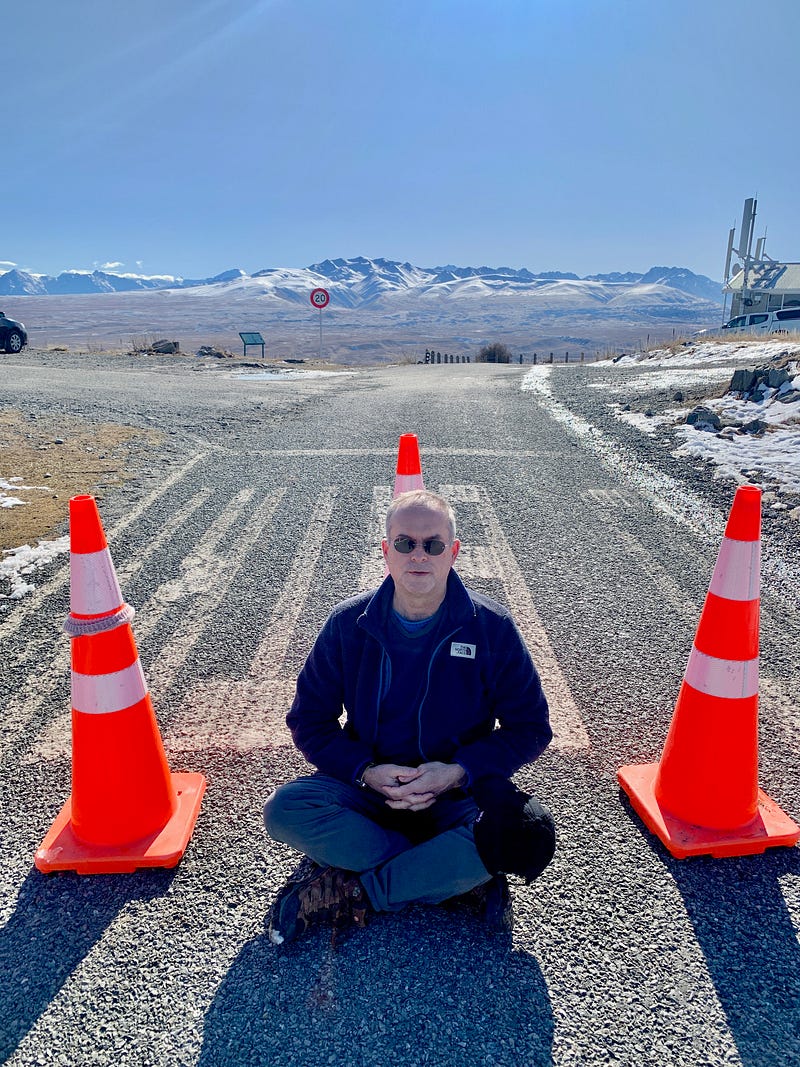
The author has achieved Zen Cone.

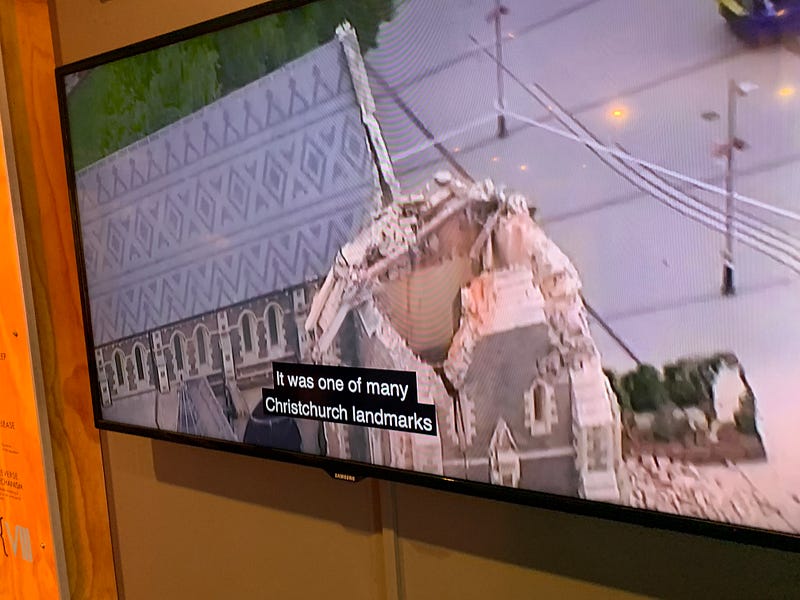
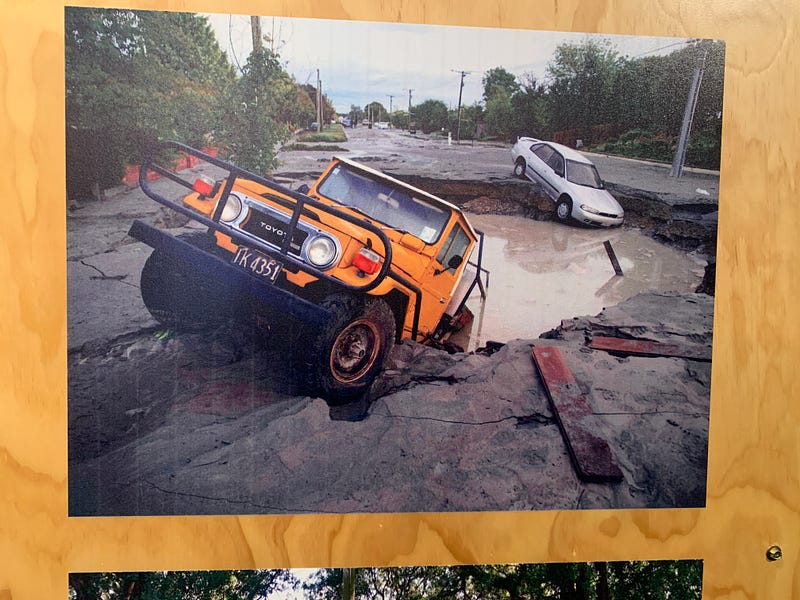
That was meant to be the end of my rant about cones in New Zealand. Then I arrived in Christchurch, which was struck by a major earthquake in 2010, with an aftershock earthquake in 2011 that was even more lethal. Almost 200 people died. Thousands lost their homes, and some 80 buildings in the main business district were destroyed — including the cathedral.
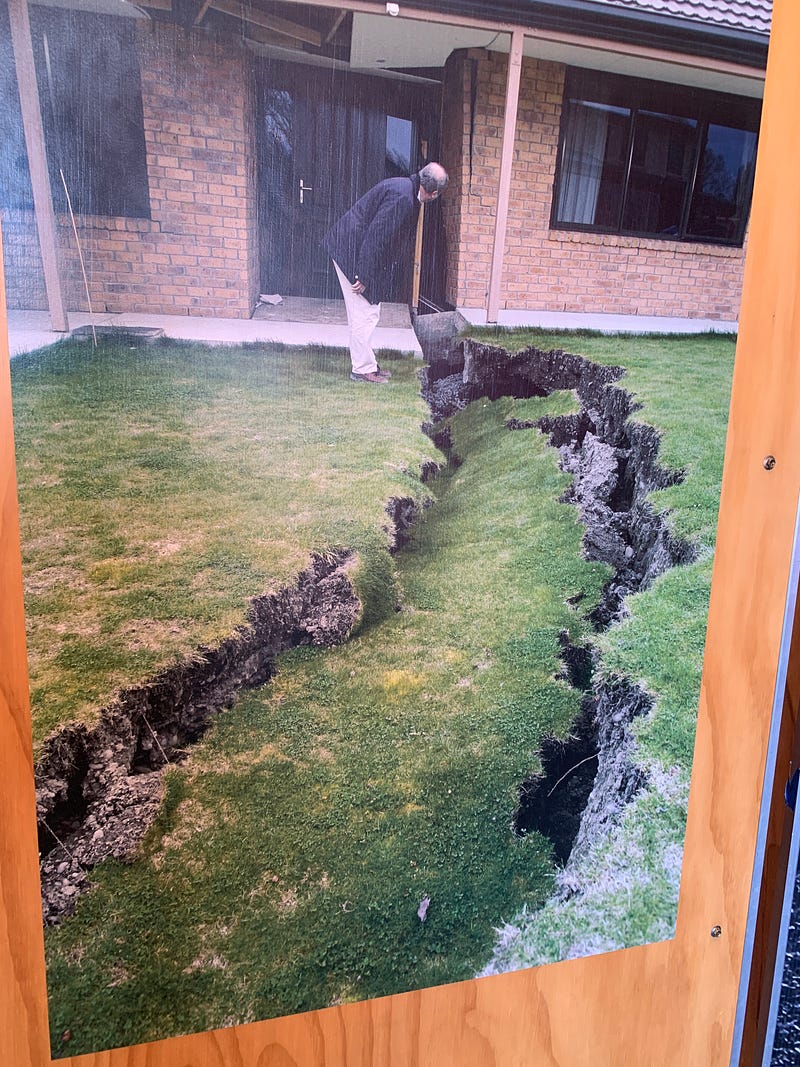
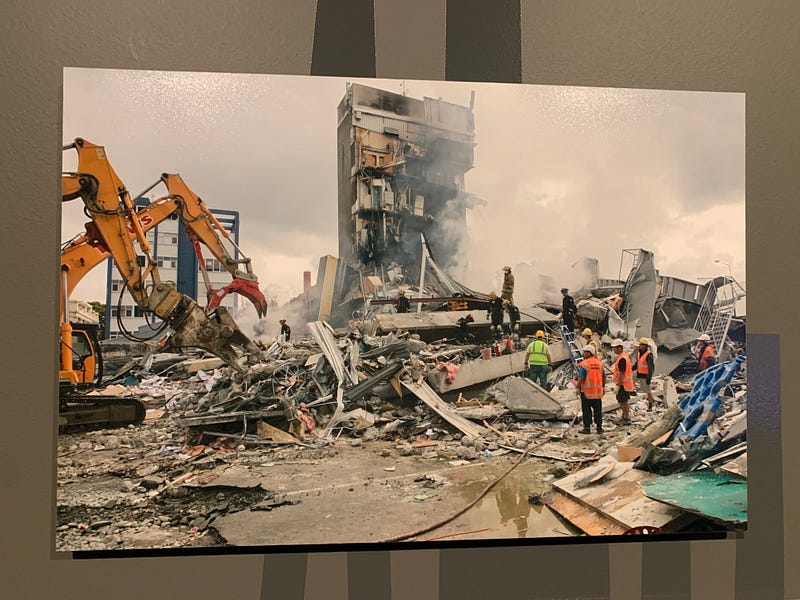
My photos taken in the Christchurch Earthquake Museum.

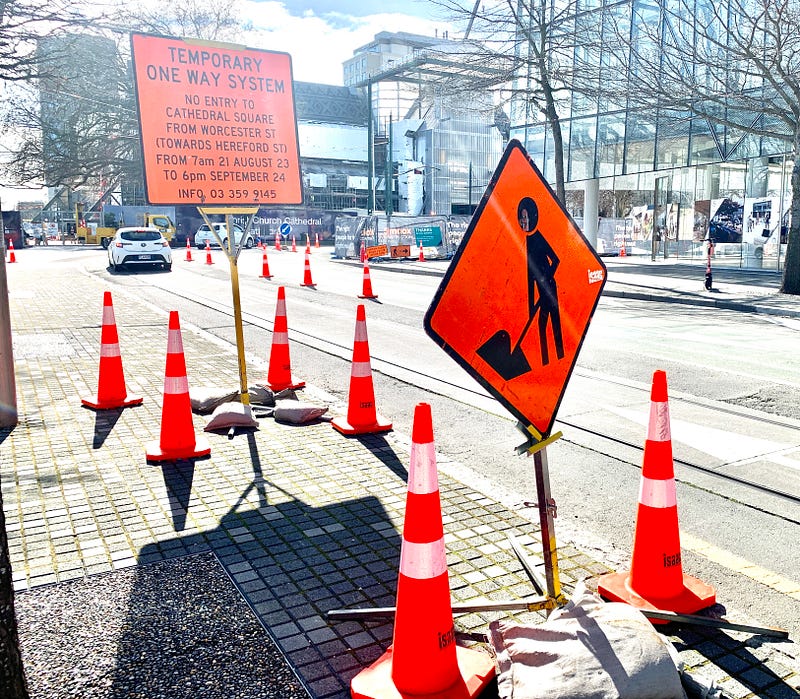
It’s been the worst disaster of the century for New Zealand. More than a decade later, the city is still rebuilding. And that means of course, a multitude of cones spread liberally throughout the city:
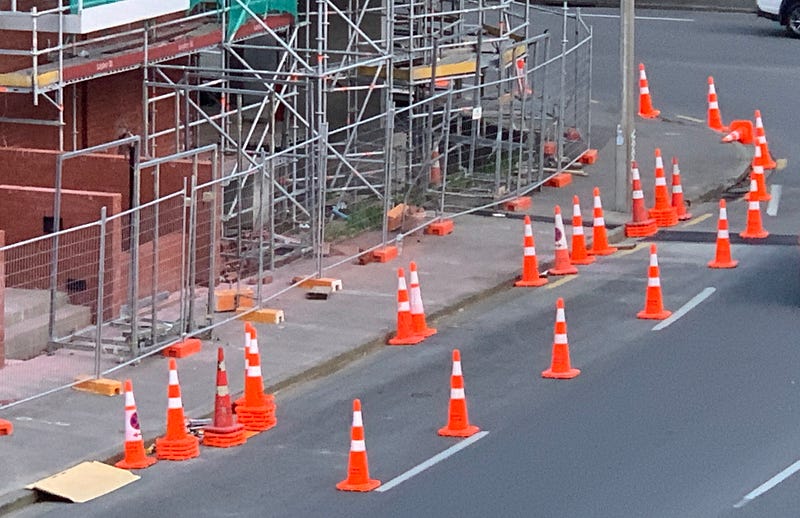
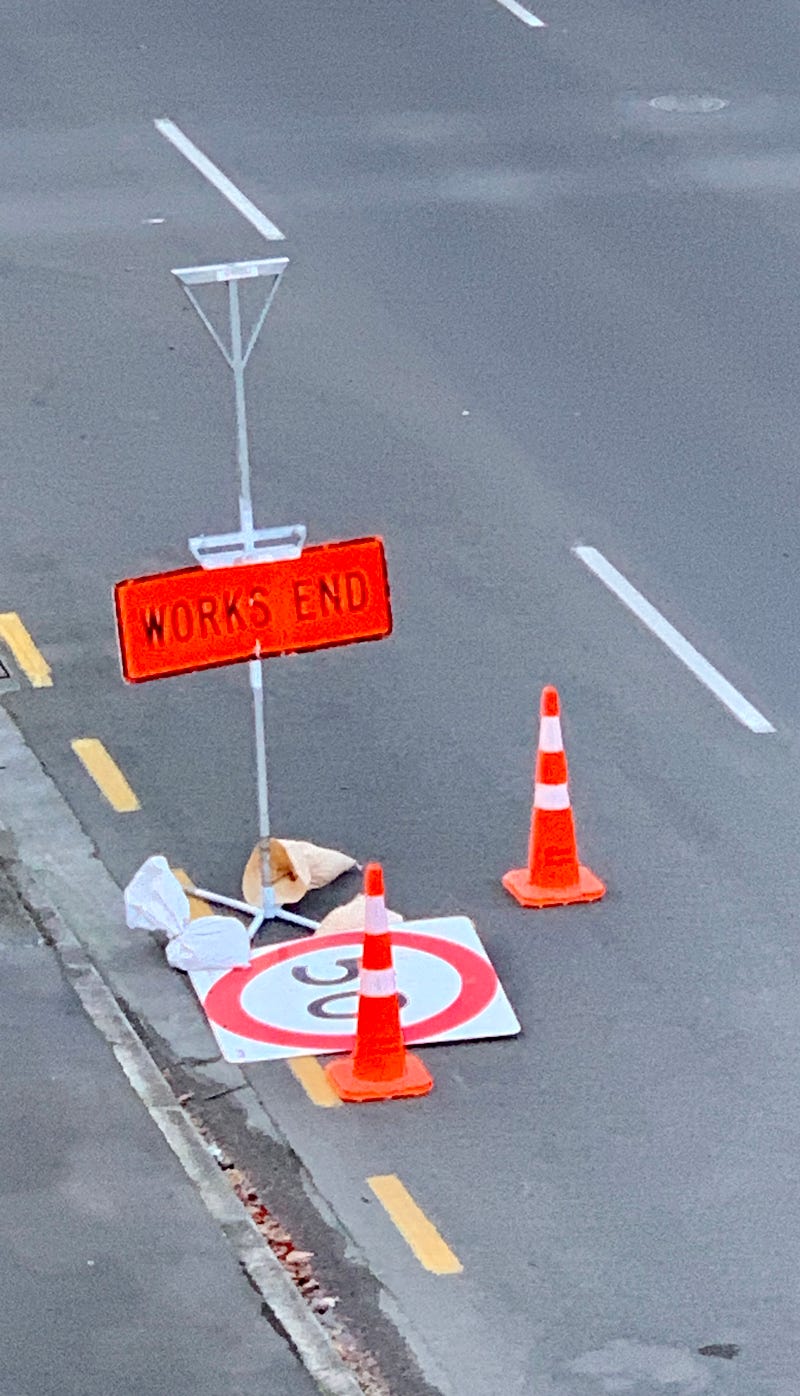
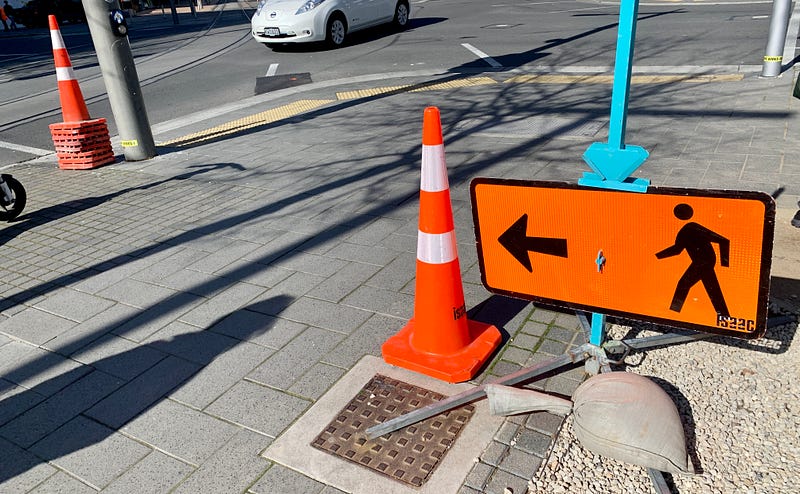
Even pedestrians get the comfort of warning cones on the sidewalks so that they don’t trip on anything or stumble into a fence.
But perhaps the greatest homage to cones is paid in the Christchurch Earthquake Museum, which has this orange cone artwork in the lobby. It. Seems to be a luminous homage to cones.
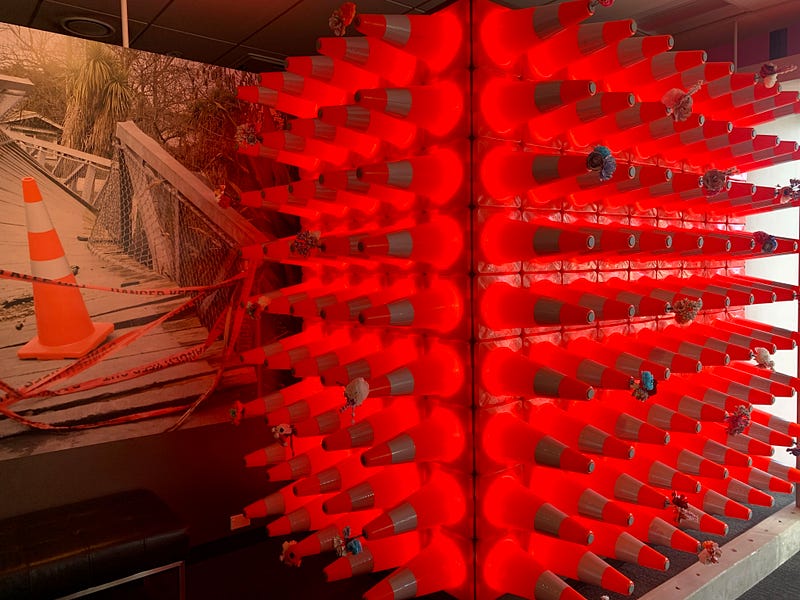
Most striking to me is the photo next to the conocopia art work. It shows a single cone on a badly damaged footbridge. That’s a cone truly working hard to keep people safe.

In truth, New Zealand is a risky place to live: floods, earthquakes, volcanic eruptions — it takes a certain gusty acceptance of danger to make your home on these islands, danger over which one has no control. So maybe I have to cut New Zealander’s some slack about excessive coning. I’ve come to realize that if they want to lessen the risks in life that they can control with a perimeter of orange, they have a good reason to do so.

****

Good news — My new book, Mature Flâneur is now available. You can order it in your favorite independent book store — And for my B.C. friends, Banyen Books in Vancouver is stocking it! — or click this link for other options:

New Zealand
Traveling
Flaneur
Humor
Globetrotter
Recommended from ReadMedium