
SCIENCE AND SOCIETY
CCBE – Part 14: How to Escape the Tragedy of the Commons and Benefit Society
Elinor Ostrom’s eight principles for preventing resource exhaustion due to competitive self-interest

Today, we’ll discuss the tragedy of the commons, and strategies to escape it. We’ll start by describing the tragedy of the commons. We’ll then link this to a concept from game theory, known as Moloch, and see what it teaches us about cooperation and competition in human society.
To do that, we’ll outline the trailblazing work of Elinor Ostrom. She won a Nobel prize in economics in 2009 for demonstrating how we can escape the tragedy of the commons.
Before she sadly died in 2012, Ostrom also collaborated with evolutionary biologist, David Sloan Wilson. They adapted her work into general principles that foster mutually-beneficial cooperation and curb mutually-harmful competition.
We’ll look at what they suggest, and describe real-world examples where their approach has worked. This will set us up for next time, when we discuss how these dynamics play out at the national and global levels.
What is the tragedy of the commons?
The tragedy of the commons was a thought experiment put forward in 1968 by US ecologist, Garrett Hardin. He argued that the use of common-pool resources was bound to result in exploitation and disaster sooner or later, as everyone has a selfish interest to maximise their own short-term gains.

As a result, a focus on self-interest and short-term profit can be a threat to the viability of important resources on which the entire collective depends. Cancer comes to mind as a telling analogy. This was a thought experiment, but many examples show that tragedies of the commons do occur, as we’ll see.
Moloch, game theory, and the tragedy of the commons
These points are also relevant to a concept from game theory known as Moloch. In game theory, Moloch describes a system that incentivises you to behave in ways that harm your own interests.
This often occurs when people trade long-term sustainability for short-term profit, as happens in the classic tragedy of the commons. Some examples, you ask?
Overuse of agricultural soil and fishing grounds are two well-known cases. We’re aware of the problems, but people are locked into incentive systems based on short-term profit, so we continue anyway. Moloch.
The tendency for competition to produce monopolies is another example. Buy-outs are often more profitable than a risky fight with a challenger. Monopolies are very profitable for monopolists, but tend to harm the long-term economic health of societies. Moloch.
Moloch makes many other appearances, like how automation and outsourcing increase profits for companies while hurting the long-term health of domestic economies. Underpaying workers, and overcharging customers (a factor in recent inflation), both have similar effects.
The details vary, but all of these cases are failures to protect long-term common interests from short-term self-interest. All are tragedies of some sort of commons. All are Moloch. So what magic did Elinor Ostrom discover to escape this trap?
Elinor Ostrom and David Sloan Wilson to the rescue
Elinor Ostrom was trained as a political scientist, and went on to study the way people manage common-pool resources. In 2009, she continued a recent trend of non-economists winning the Nobel prize in economics.

This can be a sore spot for economists, who feel like outsiders are intruding on their prize. It’s revealing that, even at the time Ostrom won, her work was mostly unknown to the field of economics.
Ostrom won her Nobel prize for discovering eight simple principles that teach us how to escape Moloch and the tragedy of the commons. You can find the principles below.
Ostrom’s principles
- Clearly defined boundaries: clear sense of group identity, and awareness of shared resources.
- Proportional equivalence between benefits and costs: you get out what you put in, and people can’t coast on the work of others.
- Collective-choice arrangements: rule making must be at least partly democratic.
- Monitoring: the group must have ways of confirming whether or not others are following shared rules.
- Graduated sanctions: punishments for breaking rules are mild at first, but escalate for repeat offenders.
- Conflict resolution mechanisms: the group must have methods for resolving conflicts that are seen as fair, quick, and transparent.
- Minimal recognition of rights to organise: the group must have at least some power to organise its own affairs.
- For groups that are part of larger social systems, there must be appropriate coordination among relevant groups.
One strength of Ostrom’s principles is that they’re very intuitive. You could explain the logic to a fairly young person and expect them to understand. And yet they’re also powerful enough to beat Moloch and escape various tragedies of the commons.
Research suggests that the more of Ostrom’s principles you adopt, the better your outcomes will be. To get a clearer sense of how this works, let’s look at some real-world cases where the principles succeeded.
Some examples where Ostrom’s principles worked
Natural resources
One of the now-classic examples involves groups of fishermen in the Turkish coastal city of Alanya. They’d fought over rights to common fishing grounds, but fixed the problem with a roster system that gave every group equal access to all fishing spots (principles 1 and 2).
The groups designed, implemented and monitored the system themselves (principles 3, 4, 7 and 8). And there were processes for managing disputes and meting out punishments, which became more severe with repeat offences (principles 5 and 6).
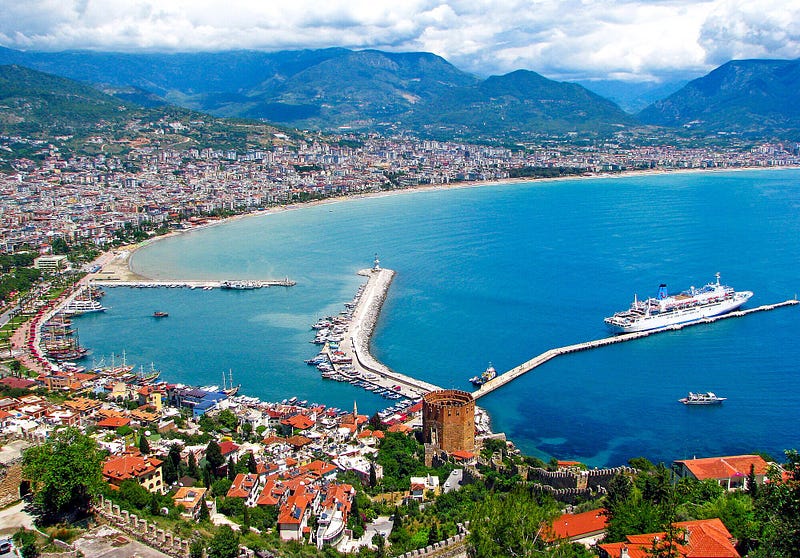
This ticks all of Ostrom’s boxes, and life on the fishing grounds near Alanya became much better as a result. But the potential of Ostrom’s principles doesn’t stop there. She teamed up with evolutionary biologist, David Sloan Wilson, to adapt and apply her principles to other aspects of life.
Education
For example, research has found that Ostrom’s principles can be successfully applied to education. Researchers led by David Sloan Wilson tested whether a program that adopted these principles could improve outcomes for students who were on the verge of failing high school.
The program was called Regents Academy, and the results were remarkable. Adopting the principles at school improved the classroom experience, dramatically reducing conflict and disruptions, and increasing cooperation and prosociality.

This program also boosted test results so significantly that the gains effectively wiped out years of academic struggle. And these benefits came in just a matter of months. It seems that programs like Regents Academy have a lot to teach us about education.
Business: givers, takers, and matchers
Ostrom’s principles also shed light on the workings of teams and organisations. In a recent article, we discussed how the WEIRD world emphasises competition among individuals, and tends to neglect the roles of cooperation and groups.
The dominant model of human nature in the field of economics is still based on this view. It’s known as Homo economicus, and it assumes that we’re self-interested wealth maximisers. But when you look at how teams and businesses work, it has little to do with Homo economicus.
The leading voice on this topic is organisational psychologist, Adam Grant. He talks about how we use three main strategies in the world of business: giving, taking, and matching.

Most people are matchers, meaning they copy the way other people treat them. This is essentially a tit-for-tat approach, a very common strategy in nature.
A minority of people are givers, meaning they help others with little or no thought for personal gain. And another minority are takers. We’ve all dealt with (or been) a taker, like the lazy person on the group project who gets carried by the team.
Linking to Ostrom, companies that adopt her principles outperform those that don’t, with greater benefits as more principles are adopted. Interestingly, research suggests that a company’s success also depends quite a lot on its minority of givers. And it turns out that givers do best when Ostrom’s principles are adopted.
Among other reasons, the principles ensure that givers gain the recognition and rewards they deserve. Importantly, it also minimises social loafing and the toxic repercussions it brings. This is especially true for givers, who are vulnerable to being exploited by takers.

When the principles aren’t followed, the opposite happens, creating an opening for takers. And if takers have free rein, the majority of matchers often become takers by default. In this way, a minority can drive either healthy (givers) or unhealthy (takers) dynamics for groups, including workforces.
Communities and groups
Ostrom’s principles have many other applications as well. From community maintenance projects to growing church congregations, the principles are so general and intuitive that they’re a useful starting point in many situations.
Conclusions
Ostrom’s principles have the power to defeat Moloch and escape many tragedies of the commons. They’re also intuitive and broadly applicable.
It’s strange that she was largely unknown to economists when she won her Nobel, but it’s clear why she won the prize. And importantly, Ostrom and her work are only becoming more famous.
Any team can benefit from adopting Ostrom’s principles, and they’re flexible enough to be adapted to many situations involving groups. Who knows? You may find ways to apply them in your own life.
Next time
But Ostrom’s principles are pitched at a certain level of organisation. It’s one thing to coordinate at the level of a community, business, church congregation, school, or local fishing industry. But as we move to higher scales of organisation, this sort of coordination becomes very challenging.
This is why competition often trumps cooperation at the national and international levels. Here, Ostrom’s principles are either ignored or used for more tribalistic and self-interested purposes than she intended.
So what are the rules at the national and international levels? And how does this relate to what we’ve learned so far? We’ll address those questions next time when we discuss the three main ‘isms’ that dominate world affairs: nationalism, realism, and liberalism. Until then!


.jpg)


