
Carbon capturing technology. The key to a greener world?
Would carbon-capturing reverse the effects of climate change?
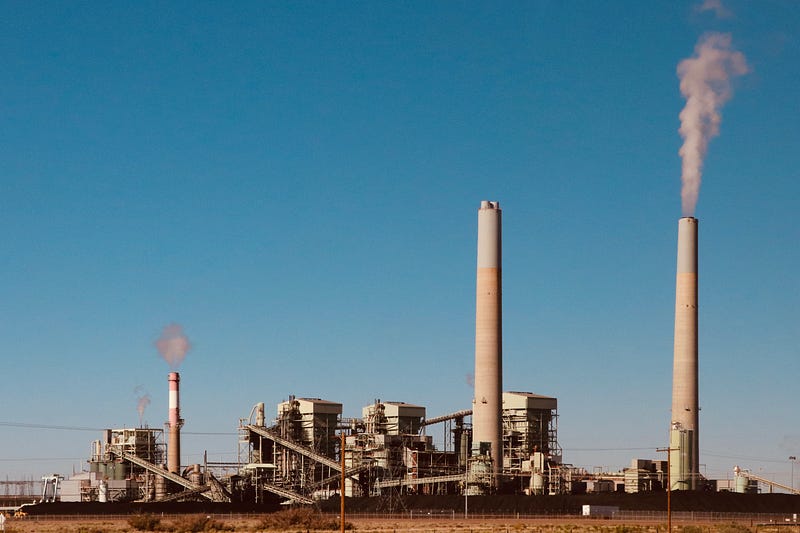
The rate at which human beings are polluting the atmosphere is alarming. Factories, plants, and individuals all over the world pump as much as 36 billion tonnes of carbon dioxide a year into the atmosphere. Some estimates put this number as high as 50 billion tonnes a year. This could not be ignored any longer, since companies are reluctant to change their ways, they have resorted to buying carbon credits. It is obvious that it is cheaper not to emit anything in the first place than to buy carbon credits, but it’s profits over everything.
In recent times a technology known as carbon-capturing has become popular. This technology removes carbon dioxide from the atmosphere that has already being emitted by different industries. The tech mogul Bill Gates has already invested billions into this technology. After capturing air from the atmosphere, it is filtered into carbon dioxide and hydrogen. Carbon dioxide is stored, and hydrogen may be used to produce electricity.
There are proposed ways that carbon dioxide could be stored and sequestered for eternity or at least a few centuries. Some of the most feasible techniques are listed below, along with their flaws.
- The carbon dioxide could be stored underneath the earth’s surface in a supercritical fluid, meaning that it has both properties of a liquid and a gas. Critics against the technique argue that the gas could leak back into the atmosphere since it has never been tested before. This could be bad for the ecosystem because excess carbon dioxide has been linked with increased plant mortality and retarded growth. Others argue that it is not known what would happen to the soil above where the gas has been stored, it could lose its fertility.
- There have also been proposals to store the carbon dioxide underneath the ocean waters as a slug, subject to pressure from the water. Again, leakage has been brought forward as a problem. Even more problematic than leakage is the risk to ocean life. Storing carbon dioxide beneath the ocean could favor the overgrowth of certain organisms, while others slowly perish.
- Another revolutionary way that has been hypothesized and tested is pumping carbon dioxide into volcano craters. Critics have also come forth to say that bacteria in the craters could convert carbon dioxide into methane, another greenhouse gas, and it could be released again into the atmosphere. This method is water-intensive, using 25 tonnes of water for each tonne of carbon dioxide buried.
Different types of carbon capture technologies.
There are two main carbon capture methods, pre-combustion and post-combustion.
- Pre-combustion.
In pre-combustion carbon dioxide is absorbed in power plants exactly after it is released, this is before carbon monoxide is diluted by other flue gases (Flue gas is the gas exiting to the atmosphere via a flue, which is a pipe or channel for conveying exhaust gases from a fireplace, oven, furnace, boiler or steam generator — Wikipedia). At the end of the process carbon monoxide is reacted with water to produce carbon dioxide and hydrogen.
- Post-combustion.
This method is mostly used of all carbon capture methods available. Here carbon dioxide is separated from flue gas which includes carbon dioxide, sulfur dioxides, nitrogen oxides, and water vapor by bubbling the gas through an absorber column with liquid solvents, such as ammonia. Upon the end of the process, trapped CO2 is released and stored.
Bill Gates and Carbon Engineering.
In British Columbia, in Canada, a start-up has emerged with a pilot facility to try to reverse the impacts of climate change by pulling carbon dioxide out of the atmosphere. It is this idea that caught the liking of Bill Gates, who has been heavily funding the company. Their process has only four simple steps. Each step is said to concentrate the carbon dioxide further.
- Step 1
A fan pulls air through and reacts with a chemical. This step captures as much as 80% of the CO2 from the air (80% of the capacity of the carbon-capturing chamber).
- Step 2
CO2 is extracted and solid calcium carbonate pellets are precipitated.
- Step 3
The pellets are heated up and carbon dioxide extracted.
- Step 4
The carbon dioxide is then stored somewhere.
Critique
Claims are that the process of making fuel from the carbon dioxide and hydrogen extracted are carbon-neutral. This is because when the fuel is combusted it does not release new carbon dioxide into the air. A Stanford University professor Mark Jacobson thinks otherwise.
He points out the fact that the carbon captured is sold as fuel is then burned again. The technology of capturing carbon dioxide is not carbon-neutral itself (it uses non-renewable electricity), so claiming that the process is carbon-neutral is misleading.
He highlights that the cost of direct air capture is more than 50 times the cost of most natural climate change solutions. A European start-up Climeworks says that it costs about $300-$800 per tonne of carbon dioxide. The reason why this process is expensive is that companies need to offset the costs of running the plants, which cost hundreds of millions of dollars to build.
Other reasons are that there aren’t yet subsidies for such technologies because the technology, not being rather new, is gaining mass adoption for the first time. Carbon capturing is a business industry and profits need to be made compared to plantations that do not have the same business model. To process carbon dioxide requires people with the know-how and acquiring their expertise is not cheap.
Staunch climate change activists also argue against selling the carbon dioxide produced to oil mining companies to help them mine more oil. This transaction has been labeled as counterproductive, but because this is business, profits have to be made.
Bill Gates-backed Carbon Engineering sells their carbon dioxide to oil mining companies because they argue that their company is still small, and they must stay afloat. Climeworks, another carbon capture company, CEO says their company does not engage in such transactions. From what he said, it is not because they do not want it but because in Europe the process of using carbon dioxide to make oil lighter and rise to the surface of the earth is not common.
Conclusion
At this rate, it will cost 3 to 7 trillion dollars to capture the carbon dioxide released yearly. This goes to show how expensive this technique is compared to natural methods of combating climate change. The government is unlikely to fork out such amounts of money “just” to remove carbon dioxide from the atmosphere. The endeavor should be undertaken by private companies, but they are all reluctant except for Microsoft and a few others.
Selling carbon as fuel is a way companies could fund themselves and improve their technologies to capture even more gas.
Technologies like these can also make people and companies contempt and just expect to pay up for the carbon dioxide they emit to “go away”. The focus should be more on reducing emissions at the source by using renewables. Even though expensive, technologies like these are somewhat needed because reducing emissions is unreasonable and requires every human being to pollute less which is highly unlikely.
To keep the rate of global warming below 1.5 degrees Celsius requires much more ambitious methods like carbon capture. Human beings are greedy animals, they require incentives to do something. Paying to have climate change reversed is a better option than expecting individuals to randomly plant trees.
Obtaining carbon negativity is almost impossible in many industries like cement and steel production. Carbon capturing technology might not make climate change disappear instantly, but it is one of the few ways available to reduce its effects.