
Mr. Beast’s 20 million trees not enough
Nature needs more trees.
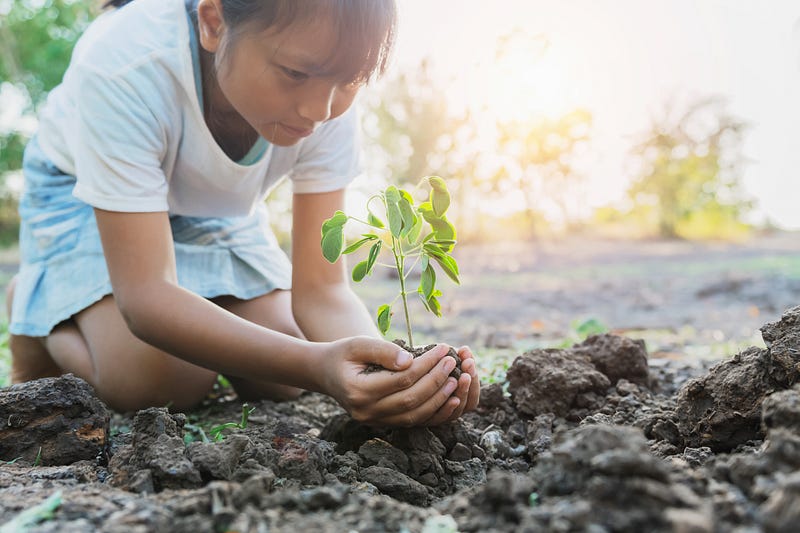
Team trees
Having planted 7.1 million trees already with the goal of 20 million, Mr. Beast’s #teamtrees is seen as a savior. As much as his efforts are appreciated, planting 20 million trees is not enough. In the Sierra National Forest in California alone, an average of 15 million trees dies a year. This is without mentioning the Amazon and other forests in the world.
***
Mr. Beast is merely encouraging many young people to take care of the planet since he is in the limelight and has amassed a huge following.
***
His real name, Jimmy Donaldson, Mr. Beast is a famous YouTuber and stuntman. He is famous for giving away pricey items to unsuspecting individuals or those who can complete a certain task. He has given away cars like Lamborghini’s, Ferraris, and Teslas, boatloads of money and he has also given away an Island.
Because of his generosity and bigger-than-life stunts, Jimmy has become famous with kids and people in general on Social Media. In 2019, A fan or Reddit suggested that Mr. Beast plant 2020 million trees to celebrate 20 million subscribers on YouTube, and he obliged.
Now with more than 53,6 million subscribers, Mr. Beast is aimed at using his influence for the betterment of the planet. Team trees aim to plant trees in 6 continents in countries that need them. Being an American, most of Jimmy’s efforts are based in the United States of America. Some trees are planted in Asia, Africa, Australia, Europe, and South America.
It is difficult for #teamtrees to simulate nature, and they can only have so many species of trees on hand to plant. Also, because #teamtrees relies on $1 donations, cheaper trees do not always mean suitable ones. Planting the same types of trees is called monoculture. An activity that is generally discouraged and frowned upon. This is because it depletes minerals in the soil.
***
The takeaway is that Mr beast is only trying to demonstrate what countries and big organizations should be doing, he is not trying to save the world on his own. That is why he relies on donations from people thus making the people accountable.
***
Fires vs trees
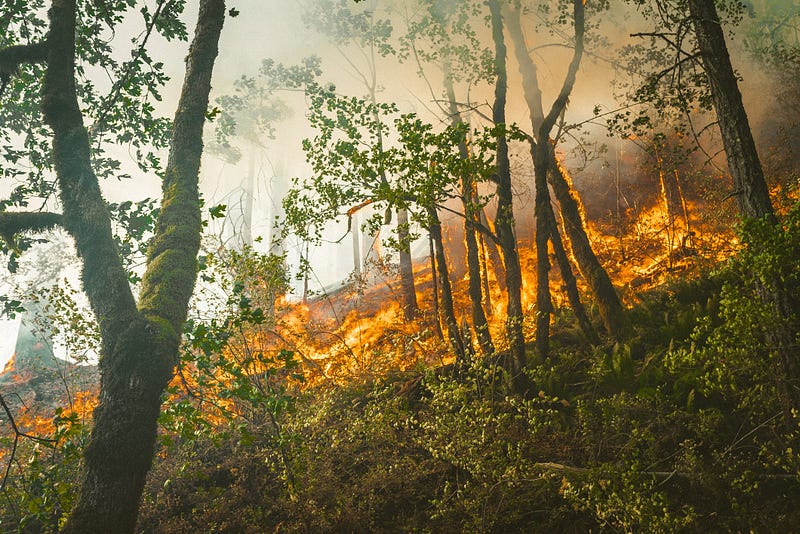
Trees grow fruits, nuts, medicine and are makers of alkaloids. They house birds of the skies, mammals of the land, and amphibious animals. They provide shade and breeze, but recently there has been a problem. Forests are burning, from California to the Amazon in Brazil and the semi-arid Australia. In California, as much as 1.2 million hectares (3 billion acres) of land has burned down since 2017.
It is estimated that more than 38,000 fires have raged over the Amazon in the past 50 years, according to The Economist. CNBC estimates that there have been at least 121,000 fires that have burned across the world since 2019. In less than half a century, more than 16% of the world’s forests have been cleared.
Fires take down trees, major fighters of climate change and global warming. With these trees burning, a lot of carbon dioxide is released into the atmosphere. Fires that burned in Australia in 2020 produced 900 million tons of carbon dioxide, 25% more than the wildfires 0f 2018 in California which released 68 million tons.
***
The earth is in the middle of a mass extinction, if these trees and forests are not protected, the world will not only face extreme climate changes, but animals will go extinct too. Animals use forests as their fortresses. They call trees home; they use trees as a place to live and feed.
***
Experts urge that more trees need to be replanted and deforestation reforested to reverse the effects of climate change.
Monoculture is just as bad as doing nothing
Many reiterate that trees alone will not help, we need to take responsibility for our planet. That means less consumption of products that impact heavily on climate change. Changing habits from using plastic straws to paper straws could be one simple way to do so. Using cutlery made from sustainable materials, throwing out less food, and switching to renewable energy.
***
How trees are planted is more crucial than how many are planted.
***
This is because a lot of mass tree plantations use monoculture. After all, they either want to break records or want to commercialize the plantations in the future.
Monoculture is about getting more for less and as soon as possible, therefore fertilizers are used, which release a lot of nitrous oxide, a greenhouse gas. Nitrous oxide often called “the laughing gas” is 300 times more potent than carbon dioxide and it depletes the 0zone layer.
Nature has the best answers
***
It has been proven that it is better to let nature regenerate itself like it did before we began tempering with it and how it would if we went extinct.
***
Scientists cite a lot of advantages to letting nature self-regenerate. Nature picks the best plants and shrubs to grow on its soil. Plantations usually grow foreign plants most of which are beautiful, grow easily, or have commercial uses. After the trees are cut down and used to produce, say paper, when the paper is thrown away, it releases carbon dioxide and methane (they actually release carbon which then forms bonds with oxygen to form carbon dioxide and with hydrogen to form methane) back into the atmosphere.
Sometimes even though trees planted were not to be used in a commercial setting, those kinds of trees may be of use to local people and end up being cut down and used for fire or medicine.
***
Letting nature pick which plants are best for the soil and climate helps them survive longer and multiply easily since most wild plants can multiply themselves.
***
Natural forests can do what planted trees do in an extended period of time. It is easy to see why, because forests are always full of thriving plants without human interference. Some plants grow better in the presence of others, this is called companion plants. Trees use up a lot of space, they need to be spaced out to maximize their survival. In nature, plants grow over others and on others thus maximizing the use of space and sequestering more carbon dioxide.
Again, a million trees could be planted on foreign land and die 5 years later due to a new disease or an outbreak. This is effort and money lost. After their death, the soil would have lost a lot of minerals and would need years to recover because the trees were a monoculture. If the monoculture was aggressive enough, the soil could become dead soil forever.
While this technique of allowing nature to take care of itself works best, it is often difficult to quantify how many plants will grow. This constraint makes it hard to get funding, sponsorships, and media coverage and this hinders many organizations from going this route because it has little commercial use.
Importance of trees
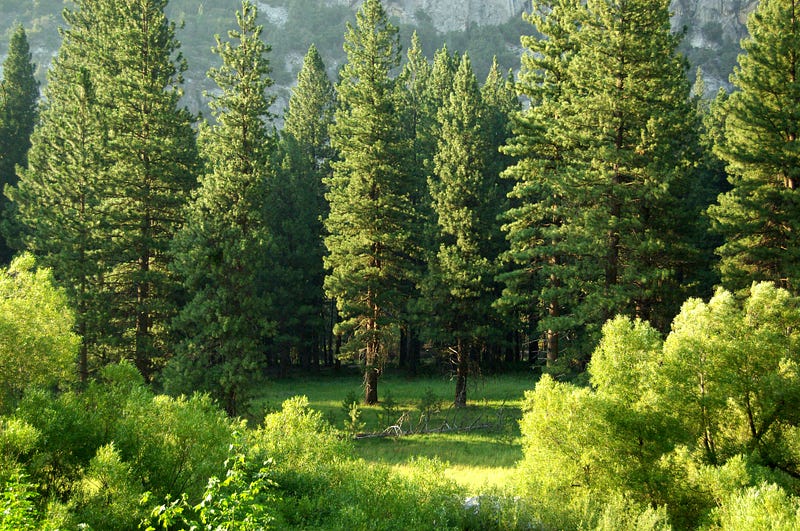
A study from the Swiss Federal Institute for Technology postulates that land needs to be reforested to sequester the carbon dioxide in the atmosphere and reduce climate change. ***
The study says that 0.9 billion hectares of land are available worldwide, an area the size of the United States to plant a trillion trees. The carbon-capturing capacity of such trees is beyond 200 gigatons. That is estimated, according to the study to be a yield of at least 32 percent of carbon emissions since the industrial revolution.
***
We breathe in oxygen and exhale carbon dioxide, the carbon dioxide is taken by trees and stored. Half the dry weight of trees is made up of carbon, which is stored in their trunks, leaves, and roots. When the trees are cut down, they release the carbon they have stored back into the atmosphere. Those trees would release 97% percent of the carbon they have stored in their lifetime implying that they would have only done 3% of the work they were supposed to do.
Other benefits of trees
Trees have a lot of beneficial uses apart from being homes to animals and providing shade in the backyard, or front yard. They reduce air temperature by blocking sunlight and reflecting heat using their leaves. They also release water from their leaves due to a process known as transpiration. Another beneficial component of trees is that they deflect and absorb sound. They do that by transforming sound into other forms of energy.
Living in an area with a few trees can help reduce noise by as much as 15 decibels. Roots of trees hold the soil down to the ground and help to prevent erosion, avalanches, flooding, and mudslides, thus protecting people and structures. Just like they sequester carbon dioxide they are also water tanks and purifiers. They absorb water during heavy rains, purifying it and filling up the water tables, and keeping the soil moist for longer.
Moist soil cools down hot temperatures and lastly, shrubs, grass, and trees act as filters of dust and other pollutants.
Greenhouse effect
The greenhouse effect, the result of heat radiation from the earth that gets trapped in the atmosphere. This is what is responsible for global warming due to climate change. Emissions of methane, carbon dioxide, nitrous oxide, and chlorofluorocarbons are the big players in the greenhouse effect. All released by human beings.
Methane is mainly released from oil, coal, and natural gas production, landfill sites (decomposition), and cattle farming. Carbon dioxide is due to deforestation, cement production, and the burning of fossil fuels. The major emitter of nitrous oxide is coal power plants during combustion. This is an indication that the agricultural, energy, and industrial sectors are major contributors to most emissions. Even their products add more, such include cars, trucks, and planes.
How NASA is helping
NASA has been trying to tackle climate change by producing resources for human beings to measure their impacts and effects and thus come up with solutions. NASA does not come up with solutions, it comes up with figures and suggestions most of the time. They have satellites in space that are constantly monitoring the earth’s surface, forests, and climate.
From the evidence that has been provided by NASA, it is clear that climate change is happening. This mainly happens due to deforestation and mass consumption. These then produce greenhouse gases which get trapped in the atmosphere and increasing the earth’s temperatures. Increased temperatures melt the ice in glaciers and warm the world’s oceans. These lead to extreme weather like too hot or too cold, storms, cyclones, and floods.
***
Once defrosted, glaciers do not freeze again until temperatures are low enough over a long period of time.
***
It is shown that one wrong action stemming from ignorance can lead to a chain of irreparable events.


