Capsule Toys Are Booming — and They Symbolize the Stagnant Japanese Economy
Looking for funny souvenirs in Japan? Here’s what you want
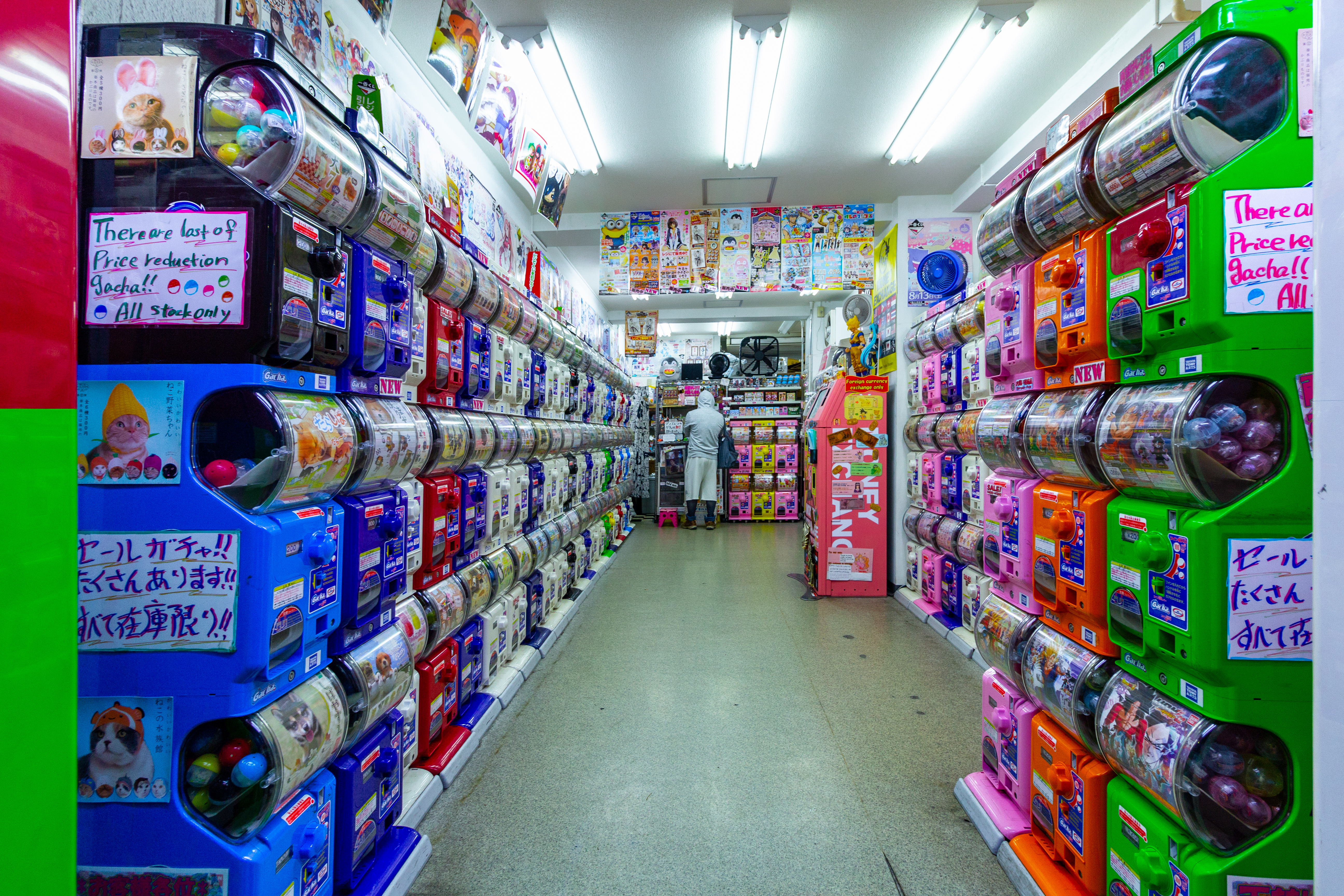
Capsule toy stores are increasing in Japan. According to available data, the market size has been stable at around $187 million to $246 million (250億円 to 330億円) over the past two decades. Recently, however, it has grown to $336 million (450億円).
I wasn’t aware of their popularity—especially among adults—until recently. But last week, I witnessed the trend firsthand (my analysis is at the end of this article).
That day, I was meeting my best friend in Shinjuku. We chit-chatted at a French restaurant, enjoying smoked salmon couscous and blue cheese meat pie, and after finishing a cup of coffee, heading to a department store.
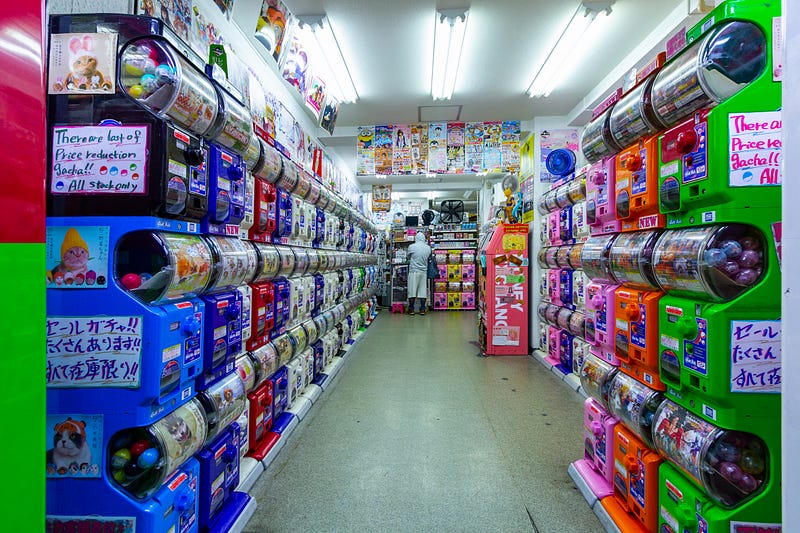
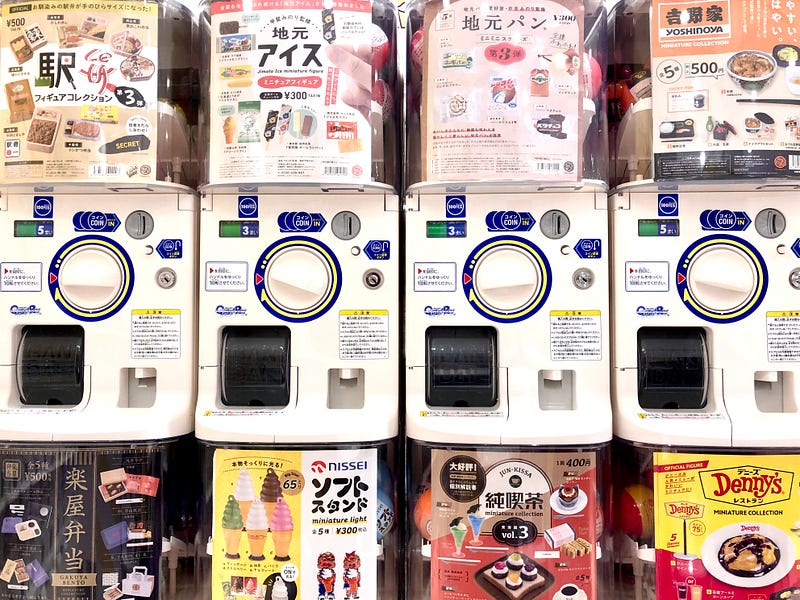
I wanted to check すみっコぐらし (sumikko-gurashi, a set of little characters produced by San-X) items there since my daughter was into them. And I happened to walk into a forest of capsule toys, which seemed very new and similar to the photo above.
What the heck were all these machines??! This is supposed to be the fashionable district in Tokyo, isn’t this?!
For me, capsule toy machines are evil. They sit at the entrance of conveyor belt sushi restaurants, which causes meaningless battles with my daughter (no, you’re gonna get bored with the plastic toy today and end up throwing it away tomorrow!)
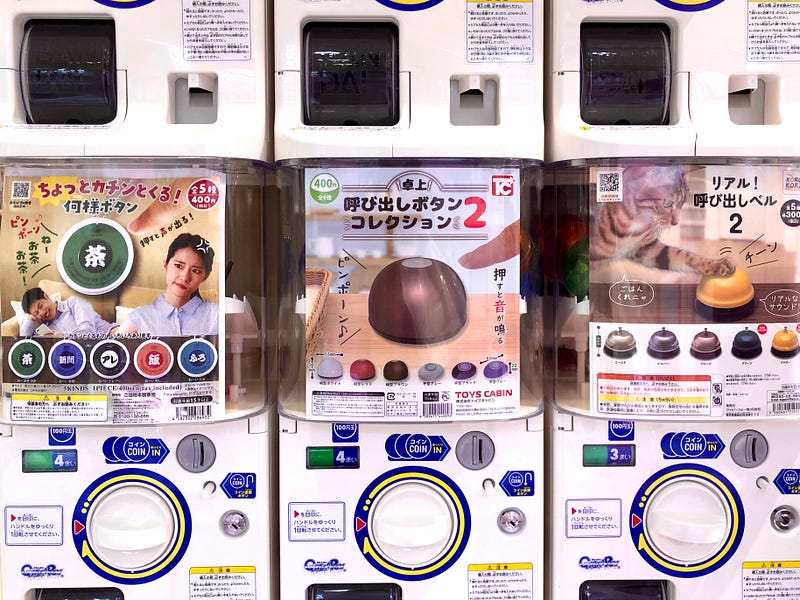
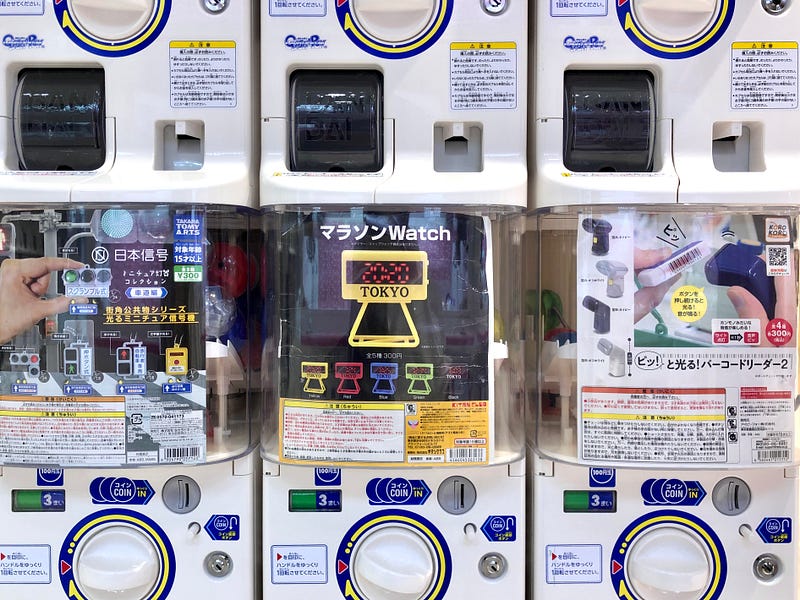
But those in Shinjuku seemed a bit different from what I knew: miniature barcode readers, bells you might have been tempted to hit again and again at a ‘family restaurant’ in Japan, and small traffic lights. I wondered who were the target consumers?
Then, my smart friend filled me in that she had seen newly installed capsule toy machines everywhere, even in her neighborhood.
“Seriously? Who buys them?” I was still skeptical but walked into the woods of toys and took a further look.
The deep forest went on with cute little bento toys, fake ice cream, and even plastic Yoshinoya beef bowls! I glanced at other customers. Girls in their uniforms, a little boy with his father, couples, men, women—everyone was examining the trinkets carefully. “Wow, they’re popular,” I conceded.
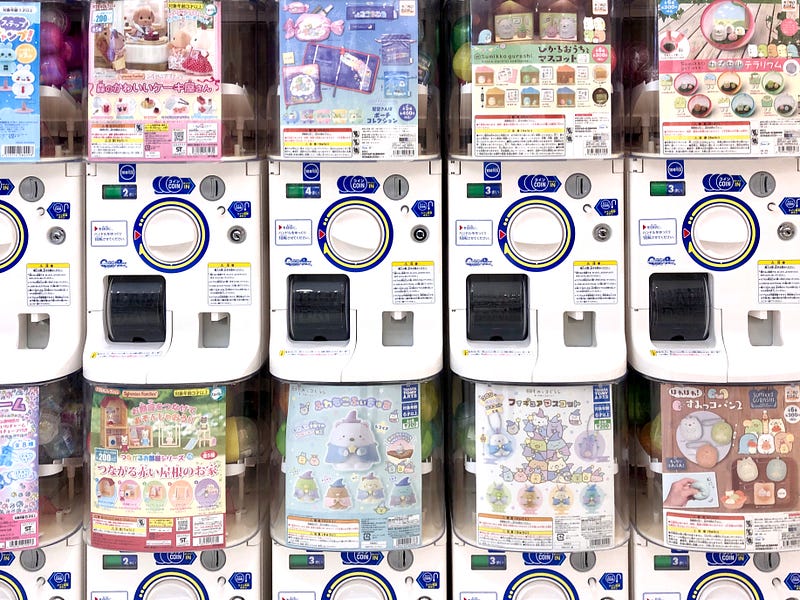
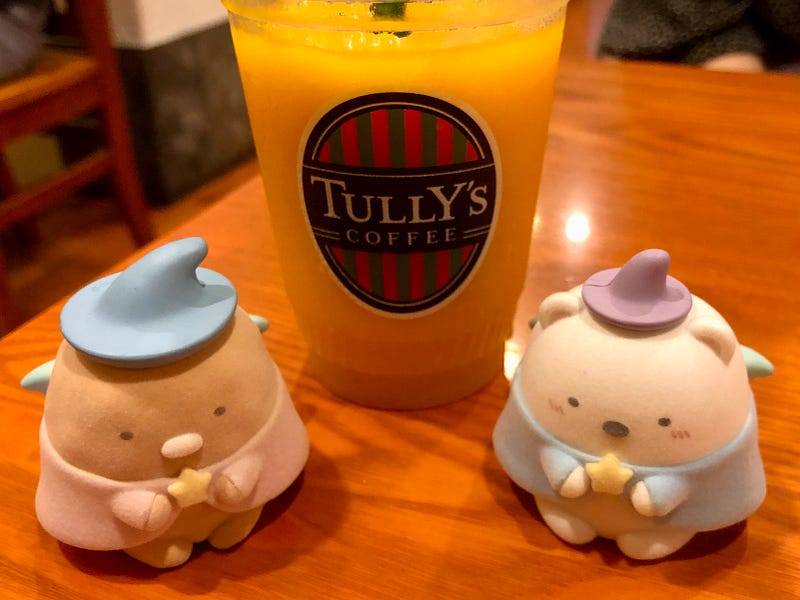
Sumikko-gurashi animals were in full swing with six machines. Seeing my wishy-washy attitude, my friend put ¥300 ($2.20) in coins, turned the handle with the noise gacha-gacha—which is the name Japanese people call these machines—and opened the capsule. It was a cute little bear-like character with wings.
Next, it was my turn. Plastic toys made me feel a bit guilty, but my friend was offering the bear to my daughter. One more tiny toy wouldn’t hurt.
We left the department store with two little fictional animals. I googled and pondered why capsule toys are attracting adults on my way home. There are a few factors:
- With the low birth rate, toy manufacturers have started focusing on adults. Unique toys such as ‘family restaurant bells’ have become popular.
- This never-ending pandemic (well, at least in Japan) drove many retail stores to close and accelerated unstaffed operations.
- The average amount of disposable income has been shrinking due to low salaries in Japan, but ¥300 can still attract consumers.
Given these reasons, capsule toys seem to symbolize the stagnant Japanese economy.
I looked back on my childhood. My home had a backyard and I played piano with my favorite huge stuffed collie dog. How about my four years old?
Although she has been enjoying English-based education at an ‘international’ kindergarten unlike me, she lives in an apartment with a balcony covered with artificial turf. Her favorite toys are all handy.
The situation is not directly comparable since my parents’ home is in a neighboring prefecture and ours is in Tokyo. Still, I felt sorry for her. I could have lived in a decent house if I wished, but I chose this convenient life and tried to save money.
My daughter was thrilled with the two little Sumikko-gurashi animals that day. But secretly, I vowed to splurge on a huge stuffed animal next time.
If you enjoyed this article, discover other works of the author at Japonica.
Follow Yuko for more stories about cross-cultural topics, travel, business, parenting, and equality. You can also subscribe from the referral link, which Medium uses a portion from followers for author support without any additional cost. Mediumの購読は、こちらのリンクからどうぞ。