avatarAvi Kotzer

Free AI web copilot to create summaries, insights and extended knowledge, download it at here

2952

Abstract

dad, who knew everything back then (and pretty much still does), explained what jai alai was. It did take until season 3 for the sport itself to take center stage in one of the episodes, <i>Killshot</i>.</p><p id="b154">The name jai alai means “merry festival” in Basque. The sport is a hard-core Basque version of handball: a ball that is bounced off a walled space. But in jai alai, the ball is thrown with great acceleration using a hand-held wicker device called <i>cesta</i>. The gimmick being it was “the fastest sport in the world”. And for a long time it did hold the world record for ball speed at 302 km per hour (188 mph).</p><h2 id="77bc">Field of dreams</h2><p id="45b8">Wait a second… why am I blabbing about jai alai?</p><p id="30aa">Because jai alai is played on a court that is called <i>cancha</i> in English, for some reason. I mean, in Spanish <i>cancha</i> means court or pitch, but I’m not sure why Merriam-Webster claims that the term in English refers specifically to the court of jai alai, as opposed to other sports. Like soccer, for which the term <i>cancha</i> is regularly used in Spanish. In any case, I’ll go with that, as it allows me to rant against the editors of the Spelling Bee puzzle.</p><p id="f140"><i>Cancha</i> also means, according to the dictionary, an enclosed yard or space, especially one used for cockfights. I’m going to again say… what? I’ve never heard of this before. I asked a few people I know who have Caribbean heritage, and they looked at me like I had two heads. Although… it may just have been the bad Skype connection. (Serves me right. I mean, who i their right mind even uses Skype anymore?)</p><p id="7e51">What’s important here is to remember that <i>cancha</i> is, officially, a word in English. And also…</p><h2 id="b7c1">En español</h2><p id="27fa">In Spanish,<i> cancha</i> is all over the place. Not just because it’s a large field in which football is played. And as always, when I say football, I mean the sport played by kicking a round <b>ball</b> with your <b>feet</b>, not the one in which you throw a <a href="https://en.wikipedia.org/wiki/Spheroid#Prolate_spheroids"><b>prolate spheroid</b></a> with your <b>hands</b>.</p><p id="116c">Some people also refer to the stadiums themselves as <i>canchas</i>.</p><p id="2792">The idiomatic expressions “tener cancha” and “estar en cancha” (to have <i>cancha</i>) mean “to be well-prepared” for something. For example, if someone I won’t name has done extensive research on the word <i>cancha</i>, that person “has <i>cancha</i>” when it comes to pontificating about said word.</p><p id="630d">In Peru, though, <i>cancha</i>, also refers to toasted corn that has not quite popped. Known also as <i>cancha serrana</i> or <i>cancha paccho</i>, it can be served as an appetizer with cheese, for example. And <i>cancha blanca</i> (white cancha) is… you guessed, it, popcorn!</p><p id="0403">Now, you’re probably asking yourself how <i>c

Options

ancha</i> can mean both “playing field” and “roasted corn”. And even if you aren’t, I’ll be super-nice and answer your question.</p><p id="610e">The term originated from two different words in Quechua, the indigenous language of Peru and other countries in South America.</p><p id="0950">In Quechua, <i>kancha</i> means “enclosed area”. A very similar-looking and sounding word, <i>kamcha</i>, means “corn” or “roasted corn”. You can imagine the confusion this may have generated when the words were misheard. That may have been the cause of the great Inca stadium fire of 769, when a group of friends misunderstood the invitation to “roast some <i>kamcha</i>”.</p><p id="3155">Back to the jai alai guy. I always wondered if he became rich from that millisecond of fame he got on a daily basis. I mean, let’s say he received one cent every time an episode aired (much like I may get one cent every time someone reads an article I wrote on Medium). That show must have been played gazillions of times across TV stations all over the planet by now! And today we also have streaming services offering us all that nostalgia for a mere $9.99 a month.</p><p id="6c88">I guess I can cling to some speck of hope that one day I too will become a Medium Millionaire.</p><p id="dcd4">Penny by penny, I should easily reach that goal by the year 2367.</p><p id="7acd">We’ve clearly established the usefulness of <i>cancha</i>. Am I right?</p><p id="6260">And yet, the editors of the New York Times Spelling Bee said: “It<b></b>s a <a href="https://www.merriam-webster.com/words-at-play/dord-a-ghost-word"><b>dord</b></a>!”</p><p id="7568">Please check out my previous entry on another <b>dord:</b></p><div id="85dd" class="link-block"> <a href="https://readmedium.com/riprap-b5fe79b8b321"> <div> <div> <h2>Riprap</h2> <div><h3>These stones are most likely gathering moss</h3></div> <div><p>medium.com</p></div> </div> <div> <div style="background-image: url(https://miro.readmedium.com/v2/resize:fit:320/0*QDTok9S88CiI9Db5)"></div> </div> </div> </a> </div><p id="9314">*What the heck is a <b>dord </b>anyway? Here you go:</p><div id="9bbf" class="link-block"> <a href="https://www.merriam-webster.com/words-at-play/dord-a-ghost-word"> <div> <div> <h2>'Dord': A Ghost Word</h2> <div><h3>One of the questions people like to ask lexicographers is this: Can you sneak something into the dictionary? Can you…</h3></div> <div><p>www.merriam-webster.com</p></div> </div> <div> <div style="background-image: url(https://miro.readmedium.com/v2/resize:fit:320/0*43sbBHswjTVdMw3p)"></div> </div> </div> </a> </div></article></body>

Cancha

Part of an iconic opening sequence in 1980s television
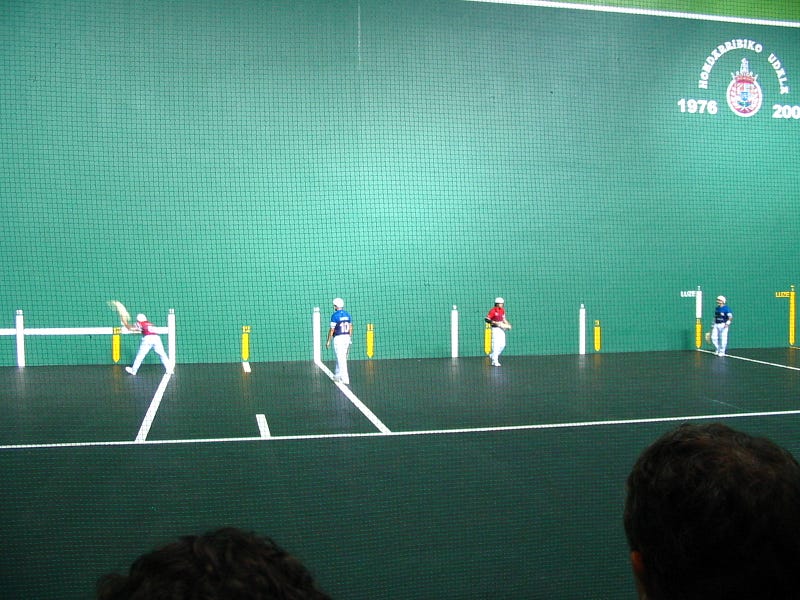
Credit: wikicommons

Today’s New York Times Spelling Bee letters:
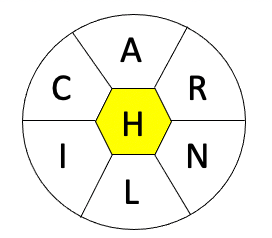
Art: Iva Reztok

A, C, I, L, N, R, and center H (all words must include H).

Merriam-Webster says…
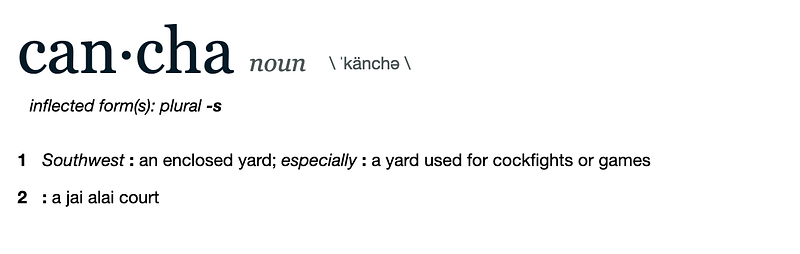
Credit: merriam-webster.com

Silly little dictionary! Don’t you know cancha can’t possibly be a word if the New York Times says it ain’t?

For further fascinating facts, check out the Spelling Bee Master.

What’s your favorite dord* from today’s puzzle?

My Two Cents

Whenever the sport of jai alai comes up, the first thing I think about is Miami Vice. And the opening sequence, with its electronic music composed by Jan Hammer and quick cuts showing the glamorous city life.
Credit: wikicommons

One of the cuts included this gentleman:
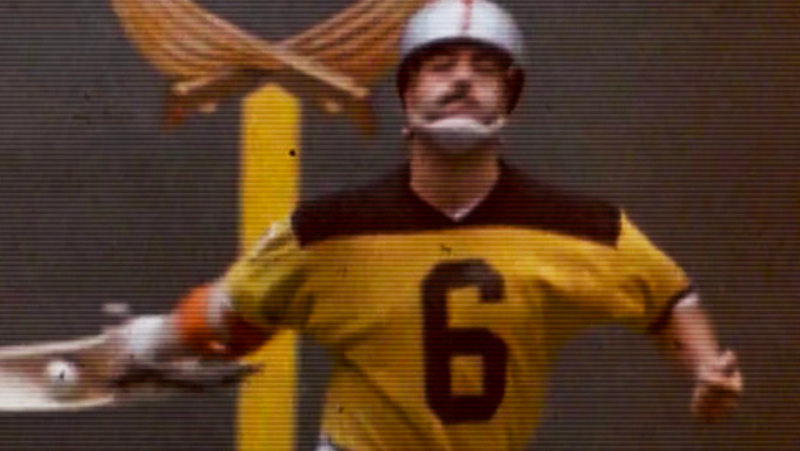
He appeared for what? Maybe a fraction of half a second? That was enough to pique my curiosity. I had no idea what he was doing or why he had a helment and what looked like some kind of sports prosthesis.

Was this show about some futuristic athletes in Miami who were addicted to amphetamines?

I’ve mentioned before that I was living in Venezuela back then, and in 1984 when Miami Vice debuted, we had four TV channels, two of which were government-owned. All four channels aired everything––whether it was local or international—in Spanish. The American shows were dubbed.

Miami Vice created instant buzz, and after we watched the pilot episode at home, it was clear that drug-addicted sports players were only marginally involved. The show was about Crockett and Tubbs, their fast cars and stylish clothes. I wanted that crocodile on Sonny’s boat to show up more often, but otherwise I was pretty much hooked. And thankful that, as a young teenager, my parents let me watch it.

My dad, who knew everything back then (and pretty much still does), explained what jai alai was. It did take until season 3 for the sport itself to take center stage in one of the episodes, Killshot.

The name jai alai means “merry festival” in Basque. The sport is a hard-core Basque version of handball: a ball that is bounced off a walled space. But in jai alai, the ball is thrown with great acceleration using a hand-held wicker device called cesta. The gimmick being it was “the fastest sport in the world”. And for a long time it did hold the world record for ball speed at 302 km per hour (188 mph).

Field of dreams

Wait a second… why am I blabbing about jai alai?

Because jai alai is played on a court that is called cancha in English, for some reason. I mean, in Spanish cancha means court or pitch, but I’m not sure why Merriam-Webster claims that the term in English refers specifically to the court of jai alai, as opposed to other sports. Like soccer, for which the term cancha is regularly used in Spanish. In any case, I’ll go with that, as it allows me to rant against the editors of the Spelling Bee puzzle.

Cancha also means, according to the dictionary, an enclosed yard or space, especially one used for cockfights. I’m going to again say… what? I’ve never heard of this before. I asked a few people I know who have Caribbean heritage, and they looked at me like I had two heads. Although… it may just have been the bad Skype connection. (Serves me right. I mean, who i their right mind even uses Skype anymore?)

What’s important here is to remember that cancha is, officially, a word in English. And also…

En español

In Spanish, cancha is all over the place. Not just because it’s a large field in which football is played. And as always, when I say football, I mean the sport played by kicking a round ball with your feet, not the one in which you throw a prolate spheroid with your hands.

Some people also refer to the stadiums themselves as canchas.

The idiomatic expressions “tener cancha” and “estar en cancha” (to have cancha) mean “to be well-prepared” for something. For example, if someone I won’t name has done extensive research on the word cancha, that person “has cancha” when it comes to pontificating about said word.

In Peru, though, cancha, also refers to toasted corn that has not quite popped. Known also as cancha serrana or cancha paccho, it can be served as an appetizer with cheese, for example. And cancha blanca (white cancha) is… you guessed, it, popcorn!

Now, you’re probably asking yourself how cancha can mean both “playing field” and “roasted corn”. And even if you aren’t, I’ll be super-nice and answer your question.

The term originated from two different words in Quechua, the indigenous language of Peru and other countries in South America.

In Quechua, kancha means “enclosed area”. A very similar-looking and sounding word, kamcha, means “corn” or “roasted corn”. You can imagine the confusion this may have generated when the words were misheard. That may have been the cause of the great Inca stadium fire of 769, when a group of friends misunderstood the invitation to “roast some kamcha”.

Back to the jai alai guy. I always wondered if he became rich from that millisecond of fame he got on a daily basis. I mean, let’s say he received one cent every time an episode aired (much like I may get one cent every time someone reads an article I wrote on Medium). That show must have been played gazillions of times across TV stations all over the planet by now! And today we also have streaming services offering us all that nostalgia for a mere $9.99 a month.

I guess I can cling to some speck of hope that one day I too will become a Medium Millionaire.

Penny by penny, I should easily reach that goal by the year 2367.

We’ve clearly established the usefulness of cancha. Am I right?

And yet, the editors of the New York Times Spelling Bee said: “Its a dord!”

Please check out my previous entry on another dord:

*What the heck is a dord anyway? Here you go:

History
Sports
Spelling Bee
Culture
Language
Recommended from ReadMedium