
Can You Really Prepare for the Inevitable Climate Collapse?
Turn your everyday life into a fortress.
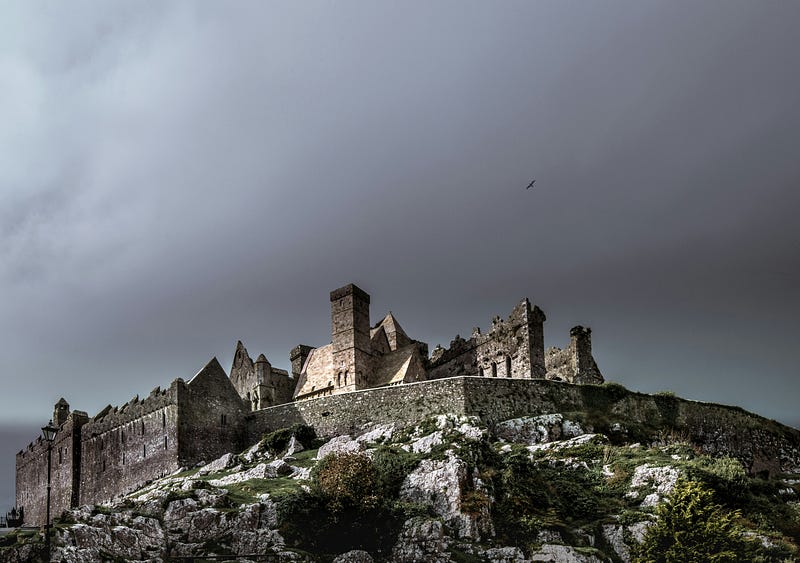
Make no mistake, we are in the middle of a global collapse.
The environment.
The economy.
The population.
It’s all going down.
But how do you survive when the world is literally burning in front of your eyes? Given that you want to survive (that’s a subject for another article), is it even possible?
Absolutely, but it will take focus and adaptability.
There are many facets of preparing for collapse; enough to populate thousands of prepper/survivalist websites with hundreds of articles, and there too many to list here.
The bulk of them can be boiled down to this: secure your base.
What Does “Securing Your Base” Mean?
The term “secure your base” comes from Ian Fleming in his James Bond novels, specifically Moonraker and Dr. No, but the idea behind is comes from military strategist Carl von Clausewitz.
Here is Clausewitz’s first Principle of Defense:
To keep our troops covered as long as possible. Since we are always open to attack, except when we ourselves are attacking, we must at every instant be on the defensive and thus should place our forces as much under cover as possible.
While this was originally written to apply to an army, we can also apply it to the single person, family, household, etc.
In short, securing your base means that you have a strong foundation in all aspects of your life, providing a stable “headquarters” that is positioned to defend against systemic shocks and survive massive changes.
Let’s take a look at some examples of how to can secure the base in our own lives.
Financial
Money is the first thing that I think of when it comes to securing my base.
While income is key, I’m not just talking about having a high-paying job so I can afford to spend it on whatever toy I want at the moment.
I’m talking about having good insurance (health, home, life, auto, umbrella) so you can absorb an untimely accident without wiping out your life savings.
I’m talking about paying off debt in an smart, aggressive manner so you owe as little as you can, which denies a person or company from having influence over your life choices.
I’m talking about having reliable sources (yes, plural) of income, ideally not exclusively from your 9–5 job. This also includes having a wide array of skills so you are not pigeonholed into a single industry and can successfully market yourself during an economic downturn.
Physical
This is more than just getting in shape, even though that is an important step.
Having a strong physical base includes your ability to withstand extreme environments of hot/cold, wet/dry, hunger/thirst without panicking and becoming disoriented due to the lack of familiarity.
(The ability to withstand extreme environments overlaps with securing your mental base, which we’ll get to next.)
Physical ability goes beyond just dropping a few pounds and breathing easier. It also includes getting strong, being flexible, having endurance, and adapting to uneven and oddball activities that aren’t standardized in the gym.
To get strong, lift weights.
To get flexible, stretch and do yoga/pilates.
To get endurance, do HIIT training or plyometrics or go rucking.
To get adaptability, do everyday stuff like chop wood or climb a tree.
This is a vast simplification, but it points out the various aspects of fitness that need to be addressed to secure your physical base. I am focused on getting strong right now, to which I’ll add endurance to the mix soon.
Flexibility is by far my weakest area, but I know that these types of physical health are not mutually exclusive, and improvement in one area normally equals at least a modicum of improvement in the others.
Mental
This one is probably one of the hardest of the three in this article, as you need to keep a sharp mind while knowing the world will collapse in your lifetime.
The first step is to realize that you need to grieve the future loss of our world as we know it. Like I’ve said before, collapse isn’t an event; it’s a process. But that process is accelerating and increasing in impact, so the world in 2050 or 2100 will definitely not look like 2023.
Medium write Climate Survivor wrote a great article on the stages of climate grief, which are summarized below.
1. Denial: Climate change is a hoax. The climate has always changed. Everything is fine!
2. Anger: Exxon did this! It’s the fault of the mega-rich! Jeff Bezos is a climate criminal!!
3. Bargaining: If we just adopt Ecars and solar power it will all be fine! I promise to recycle!
4. Depression: We are SOOOO fucked and there is nothing I can do about it. We’re already dead.
5. Acceptance: It will be what it is. I can’t change that, and that’s OK. Life is still full of beauty. (Or something like that. I’m still working on it, TBH.)
I was living in step 3 for years (more like the past 2 decades). But now, I am somewhere between 4 and 5.
However, if you and I want to actually make a go of not just surviving, the living a decent life in the latter half of this century, we need to be firmly in Step 5 while still fighting for a better world for our children (if you have them).
The Takeaway
Life through 2100, and probably after, has a very high change of becoming a nightmarish, dystopian hellscape for much of humanity. Our best hope is being able to have the physical, mental, and financial resources to react to the crises that erupt around us and protect ourselves and our families.
It won’t be easy. It will take most or all of our lives, if we’re even lucky enough to get to a place good enough to adapt.
But what other choice do we have?