
Can you develop a new perspective on reality? (# 3)

One of the strengths of the scientific approach is that it builds on previous scientific discoveries. The foundations of science only change when a consensus is reached among scientists that a key assumption is no longer tenable. This strength is also potentially a major weakness.
The current scientific consensus suggests that we are the result of random fluctuations in a meaningless universe. Many people, both scientists and non-scientists, are uncomfortable with or disagree with this interpretation. Nevertheless, the logic of the scientific approach would not easily support a different interpretation without identifying a theory that is a better explanation of physical reality e.g. a theory predicting all understood phenomena as well as providing testable hypotheses about additional phenomena.
In this series of articles, the way that science could progress is reframed. My preferred scenario is a scientific paradigm based on the premise that life is not meaningless; furthermore, any meaning of life needs to be consistent with a logical explanation for the origin of our universe. On occasions, this alternate approach involves choosing different interpretations of scientific discoveries. Where two interpretations have similar explanatory power, the interpretation investigated is the one that adds meaning to life rather than one compounding the idea that life is meaningless.
Is there an external reality?
A weakness of the current scientific approach is that some of its implicit assumptions may not become obvious until experiments are designed to uncover those assumptions. For example, for several hundred years, scientists developed theories based on eliminating the assumption that a ‘God’ created our universe. One reason for this approach is the difficulty associated with defining ‘God’. What experiments could test such an assumption? Who would fund such experiments?
The current approach to designing scientific experiments often assumes there is an external reality independent of the observer. An alternative approach to investigating reality is to hypothesise that reality is somehow designed to create meaning for all of us even though each of us may perceive a different meaning. If such an alternative approach could be objectively tested, the assumption about the independent existence of an external reality may be relaxed. In brief, an aim of the approach discussed in these articles is not to dispute scientific discoveries but to examine some of the often implicit assumptions behind these discoveries.
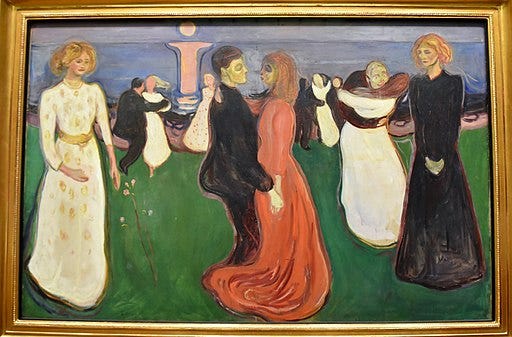
The proposed approach is not new. For thousands of years, scientists and philosophers have discussed the nature of reality and wondered whether life has any meaning. For example, consider Viktor Frankl’s idea that instead of asking ‘What is the meaning of life’, we should think of ourselves as those who are being questioned by life. Life puts us to the test. Edvard Munch’s painting ‘Dance of Life’ reflects the idea of ‘life asking whether we want to dance’ (The Ten Types of Humans, Dexter Dias, Penguin Random House, 2017 p 205).
.jpg)
A second point of departure for this approach follows some of the ideas included in Donald Hoffman’s book ‘The Case Against Reality’. In particular, he develops and explores the idea that our perception of reality is like a computer interface. What we see are icons, we do not see reality itself. No matter how much effort goes into investigating the icons, the nature of the programming behind these icons may not be discovered by those investigations.
Hoffman argues that two basic assumptions underlie his theory: (i) Conscious experiences exist e.g. the smell of a rose; and (ii) these experiences non-trivially influence some kind of action (possibly interpreted as free will). (Time 42 minutes). These articles develop a hypothesis where these two basic assumptions are not required in order to apply his idea that our perception of reality is like a computer interface. Some of the implications of this approach, however, are not necessarily consistent with the ideas put forward by Hoffman. There is no need to have read Hoffman’s book to understand these ideas. The point in mentioning books such as Hoffman’s is to acknowledge authoritative sources for the ideas discussed in these articles e.g. academics recognised for their professional expertise by other mainstream representatives of their profession.
Scientific validation
Another feature of these articles is developing the groundwork for a different way of testing scientific hypotheses. According to Hoffman, our perception of reality is derived from fitness not truth. While Darwin’s Theory of Evolution is based on survival of the fittest, Hoffman uses a game theory approach to evolution to suggest survivors perceive reality in a way that enhances their ability to survive not how accurately they interpret reality. In other words, our perception does not lead to an accurate understanding of reality. Each of us may have a different perception of the same event; the objective is survival not how accurately we interpret reality.
Hoffman argues that we do not know the nature of the machinery behind the icons that we perceive. Extending his insight, we do not know whether that machinery is something unchanging or whether the machinery changes in response to how we perceive the icons which it displays. These articles explore the idea that the way the machinery works involves feedback relating to how we perceive reality.
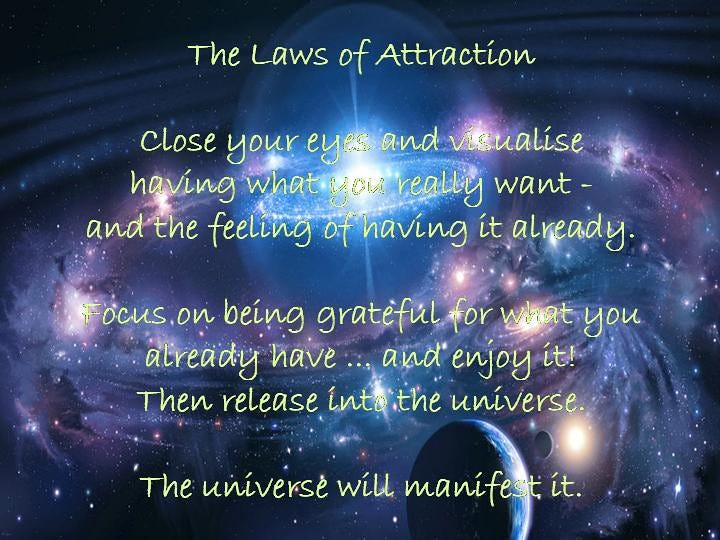
For example, some people believe in some kind of psychic power such as a ‘Law of Attraction’ (LOA): where what we think creates what we see. The machinery behind the icons we perceive may allow some people to receive confirmation that the LOA is true but deny other people the ability to use the same LOA. Scientific experiments may not support the existence of a LOA because the machinery does not allow LOA to have an existence independent of the perceiver. A challenge is to develop a theory of reality that allows the LOA to be real for some people and not for others.
As mentioned in Article 1 — Dark Matter Mystery — some of the laws of physics may evolve over time. Furthermore, when consciousness becomes an event in the evolution of the universe, the laws of physics may evolve according to changes in how consciousness interprets those laws. A memory foam explanation of the evolution of physical laws could allow consciousness to change those laws. For example, in the past, physics may have allowed humans to have psychic powers. Over time, humans lost their belief in their psychic abilities and so the laws of physics changed. But maybe we can regain those powers.
Without a theory about the origin of a psychic power, testing whether such a power exists cannot be properly examined using the scientific method. A subsequent article develops this idea in more detail based on Chiara Marletto’s ideas in her book ‘The Science of Can and Can’t’.
These articles present some ideas that explain how our reality came into existence and how some of the ideas could be tested. No claim is made with regard to the universal validity of these ideas. Indeed, application of the scientific method may conclude the hypotheses are not supported. A more basic claim is that these ideas support the possibility that there are realities based entirely on logical assumptions where each of us knows what is true without such truths being consistent with the views of other people.
Twenty questions parlour game
The eminent quantum physicist, Professor John Wheeler, suggested reality may be more like a modified version of the game ’20 questions’. In the parlour game ’20 questions’, one player thinks of an object and the other players ask 20 questions in order to discover what the object is. In Wheeler’s version, Player A thinks of an object and Player B asks a question. Player C then thinks of an object consistent with the answer given by Player A to the first question. Player B asks Player C another question. Player D thinks of an object that is consistent with the answers given to all previous questions. This process continues for 20 questions after which Player B has to guess what the object is. At the start of the game, no one knows what the final object will be.

A modification to Wheeler’s game of 20 questions is each player only has to think of an object consistent with the answers to the previous five questions. In other words, answers to questions asked more than five questions ago are no longer relevant. With this rule, the object to be identified in the game can evolve over time. Past truths may not always be true in the future. This version of the game could be analogous to allowing for the existence of a reality consistent with multiple pasts; the relevant past would be determined by answers to the most recent questions.
These articles are similar to several rounds of Wheeler’s game of 20 questions. At the end of each article, a question about the nature of reality is asked. You can choose to agree or disagree with the idea behind the question. Over time, a concept will emerge but that concept may not be known at the beginning. Indeed, many concepts could be consistent with the various propositions. An aim is to show that even when the final concept appears to be outrageous, that concept is supported by existing science; in our reality each of us has some freedom to choose what we see.
The question for this article is:
Is our reality a personal biofeedback mechanism?
I know when I am deciding whether or not to read a book, I sometimes look to see what the book’s conclusions are to see if I find them interesting. While drafts of all articles have been prepared, drafts of subsequent articles may be revised. My experience is that my ideas may evolve after being written down and published. I have published books that contain some of the ideas which formed the basis for these articles. If you are interested in guessing whether these articles will be worth reading, you may be interested in reading some of my books: ‘Gravity’s New Clothes; Part 2 of Climate Change Dilemma’; and ‘5 Steps to Better Memory’ as well the book ‘Orbiting Stars’ which contains the first drafts of all 47 articles. These books can be found at https://www.amazon.com/dp/B09L6VK75K/.