
Can Straight Readers Handle Queer Content?
Or Should Writers Closet Themselves?
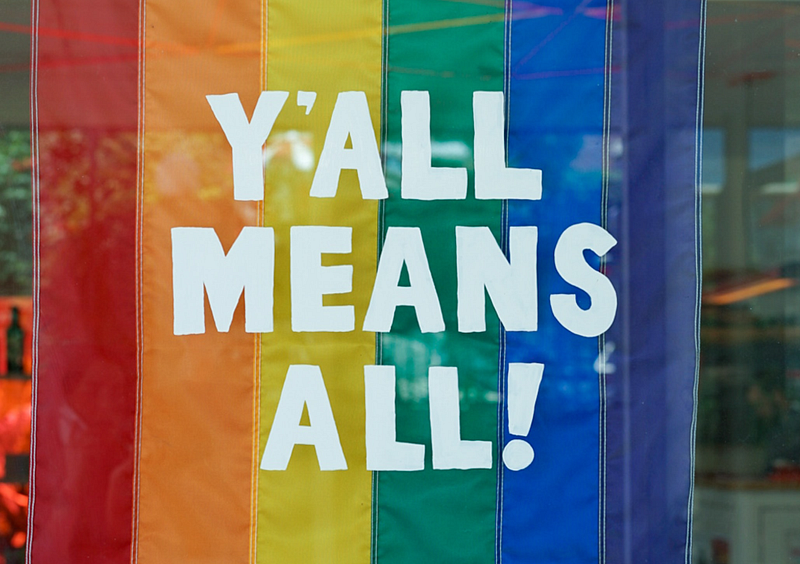
The idea of re-entering the closet may seem inane, but it is a very real question queer people face. To what degree can we bring our queerness into our work? While I’m writing this article from a queer perspective, my hope is that this will reach all writers. My sense is that we all have parts of ourselves we prefer to keep in the closet.
For a long time, queer and straight writing has stayed in its own lanes. Queer readers often create content with queer themes for queer audiences. Occasionally something comes along that is powerfully universal and reaches across audiences, but more often the content remains within its communities.
There isn’t anything inherently wrong with this either. I love queer publications as I know I’ll find writing that speaks unfiltered to my experience as a gay person. Queer festivals, for example, are vital forums for the queer community to reflect on the issues and experiences they face without having to dilute the content to reach general audiences.
The title of this article, while a little provocative, is a very genuine question. It’s not to imply straight readers cannot handle queer content. Of course straight people can handle queer content. But even the simplest propositions often have complex dimensions. Is all content equal? To what level can a queer person out themselves? Coming out, for example, is perhaps more socially acceptable than sharing explicit sexual content. [In case you find the latter uncomfortable and you want to jump at this point, my focus in this article is on the former: to what level can we come out as writers?]
I am queer and I am a writer. Most of my content on this platform weaves themes of nature, philosophy, education, and cultural commentary. Most of the ideas I explore are universal, not pertaining specifically to issues facing the LGBTQIA+ community. In expressing these ideas, I want to be able to reach people I wouldn’t ordinarily reach. But I also need to be true to myself, as many of my ideas have been born out of experiences from my life. And who I am in the world cannot be separated easily from my sexuality.
Several years ago, I was working in London with an openly gay colleague. We traveled across England doing public events, giving speeches, and meeting with various community groups. His natural flamboyance didn’t require him to out himself, but he did anyways, every time. Within five minutes of a speech or engagement, he would somehow reveal his sexuality by naming his male partner or his orientation.
This was foreign to me. Back in Australia, I was out and open with family, friends, and people I worked with. But until that point, I had never once thought to reveal my sexuality to an audience of strangers. Challenged by the idea of it, I asked him how and why he was so comfortable in doing so when the situation didn’t — at least to me — immediately call for it. I’ll never forget his response, which was in essence:
“By revealing my sexuality, I have acknowledged every queer person in the audience who is silent and given every person — regardless of their sexuality — permission to be completely themselves.” — Alastair
This was a life-changing conversation for me. I committed to being more courageous in coming out to new audiences. And the effects of that change have been transformative for both queer and straight people I work with.
As a coach and educator, I frequently find myself in conversations with straight men and women who pour their hearts out to me. Very often they reveal challenges, traumas, and questions they struggle to talk about with their straight friends and family. For them, my openness, non-judgment, and unconditional acceptance creates a safe space to be totally themselves. This openness is very much tied to how open I am about my sexuality.
Without trying, and just through being myself I am saying, I see you and accept you for who you are. And even though as a writer I am not interacting with anyone face-to-face on this platform, it is most certainly a quality of myself I want to bring to my work.
I chose to reveal my sexuality in a few articles when perhaps it wasn’t necessary. In When There’s No End in Sight, I used the film, The Adventures of Priscilla, Queen of the Desert as a key thread through the article. For me this added a little fun to the story. I even playfully likened myself to the transgender character Bernadette.
Priscilla was, in 1994, one of the first mainstream Australian queer films to reach non-queer audiences. I recall seeing it in the cinema seven times with several straight friends who were mesmerised by its comedy brilliance, dramatic depth, and the spectacle of color and costume. But since the new millennia and with non-Australian audiences, the film has become more obscure outside the queer community.
My article didn’t have an LGBTQIA+ theme. I used the desert as a metaphor for exploring how to deal with life through challenging seasons. Leading with a somewhat obscure queer film reference and expecting an audience to follow it was a risk. I could have easily removed any reference to the film and my sexuality, and still delivered the message I wanted. Instead, I chose something that may have had straight audiences think, I cannot connect with this. It’s possible some clicked away before getting to the third paragraph.
Did I make the right editorial choice? Perhaps not. I could have rewritten it as a sexuality-neutral outdoor-philosophy piece to possibly reach a wider audience. I grappled with that before hitting publish and have grappled with it since. But I love the ideas I explored in the article and felt good about expressing them on my own terms.
I guess, appropriately, the article you’re reading now is not actually about LGBTQIA+ themes, even though I appreciate it could be seen as such. The question of to what degree do we reveal ourselves in our writing is universal. Great writing, to me at least, has heart and vulnerability. I want to read content for more than the philosophical ideas in it. I want to hear who you are. I want to know how your life has shaped your perspective.
So far I have found this platform to be a remarkable space for writers to express themselves safely and be seen and accepted for who we are. But I guess it’s not just the platform that creates it. It is we, as writers, who choose to share ourselves in ways that say, I see you and I am glad you’re here.


