
The Moon’s a Camping Trip Compared to Mars
The research says humans probably couldn’t survive the trip to Mars if we launched today, but new technology could change the odds.
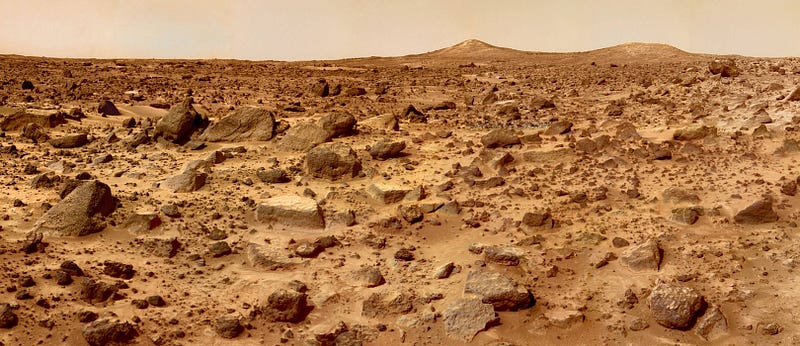
As an avid watcher of sci-fi shows and films, I have bitten my nails while watching military exercises on Mars in The Expanse, a dust storm destroy Mark Watney’s chances of survival in The Martian, and several close saves of “Little Red” landing on red soil in 2036 Origin Unknown.
The difference between film and reality is that the problem with going to Mars starts as soon as humans attempt to leave Earth. Leticia Vega, associate chief scientist for the NASA Human Research Program, reduces the challenge to this:
“Any theoretical mission to Mars would be the equivalent of ‘four to six individuals living together in a can for three years.’”
Space Sickness
Three years without Earth’s protections is a long time for any person.
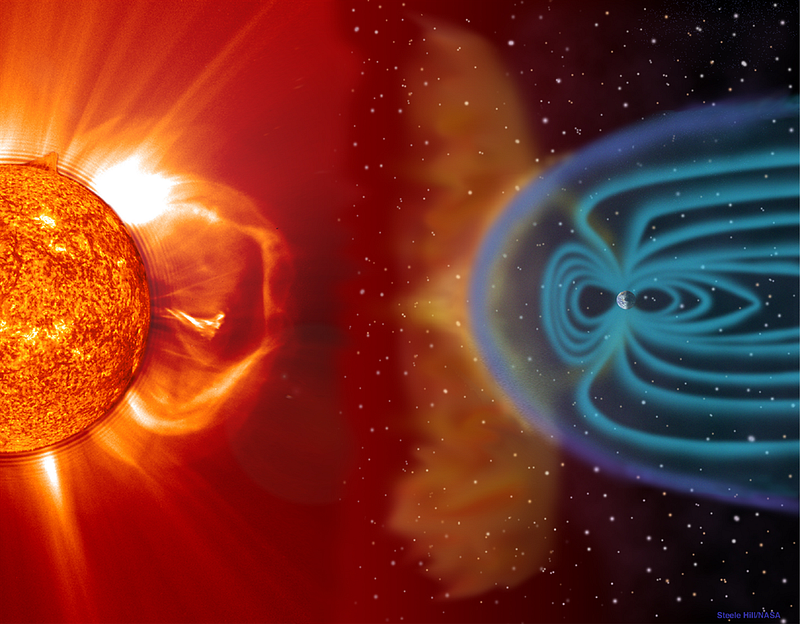
Earth offers us safety that no other planet can give us in our solar system, such as gravitational and magnetic fields. The magnetic field deflects most solar wind and protection from major fluctuations of radiation that often pummel the rest of the inner planets. Only the Earth is able to maintain a significant atmosphere thanks to the magnetic field shielding the particles that would ordinarily strip it away. We can think of the magnetic field as Earth’s own personal force field that deflect the majority of the onslaught of high-energy particles, and we can see evidence of this in the aurora borealis, or the Northern Lights.
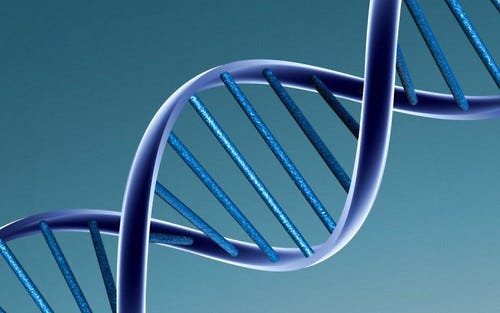
As soon as astronauts leave Earth, these high-energy particles aren’t stopped by the metal plates of a spaceship. The solar energy particles, or SEPs can pass through human skin, directly damaging DNA and causing acute radiation sickness and possibly cancer. There is extensive evidence that shows DNA damage from space radiation, such as HeLa cells flown in a Russian space station for 40 days that showed a direct correlation between length of space flight and amount of radiation damage. The time length is significant to the amount of damage absorbed by human bodies, such as chromosomal aberrations in white blood cells being observed after several months on a mission in space.
Other research points to a higher risk of cardiovascular diseases or even decreased cognitive function. Given that three years without a magnetic field to protect our DNA is a much longer time than a few months, we have no definitive understanding of how much damage can be caused to the human body other than extrapolations based on current data. It begs the question that if astronauts do survive the mission, how many will have a decreased quality of life due to earlier cancer treatments and extensive radiation therapy?
NASA has a suggestion for this question, but it’s not extensive enough to be an all-encompassing answer to the issue of solar radiation. It is, however, a step in the right direction. Sheila Thibeault, a materials researcher at NASA has admitted this when she said, “We’ve made progress on reducing and shielding against these energetic particles, but we’re still working on finding a material that is a good shield.” A couple of the ideas include polyethylene, which is in our plastic water bottles, that is fairly cheap to produce and good at shielding radiation because of a large component being hydrogen. Hydrogenated boron nitride nanotubes, or BNNTs, are tiny nanotubes woven together that allow for the absorbing of neutrons, which is a prime candidate for shielding on suits.
There is also research being done on a medication that would counteract the radiation exposure, but ultimately it’s more effective to stop the radiation before it impacts our bodies rather than not, which makes the medication a backup option if a solar flare is in effect.
The Whole Weightless Thing
The lack of gravity tends to be a problem as well. Humans are designed to function in gravity, and the lack thereof means that normal bodily functions such as fluid circulation starts to become threatening. Muscles and bones weaken, and current astronauts on the International Space Station have to exercise for multiple hours a day in order to preserve their strength. Gravity helps with the fluid circulation, but intracranial pressure changes in space, causing problems such as farsightedness and issues with balance and motor control.
Additionally, the body’s regulatory programmed cell death systems get thrown out of balance, which allows for more uncontrolled cell growth to occur. This would be a significant problem if there’s an issue with the space flight, which is very possible due to the extended amount of time the astronauts would be in space.
NASA’s answer to that is a lower body negative pressure chamber, or an LBNP, which would apply pressure to the lower half of the body and draws bodily fluid toward the legs. The average intracranial pressure drops to be more similar to that of Earth, but there’s no telling what the long-term effects of such a treatment would cause on the human body. Alan Hargens, a space physiologist at University of California, San Diego, explains that “We don’t know how much time [in LBNP] is needed to protect the body from the fluid shifts in space.” His team built a prototype LBNP suit that can be worn on the daily, and he says, “These lower body negative pressure devices are an early form of artificial gravity.”
The Human Factor
What about the astronauts themselves? If they take this long journey into space, how would they be able to provide medical and psychological care for themselves?
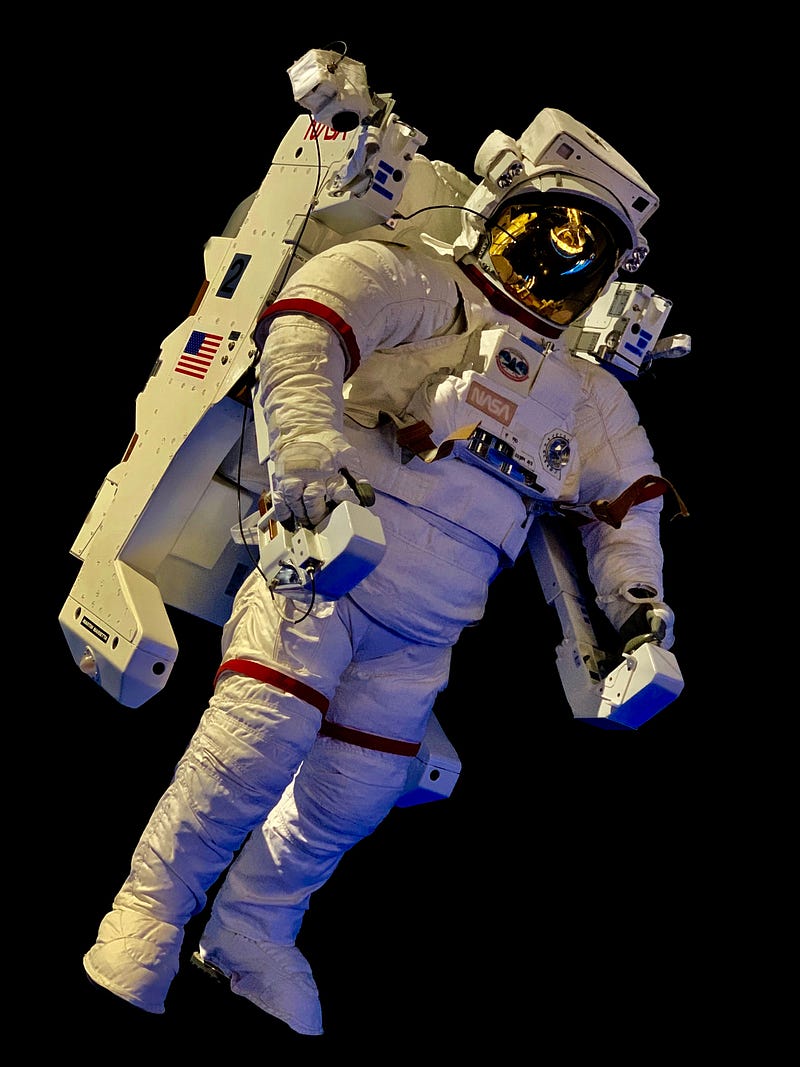
Even if there is a physician aboard, there is no guarantee that they would be able to complete an unprecedented mission. A small company called VisualDX is able to tackle that issue, and is currently being funded by NASA in order to transition the current online tool for physicians on Earth to becoming a diagnostic tool for astronauts in deep space. They are designing a tool that works without internet and it focuses on medical conditions that astronauts have a higher chance of developing, which waives the need for communication from Earth and an excessive amount of memory dedicated for the tool.
This system combined with the Autonomous Medical Officer Support, or AMOS system, would allow for the ability for nonphysicians to successfully perform medical procedures such as inserting breathing tubes. Currently, astronauts on the International Space Station are testing and using these technologies to assess if they would be better than communicating with a base on Earth for medical advice. Mars and Earth are a large distance away from one another, and even if communications could be sent at light speed, that would mean that a message from Mars would be minutes away from Earth.
There are great strides in the biomedical region in order to ensure that humans could successfully survive a three-year space journey to another planet and back, but logically, there is no ensuring that everything can be planned for. Erik Antonsen, an emergency medicine physician and aerospace engineer for NASA says:
“The moon is like a camping trip when you think about going to Mars. The reality is, when we do the first missions to Mars, there’s a high likelihood that somebody will die.”
There’s still more that has been unaccounted for, and the longest that humans have successfully stayed on the moon was three days, and the moon is a much more feasible goal in terms of space exploration.
Most of these technologies that are in development in order to tackle the issues posed by a possible human mission to Mars, but the medical devices and tools aren’t ready for that yet. And it’s likely it won’t be ready for another decade or two. Colonizing Mars is more of a fever dream at the moment, and NASA agrees. Their current timeline places a human mission to Mars in the 2030s.


