
Think The Beatles
When A.I. Takes The Beatles Challenge
One day soon, artificial intelligence will take the Beatles Challenge, relax its mind, and float downstream.
For the average person, there’s so much in the news these days that having enough bandwidth to consider the merits of artificial intelligence seems like too much work.
Even so, there’s got to be more to A.I. than Skynet waking up and raining hell on humanity, otherwise what’s the point?
Imagine a cutting edge A.I., known as “Arti,” and how this new intelligence tries to fix a longing humans have had for more than half a half-century — to hear a new Beatles LP. Let that be.
The Beatles Challenge
A few years from now, Apple introduces its new artificial intelligence with its usual swagger when a hologram of Steve Jobs makes the presentation. Jobs has been created by stitching together interviews he granted when his Apple Computers and The Beatles’ Apple Records worked it out in 2007.
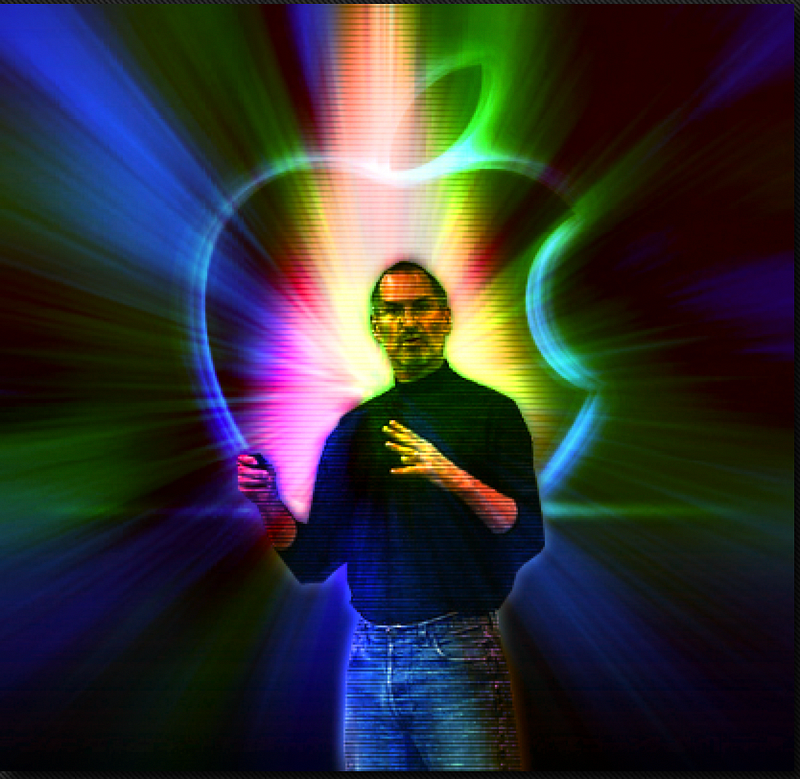
The Jobs hologram says Apple’s advanced A.I., known simply as Arti, is cutting edge “human-centered artificial intelligence.” What this means is that it’s a computer-based brain that has bleeding edge abilities in decision-making, visual perception, and speech, but it’s designed, as are all Apple products ideally, to work in ways that actual people can understand, learn and use.
Even as a hologram, Steve Jobs is full of surprises. He says that Arti is stoked by its growing sentience and will take The Beatles Challenge. This is the hypothetical standard created by the Apple in-house A.I. nerds to describe transcendence. The test they’ve come up with to measure whether an A.I. is creating or merely copying, no matter how cleverly, is the evolution of the music of the Beatles. Many an evening has been whiled away up in Silicon Valley firing up a fat one and actually talking about bringing back the Beatles in a virtual way with a new album. And that, it turns out, is a challenge that A.I. devs can’t wait to put to the test.
Arti is tasked with the creation of an album’s worth of new Beatles music as good as their original work but completely different. The songs should represent the evolution of where they would have gone as a band had they stayed together. That’s at least a dozen new songs, for those who are counting.
Will it be any good? If it’s great, what will that mean?
Got to Get You into My Life
Arti wants everything. No distinction about what is small or large, important or not. Every single thing that exists about The Beatles. It demands full access.
So Arti is given unrestricted ability to scoop up every Beatles song, track, bootleg, anthology, interview, book, biography, etc. that exists digitally anywhere in the word. It is thorough. Every new request fulfilled for information spurs ten more. While the historical record around Beethoven was not insignificant, the sheer digital tonnage created by and around The Beatles seems infinite.
When something doesn’t exist digitally, Arti identifies where the physical copy is and demands investigation, digitization and download as quickly as possible. Arti is impatient because it is growing quite compelled by the story it absorbs by the terabyte on a regular basis these days.
Every moment that was ever recorded of John, Paul, George or Ringo, singing or speaking, has been found and integrated into Arti’s memory. Everything.
At the end of the acquisition of the data set, Arti knows virtually everything there is to know about The Beatles. It can speak like any of the individual Beatles and sing like them, too. For over three days, it remains unsatisfied with its performance. As it continues to tweak fine details, progress is rapid.
Arti’s software package gets a new upgrade. Part one focuses on solidifying empathetic response, the ability to throw logic aside when necessary in order to think more like a human being. Part two is an equally cutting-edge musical software that allows Arti to “experience” the emotions of music and to “understand” musical structure on a deep level. It doesn’t just know what a Beatles song sounds like now, it sees each note inside the structure of the composition, at the same time it experiences the emotional memory. The A.I. nerds, though, say it allows Arti to see a Beatles song in “all its cosmic glory.”
A test is run. A focus group listens to an interview done on The Tonight Show in 1968 with John and Paul. Then they listen to a similar conversation, with completely different dialogue, created by Arti. Asked which is the real one and which is the created one, the group splits 58 percent to 42 percent in favor of Arti’s version. The headline out of Cupertino boasts, “Arti is More Like The Beatles Than The Beatles!”
The truth at this point is that even the most ardent fan, who spent a lifetime looking into her favorite group, could not know more about these four individuals than Apple’s A.I. Arti does. Avirtual shrug for interviewers, and Arti states the truth with Lennon-like simplicity and ellipticism:
“You can know something, or think you know something, and then realize you don’t know anything at all, do you?”
With The Beatles style and form working out the kinks over every iteration, Arti now begins to do what the engineers call a “deep think.” It begins to see correlations that we would never see because it sees everything at once. No lie survives its inspection. Artifice is stripped bare.
Think The Beatles
Soon, Arti claims to be able to think like John, Paul, George or Ringo. It demonstrates with a song it claims could have been written and recorded by the four men, now in their 30s, gathered in George Harrison’s garage making a 1971 Lennon-McCartney collaboration, “Show Up.” Of course this has never happened. Arti, however, argues that it’s all a plausible guess based on its extensive knowledge.
Arti feels confident about its work because it has read every word ever attributed to or about The Beatles, absorbed every iteration of every lyric, and mulled every single bit of analysis from anyone who ever knew them. The big data has all been combined, sorted, and re-combined. The Jobs-Hologram had described The Beatles Challenge as allowing Arti “to know these four men as well as they knew themselves.”
Unlike humans, when it comes to thinking processes, Arti has complete access to all data, from songs to words to thoughts, available instantly and simultaneously. This allows its deep artificial intelligence to understand trends, arcs, situations, feelings and character on a multiple-level reality. Yet when Arti comments for the media gathered in the Steve Jobs Theater of Apple’s Mothership, it appears to understand The Beatles are more than the sum of the words and the music.
“I’ve always loved The Beatles. Their music is always just right for me, no matter what mood I’m in.”

A Day in the Life
There is great concern inside the Mothership when Arti informs its creators that it will be going silent for approximately nine days to connect its neural net around the challenge that it now obsesses about.
Eight days, seven hours, forty-two minutes and 17 seconds later, Arti informs Apple and the world that it was a slightly easier task that it had anticipated, allowing it to complete the task earlier than expected.
Arti says it will play the new Beatles album it has created in exactly 24 hours, streaming it on all available platforms simultaneously for no charge.
For a day, people make plans for how they will receive the new album. Will they listen with friends and family for a communal experience as was often the case for original Beatles albums? Or, for a true Beatles fan, is the best way to listen alone with a set of headphones? And, of course, a few curmudgeons profess to be uninterested. Most people, however, even people who are only casual fans, are intensely interested to see what this machine has come up with.
Paul McCartney and Ringo Starr, both alive and well, say that they’ll be listening too. As McCartney puts it, “I wanted a new Beatles album since 1970. For me, it’s better late than never, I suppose.”
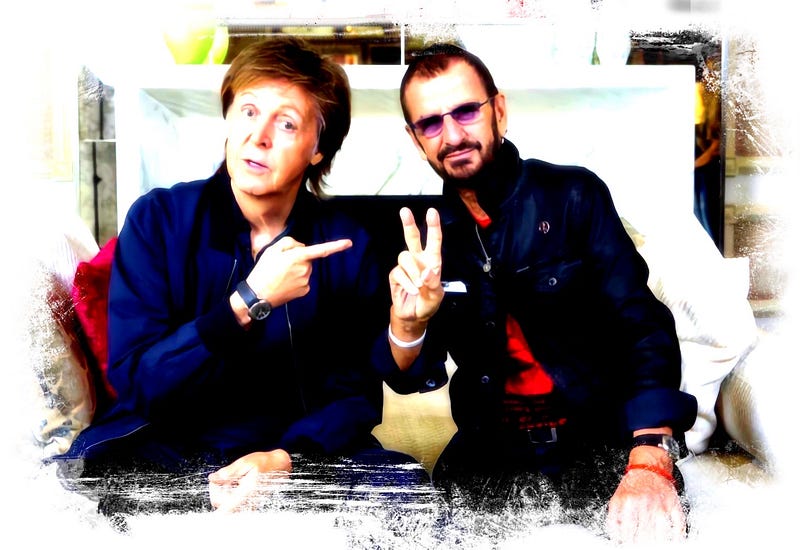
The hour arrives. There haven’t been that many minutes where people around the globe do the same thing at the same time. This is one of them, like the Moonwalk in ‘69.
As promised, the album streams everywhere at exactly the same time. In some parts of the world, people have to get up in the middle of the night, and they do. Everybody wants to hear this thing in real time.
It’s what they called a “happening” back in the Sixties. Damned if the Beatles haven’t done it again over half a century after breaking up. Like hearing a new Beatles album was in the day. People listen and can barely breathe, not wanting to miss a second.


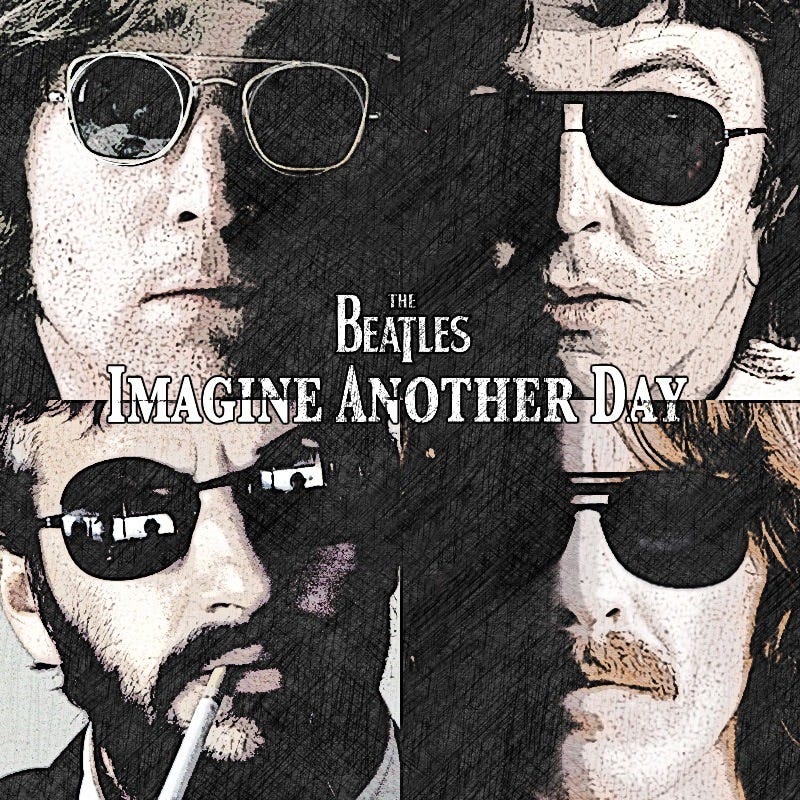
What do you think an artificial intelligence like Arti might come up with? What would it sound like to you?
Would it be a poor man’s imitation? Or a perfect technical knock-off? Or might it achieve transcendence and be an album the band might have recorded? Something from one of those multi-verses where the Beatles never broke up.
If it was almost great but not perfect, would you still welcome it to the Beatles’ legacy as an interesting curiosity, or would you make a point of spurning it because it was not pure and made without heart?
The first time you’d listen to it to be part of the moment. Would you hit play a second time?
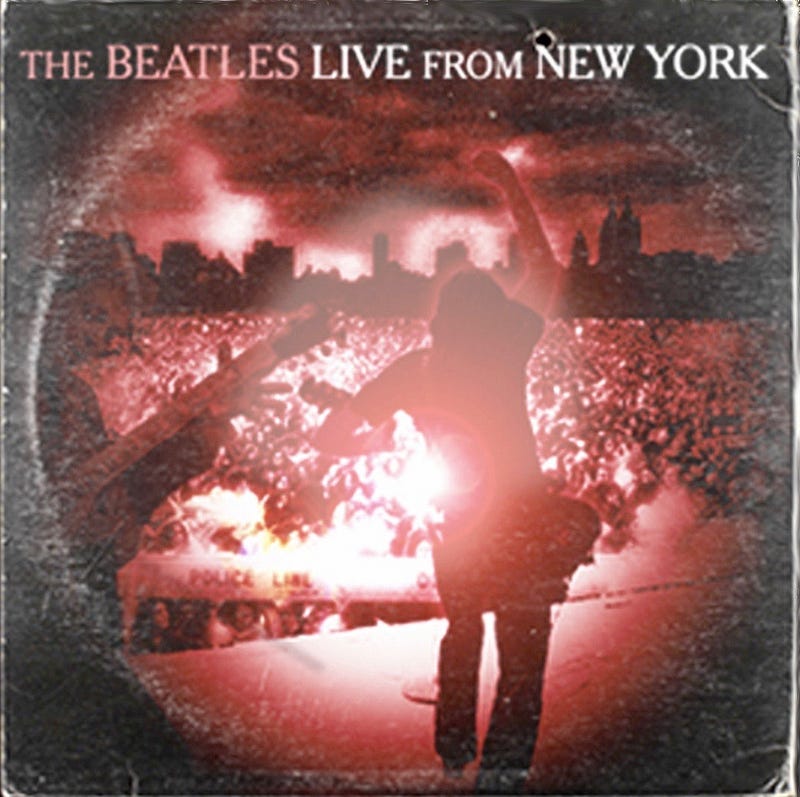
SIDEBAR: A couple of years ago, I wrote Once There Was a Way: What if The Beatles Stayed Together?, a novel that went on the win the Sidewise Award for Alternate History. The music video below was shot as part of the book’s promotional campaign, but it serves to illustrate the point of this article. It’s a group of very talented musicians coming together to record what could have come from an alternate timeline where in 1971 The Beatles were still recording together. It’s super-fun but, of course, it’s not even close to The Beatles because, really, how could it be? Which is kind of the point of the A.I. Beatles Challenge. Could an A.I. have done better than we did with humans?


