
Mental Wellness
Can Gene Expression Cause Depression?
How one DNA test identified a key source of my depression (and what I did about it)
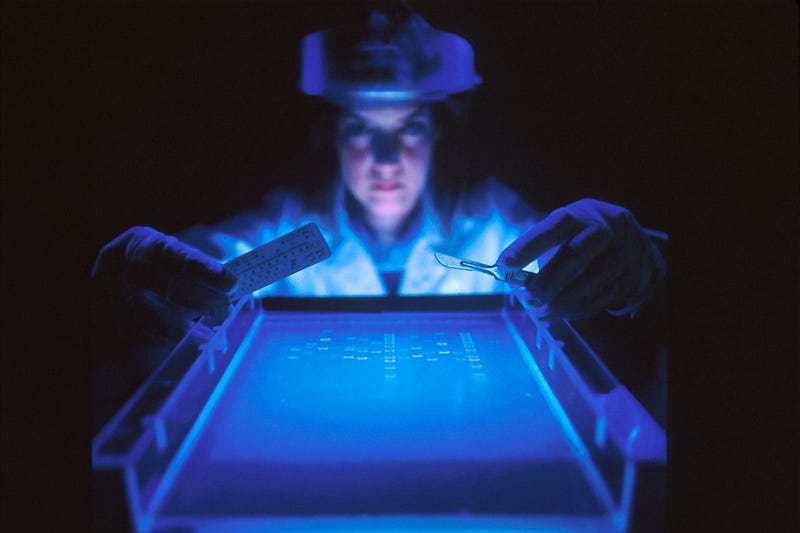
A big part of what I write about is my history with depression and the various alternative tactics I’ve used to understand it, work with it and live with it in a manageable way. Included in this list are a wide range of experiments that some might consider to be pretty esoteric. Read about my microdosing experiment as an example.
However, as I get older and I learn from these “out there” tests, I understand a little bit more clearly how I operate both mentally and physically in this world. These experiments actually allow me to become more calculated, more data-driven and more aware of what really, truly helps.
Take for example the recent round of genetic testing I ran through a Canadian-based genetics lab, The DNA Company. A functional lab test to report on my genetic make-up and hormone response. An invaluable resource for understanding our genetic expressions and the internal/external factors that contribute to our overall health.
As I am preparing to bring my first child into the world I am interested in understanding a bit more about what makes me, me, and what depression really is so that I can do everything in my power to protect my young from this horrible experience. What I have found along the way is much more fascinating than the physical genetic lineage that will be imprinted into this new ball of life. What I uncovered was a specific code that unlocked an incredible amount of awareness into how and why I suffered depression in the first place and what this little human might experience along the way.
Gene Expression & Depression
Let me continue with a bit of a background on the current understanding of genes and their impact on depression, and clearly state that while I am training in Functional Diagnostics to understand these things better, I am not an expert on genome pathways or DNA expression. I am someone who has overcome very significant individual health concerns, and consider myself to be an investigative enthusiast, passionate about the new ways we can improve our mental and physical wellbeing.
One nugget of wisdom I found through researching my own depression was this study from the Harvard Review of Psychiatry, that points the finger at genetics as a main contributor to major depressive disorder (or MDD for short). The researchers who conducted the study found that, while there is a need for broad-based research into the genetic expression-depression link, it is clear that “identifying the individual genetic underpinnings may be essential in preventing the onset of this disorder and improving the lives of those who already suffer.”
As an avid rabbit hole digger what I am always looking for are these types of little breadcrumbs that can build overtime to create a bigger, more complete story and pull the rabbit out of the hole all together. This statement and the information found in that study turned me onto a new idea; a new understanding of what maybe caused my depression in the first place. I yanked on the rabbit a little harder and found some amazing insight into my individual genetic-depression makeup.
This extremely comprehensive genome report provided a detailed understanding of why I act, feel and behave the way I do, what diet and foods might be more genetically appealing, how my hormones are interacting with my everyday environment and intelligent information on genetic risk factors in the development of disease.
Without boring you by explaining the entire report, there was one element that stood out to me that linked my search for understanding my depression to the direct DNA expression inside my individual genome.
As it turns out, I have a suppressed (or less efficient) 5-HTTLPR gene, which is the primary gene that codes for the serotonin transporter, an incredibly important chemical for regulating happiness, anxiety and overall mood. Low or suppressed levels of serotonin is linked to sever depression and high risk of suicide.
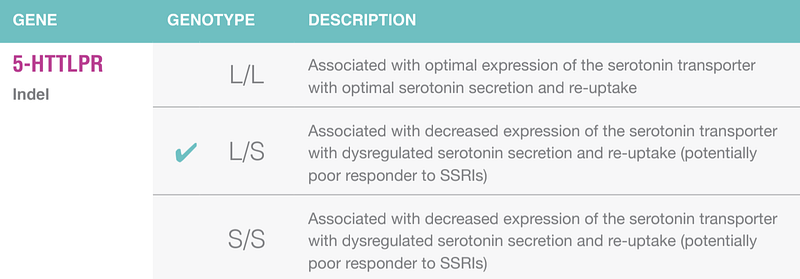
Although this suppressed 5-HTTLPR gene doesn’t always lead to higher levels of depression, it is now being studied as a key contributor to many mental health diseases and for me was a direct inhibitor to my neurological inflammation, overactive neurosis, anxiety, depression and suicidal ideation. If you’re like me and are in the L/S genotype, you may also have a poor response to SSRIs (selective serotonin reuptake inhibitors), the leading prescribed medication for anyone with depression in North America.
After pinpointing this new understanding and realizing SSRIs just might not cut it, I went on the hunt for as much information as I could find to back up this finding and outline a plan of attack for not trying to change this piece of my biological blueprint, but learning how to work with it, instead of against it like so many other surface level depressive symptoms I was dealing with.
Studies On Suppressed 5-HTTLPR
Outlined below are key takeaways from three (of many) scientific reports and studies that I reviewed to understand the role of 5-HTTLPR on depression.
“An important role has been posited for 5HTTLPR in emotion regulation and other types of social cognition. A remarkably consistent finding across imaging studies has been the observation that 5HTTLPR carriers have increased amygdala activation during emotion processing tasks.”
“Our results emphasize that genetic variation in 5-HTTLPR is relevant to the development of depressive symptomatology.”
“We found strong evidence that 5-HTTLPR moderates the relationship between stress and depression, with the s allele associated with an increased risk of developing depression under stress.”
Working With These New Findings
Now that I’m aware of this genetic inadequacy, I am able to test new tactics that allow me to live with it in a more manageable way. Knowing that my serotonin levels may be inhibited due to this suppressed gene and that could be leading to various depressive states, I am working on effective ways to improve serotonin production in my body by managing the major factor in optimizing serotonin, sleep:
- Supplementing with 5HTP to improve the production of 5-Hydroxytryptophan in my body, which helps to naturally produce serotonin and improve communication between my nerve cells.
- Supplementing with slow-release Melatonin to help reduce dopamine so that I can fall asleep faster and stay asleep longer.
- Shutting off all blue light exposure 2–4 hours before bedtime. Blue light is shown to reduce the release of melatonin and cause you to feel more alert, the more reduced blue light exposure the better sleep I have.
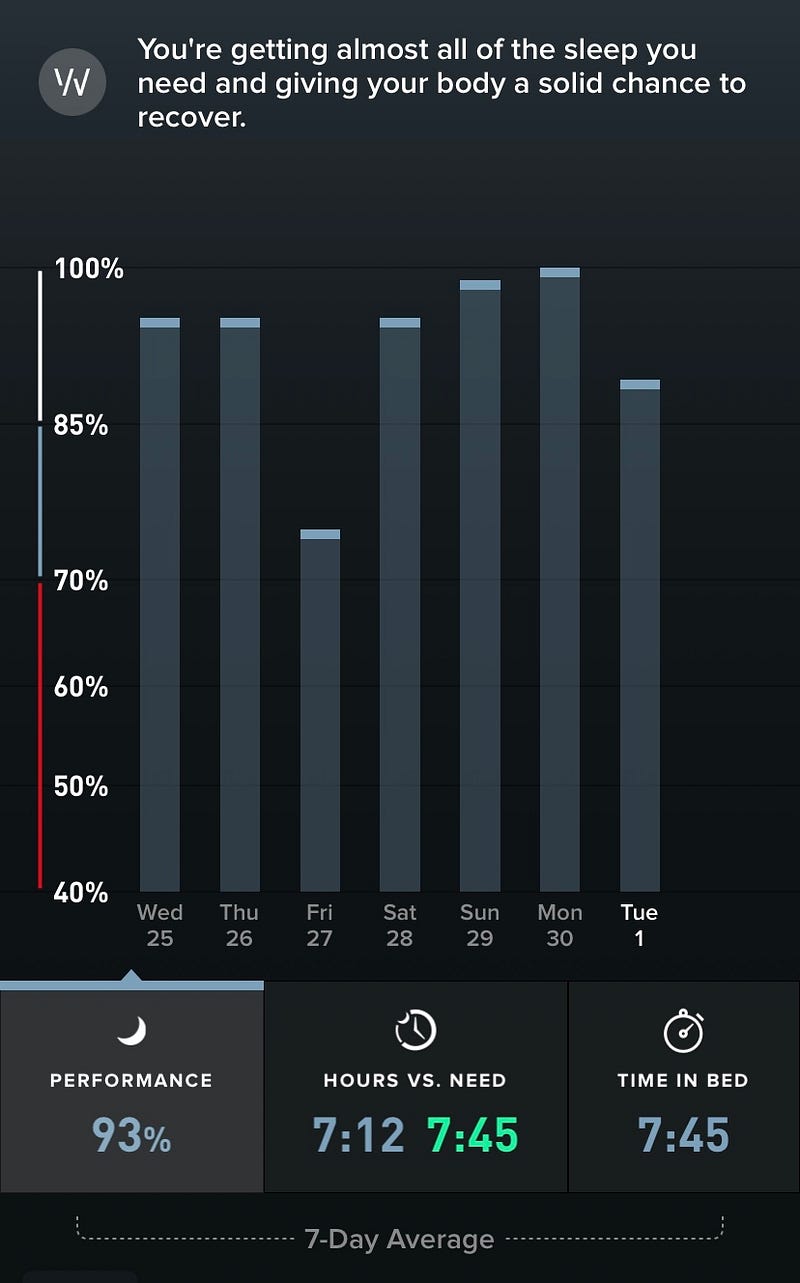
- Track sleep with my Woop strap so that I can better understand my strain levels, sleep recovery and readiness for the day.
These new tactics have helped me improve my sleep tremendously and allowed me to function in and out of lighter depressive states with ease, giving me more understanding as to why I may get depressed, as well as provide me with an active ingredient to overcome it. Check out my sleep performance as a result of this new optimization routine:
This new understanding of the 5-HTTLPR suppression is still in it’s infancy, not just with me, but in the entire scientific community, and a lot more needs to be done to understand it’s role in depression and the cascading chain of other factors that play a role. While there is more to be done and while there are many other factors at play, the beautiful thing about this new information for me, is not only can I go back up the chain to my parents and show them these new findings, I can also prepare to understand my child a little better, knowing more clearly what might trouble them in the future.
“Depression is one of the most prevalent, disabling, and costly mental health conditions in the United States, with lifetime prevalence estimates of 11.7% among adolescents1 and 16.6% among adults. It is projected to be the leading cause of disease burden worldwide by 2030. Although the impact of depression can be minimized or prevented through early detection, treatment, and ongoing care, numerous individual and structural barriers — including stigma, lack of health insurance, and other barriers to accessing mental health services — prevent many from seeking help. Indeed, only slightly more than half of all people who experience depression seek treatment, and those who do tend to drop out prematurely or receive poor quality care. Existing treatments for depression are modestly effective; only about one-fifth of adults receiving cognitive-behavioral therapy or psychodynamic therapy alone and one-third of adults receiving antidepressant medication alone will experience remission after an initial course of treatment. In children and adolescents, the efficacy of existing treatments is also limited. Moreover, nearly three-quarters of people with depression will experience a relapse at some point in their lives. These findings underscore the urgent need to prioritize prevention alongside treatment.”
Depression, from the World Health Organization
This post is part of my $100,000 journey into re-building my mind, body, and inner-self through a series of uncommon experiences that completely transformed my life. Head over here to view more.
If you liked this article, you might also like: