
Technology | Politics
Camera Tech on Guns May (Not) Finally Stem Police Brutality
Evidence and accountability, and the danger of video.
Key points:
- Cameras on Guns
- Evidence and Accountability
- The Danger

Back when I was in the army, I was trained to use multiple firearms.
There would come a time once a month when it is a soldier’s turn to to fulfil his patrol duty around the proximity of the camp. He will do so with only a partner, along with his weapon and live ammo.
For the patrol, a pair of soldiers pace round the deserted perimeter at the dead of the night, guarding gates and fence, each carrying an army issued rifle accompanied by a loaded magazine. As was often drilled into our minds by the supervising officer, carrying firearms meant carrying the responsibility of engagement.
Lucky for me, I never had to discharge my firearms during the patrols.
I had always wondered to myself: In an event of a contact, who could be witness and prove that a soldier had faithfully adhered to the rules of engagement? After all, no one is watching him during his duty except his buddy/partner.
Truth is, there is someone, something in fact; it is surveillance cameras, body cams, and now, cameras on guns.
Cameras on Guns
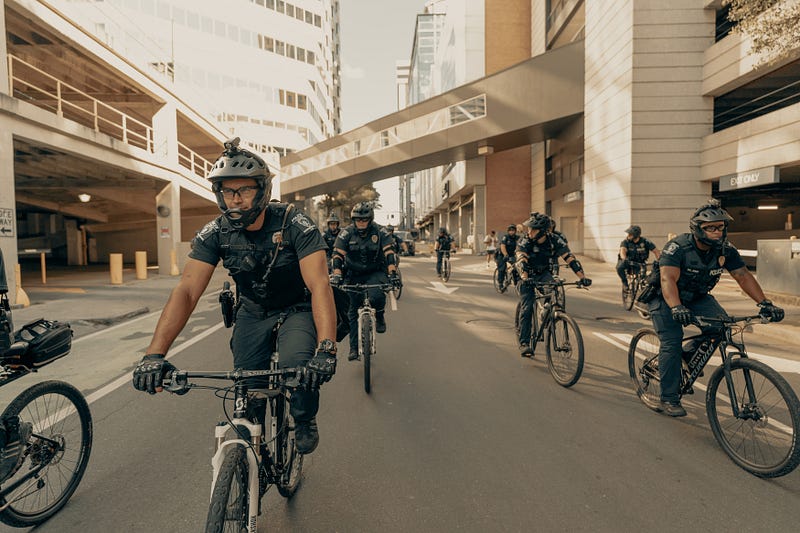
U.S. police departments announced that they are considering mounting cameras on guns to capture critical moments, in response to public demands for more police transparency amid the #BLM activism triggered by the killing of George Floyd.
This would be implemented on top of the body cams that are already deployed on police officers. Where body cams fail to capture adequate data, it is hoped that the weapon-mounted cameras fill in and provide crucial evidence and accountability.
Evidence
The gun mounted camera is believed to be able to provide crucial evidence capture that the body camera cannot.
Weapon-mounted camera by FACT Duty was able to capture critical view from the firearm at least 86% of the time, in comparison to the 37% with body cameras.
Robert Masterson the police chief from King City, California, which last month became the state’s first force to mandate the cameras on all officers’ handguns, agrees that the firearm point of view is the best.
“With (the) public’s responses to officer-involved shootings, I really felt it was important to have that perspective of what the officer most likely can see and the best point of view to see that from is the barrel of the handgun,”
More than just reducing the cost of lawsuits settlements and verdicts, the camera gives the police an evidence fall back, and the public a promise of accountability.
With hard evidence, rogue behaviors by police or civilian would no longer be unseen and brushed away as being ambiguous. Local police department can finally isolate misconduct and distance itself from non-compliance police brutality, while the public can rest assured that offenders would likely be taken to task by law.
This would benefit both the public and the police.
Accountability
The introduction of gun surveillance can establish mutual accountability for both parties the police and the policed.
In the current state of affairs, police officers convicted for fatal shootings are the exception instead of the norm. Since 2005, research shows that only 35 officers have been convicted of a crime related to an on-duty fatal shooting. Similarly, police officers in the U.S. face disproportionately higher risk of on-duty deaths as police killed on duty surge 28% from last year.
Here I write about how the police are emboldened because of this lack of palpable consequence/punishment.
The basis of higher accountability through the use of gun camera is partly the Panopticon effect; that by lending the public scrutiny, the police would behave.
By lending the public scrutiny, the camera ensures that there is a separation of law where jurisdiction is kept in check. The law must then serve justice that is at least agreeable in the eyes of the people. Granted, this is with the optimism that there exists a right and just objective morality to be found amongst the people in a society.
The principle of accountability works best at local level, devolution of power makes government more accountable for the implementation of its tasks. Decentralization also increases the level of citizen participation in making major decisions and directly affecting the community.
In an event that the footage were to be released by the court and police brutality or killings unfairly mitigated, the people would scream foul, worse engage in mob lynching. Therefore, jurisdiction will be pressured to up their game and provide a fair trial for both the police and the policed, making for a more accountable society.
It would also at least limit the power of public servants.
The Danger
WE all know the power of video and picture when we watched George Floyd plead for his life. For one, that video quite literally galvanised the entire world into activism, and some places into ugly protests.
The danger herein lies in the misuse of such power. Again, we don’t have to look far at the recent protests to see its examples. Cases of suspected “faked” or “staged” media include the one in which an elderly Buffalo Man was shoved, fell and bled from the ear.
The video was suspected staged, but later ruled out to be unconfirmed.
Yes, the theory might just be wild speculation. The point is not in whether the video was staged, but the hidden possibility that it could be. Yet, we see the large part of social media latch on to these graphic visuals and launch rashly into activism. This exposes well the collective unquestioning belief in such a form of “evidence”. If a point-blank video like that can be faked, then it is not hard to postulate that anything captured by a shaky gun camera is debatable.
Research has shown that people are indeed more likely to believe the things they see online when a picture or video and text are attached. It does not help that digital information can easily be reposted/shared and spread like wide fire.
Moreover, with advancing artificial intelligence like generative adversarial neural net and deep fake, visual media can be doctored post recording to a convincing degree. This should raise doubt, and rightfully so. (we seen too many unfortunate cases of misguided action due to fake news, especially in politics)
If supposed hard evidence is retouched and the clueless public act as enforcers, the public sentiment could react out of context in knee-jerk fashion. Misguided activism is just downright unfortunate.
Fake news aside, visual media may also does not capture the full context of the story. Unlike dash-cam car footage, rules of engagement of firearms are not as clear cut as traffic rules, and are highly dependent on circumstance that is much more stressful in the magnitudes of life-and-death. There is also the limitation of not capturing the context of events leading up to the point where the officer draws his gun, which is often the most crucial part in evaluating an officer’s action.
At best, the recordings may present us an incomplete picture, worse a manipulative fabricated lie.
The public should be more discerning when to comes to visual media.
The Conclusion
With evidence and accountability, we may finally attain more police transparency.
Before we rest on our laurels, there is one more thing: More than proving guilt, the value of camera on guns seems to be in proving innocence.
The elephant in the room is racial discrimination. Ultimately, what the installation of cameras on guns aims to achieve is to capture prejudice from the barrel. Racial discrimination is still a looming problem that will only become more apparent after the mandate.
“[…]best point of view to see that from is the barrel of the handgun.”
Until the world sees exactly the unfolding events that lead to the unfair treatment of the marginalised, perpetrators are still walking away scott-free; change would be painstakingly slow.
References:
https://viridianweapontech.com/fact-duty-learn-more
https://www.sciencedirect.com/science/article/pii/S1877042813051227
Feel free to drop by, connect, or say Hello on my Medium and Twitter for more tech perspectives.
Or, read more: