Cambodia’s Gritty Past and Glorious Present: A Journey Through Time
A Journey of Exploration and Understanding at Cambodia’s Tragic UNESCO World Heritage Site and Related Historical Landmarks
From the moment I first set foot in Cambodia, I was gripped by its undeniable allure.
Cambodia is a country where the past interweaves with the present, revealing a rich tapestry of cultural heritage, humbling monuments, and serene landscapes, while also bearing witness to a somber history that should never be forgotten.
I’ve previously written on the wonders of Angkor Wat and beyond and highly recommend you take a look at that article if you’re interested in exploring Cambodia’s incredible ancient temples.
In this article though, I want to talk about a more somber episode of Cambodia’s past, with a visit to an important World Heritage Site in Phnom Penh: the Tuol Sleng Genocide Museum, which marks the turbulent history of Cambodia’s 1970s genocide, and paints a stark picture of the country’s tragic past.
This is a horrible period in history where an estimated two million people tragically lost their lives under the brutal rule of the Khmer Rouge.
I also want to share insights from my visit to the Killing Fields near Phnom Penh and the Killing Caves near Battambang — locations that stand as poignant reminders of the horrific atrocities committed during that time.
Despite the heavy heart that accompanies visiting such sites, they serve as important pillars of historical understanding and memory, encouraging us to reflect on the resilience of the human spirit, and to continually strive for a world free from such devastating violence.
Yet, Cambodia is not solely defined by its painful past. It’s a country that carries its history with dignity while progressing towards a brighter future.
From the grandeur of the Royal Palace and the shimmering Silver Pagoda in Phnom Penh, to the bustling life along the riverfront, and the nostalgic aura of the Old Correspondents’ Bar, modern Cambodia offers a rich, vibrant experience that truly captivates the senses.
I’ll also share my delightful experience riding the Bamboo Train in Battambang, an adventure that harks back to simpler times and offers a different, charming perspective of rural Cambodia.
In this journey, I invite you to join me as I recount the stark contrasts and remarkable spirit I encountered in Cambodia.
Tuol Sleng Genocide Museum: A Reminder of a Tragic Past
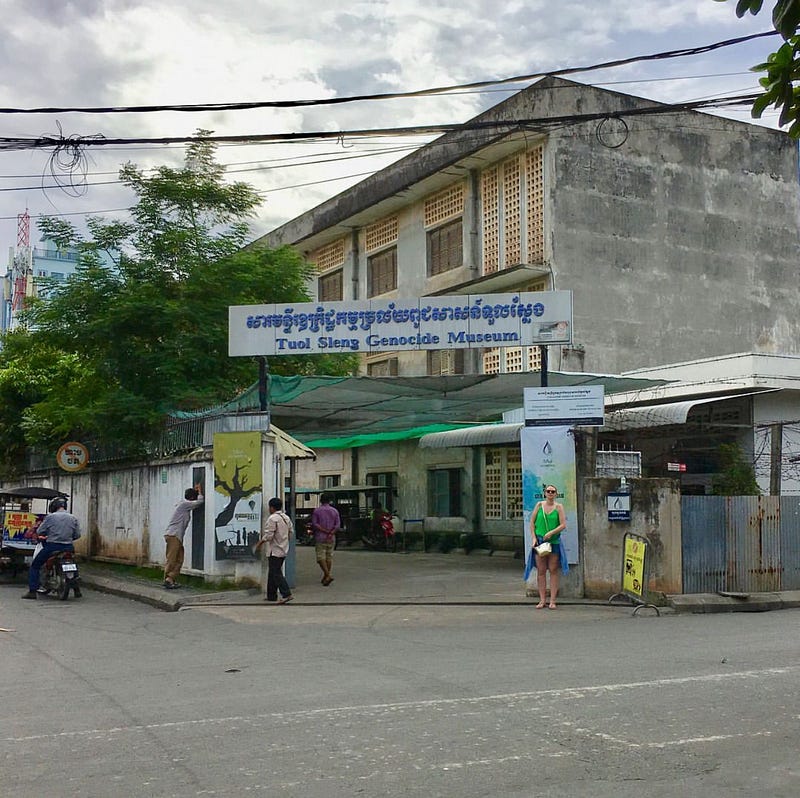
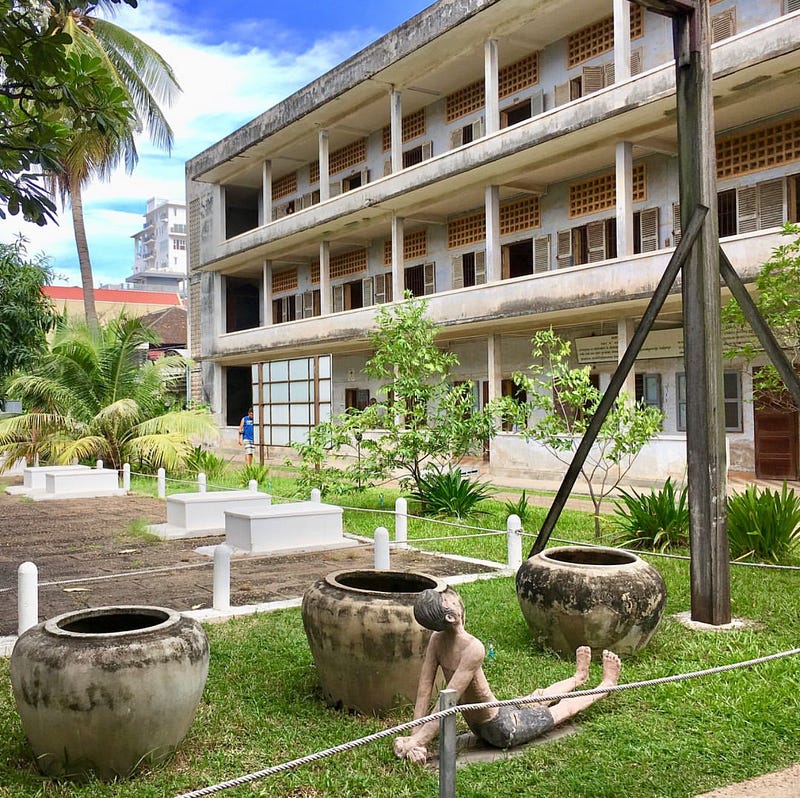
In the heart of Phnom Penh, ensconced within a former high school, lies the Tuol Sleng Genocide Museum. The building, once filled with laughter and learning, became a centre for unspeakable atrocities under the Khmer Rouge regime.
Known as “Security Prison 21” (S-21), it was the largest centre of detention and torture in the country, where an estimated 20,000 people were imprisoned and ruthlessly eliminated.
UNESCO recognised this harrowing site in 2009, inducting it into the Memory of the World Register.
This crucial acknowledgment affirms the global significance of the Tuol Sleng Genocide Museum, not only as a testament to the horrific acts committed during the Khmer Rouge rule but also as a venue for education and a rallying point against such cruelties reoccurring.
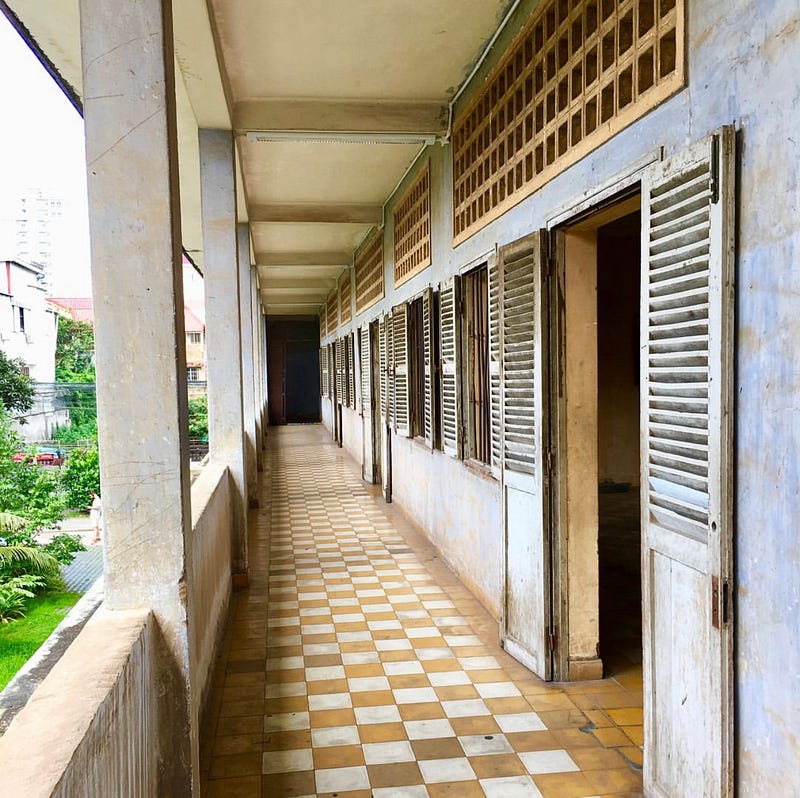
My visit to the museum was, without a doubt, an intensely emotional experience. Walking through its chillingly silent halls, I was confronted with the stark reality of a past that seemed almost too horrendous to comprehend.
Rooms once meant for education had been converted into torture chambers, with classrooms that once echoed with the innocent chatter of students, repurposed into grim detention cells and the scene of unimaginable torture.
The sight of school desks, meant to uphold knowledge and learning, being turned into instruments of brutality was a haunting testament to the regime’s monstrosity.
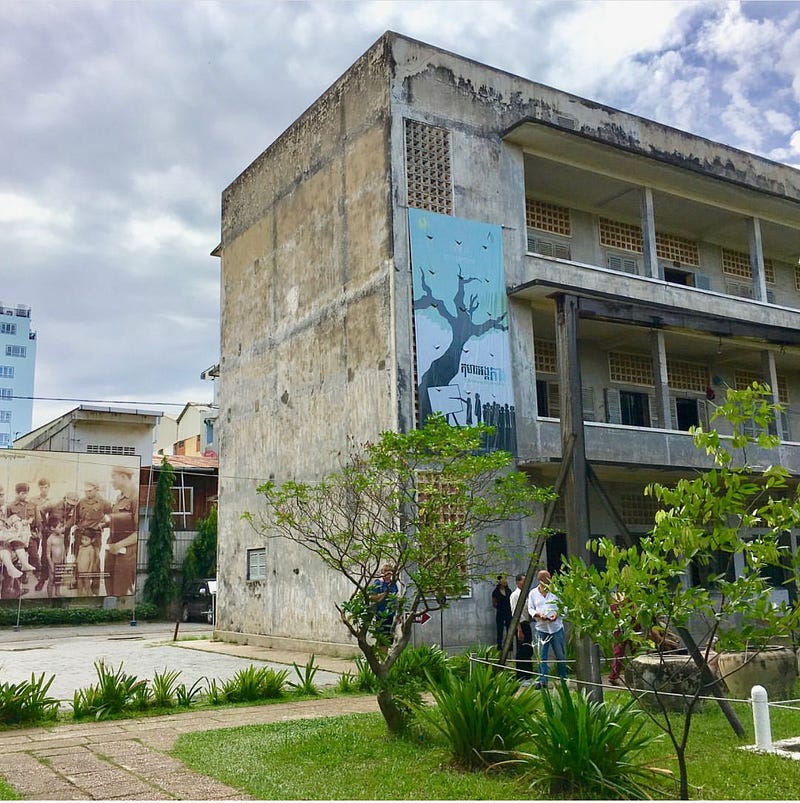
Perhaps the most haunting elements of all were the hundreds of black-and-white portraits that adorned the walls, each telling a story of a life abruptly and cruelly ended.
Men, women, and children, each marked with a number, stared out from these images — a chilling reminder of the individuals behind the staggering statistics of the genocide.
Every corner of the museum seemed to whisper of the chillingly systematic and inhuman atrocities committed here.
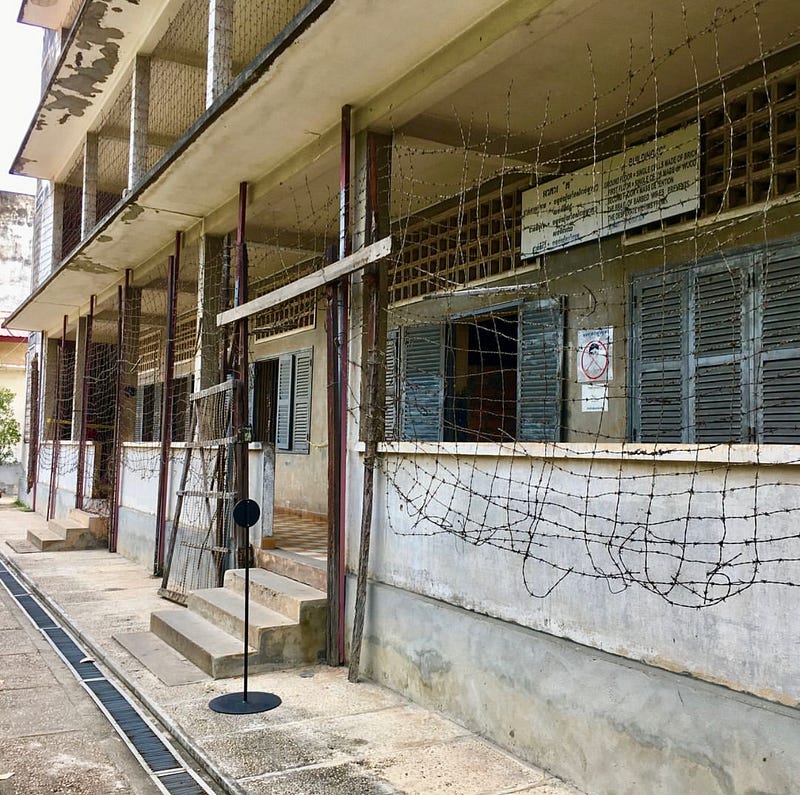
The haunting photographs, the rusty shackles, the confessional transcripts — they all bore an unspoken testament to the extreme suffering of thousands of innocent souls.
However, the silence of Tuol Sleng is not merely oppressive, but also reverential. It speaks of respect for the victims and their immense suffering, of the importance of remembering, of the hope that remembering might prevent such atrocities from recurring.
As heart-wrenching as the experience was, I also felt a profound sense of admiration for the strength and resilience of the Cambodian people, who have managed to turn a site of unimaginable terror into a beacon of remembrance and learning.
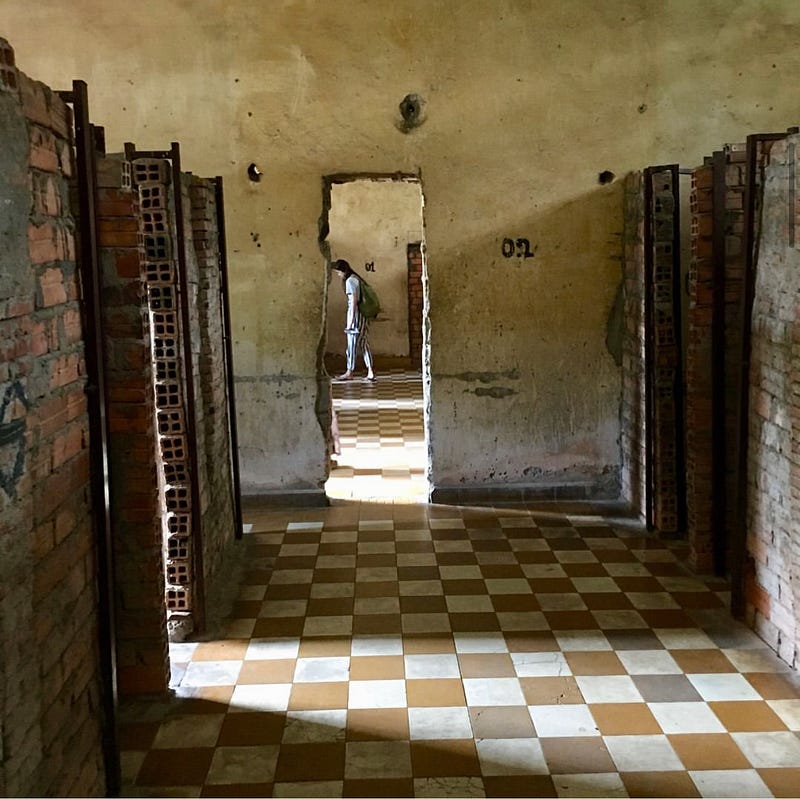
The Killing Fields and Killing Caves: Reminders of a Brutal Regime
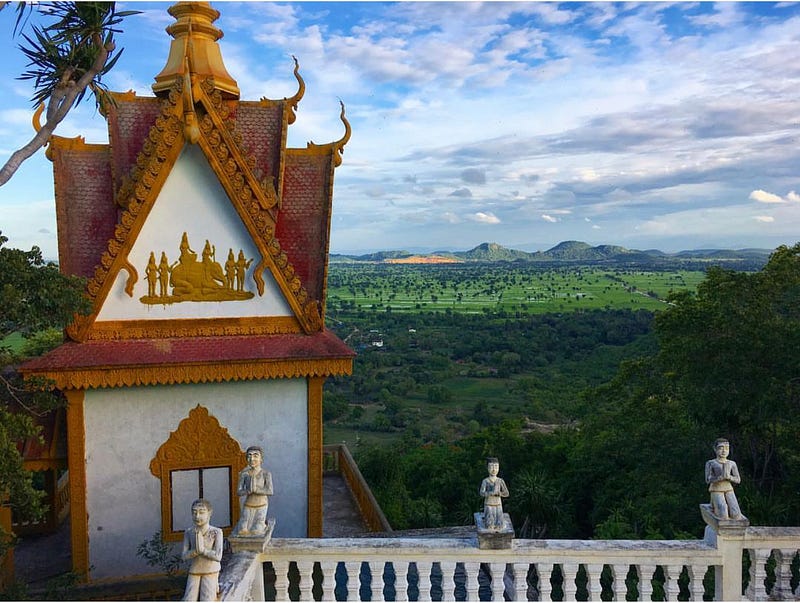
As I journeyed from Phnom Penh to the countryside, I found myself at the Killing Fields of Choeung Ek (just outside central Phnom Penh) and then (a few hundred kilometres later) at the Killing Caves of Phnom Sampeau near Battambang.
Both places are chilling remnants of the same brutal period in Cambodian history.
While the Killing Fields, a network of hundreds of sites scattered across Cambodia, represent the mass execution and burial grounds, the Killing Caves serve as a stark testimony to a specific form of these brutal executions.
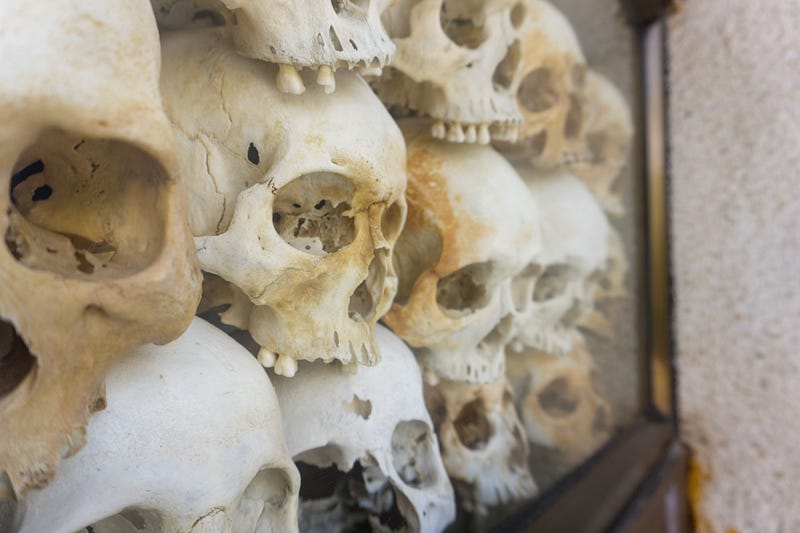
The Killing Fields of Choeung Ek, are now a memorial marked by a Buddhist stupa filled with over 8,000 human skulls, and is a haunting testament to the mass extermination carried out by the Khmer Rouge.
Just 15 km from Phnom Penh, it is estimated that around 20,000 people were brutally murdered and buried here, making it the largest and most notorious of the Killing Fields.
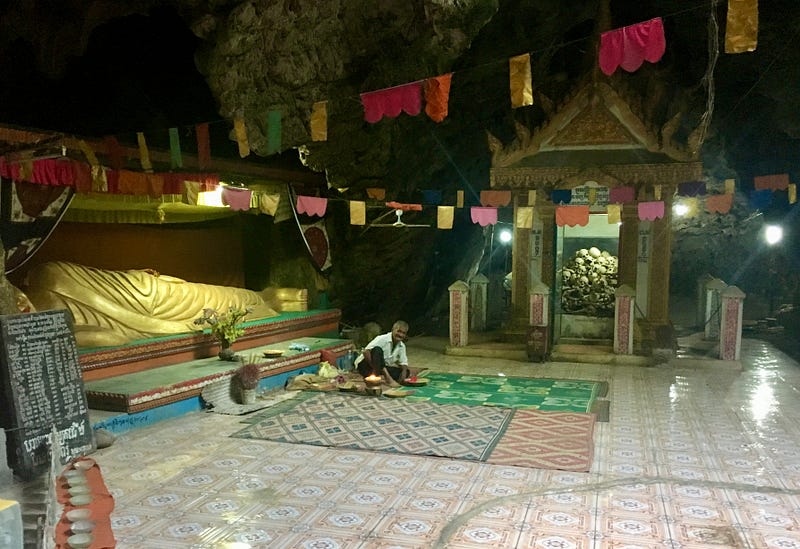
The Killing Caves of Phnom Sampeau, on the other hand, paint a grim picture of the Khmer Rouge’s horrific acts. Victims were brought to the top of the mountain, bludgeoned, and then dropped through a skylight into the caves below.
Today, a glass memorial filled with bones and skulls (see the photo above) serves as a stark reminder of this horrifying past.
My visit to both sites was a sobering experience. Walking through the fields, seeing clothes fragments emerging from the earth, listening to the haunting audio guide that recounted the heart-wrenching tales of survival and loss — it was a stark encounter with the horrifying depths of human cruelty.
Equally chilling was my visit to the caves: a tranquil place that bore silent witness to a brutal past.
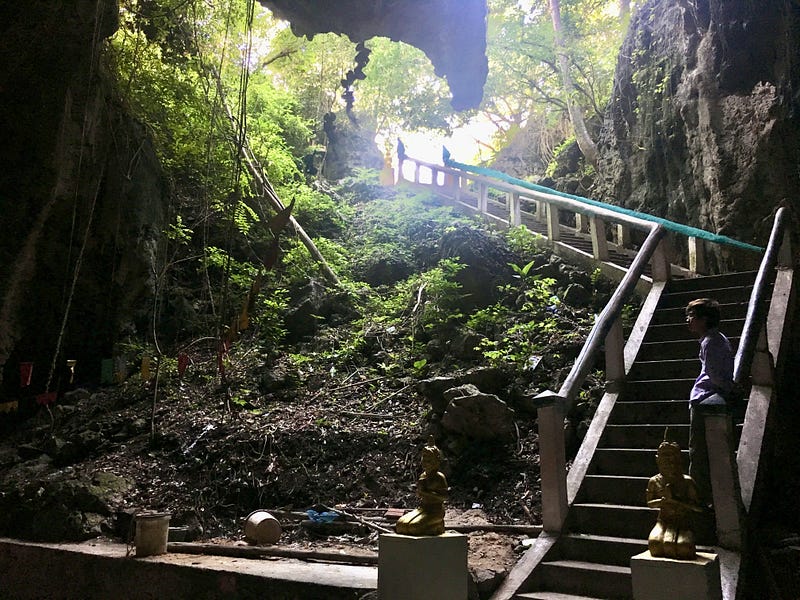
As I stood atop the mountain at Phnom Sampeau, overlooking the serene landscape (see photo at the top of this section), it was almost inconceivable that such horrific acts occurred in such a beautiful location.
Despite the horror, these places have a vital role in Cambodia’s narrative, and indeed, in world history. They serve as profound reminders of the depths to which humanity can sink under the influence of destructive ideology.
They encourage us to confront our history, however painful it may be, and to use this understanding as a catalyst for change, fostering peace, tolerance, and respect for human rights.
These sites are not just about remembering the victims; they are about ensuring that their suffering leads to a determination to prevent such atrocities from happening again.
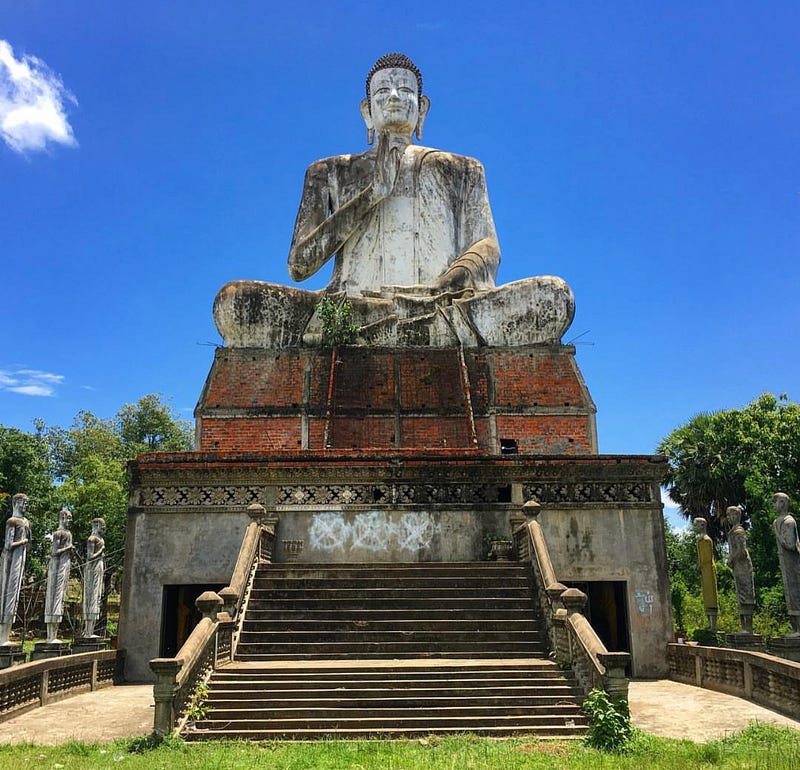
Revelling in the Present: The Vibrant Cambodia of Today
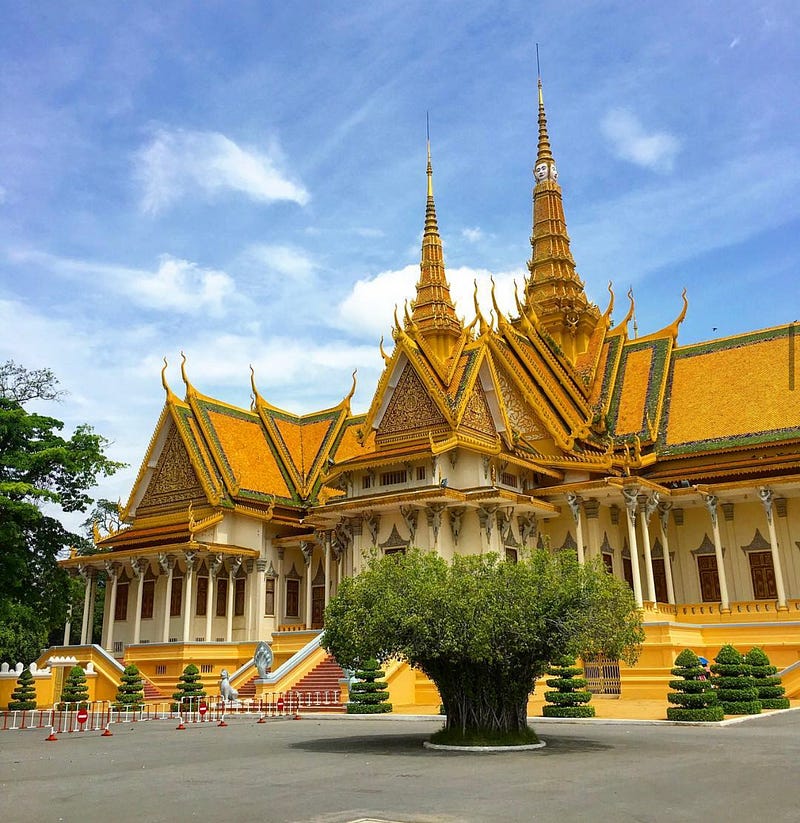
Emerging from the shadow of its poignant past, Phnom Penh is a city that pulsates with life, vigour, and vibrancy.
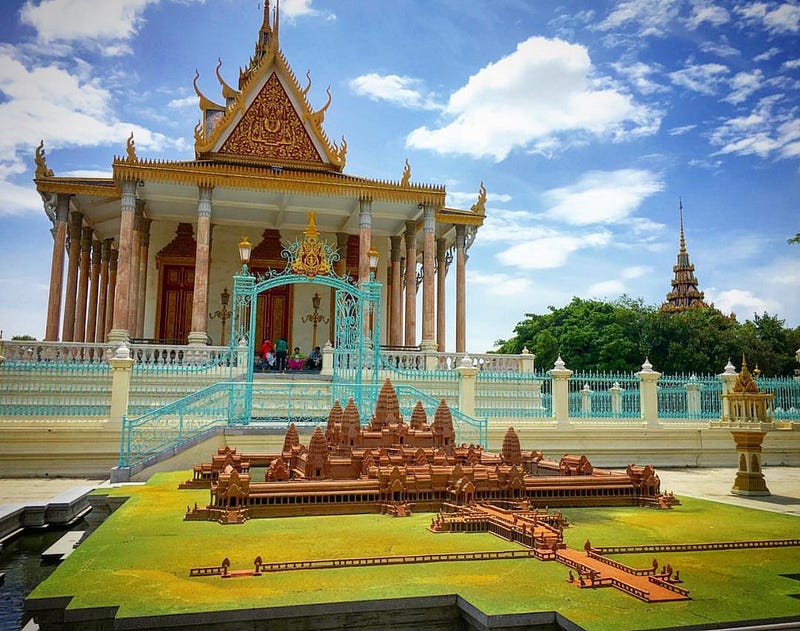
This resilience is beautifully encapsulated in the majestic Royal Palace and the enchanting Silver Pagoda, landmarks that reflect the city’s cultural richness and architectural grandeur.
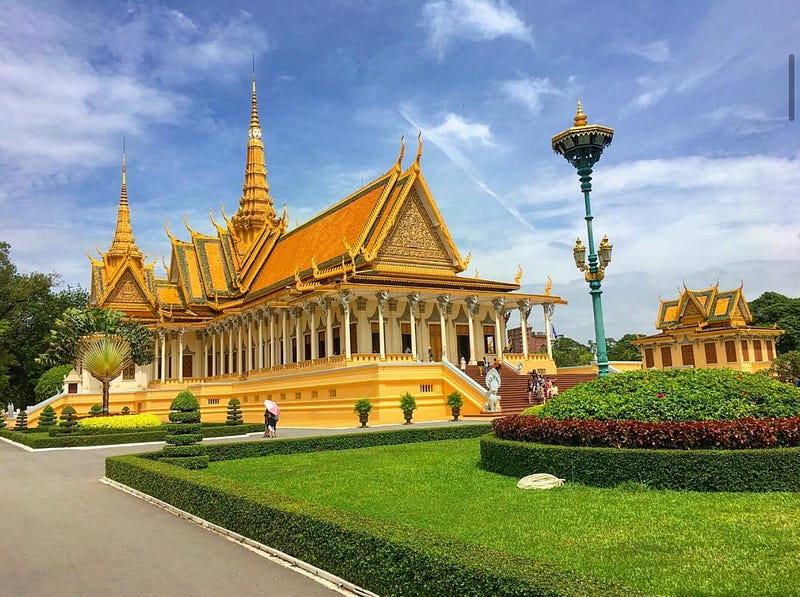
Standing grandly along the city’s riverfront, the Royal Palace has been the residence of the Kings of Cambodia since the 1860s, with a brief period of abandonment during the Khmer Rouge era.
The Palace complex is a stunning spectacle of Khmer architectural craftsmanship, with its ornate golden spires, distinctive multi-tiered roofs, and intricate carvings.
Adjacent to the Palace, the Silver Pagoda, or Wat Preah Keo, is renowned for its floor made up of over 5,000 silver tiles and its remarkable collection of Buddha statues, including the Emerald Buddha, made of Baccarat crystal, and a life-sized gold Maitreya Buddha adorned with over 2,000 diamonds.
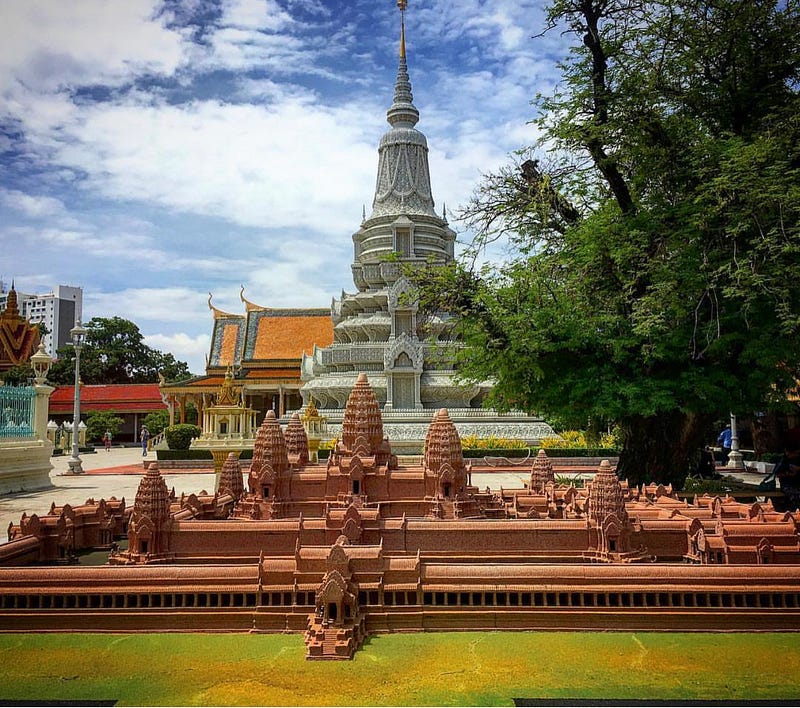
Visiting these landmarks was truly a feast for the senses. As I entered the Royal Palace compound, I was instantly awestruck by the grandeur of the Throne Hall and the beautifully manicured gardens.
The frescoes depicting scenes from the Reamker, the Khmer version of the Ramayana, were captivating, narrating tales of mythology and royal history.
Walking into the Silver Pagoda was another mesmerising experience. The glinting silver floor, the ornate statues, and the serene ambiance created an environment that felt both deeply spiritual and immensely beautiful.
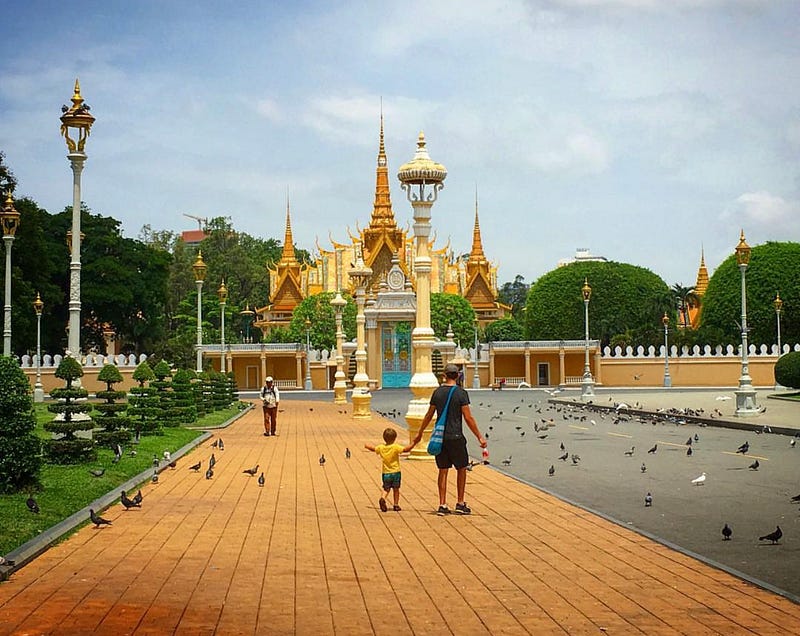
Despite the bustling city outside, there was an undeniable sense of peace and tranquility within these sacred walls.
These locations are more than just magnificent landmarks; they are a celebration of Cambodian culture, history, and spirituality, providing a fascinating insight into the country’s royal heritage.
My visit to these magnificent monuments was a highlight of my journey through Cambodia.
It was a poignant reminder of how the country, while acknowledging and remembering its somber past, is also preserving and celebrating its rich cultural heritage.
The Alluring River Front in Phnom Penh
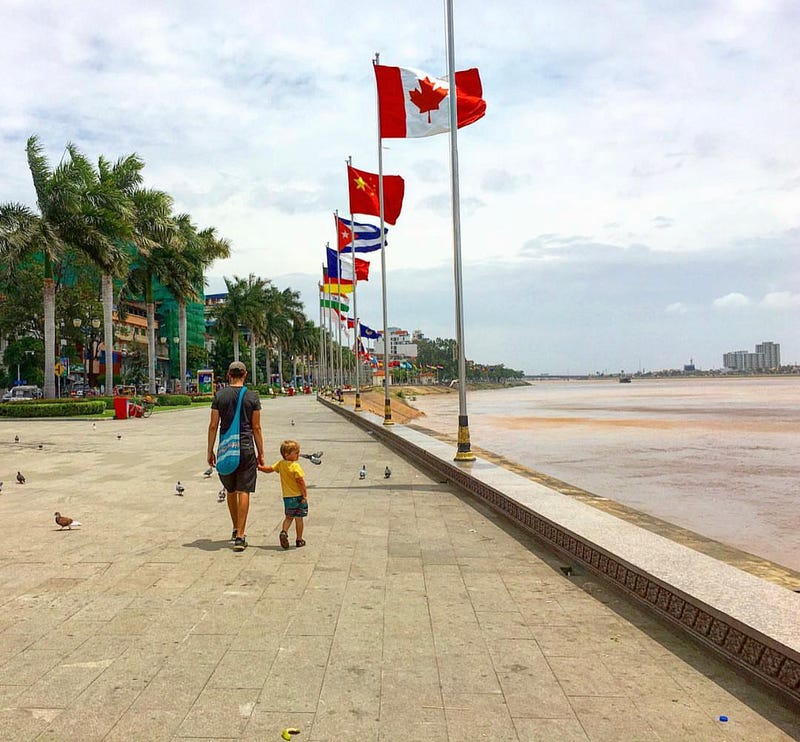
Another shining gem in the heart of Phnom Penh is its beautiful riverfront — a bustling esplanade that runs along the junction of the Tonle Sap, Mekong, and Bassac rivers.
Known as Sisowath Quay, this lively strip is a testament to the city’s transformation and its embrace of modernity, without losing sight of its cultural heritage.
The riverfront is a hive of activity, with an eclectic mix of attractions that range from ornate temples and traditional markets to contemporary art galleries and chic boutiques.
Dotted with a plethora of restaurants, bars, and street food vendors, it’s a gastronomic haven offering an array of cuisines that tease and please the palate.
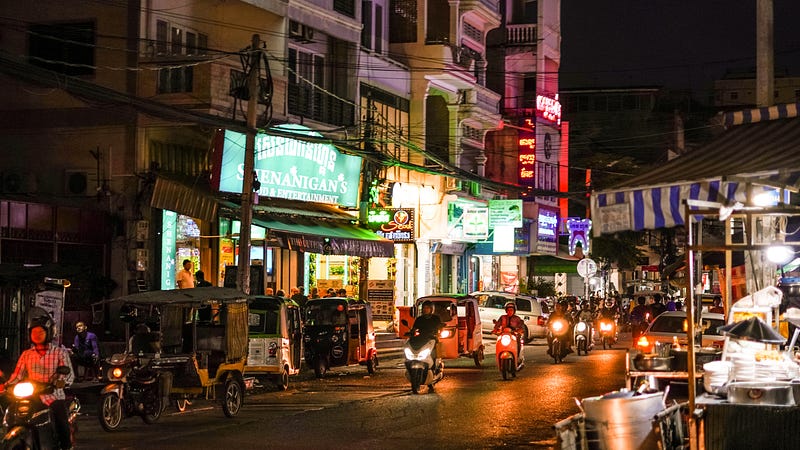
For those seeking a taste of Cambodian culture, the lively weekend night markets and frequent cultural performances provide a fascinating glimpse into the country’s traditions.
Visiting the riverfront was a delightful experience. As I strolled along the promenade, I was greeted by a vibrant and friendly ambiance.
Locals practicing Tai Chi in the early morning, children flying kites in the afternoon breeze, street performers adding a dash of color and music to the evenings — the riverfront was alive and pulsating with energy.
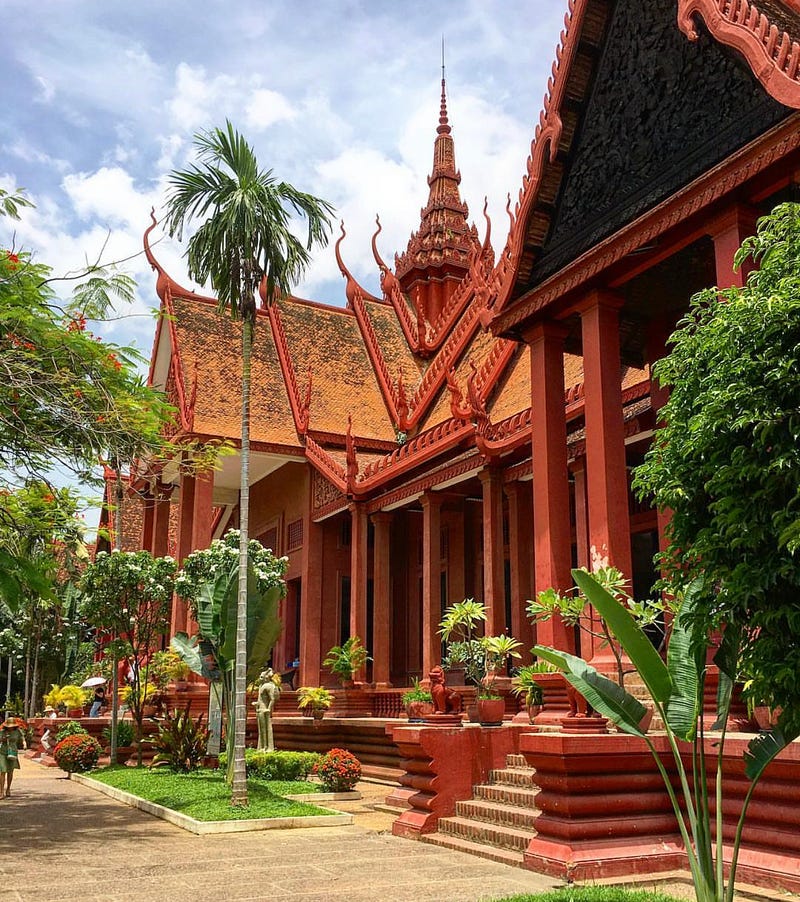
The real charm of the riverfront, however, is its ability to blend the old and the new seamlessly. While on one hand, it showcases the city’s growing cosmopolitan spirit, on the other, it maintains a deep-rooted connection to its past.
From the elegant French colonial buildings reminding us of the bygone era to the tranquil Wat Ounalom, representing Cambodia’s spiritual core, the riverfront is a captivating synthesis of contrasts.
Stepping Back in Time: The Old Foreign Correspondents’ Club
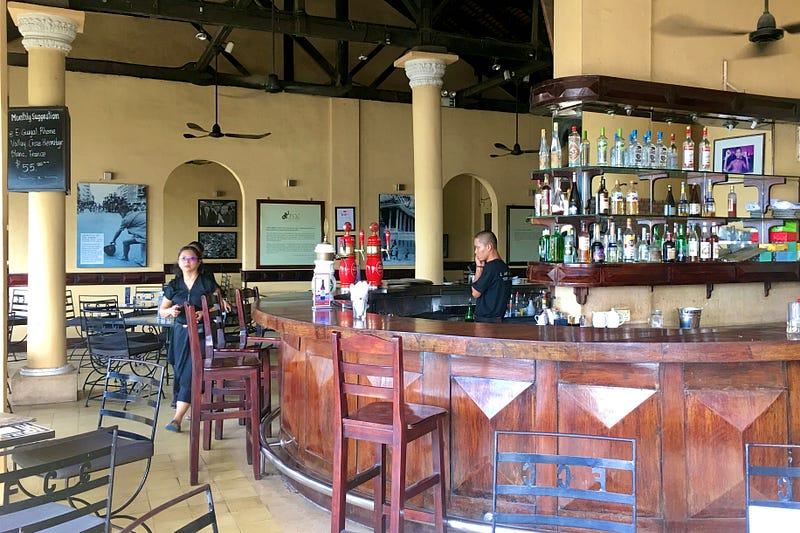
Situated in the heart of Phnom Penh, overlooking the central river, is the iconic Foreign Correspondents’ Club, which presents a captivating portal into Cambodia’s historical saga; retaining the charm of its formative years in the 1990s, when it functioned as a hub for journalists, diplomats, and humanitarian workers amidst the nation’s tumultuous evolution,
It was within its walls that some of history’s most courageous correspondents congregated, sharing accounts and risking their lives to illuminate the harsh realities of Cambodia to the wider world.
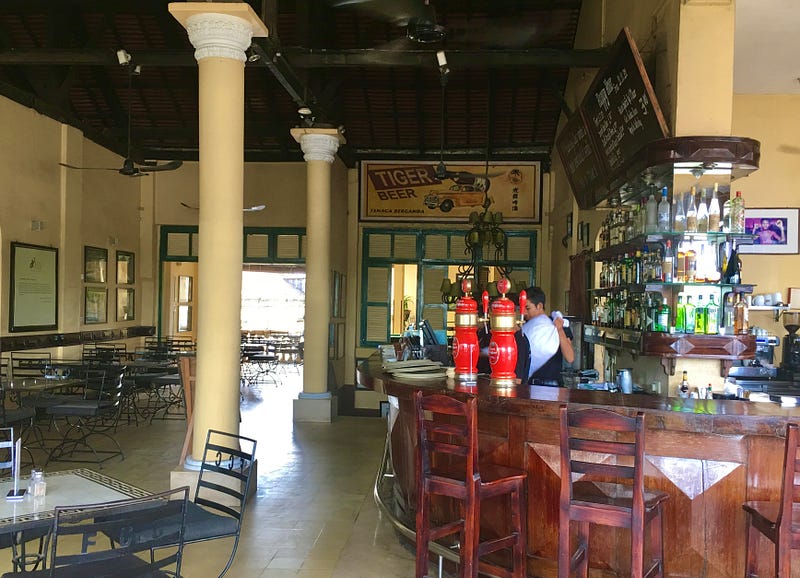
The establishment has borne witness to countless political and societal upheavals, positioning it as a compelling chronicle of the country’s history.
The club’s unique appeal lies not solely in its historical relevance though, but also in the ambience it has meticulously preserved over the years. With its classic wooden interiors, dimmed lighting, vintage photographs, and antique furnishings, the atmosphere is steeped in a deep sense of nostalgia.
It also offers a wide selection of drinks, including authentic Cambodian cocktails, and an extensive menu to suit diverse culinary preferences.
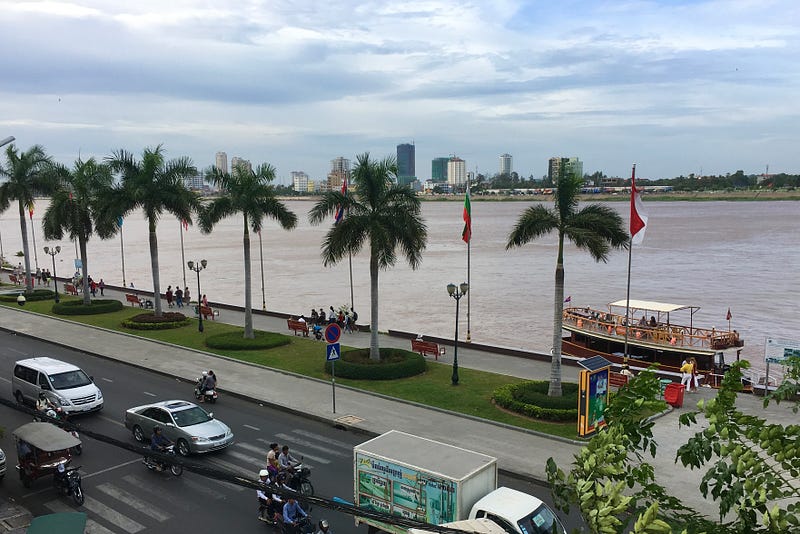
As I reclined on the open terrace, absorbing the panoramic view of the teeming river and city life, I could almost discern the ghostly echo of typewriter keys and hushed conversations of those intrepid reporters from another era.
Despite its historical roots, the club is also distinctly contemporary, resonating with the vitality of the present through its buzzing atmosphere and modern gastronomic delights.
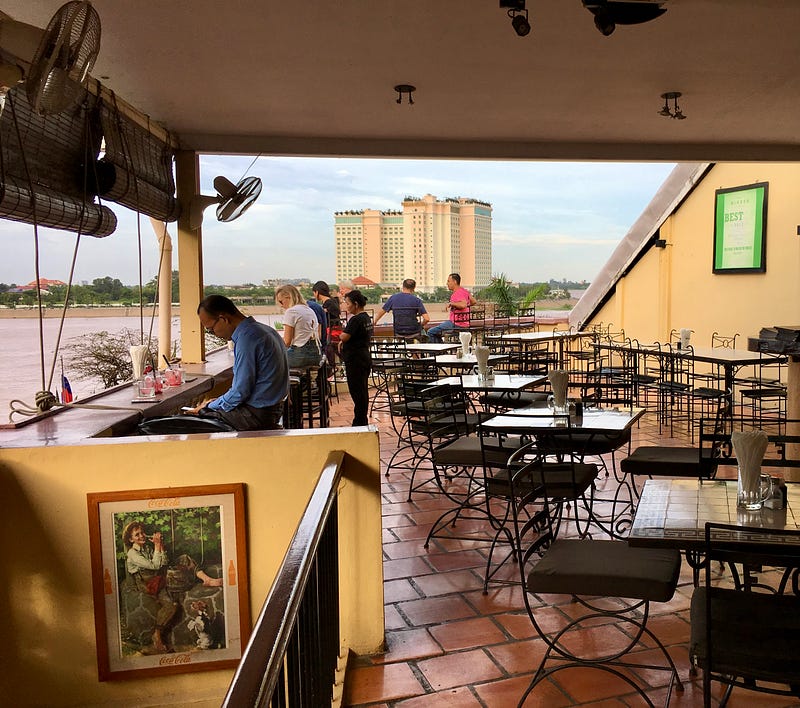
Its profound heritage, immersive atmosphere, and unparalleled river views make it a must-visit landmark — to step into the Foreign Correspondents Club is to step into a time capsule; a place that beautifully juxtaposes a preserved slice of Cambodia’s intricate past with a window into its bustling present.
Battambang Bamboo Train: A Unique Cambodian Adventure
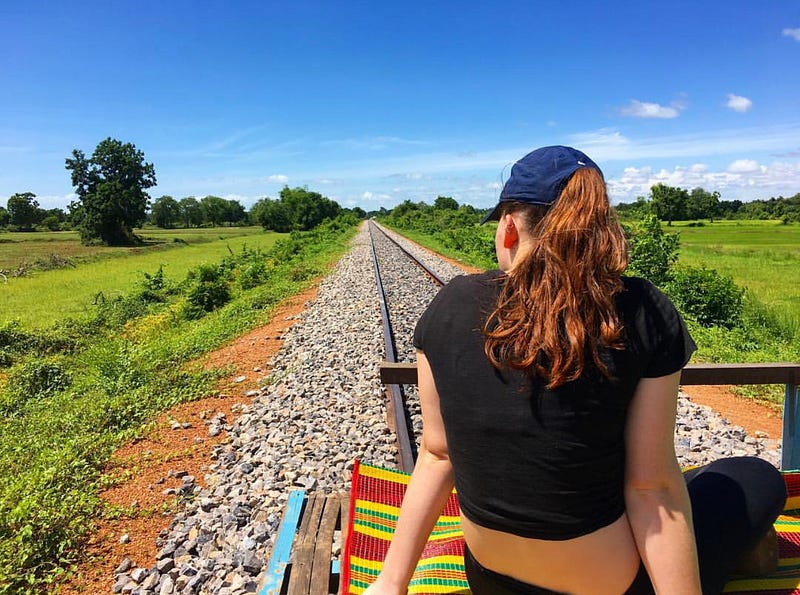
When it comes to unique travel experiences, the famed Battambang Bamboo Train stands out distinctly. This improvised rail vehicle, which once served as an essential mode of transport for locals, is now a popular attraction that offers an authentic slice of Cambodian rural life.
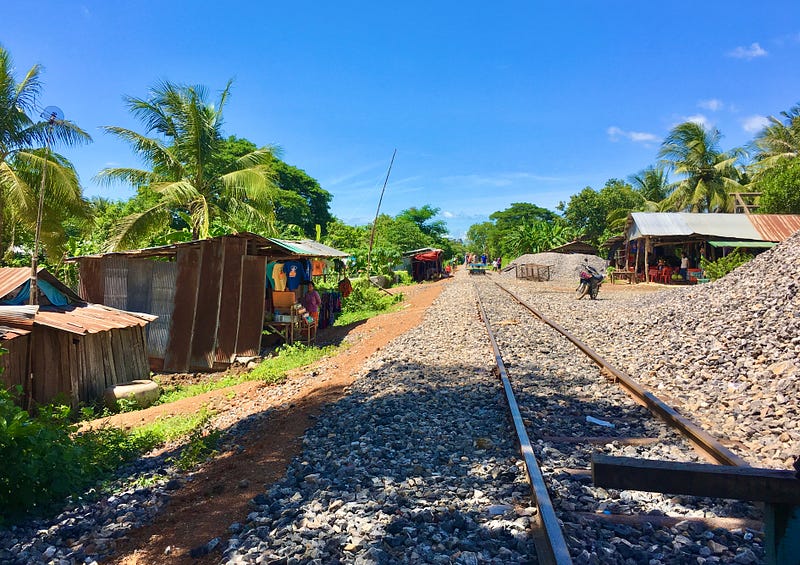
The Bamboo Train consists of a simple bamboo platform, about 3 by 4 meters, resting on two sets of wheels, powered by a small motor. It chugs along warped, misaligned tracks at surprisingly swift speeds, offering an adventurous and fun-filled ride through the scenic countryside.
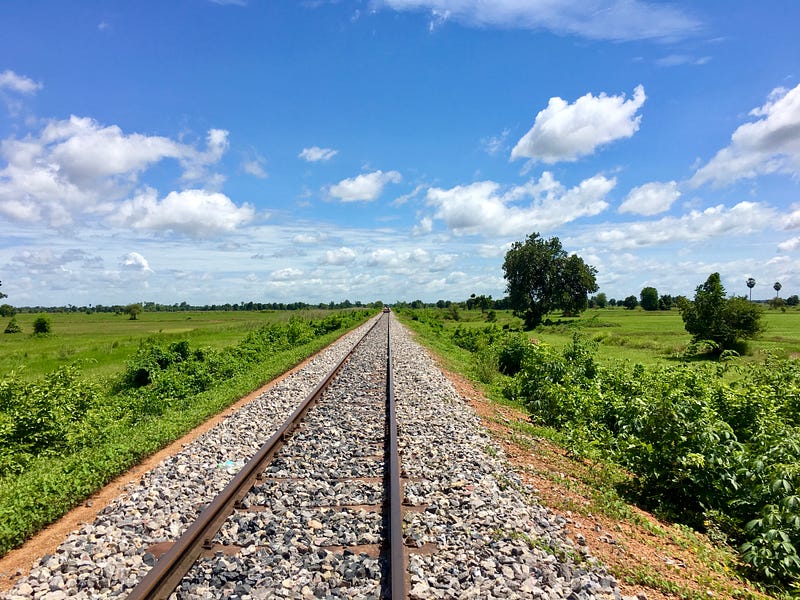
The ride is not just about the thrill, but also about soaking in the tranquil beauty of Battambang. As the bamboo platform rumbled along the tracks, I was treated to a panoramic view of verdant rice fields, local villages, and serene landscapes, with the occasional interruption of friendly waving children.
What makes this experience unique is its delightful simplicity and resourcefulness. The train can be easily disassembled and reassembled, allowing for an efficient method to navigate the single-track railway.
When two trains meet, the one with the lighter load is swiftly disassembled to let the other pass, a spectacle that brings alive the ingeniousness of this transportation system.
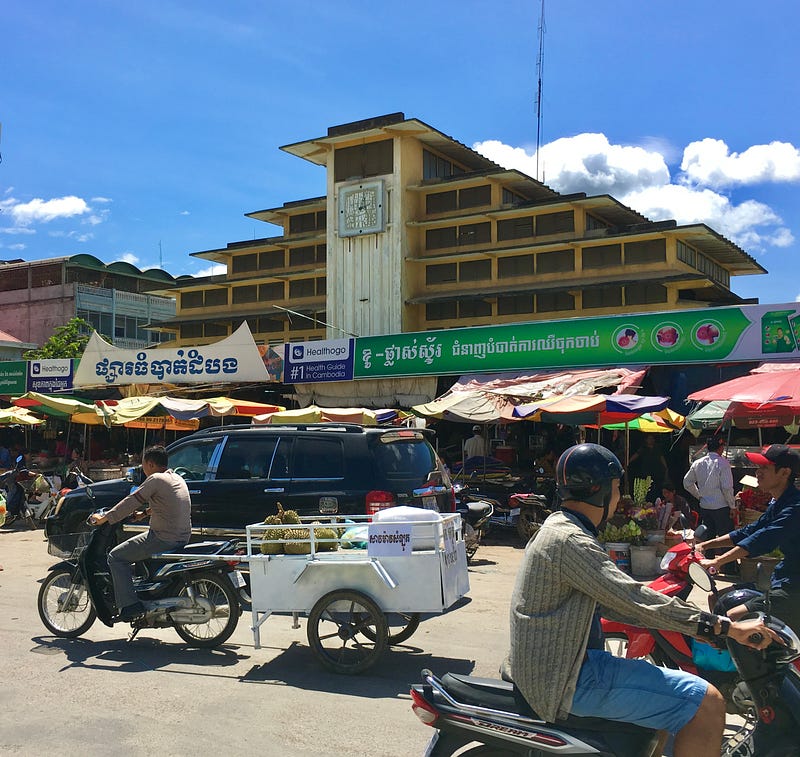
Battambang’s Bamboo Train was a stark contrast to the frenetic pace of city life and served as a beautiful reminder of Cambodia’s rustic charm and ingenious spirit.
This quirky, yet endearing ride is also a testament to Cambodia’s resilience, adaptability, and innovation.
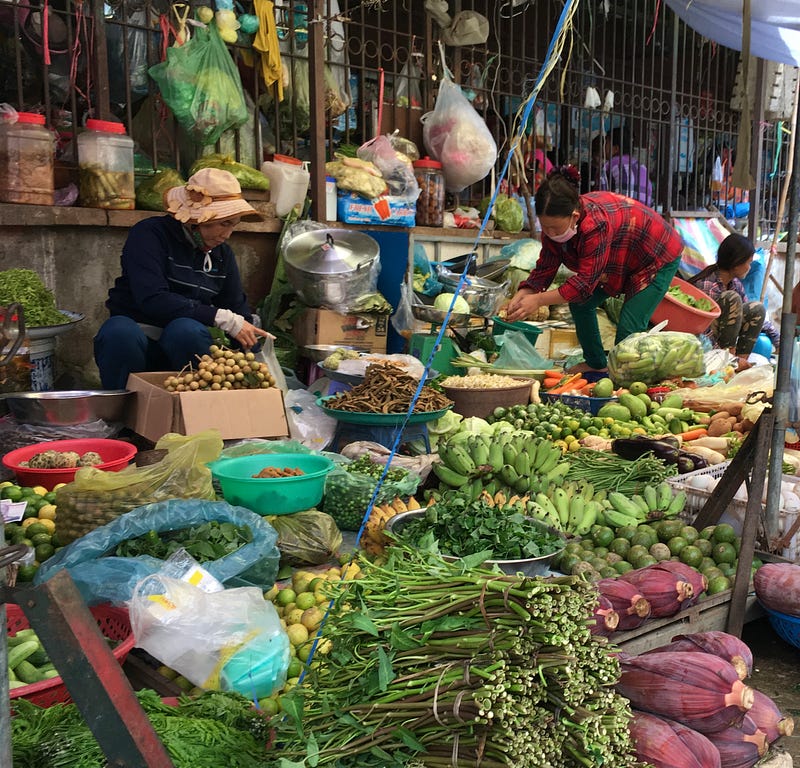
Cambodia is a country that tells a compelling story of resilience and rejuvenation. Its gritty past and glorious present offer contrasting narratives that are both humbling and inspiring.
From the haunting silence of the Tuol Sleng Genocide Museum and the chilling remnants of the Killing Fields to the vibrant energy of Phnom Penh’s riverfront and the nostalgic charm of the Foreign Correspondents’ Club, each corner of Cambodia narrates a unique chapter of its complex history and promising future.
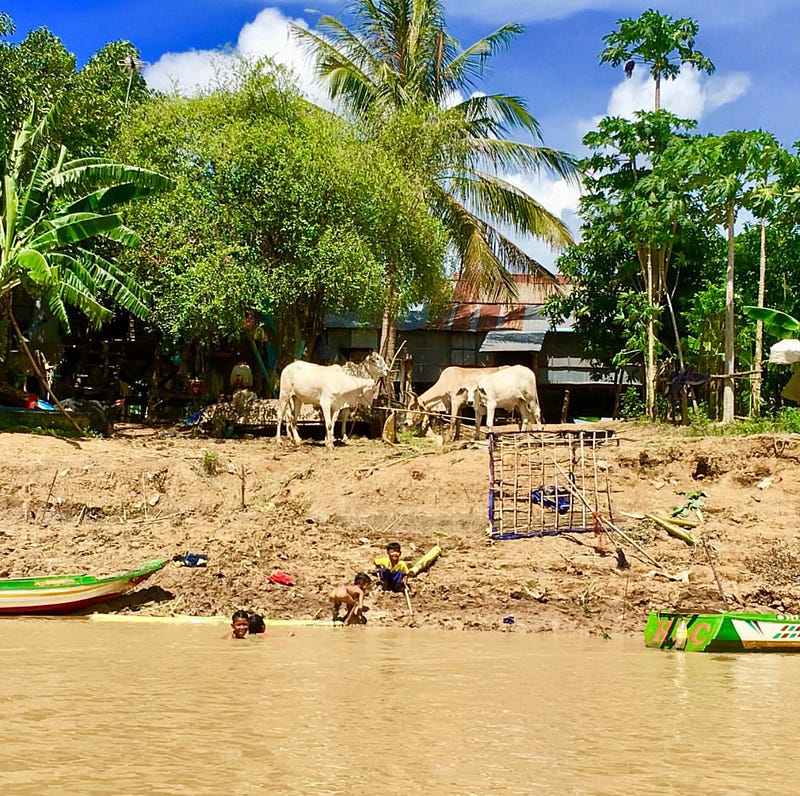
As I journeyed through Cambodia, it felt as if I was leafing through the pages of a living history book. Each site, each experience, etched a deeper understanding of Cambodia’s multifaceted identity.
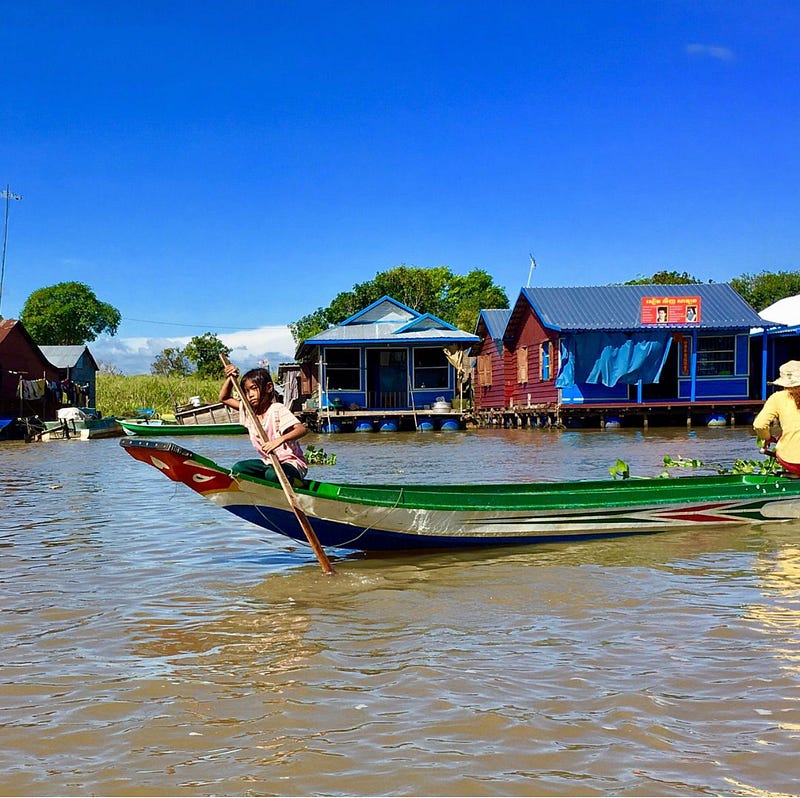
The strength and spirit of the people, their triumphant transformation from a tragic past to a thriving present, left an indelible impression on me.
For the intrepid traveler seeking to immerse themselves in a nation’s story beyond the surface, Cambodia offers a rich tapestry of experiences.