
A Journey of Enchantment: Discovering Angkor Wat and Its Neighbouring Temples
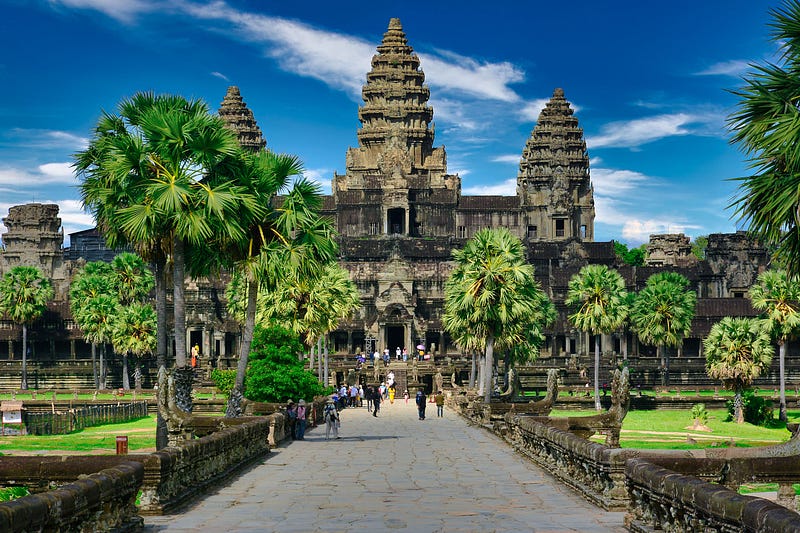
The sprawling temple complex of Angkor Wat, with its majestic scale and architectural brilliance, has long captivated my imagination.
As the largest religious monument in the world, it stands as a testament to the creativity and dedication of the Khmer Empire.
Designated a UNESCO World Heritage site in 1992, its name “Angkor Wat” translates as “City of Temples” in Khmer — the official language of Cambodia, where it is located, near the small (relatively) modern city of Siem Reap.
Originally constructed as a Hindu temple dedicated to the god Vishnu during the reign of King Suryavarman II in the early 12th century, it was then gradually transformed into a Buddhist temple towards the end of the 12th century
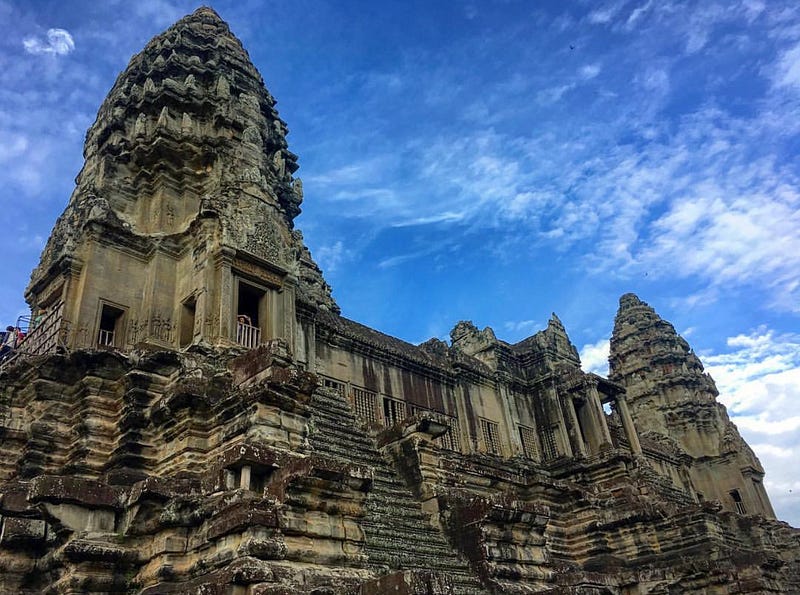
From the moment I laid eyes on Angkor Wat, I was struck by its awe-inspiring scale.
The temple complex features a series of concentric rectangular galleries rising to a central tower, surrounded by a wide moat, with the layout symbolising the Hindu cosmology, and representing the mythical Mount Meru: the centre of the universe in Hindu and Buddhist cosmology.
Angkor Wat is also adorned with extensive bas-reliefs and sculptures, which depict a variety of scenes from Hindu mythology, including the Ramayana and Mahabharata epics, as well as historical events and everyday life in the Angkorian period.
The bas-reliefs also include images of Apsaras (celestial nymphs) and Devatas (guardian spirits), with their intricate details and expressions showcasing the skill of Khmer artists.
I could not help but marvel at the dedication and skill of the thousands of artisans and labourers who clearly toiled tirelessly to create such a masterpiece.
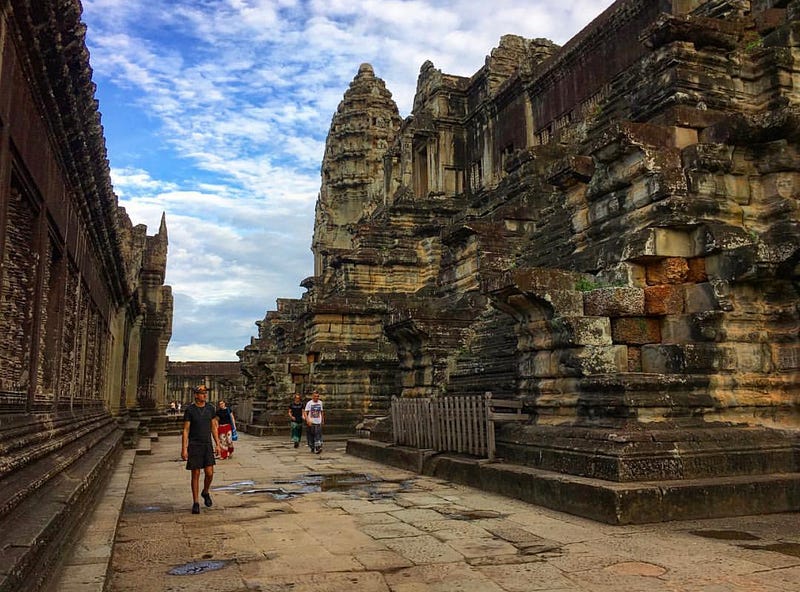
While efforts have been made to preserve and restore Angkor Wat, the site faces challenges from environmental factors, including water damage, erosion, and vegetation growth, as well as human-induced problems like looting and vandalism.
Various organisations, including UNESCO and the Cambodian government, are working together to address these issues and ensure the long-term preservation of this extraordinary heritage site.
Angkor Wat also holds great cultural, religious, and symbolic significance for Cambodia — it is a source of national pride and is featured on the Cambodian national flag and on their currency.
It also attracts millions of tourists annually, making it a major tourist destination and contributing to the country’s economy.
Diversity and Intrigue of Surrounding Temples
While Angkor Wat is undoubtedly the crown jewel of the Angkor temple complex, it is merely the beginning of a fascinating journey through the diverse and captivating temples that surround it.
Beyond Angkor Wat’s imposing walls also lies a treasure trove of diverse and equally fascinating temples, each offering a unique glimpse into Cambodia’s rich history and culture.
There are actually thousands of ancient temples and other archeological sites across Cambodia.
The Angkor Archaeological Park, where Angkor Wat sits, is itself around 400 square kilometres in size, and contains the magnificent remains of a number of different capitals of the Khmer Empire, beginning in the 9th century, through to the 15th century.
In the ancient walled city of Angkor Thom, next to Angkor Wat, is a personal favourite of mine: Bayon (or as our family nicknamed it, “crazy Bayon”, for the hundreds of heads that make up the temple at every turn).
Not far from this are also the impressive temples of Ta Prohm (jungle temple!), and Preah Khan.
A little further a field are then also a few other favourites of mine, including Banteay Srei, Beng Mealea (another fabulous jungle temple about an hour’s tuktuk drive from Siem Reap) and Koh Ker (Cambodia’s own pyramid temple).
Let me introduce you to each! (Just note that Cambodia has many many more wonderful ancient sites beyond those mentioned here too).
Bayon
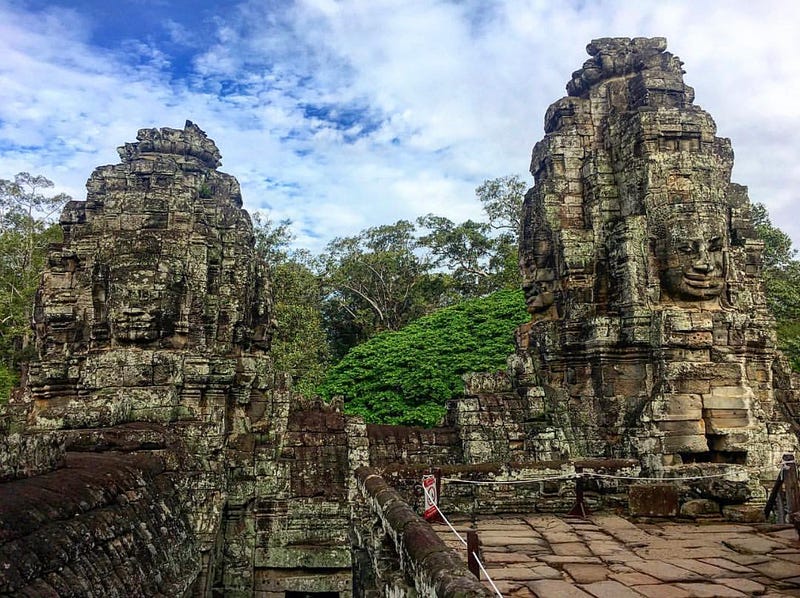
Located at the heart of the ancient city of Angkor Thom (which served as the last and most enduring capital of the Khmer Empire), Bayon is a mesmerising temple known for its giant stone faces.
Built in the late 12th century or early 13th century, under the reign of King Jayavarman VII, Bayon was designed as the state temple and the centre of his massive building program.
Bayon’s architecture is characterised by a unique combination of styles, reflecting the transition from Hinduism to Mahayana Buddhism during Jayavarman VII’s reign.
The temple consists of a series of interconnected galleries and terraces, culminating in a central sanctuary.
Bayon’s most striking feature is the 54 towers though, each adorned with four colossal stone faces, which are believed to represent the compassionate gaze of the bodhisattva Avalokiteshvara or the likeness of Jayavarman VII himself.
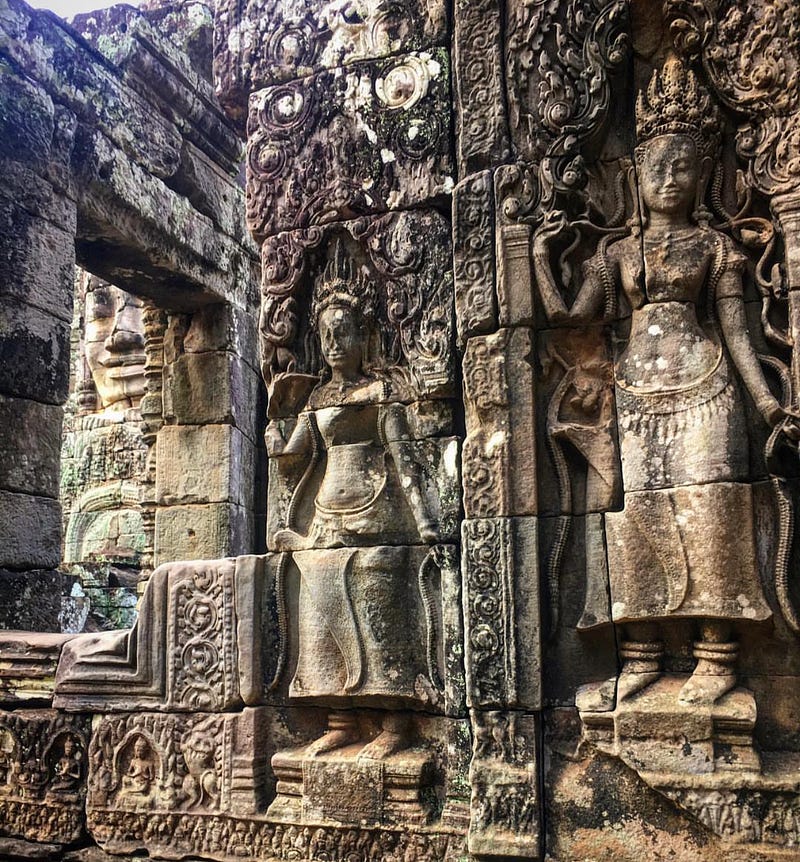
Bayon is also famous for its extensive bas-reliefs, which depict a variety of scenes from both religious mythology and historical events.
These carvings provide valuable insights into the everyday life of the Khmer people during the Angkorian period, showcasing their customs, clothing, and interactions with neighbouring civilisations.
The bas-reliefs also portray several military engagements, including naval battles and scenes of the Khmer army on the march, highlighting the empire’s military prowess.
Like other temples in the Angkor complex, Bayon has faced challenges from natural forces, such as vegetation growth, erosion, and water damage.
Efforts have been made to preserve and restore the temple, with various organisations and governments contributing to its conservation.
Ta Prohm
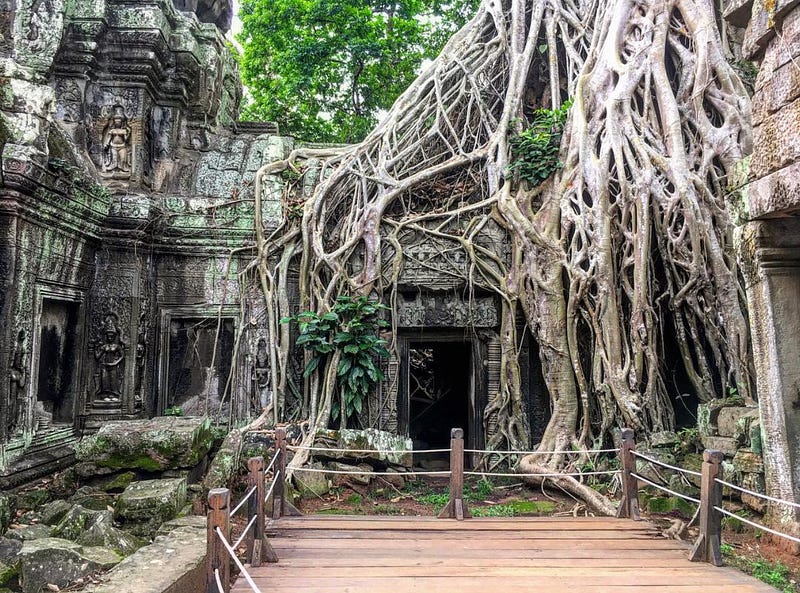
Ta Prohm is a captivating temple, again within the Angkor Archaeological Park, and located not far from Angkor Wat and Angkor Thom.
Towering trees with massive roots have grown over the temple walls and buildings, creating a unique blend of architecture and nature.
This distinctive blend creates an ethereal ambiance, evoking a sense of mystery and wonder as you explore it.
It was built during the late 12th and early 13th centuries by King Jayavarman VII as a Mahayana Buddhist monastery and university.
Originally known as Rajavihara (“royal monastery”), the temple was dedicated to the king’s family, particularly his mother, and is believed to have housed more than 12,000 people, including monks, laymen, and support staff.
The temple complex layout is relatively flat and spread out, with many interconnected courtyards and sanctuaries, and features a typical Khmer design, with a series of concentric enclosures connected by galleries and gopuras (entrance towers).
The temple’s architecture includes both sandstone and laterite, a porous, iron-rich rock used for the outer walls and enclosures.
Many of the walls are adorned with bas-reliefs and inscriptions, although they are not as extensive or detailed as those found at Angkor Wat or Bayon.
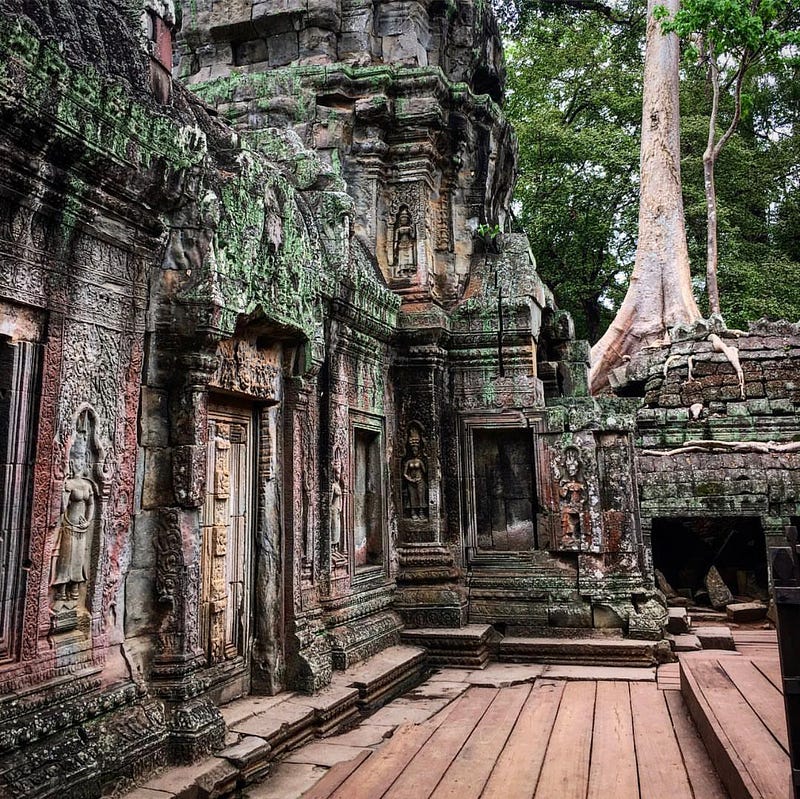
Ta Prohm’s unique appeal, with its overgrown trees and crumbling structures, has led to a conservation approach called “the art of controlled neglect.”
This approach seeks to maintain the temple’s delicate balance with nature, preserving its distinctive atmosphere while ensuring structural stability and safety.
In the 1990s, a project led by the Archaeological Survey of India (ASI) was initiated to stabilize the structures, clear some of the vegetation, and install wooden supports where needed.
The ASI’s ongoing work involves carefully monitoring and maintaining the site to prevent further deterioration while respecting its enchanting, natural state.
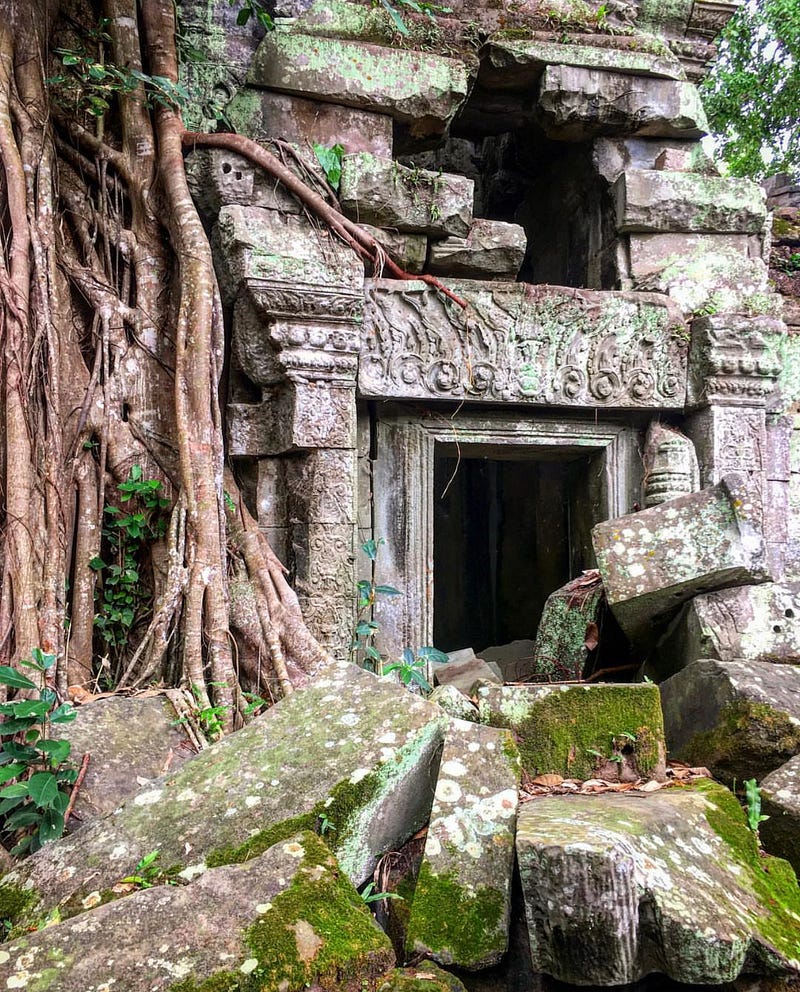
Ta Prohm’s mysterious beauty has made it a popular tourist destination, as well as a filming location for movies such as the 2001 film “Lara Croft: Tomb Raider.”
Its fame has also contributed to raising awareness about the importance of preserving and protecting Cambodia’s cultural heritage.
Preah Khan
Preah Khan, which translates to “Holy Sword” in Khmer, is another large temple complex, again within the Angkor Archaeological Park.
Constructed in the late 12th century by King Jayavarman VII, this sprawling temple complex once served as a Buddhist monastery and learning centre, as well as a temporary royal residence while the king’s new capital city, Angkor Thom, was being built.
Its impressive architecture and extensive carvings, along with the numerous trees and vegetation that have grown among the ruins, again create a sense of mystery.
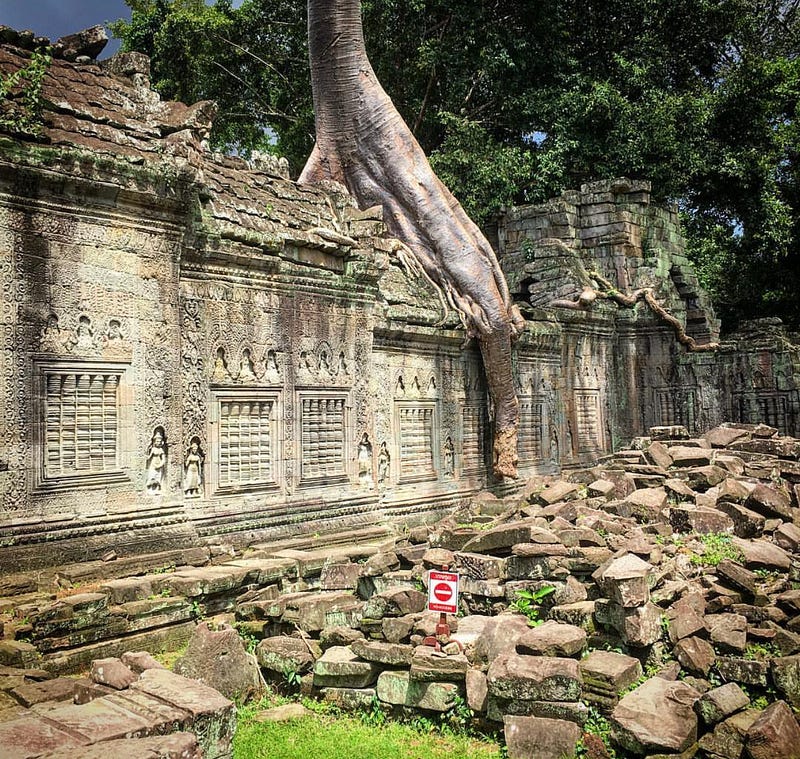
Preah Khan was built on the site of Jayavarman VII’s victory over the invading Chams, which is believed to be the inspiration for the temple’s name.
The temple was dedicated to the king’s father and originally housed a significant collection of sacred statues and relics.
In addition to its religious functions, Preah Khan was also an important centre for learning, with over a thousand teachers recorded as having lived within its walls.
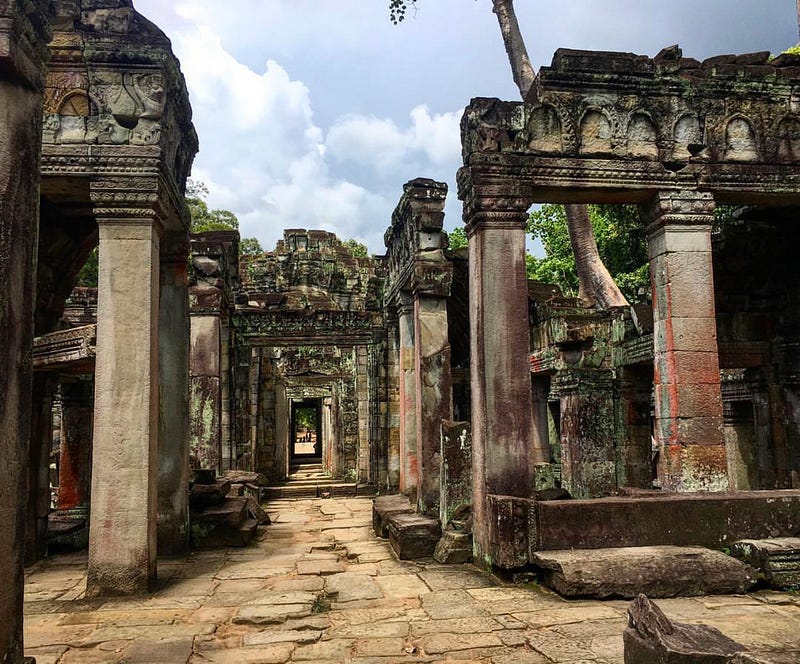
Preah Khan’s layout is characterized by a series of concentric rectangular enclosures, with the central sanctuary surrounded by four smaller sanctuaries at the corners.
It is constructed primarily from laterite and sandstone, featuring intricately carved pediments, lintels, and devatas (guardian spirits).
A significant feature of Preah Khan is the presence of numerous garudas, mythical half-human, half-bird creatures that adorn the outer walls of the temple.
One of the temple’s most distinctive elements is its cruciform central corridor, adorned with decorative stone reliefs and impressive carvings.
The corridors and galleries are adorned with bas-reliefs depicting scenes from Hindu mythology and the life of the Buddha, as well as inscriptions detailing the temple’s history and functions.
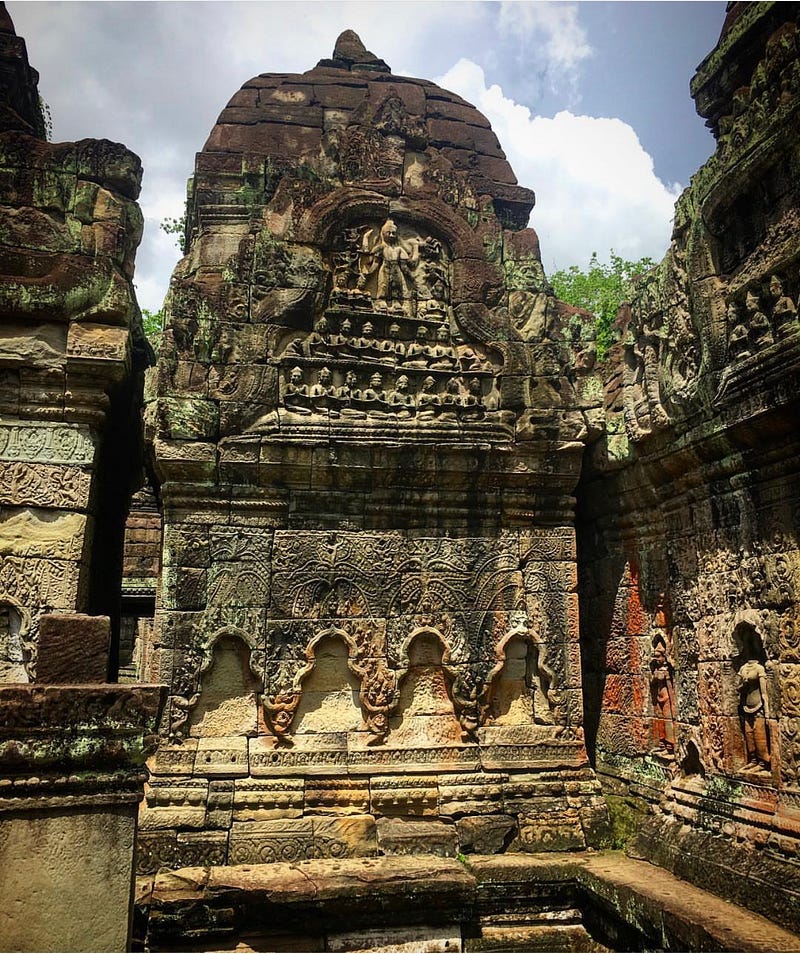
The temple’s vast, labyrinthine corridors and galleries offer a captivating experience, while the intricate carvings and bas-reliefs provide insight into the artistry of the Khmer civilisation.
Restoration work has focused on stabilising the structures, clearing encroaching vegetation, and preserving the site’s delicate bas-reliefs and carvings.
Banteay Srei
Often referred to as the “jewel of Khmer art,” Banteay Srei is a smaller temple complex carved from red sandstone and boasting some of the finest and most intricate carvings in the Angkor region, depicting scenes from Hindu mythology and delicate floral patterns.
Also known as the “Citadel of Women” or “Citadel of Beauty,” it is a small but exquisite temple located about 25 kilometers (15.5 miles) northeast of the main group of temples in the Angkor Archaeological Park.
It was built in the 10th century, during the reign of King Rajendravarman II, and is dedicated to the Hindu god Shiva.
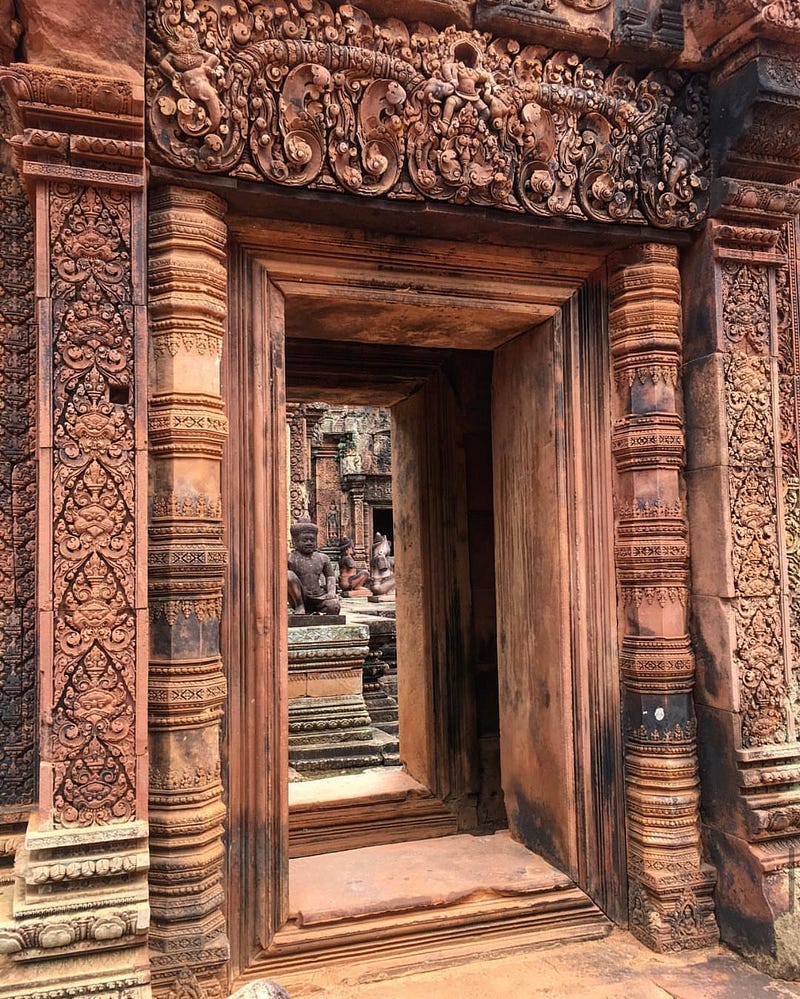
Banteay Srei is renowned for its exceptional carvings and the red sandstone used in its construction, which lends a warm, pinkish hue to the temple.
Its design consists of a series of concentric enclosures, each adorned with an elegant gopura (entrance tower) and separated by a moat.
The temple’s layout is symmetrical, with three main towers in the central sanctuary, dedicated to Shiva and the deities Vishnu and Brahma.
The temple is then surrounded by intricately carved libraries, offering spaces for storing sacred texts and scriptures.
It’s fame and charm primarily lie in its exceptionally detailed and well-preserved carvings, which are considered some of the finest in the entire Angkor region — it is considered a masterpiece of Khmer art and architecture.
The red sandstone used for the temple’s construction has allowed for intricate and delicate carvings, featuring scenes from Hindu mythology, such as the Ramayana and the life of Lord Krishna.
The temple also showcases a variety of decorative elements, including floral patterns, lintels, pediments, and pilasters, all of which contribute to its striking beauty and elegance.
“Rediscovered” in 1914 by French archaeologists, Banteay Srei has since undergone several restoration projects; initially using a technique called anastylosis, where the original stones are dismantled, cleaned, and reassembled, and with further restoration and preservation work then since carried out over the years to maintain the temple’s integrity and beauty.
Beng Mealea
Beng Mealea, which translates to “lotus pond” in Khmer, is a sprawling temple complex located about 40 kilometers (25 miles) east of the main Angkor Archaeological Park.
Believed to have been built in the early 12th century during the reign of King Suryavarman II, the same ruler responsible for Angkor Wat, Beng Mealea was once an important temple on the ancient royal highway that connected Angkor to the Preah Khan temple complex in Preah Vihear Province.
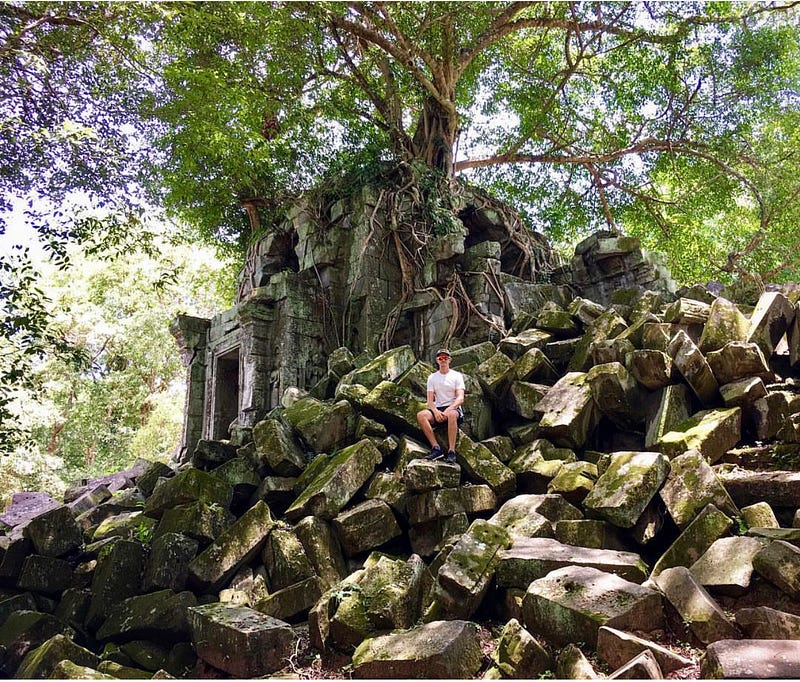
We found this temple particularly fascinating for its sheer size and the way in which the jungle has literally taken over this vast complex, with huge trees and vines growing throughout it.
Collapsed walls, scattered stones, and crumbling structures create an atmospheric, labyrinthine landscape that evokes a sense of mystery and adventure — very Indiana Jones reminiscent.
It covers an extensive area, with its layout and architectural style bearing similarities to Angkor Wat.
However, the temple’s precise history and original purpose remain uncertain due to the lack of inscriptions or historical records.
The complex consists of three concentric enclosures, libraries, a moat, and a central sanctuary.
Built primarily from sandstone, Beng Mealea also features elaborate carvings, including lintels, pediments, and devatas (guardian spirits).
For many years, Beng Mealea was relatively inaccessible due to its remote location and the presence of landmines from Cambodia’s civil conflict (read here about the genocide that occurred under the Khymer Rouge in the 1970s).
With the clearance of landmines and improvements in infrastructure, the site has become more accessible to visitors.
However, conservation and restoration efforts at Beng Mealea have been minimal compared to other temples in the Angkor complex.
The temple’s current state of “controlled decay” has been maintained to preserve its unique, overgrown ambiance.
Koh Ker
Koh Ker is where we find Cambodia’s pyramid temple — at an ancient, remote archaeological site located approximately 120 kilometers (75 miles) northeast of Siem Reap, Cambodia.
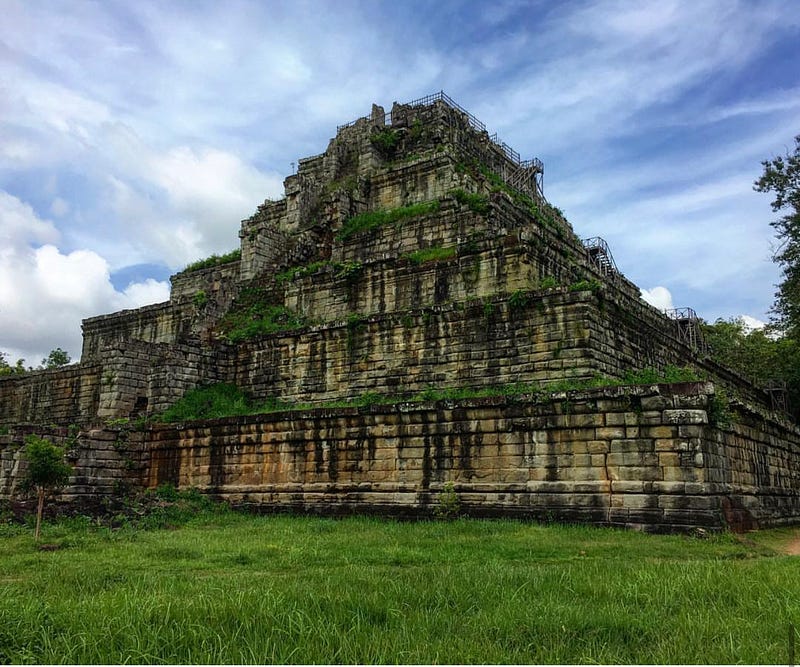
Koh Ker served as the capital of the Khmer Empire under the reign of King Jayavarman IV from 928 to 944 AD, before the capital was moved back to Angkor.
The site boasts a variety of temples and monuments that reflect the architectural style of the 10th century, offering a unique window into the history of the Khmer Empire.
Characterised by a linear plan, with monuments spread over an area of approximately 81 square kilometers, the main temple complex is surrounded by a moat and features a large, seven-tiered pyramid called Prasat Thom, which is the most prominent structure at Koh Ker.
Prasat Thom reaches a height of about 36 meters (118 feet), making it one of the tallest monuments in the region.
The pyramid is thought to have been a funerary temple dedicated to King Jayavarman IV and his family.
Again, due to its remote location and the presence of landmines from Cambodia’s civil conflict, Koh Ker remained relatively inaccessible and unknown to the wider world until recent years.
With the clearance of landmines and improvements in infrastructure, the site has become more accessible to visitors.
However, the remoteness of Koh Ker has also helped to preserve the site from the impacts of mass tourism, providing an off-the-beaten-path experience for those who venture to explore it.
We were the only ones there when we visited a few years ago and loved its isolated feel — you can literally feel the history all around you.
In recent years, efforts have been made to protect and conserve Koh Ker, with the involvement of international organisations and the Cambodian government.
If You’re Intending On Visiting
If you’re intending on a visit to Cambodia to see these wonderful temples and ancient sites, do pop me a message.
We have some good contacts there and can put you in touch.
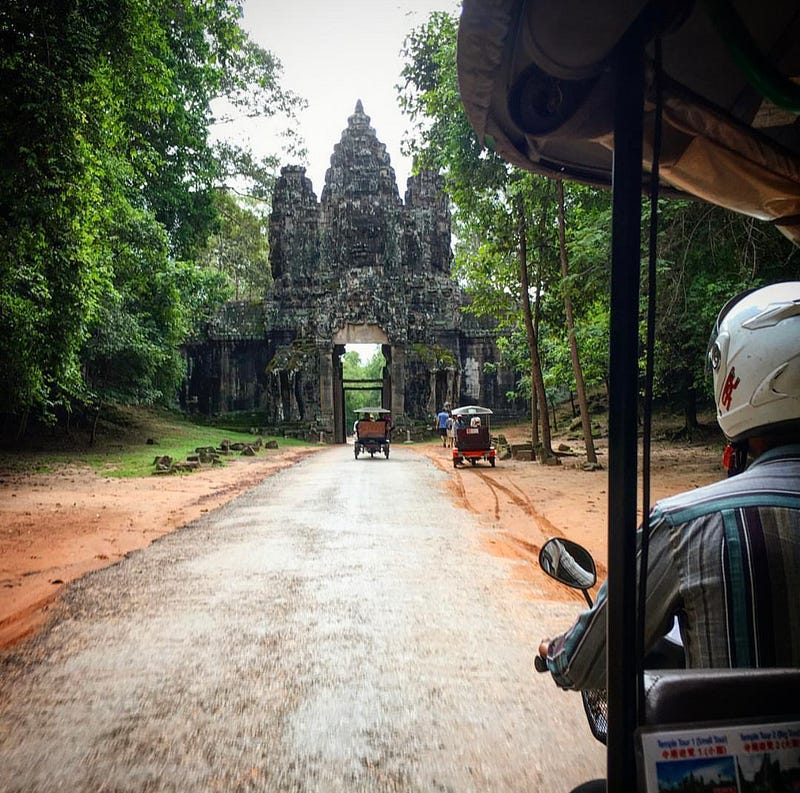
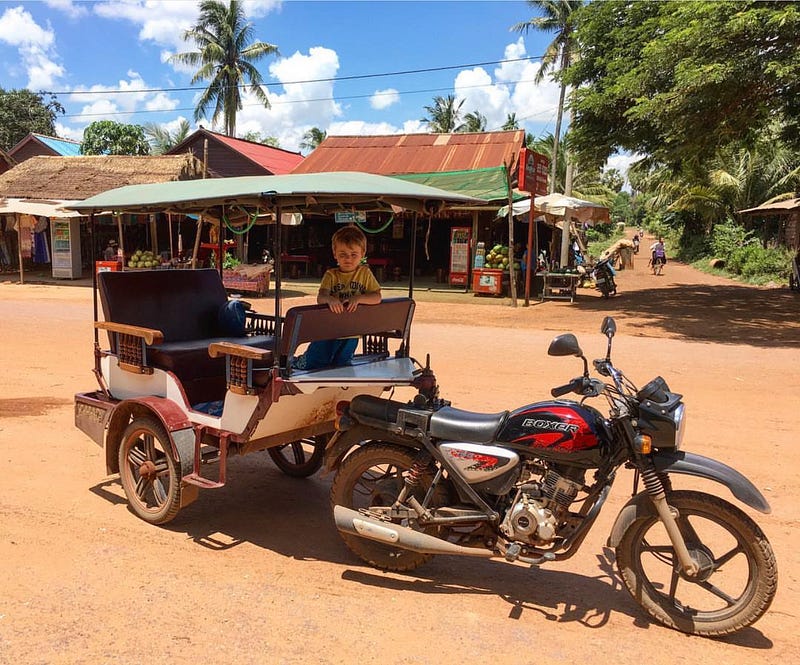
Pictured below was the tuktuk we spent lots of time in on our last trip, as we moved between all the wonderful sites!
Definitely an exciting set of places to visit.
- Unless otherwise credited, all photos are my own