avatarAvi Kotzer

Free AI web copilot to create summaries, insights and extended knowledge, download it at here

3835

Abstract

consists of segments known as ascending, transverse, descending, and sigmoid. After that comes the rectum and, finally, the anal canal. I don’t have my old anatomy books at hand, so I’m going to resort to images taken online (but not from Unsplash, as I made clear earlier).</p><figure id="0878"><img src="https://cdn-images-1.readmedium.com/v2/resize:fit:800/1*JcW96dYuTKMr5i9lWyBGhA.png"><figcaption>Adapted from image by Blausen.com staff (2014)</figcaption></figure><p id="c86b">My screenshotter and man-in-the-mirror Iva Reztok simplified the above illustration by taking out some of the labels. But as usual, he did a crappy job and some of the lines attached to the labels are still visible. So please ignore them.</p><p id="f6ce">In herbivores (animals that eat mostly plants), the cecum is adapted to storing food. Bacteria then break that down the <b>cellulose</b> that came from the plants. This is one of the differences with humans, who cannot digest cellulose. Which is why eating this organic material as “fiber” is healthy and helps aid digestion… and pooping! So what purpose does the cecum serve in people? It helps absorb salts and electrolytes, lubricating the solid waste so it passes into the large intestine more easily.</p><p id="0cec">One of the important components of the cecum is the <b>ileocecal valve</b>, a sphincter muscle whose main function is to prevent the reflux of contents from the colon into the ileum (small intestine).</p><figure id="f155"><img src="https://cdn-images-1.readmedium.com/v2/resize:fit:800/0*ojo4JMiJ76wwrcvD.png"><figcaption><b>Image from Gray’s Anatomy. The book, not the TV show! (Public domain)</b></figcaption></figure><p id="5e1b">In the above illustration the ileocecal valve is labeled “colic valve”. Also, that “vermiform process” on the lower right refers to the appendix.</p><p id="8188">Both the opening of the valve and the appendix are useful when performing a colonoscopy. Finding both or one of them indicates one has reached the cecum and a complete colonoscopy has been performed.</p><h2 id="079a">Bridged letters</h2><p id="fee7">So… what’s the deal with that <i>caecal</i> spelling, you’re probably wondering. Unless you’re British, in which case you’re wondering why Americans keep spelling things incorrectly.</p><p id="9742">The character <b>Æ</b> (lowercase <b>æ</b>), formed from the letters <i>a</i> and <i>e</i>, originally represented the Latin diphthong <i>ae</i>. In linguistics it’s known as a <b>ligature</b>. That would be entry <b>4a</b> below.</p><figure id="82f5"><img src="https://cdn-images-1.readmedium.com/v2/resize:fit:800/1*7RF5EPfpuuE69AgOcPCB4A.png"><figcaption>Credit: merriam-webster.com</figcaption></figure><p id="00de">Those of you who sing or play a musical instrument (especially a woodwind or brass) may be familiar with entries 1c and 3. Entry 1b could be applied to the cecum, as it serves to unite or connect the small intestine to the colon. And if you spell it as c<b>æ</b>cum, you’ll get two ligatures for the price of one!</p><p id="87e0">Now, regarding entry 5 in the dictionary… that’s the first time I’ve heard about this sense of the word. And that’s one of the wonderful things about writing this column: Every day I learn something new, even about things I had prior knowledge about.</p><p id="c6c7">You’ll be happy to know that <b>æ</b> has a name: ash, or <b>æsh</b> if the ash itself is included. (So is æsh<b> </b>a meta ash? Something philosophical to ponder for a lazy Sunday afternoon.) Ash was an Anglo-Saxon rune (ᚫ) that, when it was transliterated to Old English was called <i>æsc</i>, or “ash tree”. The Old English did not write in runic symbols, so ᚫ became æ.</p><p id="7263">In some languages ash was a hard-working sound, putting in extra hours, and so it was promoted to the full status of a lett

Options

er in Danish, Norwegian, Icelandic, and Faroese. Rumor has it that ash was also used in the Old Swedish alphabet before ä started trending and replaced it.</p><p id="ea68">Today, the ash symbol is used by <a href="https://upload.wikimedia.org/wikipedia/commons/8/8f/IPA_chart_2020.svg">International Phonetic Alphabet </a>to represent the “a” sound of the English word <i>cat</i>. If you clicked on the link, check under Vowels between Open-Mid and Open.</p><p id="437a">Many people are used to seeing ash hang around such words as encyclopædia or æon, as in the groundbreaking Peter Chung animation <a href="https://www.mtv.com/shows/aeon-flux"><i>ÆON FLUX</i></a>, later turned into a vapid movie starring Charlize Theron. In the United States the ash has never caught on, whether due to technological limitations (no typewriter key), anti-British sentiment when it was just a baker’s dozen of colonies, or for other reasons I can’t seem to make up at this moment.</p><p id="c1bb">So, for example in the U.S. the issue of the ash is usually simplified by turning “æ” into “e”. (This happened with other ligatures as well, like œ.) Take the word <b>medieval,</b> now more common than <i>mediaeval</i> (and <i>mediæval</i>). However, sometimes the ash is kept as the pair of separate letters (a-e) instead of the symbol, like in the word <b>archaeology</b>, which even in the States is preferred over <i>archeology</i>.</p><p id="fe50">As a symbol, the ash has other uses besides linguistics. In coin collecting (numismatics), “Æ” is used as an abbreviation to indicate a coin is made from bronze. This comes from the Latin word <i>aes</i> (<i>aere</i> in the <a href="https://www.merriam-webster.com/dictionary/ablative">ablative</a> form, “from bronze”). Similarly, AR is used for silver and AV for gold. See below for an example of Æ labeling.</p><figure id="0cba"><img src="https://cdn-images-1.readmedium.com/v2/resize:fit:800/1*lyP5jKa4-rxAVbxtyMFLKw.png"><figcaption>Source: vcoins.com</figcaption></figure><p id="ad9f">Well, okay, in this case Æ was written as AE (cue facepalm). As usual, Iva Reztok has failed once again.</p><p id="0932">Now you know. If you’re ever in Great Britain, you can practice your ligature skills (doubly) by telling people you know exactly where your the <i>caecal</i> portion of your large intestine is. Just make sure none of those people play the Spelling Bee, because the editors of the game decided that <i>c(a)ecal </i>is a dord*.</p><p id="d388">You can check out my previous entry on another <b>dord* </b>here:</p><div id="446b" class="link-block"> <a href="https://readmedium.com/pepo-ca369919a883"> <div> <div> <h2>Pepo</h2> <div><h3>A berry modified fruit and a very iconic cartoonist</h3></div> <div><p>medium.com</p></div> </div> <div> <div style="background-image: url(https://miro.readmedium.com/v2/resize:fit:320/0*C-_lMekBCd2Tks2H)"></div> </div> </div> </a> </div><p id="454b">*What the heck is a <b>dord, </b>you ask? Here’s the answer:</p><div id="58c2" class="link-block"> <a href="https://www.merriam-webster.com/words-at-play/dord-a-ghost-word"> <div> <div> <h2>'Dord': A Ghost Word</h2> <div><h3>One of the questions people like to ask lexicographers is this: Can you sneak something into the dictionary? Can you…</h3></div> <div><p>www.merriam-webster.com</p></div> </div> <div> <div style="background-image: url(https://miro.readmedium.com/v2/resize:fit:320/0*lRmDDM7oVYLz1ZT4)"></div> </div> </div> </a> </div></article></body>

Caecal

You can get a double ligature with this word!

Photo by Towfiqu barbhuiya on Unsplash

Today’s New York Times Spelling Bee letters:
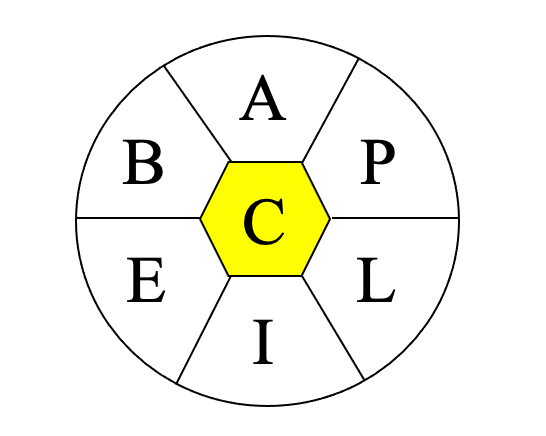
Art: Iva Reztok

A, B, E, I, L, P, and center C (all words must include C)

Merriam-Webster says…

Credit: merriam-webster.com

Silly little dictionary! Don’t you know caecal can’t possibly be a word if the New York Times says it ain’t?

For further fascinating facts, check out the Spelling Bee Master.

What’s your favorite dord* from today’s puzzle?

My Two Cents

Boy was it hard to find a picture of the large intestine on Unsplash! So hard, in fact, that I ended up not finding one. Although I appreciate the convenience of having stock photos available on this platform at a click’s notice, I sometimes run into difficulties when using certain tags. It could be that I don’t know how to use the search feature provided. So, if any of my eagle-eyed readers knows, my ears are open to their advice.

Today I tried using “colon” (a term used to designate most of the large intestine) and got a wide array of results, none of which included a photo of that part of the digestive system. There were some pictures of people doing science-y things, pictures of a keyboard (because :) and plenty of pictures of statues of Cristopher Columbus, whose last name in Spanish is “Colón”.

I tried innards, guts, intestines… even six-pack. I figured if I couldn’t attract readers with a photo of someone’s insides, I might catch their attention using a photo of a nice-looking person with a sculpted abdomen.

In the end, I settled for the photo you saw earlier. It seems to have a touch of humor, and is also an image many of us regular non-gym rats can identify with.

Bridged innards

Obviously, “chiefly British spellings of cecal” ain’t gonna cut it if you don’t know what cecal means. (And according to the editors of the Spelling Bee, you don’t! Otherwise it would have been a valid word in today’s game.) So let me click on cecal for you…
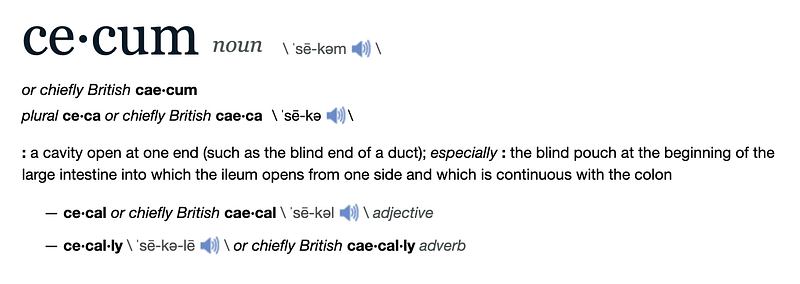
Credit: merriam-webster.com

The cecum or caecum is the “pouch” where the large intestine begins. It is usually located on the right side of the body, joined to your appendix ––or, if you’ve had your appendix removed like I did, appendixless. The word cecum (whose irregular plural ceca was also rejected in today’s Spelling Bee) comes from the Latin caecus, meaning “blind”. In Spanish, the word ciego means both “blind” and “cecum”!

The cecum serves as a ligature, or connection, between the end of the small intestine, called the ileum, and the major portion of the large intestine known as the colon. The colon consists of segments known as ascending, transverse, descending, and sigmoid. After that comes the rectum and, finally, the anal canal. I don’t have my old anatomy books at hand, so I’m going to resort to images taken online (but not from Unsplash, as I made clear earlier).
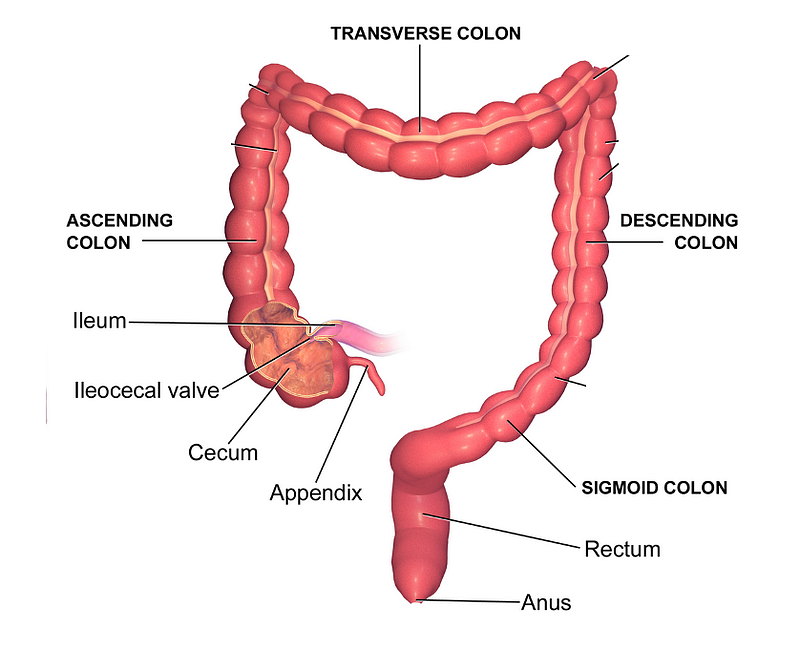
Adapted from image by Blausen.com staff (2014)

My screenshotter and man-in-the-mirror Iva Reztok simplified the above illustration by taking out some of the labels. But as usual, he did a crappy job and some of the lines attached to the labels are still visible. So please ignore them.

In herbivores (animals that eat mostly plants), the cecum is adapted to storing food. Bacteria then break that down the cellulose that came from the plants. This is one of the differences with humans, who cannot digest cellulose. Which is why eating this organic material as “fiber” is healthy and helps aid digestion… and pooping! So what purpose does the cecum serve in people? It helps absorb salts and electrolytes, lubricating the solid waste so it passes into the large intestine more easily.

One of the important components of the cecum is the ileocecal valve, a sphincter muscle whose main function is to prevent the reflux of contents from the colon into the ileum (small intestine).
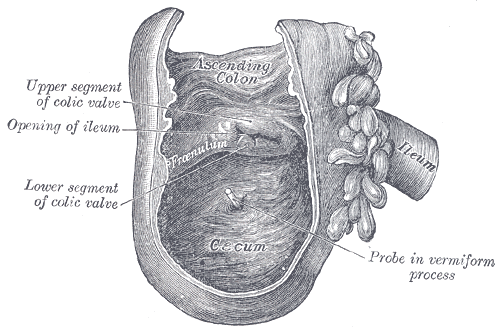
Image from Gray’s Anatomy. The book, not the TV show! (Public domain)

In the above illustration the ileocecal valve is labeled “colic valve”. Also, that “vermiform process” on the lower right refers to the appendix.

Both the opening of the valve and the appendix are useful when performing a colonoscopy. Finding both or one of them indicates one has reached the cecum and a complete colonoscopy has been performed.

Bridged letters

So… what’s the deal with that caecal spelling, you’re probably wondering. Unless you’re British, in which case you’re wondering why Americans keep spelling things incorrectly.

The character Æ (lowercase æ), formed from the letters a and e, originally represented the Latin diphthong ae. In linguistics it’s known as a ligature. That would be entry 4a below.
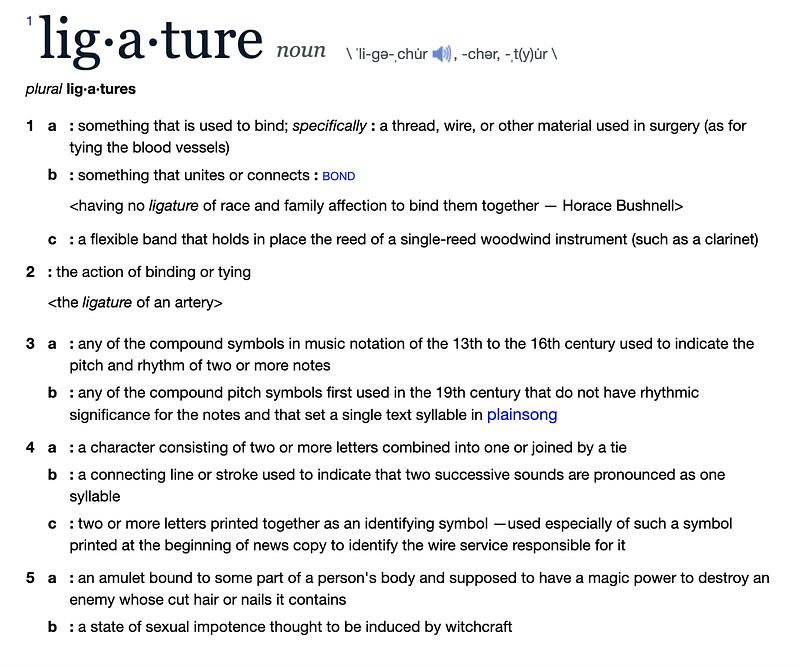
Credit: merriam-webster.com

Those of you who sing or play a musical instrument (especially a woodwind or brass) may be familiar with entries 1c and 3. Entry 1b could be applied to the cecum, as it serves to unite or connect the small intestine to the colon. And if you spell it as cæcum, you’ll get two ligatures for the price of one!

Now, regarding entry 5 in the dictionary… that’s the first time I’ve heard about this sense of the word. And that’s one of the wonderful things about writing this column: Every day I learn something new, even about things I had prior knowledge about.

You’ll be happy to know that æ has a name: ash, or æsh if the ash itself is included. (So is æsh a meta ash? Something philosophical to ponder for a lazy Sunday afternoon.) Ash was an Anglo-Saxon rune (ᚫ) that, when it was transliterated to Old English was called æsc, or “ash tree”. The Old English did not write in runic symbols, so ᚫ became æ.

In some languages ash was a hard-working sound, putting in extra hours, and so it was promoted to the full status of a letter in Danish, Norwegian, Icelandic, and Faroese. Rumor has it that ash was also used in the Old Swedish alphabet before ä started trending and replaced it.

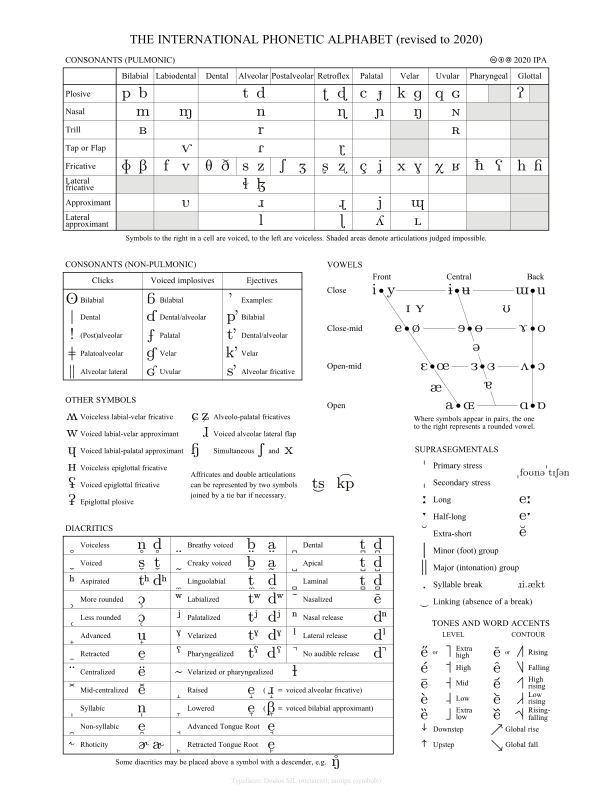
Today, the ash symbol is used by International Phonetic Alphabet to represent the “a” sound of the English word cat. If you clicked on the link, check under Vowels between Open-Mid and Open.
Many people are used to seeing ash hang around such words as encyclopædia or æon, as in the groundbreaking Peter Chung animation ÆON FLUX, later turned into a vapid movie starring Charlize Theron. In the United States the ash has never caught on, whether due to technological limitations (no typewriter key), anti-British sentiment when it was just a baker’s dozen of colonies, or for other reasons I can’t seem to make up at this moment.

So, for example in the U.S. the issue of the ash is usually simplified by turning “æ” into “e”. (This happened with other ligatures as well, like œ.) Take the word medieval, now more common than mediaeval (and mediæval). However, sometimes the ash is kept as the pair of separate letters (a-e) instead of the symbol, like in the word archaeology, which even in the States is preferred over archeology.

As a symbol, the ash has other uses besides linguistics. In coin collecting (numismatics), “Æ” is used as an abbreviation to indicate a coin is made from bronze. This comes from the Latin word aes (aere in the ablative form, “from bronze”). Similarly, AR is used for silver and AV for gold. See below for an example of Æ labeling.
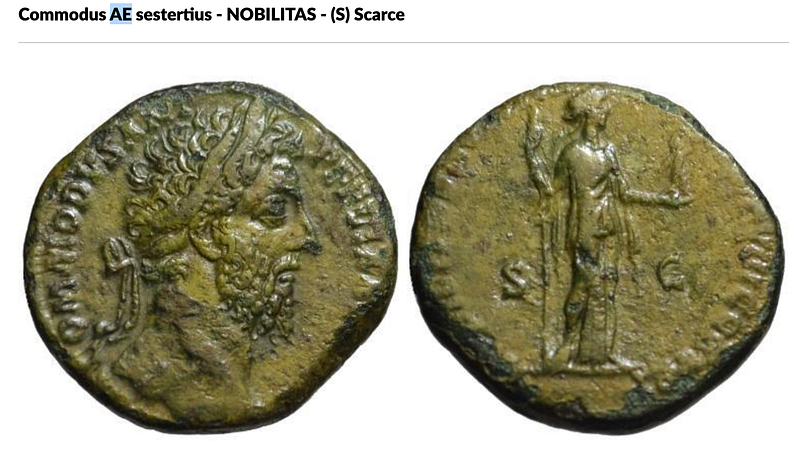
Source: vcoins.com

Well, okay, in this case Æ was written as AE (cue facepalm). As usual, Iva Reztok has failed once again.

Now you know. If you’re ever in Great Britain, you can practice your ligature skills (doubly) by telling people you know exactly where your the caecal portion of your large intestine is. Just make sure none of those people play the Spelling Bee, because the editors of the game decided that c(a)ecal is a dord*.

You can check out my previous entry on another dord* here:

*What the heck is a dord, you ask? Here’s the answer:

Spelling Bee
Language
Medicine
Science
UK
Recommended from ReadMedium