avatarAvi Kotzer

Free AI web copilot to create summaries, insights and extended knowledge, download it at here

3846

Abstract

redit: merriam-webster.com</figcaption></figure><p id="1d5a">That little hook hanging from the bottom of the c is called a <b>cedilla</b>, and the letter “c” is known as <b>c-cedilla</b> when it carries said hook. In the same way the squiggly line is written above the “n” in Spanish, the <b>cedilla,</b> or <b>cedille</b> (from French <i>cédille</i>) is a little piggy tail that is scribbled under certain letters to indicate that their pronunciation changes. The <b>ç</b> is used in the Albanian, Azerbaijani, Manx, Tatar, Turkish, Turkmen, Kurdish, Zazaki, and the Romance alphabets of Catalan, French, Friulian, Ligurian, Occitan, and Portuguese. It was also part of Spanish a long time ago, but was eventually substituted by the letter “z”, which has a softer sound than it does in English.</p><p id="294d">The <b>ç </b>can have a /d͡ʒ/ sound, but in some languages it also functions as an “s”. For example, the name of the internationally popular Catalan football team, Barcelona, is often shortened to Barça. That helps the “c” from the full name retain its /s/ sound.</p><p id="15f8">Spanish, Catalan, and Portuguese––like English–– have a hard and soft c. When the letter “c” is followed by the vowels a, o, and u, it makes the hard /k/ sound. When the vowels are e and i, the sound is /s/. However, the <b>cedilla</b> makes the digraphs <b>ca, co,</b> and <b>cu</b> sound like <b>sa, so,</b> and <b>su</b>.</p><p id="63d0">In the International Phonetic Alphabet (IPA), /ç/ represents the voiceless palatal fricative. I mention the IPA not only to give my readers an important piece of information that will definitely change their lives for the better, but also as an excuse to link to <a href="https://readmedium.com/emic-26c13b4743c7">yesterday’s column</a> so I can earn an additional 13 cents this evening.</p><p id="e3d2">The word facade comes to English from the French <i>façade</i> (‘frontage’). The c lost it’s piggy tail on its way over the Atlantic Ocean, but the pronunciation didn’t change. We don’t say <b>fakad</b>, but <b>fasad</b>.</p><p id="6d19">Which reminds me of an apocryphal story about Irish playwright George Bernard Shaw. At some event he had been invited to, someone tried to demonstrate their cleverness to the 1925 Nobel Prize for Literature by telling Shaw that ‘sugar’ was the only word in the English language in which the letter ‘s’ is pronounced /sh/. Old George was cleverer, though, and simply replied: “Are you <b><i>sure</i></b>?”</p><figure id="b044"><img src="https://cdn-images-1.readmedium.com/v2/resize:fit:800/0*GFB69VOThhhNgA0k.jpg"><figcaption><b>He probably made this face, too.</b></figcaption></figure><h2 id="057a">Tim-tim</h2><p id="7b23"><i>Cachaça</i> is a distilled spirit made from fermented sugarcane juice. Also known as <i>pinga</i>, <i>caninha</i>, and other names, it is the most popular spirit among distilled alcoholic beverages in Brazil. Outside Brazil, cachaça is used almost exclusively as an ingredient in tropical drinks, with the <b>caipirinha</b> being the most famous cocktail. In Brazil, caipirinha is often paired with the dish <b>feijoada</b>.</p><p id="8ae5">The major difference between cachaça and rum is that rum is usually made from molasses, a by-product after a refinery boils the cane juice to extract as much sugar crystal as possible, while cachaça is made from fresh sugarcane juice, fermented and distilled.</p><figure id="6fa5"><img src="https://cdn-images-1.readmedium.com/v2/resize:fit:800/0*6zF_81Geh0TvNpf4"><figcaption>Photo by <a href="https://unsplash.com/@nickwalker?utm_source=medium&amp;utm_medium=referral">Nick Walker</a> on <a href="https://unsplash.com?utm_source=medium&amp;utm_medium=referral">Unsplash</a></figcaption></figure><p id="e6e2"><b>Caipirinha</b> is Brazil’s national cocktail, made with cachaça (sugarcane hard liquor),

Options

sugar, and lime. The drink is prepared by mixing the fruit and the sugar together, then adding the liquor. This can be made in a single large glass to be shared among people, or in a larger jar, from which it is served in individual glasses.</p><p id="9629">The word <i>caipirinha</i> is the diminutive of the word <i>caipira</i>, which in Brazilian Portuguese refers to someone from the countryside (specifically, someone from the rural parts of south-central Brazil), similar to US English <b>hillbilly</b><i>.</i></p><p id="17ac">Although the origin of the drink is unknown, one account says it came about around 1918 in the region of Alentejo in Portugal, with a popular recipe made with lemon, garlic, and honey, indicated for patients with the Spanish flu. Another account is that Caipirinha is based on Poncha, an alcoholic drink from Madeira, Portugal. The main ingredient is <i>aguardente de cana</i>, which is made from sugar cane. Sugar cane production was switched from Madeira to Brazil by the Portuguese as they needed more land to plant it on. Before this people in Madeira had already created <i>aguardente de cana</i>, which was the ancestor to <i>cachaça</i>.</p><p id="84c7">But <i>cachaça</i> is not a liquor limited to one alcoholic beverage. There are a bunch of other drinks you can make with it, as this collection of recipes attests. Cheers! Or, as the say in Brazil: <i>Felicidades!</i></p><div id="e313" class="link-block"> <a href="https://www.diffordsguide.com/encyclopedia/433/cocktails/20-best-cachaca-cocktails"> <div> <div> <h2>20 best Cachaça cocktails</h2> <div><h3>A compilation of the 20 best cachaça cocktails would not be complete without a Caipirinha, not only the classic, but…</h3></div> <div><p>www.diffordsguide.com</p></div> </div> <div> <div style="background-image: url(https://miro.readmedium.com/v2/resize:fit:320/0*6rzCcD5ERgFP5v_h)"></div> </div> </div> </a> </div><p id="3f89">With the weekend soon approaching, many of us will celebrate by drinking spirits or mixing them with nonalcoholic beverages. So go ahead, shake up a martini, a rum & coke, or a long island ice tea. Just don’t try to prepare a tasty caipirinha, because that requires some quality <i>cachaca</i>. And as we’ve seen, the editors of the Spelling Bee decided that <i>cachaca</i> is a dord*.</p><p id="74d5">You can check out my previous entry on another <b>dord* </b>here:</p><div id="f8de" class="link-block"> <a href="https://readmedium.com/emic-26c13b4743c7"> <div> <div> <h2>Emic</h2> <div><h3>How do you see the elephant in the room?</h3></div> <div><p>medium.com</p></div> </div> <div> <div style="background-image: url(https://miro.readmedium.com/v2/resize:fit:320/0*AEG-gCLTFGq78tr-.jpg)"></div> </div> </div> </a> </div><p id="4131">*What the heck is a <b>dord, </b>you ask? Here’s the answer:</p><div id="5ea5" class="link-block"> <a href="https://www.merriam-webster.com/words-at-play/dord-a-ghost-word"> <div> <div> <h2>'Dord': A Ghost Word</h2> <div><h3>One of the questions people like to ask lexicographers is this: Can you sneak something into the dictionary? Can you…</h3></div> <div><p>www.merriam-webster.com</p></div> </div> <div> <div style="background-image: url(https://miro.readmedium.com/v2/resize:fit:320/0*y9ciPW2bu_yG2MH3)"></div> </div> </div> </a> </div></article></body>

Cachaca

That last c sounds like an s… it that why this word was rejected?
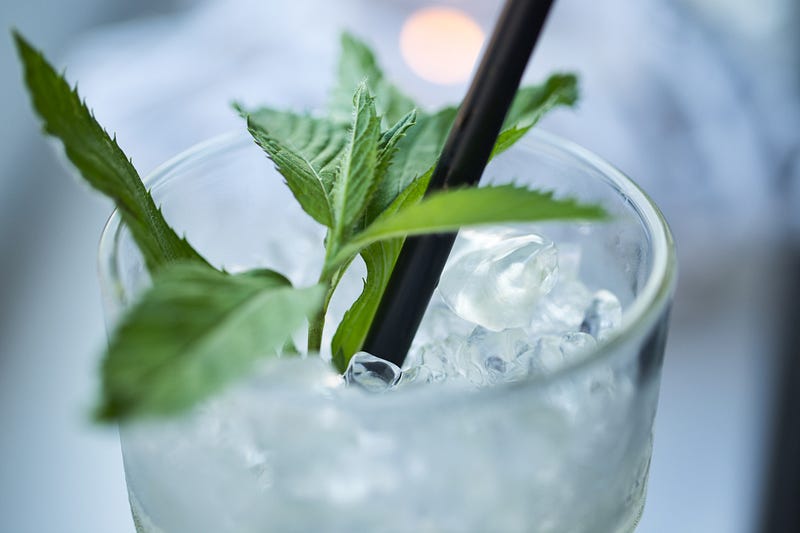
Photo by Marc Schulte on Unsplash

Today’s New York Times Spelling Bee letters:
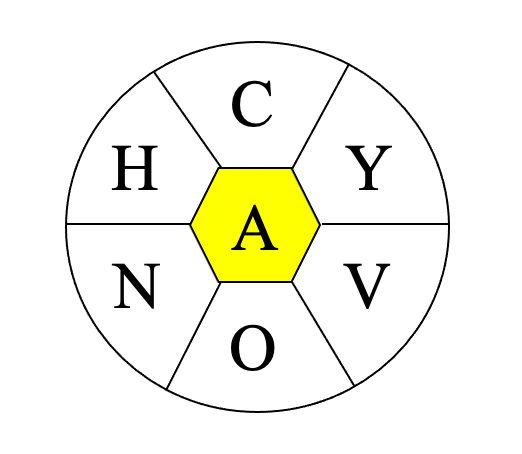
Art: Iva Reztok

C, H, N, O, V, Y, and center A (all words must include A)

Merriam-Webster says…
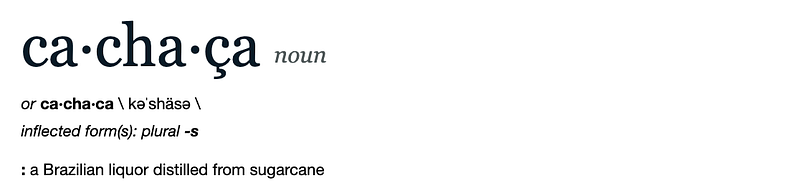
Credit: merriam-webster.com

Silly little dictionary! Don’t you know cachaca can’t possibly be a word if the New York Times says it ain’t?

For further fascinating facts, check out the Spelling Bee Master.

What’s your favorite dord* from today’s puzzle?

My Two Cents

The English alphabet has 26 letters: 20 consonants, 5 vowels, and the phonemically-fluid “y”. Other languages have alphabets with fewer or more letters, depending on their development over the centuries. For example, since 1803 the Spanish alphabet had 29 letters, which included all the ones in English plus ch, ll, and the bedeviling ñ (pronounced EN-ye). Although ch and ll have two letters each, in Spanish they are considered digraphs because of the sound they make. Ch makes the same sound it does in English, and ll is pronounced close to the “y” in yam. (In Spanish the alpaca’s cousin is pronounced yama, not lama as in English.)

However, the 10th Congress of the Association of Academies of the Spanish Language, held in 1994, agreed to adopt the universal Roman script for the alphabet, in which ch and ll are not considered independent letters. As a result of that, those words that begin with these two digraphs were removed from their independent sections in the dictionary and alphabetized in their corresponding places within the sections corresponding to c and l, respectively. In theory this change didn’t affect the composition of the alphabet, but most Spanish speakers today won’t mention ch and ll when running through it aloud or in their heads.

The letter ñ still remains, though; it’s my favorite letter of the alphabet and a very important one come December 31st and January. That’s when many people, especially in the Western world, wish each other a happy new year, which in Spanish is “feliz año nuevo”. If you don’t type the squiggly line (tilde) over the “n” you’ll just have, well, an “n”. And “feliz ano nuevo” has a completely different meaning: happy new anus.

Which is why I think that either January 1st should be officially designated as “Día internacional de la ñ” (International Ñ Day) in honor of a letter that helps avoid a lot of awkward conversations.

Stranger çings

Perhaps you noticed that the dictionary spells cachaca the way it’s supposed to be written in Portuguese. If you didn’t, no need to scroll up. Here it is again:

Credit: merriam-webster.com

That little hook hanging from the bottom of the c is called a cedilla, and the letter “c” is known as c-cedilla when it carries said hook. In the same way the squiggly line is written above the “n” in Spanish, the cedilla, or cedille (from French cédille) is a little piggy tail that is scribbled under certain letters to indicate that their pronunciation changes. The ç is used in the Albanian, Azerbaijani, Manx, Tatar, Turkish, Turkmen, Kurdish, Zazaki, and the Romance alphabets of Catalan, French, Friulian, Ligurian, Occitan, and Portuguese. It was also part of Spanish a long time ago, but was eventually substituted by the letter “z”, which has a softer sound than it does in English.

The ç can have a /d͡ʒ/ sound, but in some languages it also functions as an “s”. For example, the name of the internationally popular Catalan football team, Barcelona, is often shortened to Barça. That helps the “c” from the full name retain its /s/ sound.

Spanish, Catalan, and Portuguese––like English–– have a hard and soft c. When the letter “c” is followed by the vowels a, o, and u, it makes the hard /k/ sound. When the vowels are e and i, the sound is /s/. However, the cedilla makes the digraphs ca, co, and cu sound like sa, so, and su.

In the International Phonetic Alphabet (IPA), /ç/ represents the voiceless palatal fricative. I mention the IPA not only to give my readers an important piece of information that will definitely change their lives for the better, but also as an excuse to link to yesterday’s column so I can earn an additional 13 cents this evening.

The word facade comes to English from the French façade (‘frontage’). The c lost it’s piggy tail on its way over the Atlantic Ocean, but the pronunciation didn’t change. We don’t say fakad, but fasad.

Which reminds me of an apocryphal story about Irish playwright George Bernard Shaw. At some event he had been invited to, someone tried to demonstrate their cleverness to the 1925 Nobel Prize for Literature by telling Shaw that ‘sugar’ was the only word in the English language in which the letter ‘s’ is pronounced /sh/. Old George was cleverer, though, and simply replied: “Are you sure?”
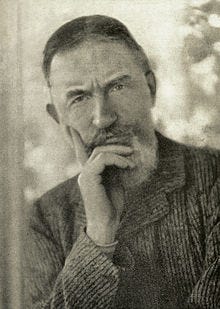
He probably made this face, too.

Tim-tim

Cachaça is a distilled spirit made from fermented sugarcane juice. Also known as pinga, caninha, and other names, it is the most popular spirit among distilled alcoholic beverages in Brazil. Outside Brazil, cachaça is used almost exclusively as an ingredient in tropical drinks, with the caipirinha being the most famous cocktail. In Brazil, caipirinha is often paired with the dish feijoada.

The major difference between cachaça and rum is that rum is usually made from molasses, a by-product after a refinery boils the cane juice to extract as much sugar crystal as possible, while cachaça is made from fresh sugarcane juice, fermented and distilled.
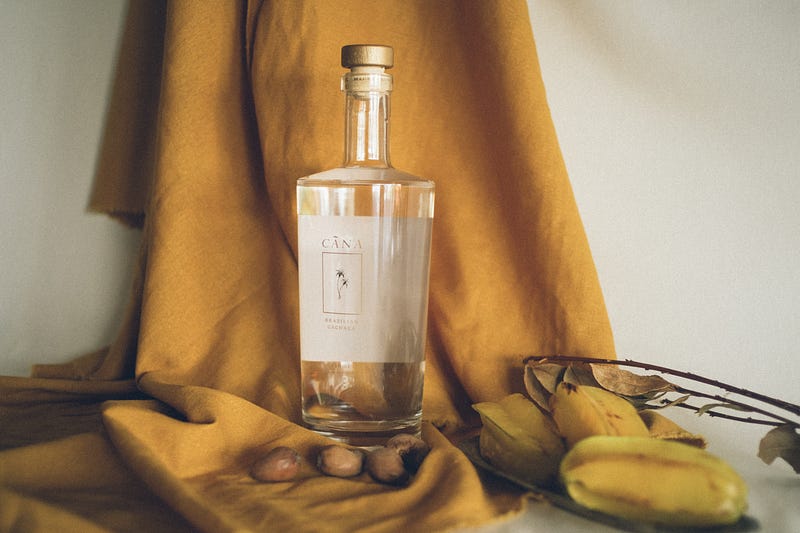
Photo by Nick Walker on Unsplash

Caipirinha is Brazil’s national cocktail, made with cachaça (sugarcane hard liquor), sugar, and lime. The drink is prepared by mixing the fruit and the sugar together, then adding the liquor. This can be made in a single large glass to be shared among people, or in a larger jar, from which it is served in individual glasses.

The word caipirinha is the diminutive of the word caipira, which in Brazilian Portuguese refers to someone from the countryside (specifically, someone from the rural parts of south-central Brazil), similar to US English hillbilly.

Although the origin of the drink is unknown, one account says it came about around 1918 in the region of Alentejo in Portugal, with a popular recipe made with lemon, garlic, and honey, indicated for patients with the Spanish flu. Another account is that Caipirinha is based on Poncha, an alcoholic drink from Madeira, Portugal. The main ingredient is aguardente de cana, which is made from sugar cane. Sugar cane production was switched from Madeira to Brazil by the Portuguese as they needed more land to plant it on. Before this people in Madeira had already created aguardente de cana, which was the ancestor to cachaça.

But cachaça is not a liquor limited to one alcoholic beverage. There are a bunch of other drinks you can make with it, as this collection of recipes attests. Cheers! Or, as the say in Brazil: Felicidades!

With the weekend soon approaching, many of us will celebrate by drinking spirits or mixing them with nonalcoholic beverages. So go ahead, shake up a martini, a rum & coke, or a long island ice tea. Just don’t try to prepare a tasty caipirinha, because that requires some quality cachaca. And as we’ve seen, the editors of the Spelling Bee decided that cachaca is a dord*.

You can check out my previous entry on another dord* here:

*What the heck is a dord, you ask? Here’s the answer:

Spelling Bee
Language
Alcohol
Linguistics
Brazil
Recommended from ReadMedium