The End Is Nigh — Societal Collapse, A Summary
Summary: Progress And Hope, or Calamity And Rope
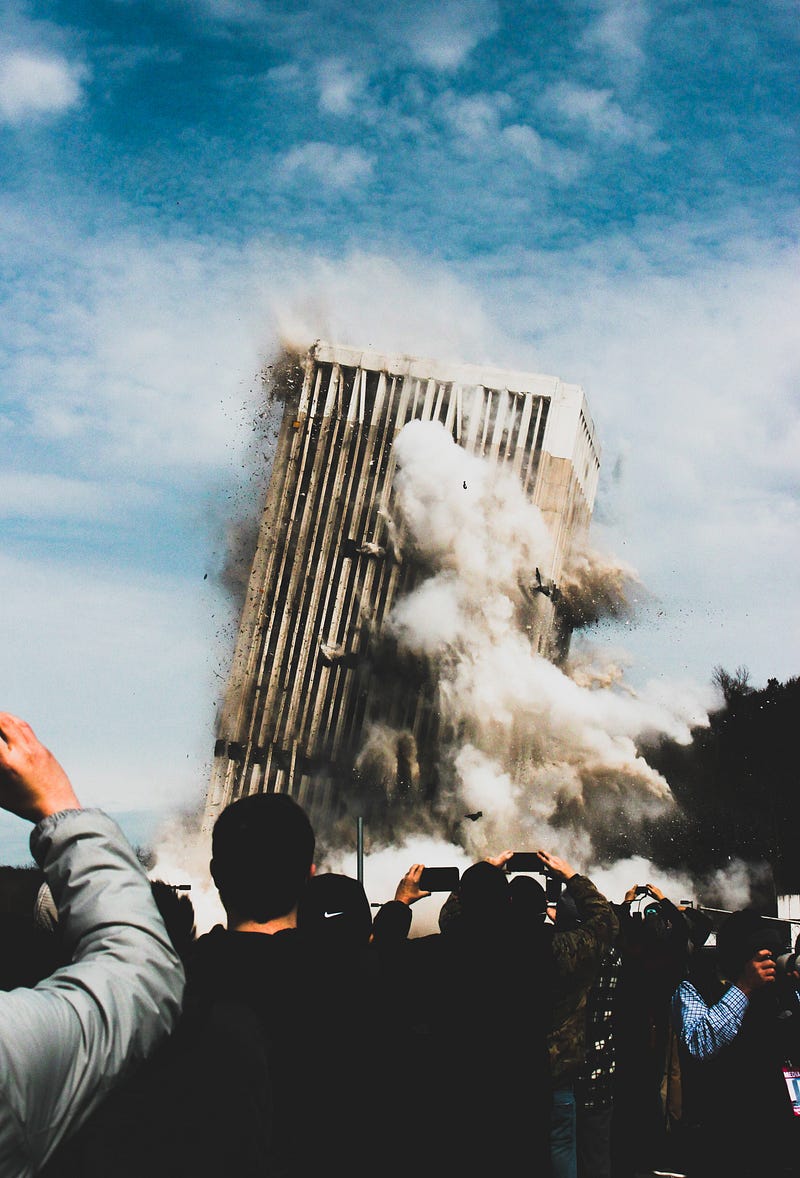
Over the last months, I’ve dug into the nitty gritty of ‘collapsology’, the notion that we’re headed for an imminent global collapse of modern civilization. While others have detailed our predicament in great detail and at great length (see the appendix for a collection of resources worth checking out), I’ve written a brief overview of the topic, geared towards the average reader that might not be too familiar with the rather sinister prediction that life as we know it is about to end.
The Series - What is collapse? - Why collapse is inevitable - When will society collapse? - How society will collapse - Can collapse be avoided? - What to do in the face of collapse? - Summary [you are here] - Appendix: Bonus content
Below, I summarize the above six parts.

Consider your body, a vast interconnected amalgamation of cells, organs, limbs, bacteria, and fluids. A central government in the head controls all of it. We are, each and every one of us, a remarkably complex organism that resists the tides of entropy, sticking together against all odds.
To maintain our complexity, we need energy and building materials. In poorer nations, many use most of that energy to stay alive and gain more energy. In richer countries, many have the luxury of expanding their capacity to acquire energy: One can build muscle in order to carry more firewood, one can use time to learn a new skill, one can gather non-essentials to attract mates, and so on.
Thus, if an organism is in energy surplus, it can expand its reach. But the bigger the reach, the more it costs to maintain the organism. If the wheel of fortune turns, the system might have to shed some of its complexity. Sometimes, the whole organism disintegrates.
Modern society is precisely such an organism, and it has, with its interconnected product chains stretching around the world, grown large indeed. But, we’re using more energy than ever before.
If we suddenly found ourselves without enough energy to sustain our global modern society, we’re looking at collapse.
As explained in part 1 of this series (What is collapse?), collapse is the persistent decline of our global civilization into a less populous, fractured world, marked by massively reduced societal complexity and technological capacity. In other words, it’s the end of the world as we know it.
By way of analogy, it’s equivalent to all the parts of your body not sticking together anymore. While society isn’t as interconnected as your body is, as mutually dependent, losing the glue that keeps food coming to the supermarket will be painful, if not lethal.
Without all the specialized occupations, skills, and knowledge we have today, how are we to create antibiotics, solar panels, or distribute food efficiently? The prediction is that by the end of the century, we won’t have enough to go around. But, as the mantra goes, it will probably be ‘faster than expected’.
The future is, according to the collapse narrative, medieval societies or Neolithic tribes. It could also be total Armageddon if the scales tip into a nuclear winter or hothouse Earth scenario. The three most optimistic scenarios are high-tech dystopia (think Bladerunner or Elysium), primitive utopia (think Hobbiton in Lord Of The Rings), or perhaps we can get to space in time (think the Expanse). Most likely though, is a slow decline into a world wrought by unstable weather, local warlords taking what they want, and a phasing out of our modern luxuries like plumbing and electricity.
But is it inevitable?
As I explored more in depth in part 2 of this series (Why collapse is inevitable), yes it is. There are three main reasons.
1) Infinite growth in a finite environment is impossible. If a predator eats all the prey, they will eventually starve to death, unless they restrain themselves and not overshoot the carrying capacity. Just like a virus killing its host by being too successful, so will we kill the earth if are not careful.
Most species would propagate until they filled every inch of available space, but, luckily, most species face constraints in terms of disease, famine, or predators. Abstractly, we can consider such constraints as problems to be overcome.
We humans found fossil fuels, stored energy for immediate use. Since the industrial revolution, we’ve used fossil fuels to do more work than we ever could using our hands. Fossil fuels allowed us to solve problems like never before. We could mine deeper, grow more, build higher, and move longer.
But the amount of energy we’re able to extract per energy unit we invest is falling due to lower concentrations of resources and diminishing global stores. It is, after all, the nature of finite resources: they run out. While renewable energy might take over, there’s no such alternative for many minerals we dig out of the Earth.
In other words, we will run out at some point. When that happens, all the resources and energy required merely to maintain the status quo will be too high, or too expensive. With oil production scheduled to peak in the next decade or two, along with phosphorous, copper, and many other minerals, it looks increasingly unlikely that society at our current level of consumption will last until 2100.
2) Destruction of the environment increase problems In addition to resources running thin comes climate change, pollution, and destruction of the very environment we rely on.
Climate change will cause more extreme weather and change up the stable climate many agricultural regions rely on. This alone will present huge costs in terms of energy and resources in order to solve, resources that come on top of what we need for maintenance.
Pollution and environmental degradation, such as depleting top soil, will cause further shortages, which again costs energy and resources to address.
All such disasters, from droughts to floods, represent stressors to our system. To solve them, we need energy. We can handle the occasional disaster, but as once in a century storms become once a decade storms, how long until we stop rebuilding cities?
Then there are the truly horrible events, like the infamous clathrate gun that would more or less instantly render our planet inhospitable to life. But, even if we don’t consider such dramatic tipping points in the planet’s equilibrium state, we’re still at the mercy of natural forces, even though we like to believe ourselves to be above the arbitrary nature of nature.
In other words, maintenance cost will increase without a corresponding increase in the reach of our system. We could push further through massive collaborative projects, but these face diminishing returns. Consider the difference between one person, such as Galileo Galilei, revolutionizing astronomy, and today’s efforts requiring teams of hundreds of scientists and satellites and massive observatories?
Thus, problems become more expensive not merely to resist, but also to solve. Together, it means the whole system becomes more brittle.
3) Our interconnected world is vulnerable to cascading failures Given our huge maintenance cost and the rising problems we’ll face in the coming decades, we rely on a global and efficient supply chain to produce all that we need. Without the interconnected global economy, one nation’s surplus iron can’t be turned into steel in another nation’s huge smelters. When every product we rely on, from computers to pencils, requires a huge complicated machinery to be made, a failure in one part cause cascading failures further down the line.
So when a severe drought cripples chip manufacturing, all kinds of technology production is crippled. Thus, one region’s problem is everyone’s problem. The financial crisis of 2008 is an excellent showcase of how we’re no longer isolated islands anymore.
In sum, we’ve built a complex machinery of many special roles and parts, and while we’ve lived in a climatically stable world of relative abundance, that is about to end. Expect that more and more frequent catastrophes will reverberate through society at large with less and less ability to clean up afterwards.
But when does it end?
The current prediction is that this decade will be the last where most of us live in relative luxury. Some are more pessimistic. In part 3 of this series (When will society collapse?), I detail how it’s likely that continued economic growth (as our current economic system depends upon) will be a thing of the past by 2030. A decade after that, it’ll be increasingly clear that things are going downhill.
The long and short of why sooner rather than later is a combination of factors. First is climate change. It’s highly likely that we’ll hit 1.5 degrees Celsius warming at least once this decade. With no sign of our global CO2 emissions decreasing, until 2030 at the earliest (according to emissions target set by many countries, which they are unlikely to follow anyway), we’ll see an increase in storms, droughts, cold snaps, heatwaves, and other types of extreme weather that our society is not built for.
Then there are resource shortages. Everything from sand and copper to oil and fresh water, is running scarce. Or rather, reserves are smaller and fewer, or less concentrated, thus increasingly expensive to get from where it is to where it’s needed.
Couple the above with increasing poverty levels, top soil depletion, and aging populations, we’re set for too many problems to handle.
And when a system experiences more stress than it can handle, it’ll start to break down.
Collapse will be unevenly distributed. In part 4 of this series (How society will collapse) I predicted that society will crumble slowly, with local catastrophes here and there. Sometimes, events might synchronize in a ‘slow at first, then all at once’ type fashion.
Thus, it’ll likely be a slippery slope down the societal complexity scale, marked with periods of seeming stability, until the collective narrative shifts from an optimistic future to one of doom. When public trust erodes, likely to coincide with a bigger natural disaster or outbreak of war, collapse will speed up.
Meanwhile, prices will increase and products will start disappearing from the shelves. More authoritarian politics will rule the day as a response to growing discontent. This will bring with it oppression, conflict, migration, privatization (or collective appropriation) of everything, or even war.
For those living in rural areas that don’t provide anything useful to the state, expect crumbling infrastructure as public money becomes scarce. People will flock to the cities for work, but with poor living conditions and high population density, pandemics will become a more frequent phenomenon.
Finally, when the situation has crumbled long enough, the cities will empty as food stops being brought in.
In the end, we’ll likely see many billions dead from hunger or disease (or war), and a drastic reduction in our technological capacity.
This sounds pretty bleak. Is there hope?

In part 5 of this series (Can collapse be avoided?), I debunked most of the commonly held hopes that we’ll be able to turn planet Titanic around, even if we haven’t, as some believe, already hit the iceberg. There are, however, a few “fixes” that might or might not protect us from a loss of modern technology and science. Probably we need several or all of them.
1) Spread out from Earth and mine asteroids 2) Build abundant energy through fusion, fission, or renewables 3) Create technological arks or advanced self-sustained cities 4) Rewild the Earth 5) Invent AGI and/or autonomous robots that can harvest and produce what we need 6) Geoengineering
The problem with all these are time and resources: 1) Space mining is at least 50 years out (at any scale that can help us), 2) fusion might take another 20 years before commercial energy generation is practical (another decade, at least, to build enough power plants), 3) technological self-sustained arks have not been done yet, 4) rewilding is politically untenable and takes at least a few decades even if we went full tilt at it now, 5) AGI is still an unknown technology, and 6) geoengineering at scale is unproven.
In addition comes the resources needed to develop and employ such solutions at scale. Without massive collaboration between governments and the funding to match, everything except geoengineering is simply a pipe dream, or ‘hopium’ as it’s also called.
So, yes, there is always hope. But, if that hope is predicated on the entire world declaring war on our current predicament, then I’d deem it extremely unlikely that anything meaningful will be done in time.
What does any of this mean for you?
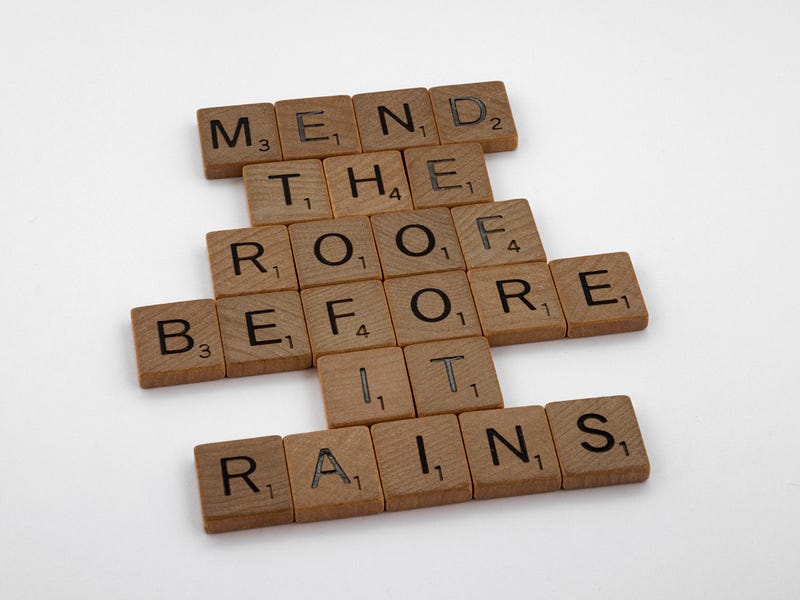
The coming collapse should tell you that having a rigid 20-year plan might not be practical as the local and global situation will become less predictable and more erratic. As I laid out in part 6 of this series (What to do in the face of collapse?), you have, in principle, three choices.
- Prepare for future uncertainties As the system struggles to keep up with the increasing battering it’ll take, and a general lack of resources to repair itself afterwards, you’ll likely witness disruptions. The pharmacy might temporarily (or permanently) run out of a medicine you need, coffee might become too expensive, or parts for your dishwasher are nowhere to be found. On the less extreme end, you can stock up a few weeks of essentials and scale down the complexity of your daily life, before collapse does it for you. On the other end, you can buy a farm or bunker, and go full ‘Into The Wild’.
- Fight for what is right If you believe the world is not a lost cause yet, go out there and demand change. Or be the change yourself. Become an activist, politician, entrepreneur, community organizer, or any number of roles that can enforce change. You could also gear up for helping those left behind by the growing inequality we’ll see in the coming years, or protect the weak from oppression by the strong. The options are many.
- Sit back and enjoy the end of the world For those who think it’s all lost anyhow, or who don’t want to fight for their survival once shit really hits the fan, the hedonistic route is for you. There’s not much more to be said about this angle.
For all these options, however, it doesn’t hurt to build a strong community around you. Banding together is your best bet when times get tough, if you want to push for change, or if you merely want to enjoy the end times.
Conclusion

You might find all this depressing, and you won’t be alone in that, so reach out to others. Talk about your fears, your hopes, and how you might prepare or adapt to the coming calamities.
What more can one poor soul do in the face of it all? Little. It’s humbling, but also a reminder to appreciate what we got. And perhaps a prod to look at the world in a slightly bigger and more holistic perspective than our own immediate bubble.
Humanity will most likely not go extinct, though. But, it’s unlikely that modern society as we know it will survive. How far we will fall and what the state of the Earth will be once modern society is done for, that are open questions.
I don’t believe any of this stupid bullshit That is fine. I’m not sure I do either. All I’ve ever known is affluence and growth. Still, I’m more aware now of the fragility of our global system, how the future will be shaped by climate change, and the likely political response to increasing societal stress. If you don’t believe me (which you shouldn’t, I’m just a poor sod on the internet) then I can only urge you to check out some of the links in the appendix and judge for yourself the evidence put forth by those who actually know what they’re talking about.
Here’s a cute picture to brighten the mood while contemplating all that you’ve read: