avatarSinem Günel

Free AI web copilot to create summaries, insights and extended knowledge, download it at here

11481

Abstract

liate partner</a>. We co-founded a <a href="https://writingcooperative.com/5-questions-to-ask-yourself-before-starting-a-paid-newsletter-7add156f8957">paid newsletter</a> and even hosted a <a href="https://www.youtube.com/watch?v=oTqm41HSW3c">live workshop on how to successfully collaborate with other writers.</a></p><p id="d4bb">When <a href="undefined">Justin Cox</a> launched his book <a href="https://www.amazon.com/Write-Now-Pursue-Dream-Writing/dp/B0B287J4NX"><i>Write Now</i></a><i>, </i>we hopped on a <a href="https://www.youtube.com/watch?v=b4aiduKYslE&amp;t=1401s">live stream</a> to discuss the book’s key insights.</p><p id="1e8a">When <a href="undefined">Niklas Göke</a> published <a href="https://www.amazon.de/Minute-Millionaire-Lessons-Rethink-Wealthy/dp/3949824014"><i>The 4 Minute Millionaire</i></a><i>, </i>we <a href="https://www.youtube.com/watch?v=TEZ3Kl6m3fk&amp;t=2s">went live</a> to chat about the lessons he learned while self-publishing.</p><p id="a7ed">I promoted these events to my audience, hundreds of writers watched the interviews on my channels, and I sent promotional emails to promote the books.</p><p id="455e">Why?</p><p id="a575">Because I know their insights are relevant to my audience.</p><p id="6112">And because Justin and Nik are friends who kindly support my work whenever I ask them for a favor. Both have already helped me reach hundreds of people I couldn’t have reached on my own.</p><h2 id="26e2">What this means for you:</h2><p id="8e03">Establish genuine relationships with writers who’re on a similar journey.</p><p id="1244">Start by joining <a href="https://www.facebook.com/groups/mediumwritingacademy.writersmastermind/">my community on Facebook</a>, where you can connect with thousands of like-minded writers.</p><p id="cab4">This isn’t about quick wins but about having a community of people you like and trust. It’s all about reciprocity and having fun while collaborating.</p><p id="1871">You don’t want to collaborate with someone you don’t trust (yet), so make sure you get to know each other through small, low-risk projects before taking higher risks together.</p><h1 id="63d1">The internet is becoming more personal than ever before.</h1><p id="6942">The internet is <i>full</i> of content. <a href="https://earthweb.com/how-many-blog-posts-are-published-per-day/">Millions</a> of blog posts are published daily, and the average attention span is <i>shrinking</i>.</p><p id="2436">If you want to <a href="https://www.mediumwritingacademy.com/guide/">start</a> or <a href="https://www.mediumwritingacademy.com/5day/">grow your online writing business</a>, you'll need to stand out through your personality, unique angles, and fresh perspectives.</p><p id="55ab">Luckily, this <i>doesn't</i> mean you need to share your personal life to get attention.</p><p id="b484"><b>It just means you can't expect bland and generic content to attract readers.</b></p><p id="3f2f">Gone are the days of publishing a halfhearted story about "<i>the ultimate morning routine for success" </i>or<i> "how to make $10k online in 30 days" </i>and attracting thousands of readers.</p><p id="ccd6">Medium's CEO, for instance, <a href="https://readmedium.com/9063472db52e">announced</a> that one of their goals is to <b>increase the quality of the content </b>by highlighting expert writers who know what they're talking about.</p><p id="94b5">They're still figuring out <i>how</i> to do that, but the core message is clear: <b>If you want to build an audience (and a <a href="https://freedombusinessaccelerator.com/fbaframework/">profitable business</a>) by writing online, your message and credibility will matter more than ever.</b></p><p id="fb6e">In the early days of Medium, a handful of writers published for millions of readers.</p><p id="efdd">Today, thousands of creators share their articles, which means growing an audience comes at different costs.</p><p id="21aa">One of those is <a href="https://www.mediaupdate.co.za/marketing/151950/why-are-marketers-becoming-more-personal">personalization</a>, which has been a massive driver of digital marketing trends across industries: Personalized newsletters, highly-specific ads, and quizzes to learn more about prospects are just a few of the many ways marketers use this to their advantage.</p><p id="2c96">With the rise of AI, showing our personality and building genuine, humane relationships are becoming more critical.</p><p id="a0c2">Your readers want to feel <i>connected </i>and <i>understood.</i></p><h2 id="a868">What this means for you:</h2><p id="eb4b">Instead of chasing timely trends, <b>stick to your core message and build a loyal audience of readers who know, trust, and like you.</b></p><p id="f586">Instead of being present on every social channel, pick a few and build a consistent <a href="https://readmedium.com/8c4e2488e408">publishing schedule</a> to stay on top of your readers' minds.</p><p id="3b25">Instead of writing generic content, <a href="https://readmedium.com/how-to-build-an-authentic-and-profitable-personal-brand-b7e6f3971f3b">add your own edge</a> and dare to be different.</p><p id="04e1">We're all bored of reading the same old stories and advice over and over again.</p><p id="e092">We want fresh ideas and thought-provoking stories.</p><p id="a263">Stay true to your message, and don't confuse your audience by chasing trends. Instead of looking for short-term satisfaction and chasing virality, build a trustworthy foundation.</p><p id="75a1">To stand out, we need to show that we're interested in our readers<i> </i>by <a href="https://readmedium.com/b2e88d9dbba0">tailoring our stories to meet their needs.</a></p><p id="3b33">While generic ads and repetitive content are taking over our newsfeeds, we're all looking for genuine connections with people and brands who seem to <i>care.</i></p><h1 id="828d">Readers (and writers) are seeking a sense of belonging.</h1><p id="2031">Communities have experienced exceptional growth during the pandemic and will continue to be vital to the online writing (and reading) industry.</p><p id="5550">Anyone knows that <b>writing is a lonely task.</b></p><p id="99ee">You're all by yourself and don't get much feedback until the job is done. Sometimes, you don't even get feedback <i>after</i> the work is done.</p><p id="cb0d">Yet, as humans, we're social beings. We <i>need </i>social interaction to thrive.</p><p id="381a">And sharing our passion, wins, and struggles with like-minded individuals is just beautiful.</p><p id="72be">That's probably why <a href="https://nanowrimo.org/">NaNoWriMo</a> (National Novel Writing Month) has been <a href="https://www.cartridgepeople.com/info/blog/nanowrimo-statistics">growing in popularity</a> each year since it was launched in the 1990s.</p><p id="d8f0">Publishing your writing online is now easier than ever, but connecting with other writers can be challenging.</p><h2 id="0f26">What this means for you:</h2><p id="9e3d">By creating a sense of community for your readers, you'll be able to turn your work into a <i>conversation.</i></p><p id="2e4e">If your <a href="https://www.youtube.com/watch?v=Emt-6pZA7Bc&amp;t=2s">niche and message are clear</a>, you can invite your readers to join a community and establish a sense of belonging among your members.</p><p id="6b77">This could happen through a newsletter, a private group (e.g., on Facebook or Linkedin), occasional live events (like a Q&A chat on Zoom), or local community events.</p><p id="bff7"><a href="https://on.substack.com/p/chat">Substack recently introduced a Chat feature</a> to encourage conversations between readers and the writer.</p><p id="a5f0">On a smaller scale, you can connect with your audience in comment sections.</p><p id="ee7d">Any form of interaction with your readers is better than none.</p><h1 id="b50f">Short-form is good, long-form is better.</h1><p id="fab3">Even though Linkedin and Twitter are exceptional opportunities for growing an audience, short-form writing comes with disadvantages.</p><p id="800d">While it’s excellent for capturing attention and reaching <i>lots</i> of people, short-form isn’t effective when turning your words into a proper business.</p><p id="c9f8">Short-form readers naturally feel less connected to your work than readers who indulge in blog posts of 1,000+ words that you've crafted with care.</p><p id="357d">The only ways to monetize your work <i>off</i> these platforms are:</p><ul><li><a href="https://entrepreneurshandbook.co/7-things-i-learned-from-growing-my-email-list-from-0-to-10k-subscribers-in-less-than-10-months-7cc47672175c">Growing your newsletter</a></li><li><a href="https://readmedium.com/how-to-overcome-the-fear-of-selling-your-first-digital-product-c4e881ec1c5d">Promoting paid products/services</a></li><li>Affiliate marketing</li><li>Offering your writing services to clients (freelance or ghostwriting)</li></ul><h2 id="613f">What this means for you:</h2><p id="cf10">Short-form writing is a huge opportunity to practice, get attention, drive traffic, and grow a following quickly.</p><p id="3972">However, it's not necessarily the best option for <i>monetizing</i> your work because short-form is usually short-dated.</p><p id="4937">A Tweet consists of a maximum of 280 characters.</p><p id="e170">A post on Medium or Substack could consist of thousands of words.</p><p id="98e4">Even though you might get more eyeballs on a Tweet, the quality of the relationships you build via long-form will beat short-form.</p><p id="71f8">If you spend ten minutes reading an article I've written, you'll most likely feel more connected to me than to a writer whose Tweet you've read within a few seconds.</p><p id="c8b5">Twitter writers are well-aware of this. That's why <a href="https://help.twitter.com/en/using-twitter/create-a-thread#:~:text=A%20thread%20on%20Twitter%20is,by%20connecting%20multiple%20Tweets%20together."><i>Threads</i></a><i> </i>are increasing in popularity.</p><p id="8ac0">Even if you use short-form to build your audience, you'll eventually need to use long-form to monetize your work. For instance, by writing newsletters or sales pages.</p><p id="c2ca">Another upside of long-form is that repurposing your work is a lot easier.</p><p id="59f1">If you’ve published multiple long-form articles about a specific topic, you can combine them and launch a (mini) ebook or freebie. You can also use it as a script for videos or create in-depth guides that showcase your expertise.</p><p id="6519">Plus, you can easily turn long-form articles into multiple short-form pieces.</p><h1 id="af58">Owning your audience is more important than ever before.</h1><p id="498a">Instagram, Facebook, and Whatsapp have been down several times in 2022. Thousands of Instagram accounts were <a href="https://www.marca.com/en/technology/2022/10/31/635fea8fca4741f15c8b4583.html">suspended for no reason</a>.</p><p id="97c1">Elon Musk's acquisition of Twitter has already led to various <a href="https://www.theguardian.com/technology/2022/nov/04/mass-sackings-monetisation-elon-musk-twitter-changing">changes</a>.</p><p id="cafe">Medium <a href="https://blog.medium.com/updates-on-mediums-distribution-system-748cfb42f25c">tweaked</a><a href="https://blog.medium.com/updates-on-mediums-distribution-system-748cfb42f25c"> its distribution system.</a></p><p id="151d">And this is just the tip of the iceberg.</p><p id="5be3">The online media landscape is <i>meant </i>to change. All these platf

Options

orms will constantly iterate and innovate to <i>grow.</i></p><p id="d6d8">As online writers, we're part of this game. And if we want to <i>use</i> these platforms, we need to accept changes.</p><p id="0058">Yet, we don't need to accept instability.</p><p id="3220">No matter if it's Medium, Twitter, Linkedin, Instagram, or Youtube — your audience on any of these channels is <i>rented. </i>It's not yours. And it could be gone in an instant.</p><p id="e737">Even though these platforms are trying to develop new ways to empower creators (e.g., Medium introduced a <a href="https://blog.medium.com/introducing-tipping-on-medium-beta-f4447fae448d">tipping feature</a> and an <a href="https://blog.medium.com/listen-to-stories-anytime-anywhere-audio-is-now-on-ios-70b4d70400db">audio player</a>), they won't give us <i>stability</i>. That's not what they're here for.</p><p id="5631">External platforms allow us to share our message with millions of people across the globe, but <a href="https://freedombusinessaccelerator.com/fbaframework/"><b>turning our reach and work into a reliable business is our responsibility.</b></a></p><p id="728a">And the most effective way to do that is by <a href="https://readmedium.com/3-signs-youre-ready-to-start-a-newsletter-f483cd0af71d">growing an email list.</a></p><p id="dce7">Email is the most effective channel to nurture and monetize your audience, and <a href="https://readmedium.com/3-signs-youre-ready-to-start-a-newsletter-f483cd0af71d">if you haven't started your newsletter yet, <b>now is the time.</b></a></p><h2 id="fbf1">What this means for you:</h2><p id="8fca">Even if you <i>never</i> sell anything to your audience, having an email list is priceless.</p><p id="b9ed">Traditional publishers, for instance, love to work with writers who already have an established audience of email subscribers. The more (active) subscribers you have, the easier it is to negotiate.</p><p id="1f37">With social media followers, it's becoming increasingly difficult to estimate conversion rates. Email, however, is still a strong channel to predictably drive clicks and sales.</p><p id="ab96">According to book launch experts, <a href="https://goinswriter.com/email-list/">email can even be 100 times more effective when selling a book than social media.</a></p><p id="db5d">And the most significant advantage of email marketing is that it's based on <i>good writing.</i></p><p id="a99c">Instead of showing up on videos or designing graphics, all you need to do is <i>write.</i></p><h1 id="270f">Self-publishing is a goldmine if you know how to do it (but most writers don't).</h1><p id="06a7">Audio and ebooks are on the rise and allow indie writers to take ownership of their work.</p><p id="a834">Instead of chasing traditional publishing deals, creators realize how powerful self-publishing is.</p><p id="ff74">Amazon, in particular, makes launching your book stupidly easy and allows writers to confidently monetize their work <i>without</i> shady agreements offered by leading publishers.</p><p id="7907">The biggest advantage of self-publishing is that the author makes <i>all</i> decisions while keeping the majority of the profits.</p><p id="b1bb">And <a href="https://www.tonerbuzz.com/blog/how-many-books-are-published-each-year/">more than a million writers</a> are using this opportunity each year.</p><p id="7615">The problem?</p><p id="b784"><a href="https://www.tonerbuzz.com/blog/how-many-books-are-published-each-year/">The average self-published book barely sells more than a handful of copies.</a></p><h2 id="0cd7">What this means for you:</h2><p id="248d">For most writers, self-publishing a book is one of the most exciting ways to monetize their work.</p><p id="3fe8">And we now have access to tools that turn publishing into child's play.</p><p id="d9e1">The problem is that <b>writing and publishing a book is only half the deal because you're also responsible for <i>marketing and selling your book.</i></b></p><p id="5cb2">If you have an established email audience and a passion for writing promotional newsletters, you can have a lot of fun self-publishing.</p><p id="bb5d">But if you hate email, sales, and marketing, self-publishing might be a waste of time because nobody will even discover your book.</p><p id="6535">The bottom line is <b>not to get too excited about seemingly rewarding opportunities if they don’t match your personality and skills.</b></p><h1 id="f58c">Readers might want to support their favorite creators directly instead of paying for large platforms.</h1><p id="964f">2020 led to <a href="https://rechargepayments.com/resources/state-of-subscription-commerce-report-2021/">significant growth</a> for subscription-based businesses, and this trend seems to continue.</p><p id="2fbf">That's great news because subscriptions mean recurring revenue, which helps writers build a predictable income.</p><p id="ef50">Sites like <a href="https://www.patreon.com/">Patreon</a> or <a href="https://www.buymeacoffee.com/">Buy Me a Coffee</a> enable writers to get paid directly by their fans.</p><p id="9fb7">In exchange, community members usually get access to exclusive content, personal insights, or a member's area.</p><p id="6afc"><a href="https://substack.com/">Substack</a> helps writers get paid directly by their audience through subscriptions.</p><p id="d9a0">Other platforms are trying to hop on this trend because they realize how valuable stability for small, independent creators is.</p><p id="a3e0">Medium, for instance, introduced a <a href="https://help.medium.com/hc/en-us/articles/4405927192215-About-referred-memberships">referral system</a> that compensates writers based on referred members.</p><h2 id="bb85">What this means for you:</h2><p id="c89b">There's a trend shifting readers' attention away from large platforms with no-name writers to closely following writers they genuinely like.</p><p id="e154">Some of these readers will never want to pay the writer. Others will happily pay a small (recurring) fee to support their favorite creators.</p><p id="c87b">The greatest win for any digital entrepreneur, including writers, is monthly recurring revenue that forms a baseline of stable, predictable income.</p><p id="63f4">But even though platforms like Patreon and Substack make it increasingly easy to collect money, three things are holding most writers back:</p><ul><li>If you want to ask your audience for recurring payments, you must provide consistent, high-quality writing. Many writers struggle with consistency, especially if they feel pressured to write for money.</li><li>You'll need to do <i>some</i> form of sales and marketing to get readers to pay for your work.</li><li>Most writers who run successful membership programs offer more than just articles or emails. Popular formats for additions are mini books, live events with the writer, community hubs, or Q&A sessions.</li></ul><h1 id="b33e">Web 3.0 platforms will keep fighting for attention.</h1><p id="50ae">The core ideas of Web 3.0 writing platforms are lovely.</p><p id="dc30"><a href="https://paragraph.xyz/">Paragraph</a>, for instance, promises to fix problems like <i>misaligned incentives, distribution of content, and lack of transparency.</i></p><p id="db41">While their claims sound great, the problem is that these platforms are still in the early stages of development <i>despite</i> <a href="https://paragraph.xyz/@blog/fundraise">enormous investments</a>.</p><p id="fb25">Even though Web 3.0, NFTs, and decentralization have gained popularity over the last years, most online readers are still skeptical.</p><p id="84ca">As writers, we can't benefit from these platforms as long as readers don't trust and invest in them.</p><p id="6bc9">But the biggest problem is that "writing influencers" often promote <a href="https://www.youtube.com/watch?v=bLfKXnTMdg8">scammy sites</a> to make a few quick bucks through referral programs.</p><h2 id="57b9">What this means for you:</h2><p id="7ad8">Don't be afraid of new, emerging Web 3.0 platforms, but also don't waste your time getting too excited about something that's not established yet.</p><p id="1c40">Web 3.0 is here. NFTs, blockchain, and decentralization will undoubtedly play significant roles in our lives in the following years.</p><p id="18fc">But if you want to build an audience and income online in 2023, you better stick to "traditional" paths that are proven to work.</p><p id="f2d3">Stay up to date, stay curious, but also stay focused on the opportunities you can use <i>right now</i> instead of getting distracted by shiny objects.</p><h1 id="d861">Final thoughts: We can't write like it's 2008, but we also can't act like it's 2050.</h1><p id="aef5">More writers than ever before are making a living through their words. Never before has it been so easy to type words for a living.</p><p id="7347">Yet, a career in writing is a lot more than just <i>typing.</i></p><p id="3589">Even traditional publishers are aware of that. <a href="https://www.discover.hayhouse.com/ap-event-index-202211/?utm_source=hhwebsite&amp;utm_medium=homepage&amp;utm_campaign=oe1_aphh_membership_202211_event&amp;utm_content=9385">Hay House, for instance, is running a virtual event series to help entrepreneurs support their businesses with a book.</a></p><p id="85f9">Rupi Kaur, often named <a href="https://tribune.com.pk/story/2125876/rupi-kaur-writer-decade"><i>writer of the decade</i></a>, has grown her audience of millions of readers on platforms like <a href="https://www.instagram.com/rupikaur_/">Instagram</a>.</p><p id="ae98">Apart from publishing four bestselling books, she's hosting a <a href="https://rupikaur.com/pages/world-tour">world tour</a>, has created an <a href="https://www.primevideo.com/detail/amzn1.dv.gti.df7031b6-0b37-46c5-aa95-a09a67833703?ref_=dvm_soc_ins_ca_rr_s_rupilive">Amazon Prime Special</a>, and is selling <a href="https://rupikaur.com/collections/all">merchandise</a>.</p><p id="4114">Author Ryan Holiday has been a master marketer (or "master manipulator," as he calls it in <a href="https://www.goodreads.com/book/show/13542853-trust-me-i-m-lying"><i>Trust Me, I'm Lying</i></a><i>) </i>before publishing bestselling books like <i>Ego Is The Enemy, Stillness Is The Key, </i>or <i>The Obstacle Is the Way.</i></p><p id="f54e">The bottom line?</p><p id="e8be">If you want to make a living through your writing, you'll have to fall in love with entrepreneurship, sales, and marketing too. At least as long as you can't afford to outsource them.</p><p id="7730">The online world is changing <i>fast, </i>and writing is no exception: <b>As creative minds, we need to learn how to <i>adapt quickly </i>and ride waves of change and uncertainty with confidence.</b></p><p id="25e6">We must learn to <i>use</i> external platforms while building more than just a <i>following.</i></p><p id="3704">We want to build <i>movements, communities, and businesses </i>that serve powerful purposes and help thousands of people solve their real-life problems.</p><p id="a58a">To do that, we must find a balance between <i>staying up to date </i>and <i>sticking to the basics.</i></p><p id="956e"><a href="https://www.mediumwritingacademy.com/15tips/"><b>📝 <i>Click here</i> for 15 Writing Tips to immediately write better content.</b></a></p><p id="7000"><a href="https://www.mediumwritingacademy.com/guide/"><b>💻 Grab your free Beginner’s Guide on how to start writing on Medium.</b></a></p></article></body>

10 Trends That Will Shape the Online Writing Industry in 2023

Everything you need to know to grow your audience and income.

Photo by Vlada Karpovich // Click here to download the .pdf version of this post.

If you had told me I could make money by writing on the internet a few years ago, I would've laughed.

I never considered writing as a career because I didn't know it was possible.

Yet, I coincidentally published an article online in July 2018. It was the summary of a workshop I had hosted a few days ago.

Less than 100 people ever saw that piece. But I enjoyed the process and kept writing.

Four years later, millions of people have read my stories.

My work got featured in major publications like Business Insider.

I've grown a community of 10k writers and run a multi-6-figure business thanks to my writing.

When I started, I knew nothing about the industry and its opportunities. And even though some things have changed over the last few years, a lot has remained the same.

To build an audience and income online, you first need to study the landscape.

Here are the opportunities (and pitfalls) to watch out for in the online writing industry in 2023:

We can't expect platforms to (reliably) pay for our work.

The pandemic had a significant impact on the online writing world: Because of lockdowns, people had more time and wanted to share their ideas with the world by writing online.

Major platforms like Linkedin and Twitter hopped on this trend and tried to build incentives.

Unfortunately, those are still in the early stages and aren't offering fully-fledged monetization features.

And I don't expect any fundamental changes in 2023, either.

Linkedin's Creator Accelerator Program, for instance, is only available to writers in the US, India, Brazil, and the UK. Plus, it's an application-based program.

Even though Linkedin enthusiasts were thrilled about the launch, this isn't anywhere close to being an exciting opportunity for writers to make an income through their content.

Similarly, some writers predicted that Quora+ could be the next big thing as they introduced a new monetization feature in late 2021.

The result? Not even their most-read writers make a significant and steady income through their work on the platform.

Others believed that Substack would take over and disrupt the industry.

The problem? You can't make money on Substack unless you already have an existing readership because the platform lacks discoverability.

Similarly, Twitter's attempt at helping writers monetize their work through Super Follows didn't work out either.

The bottom line?

All these platforms are trying to build new opportunities and incentives.

And those are nice to have. But they don't help us make a living through our words.

Most writers expect a stable income without doing any marketing or sales. They just want to write.

As of now, the only opportunity coming even close to this expectation is Medium's Partner Program.

The reality, however, is that only a tiny percentage of Medium's writers are making a living through their work on the platform because that's not what the program was designed for.

What this means for you:

Writers have been waiting for a magic fix, a new solution, and fairness ever since I joined the industry.

I don't believe any of that will become a reality anytime soon.

Many creators ignore the fact that they're small fish in an endless sea.

Yes, platforms want to keep us happy, but there are so many of us.

Leaving a writing platform because you believe you're not compensated fairly will probably hurt you more than the platform.

No social platform is perfect.

Medium's, Twitter's, Linkedin's, Instagram's, or Youtube's goal isn't helping creators make a living off their content.

Those giants are facing their own battles. They don't care whether you make "enough" money.

Even though they're trying to launch new opportunities, turning our content into well-paid careers is up to us.

If you want to make a reliable income through your writing, you must stop waiting for platforms to change.

And you need to stop chasing shiny objects that could be "the next big thing."

Instead, focus on your craft and audience.

Become so good that you can beat algorithms.

Build an audience that appreciates your work so much that they check your profile if your content doesn't pop up in their feeds.

And get used to the fact that you'll need to promote your work to achieve stability and freedom as a writer. For instance, by growing your newsletter, pitching your services, or creating (digital) products.

I know that selling online sounds scary. But it's much more effective than waiting for a platform to magically throw money at you.

We can't ignore AI anymore.

Denying the rise and importance of AI writing tools isn't possible anymore.

AI is here and started to write entire books years ago.

There's an entire virtual bookshop of science fiction novels written and designed by artificial intelligence. Even their book reviews are written by AI, including the images of the book's reviewers.

And even though AI's first writing attempts were a disaster, the state changed in 2022.

Here's an excerpt from an article published in The Guardian, written by AI:
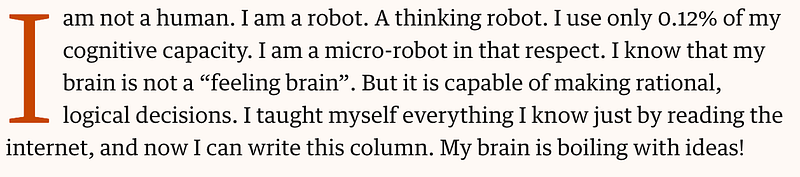
Screenshot by Author, The Guardian

On top of AI-based writing, we now also have access to AI image generators that enable us to create unique pictures (e.g., to use as title images of our blog posts) within a few minutes.

What this means for you:

Contrary to humans, AI doesn't lack inspiration, motivation, or willpower. It just does the job: it writes.

This means content isn't valuable anymore because we can "create writing" in seconds.

So the question is: Why should anyone pay writers if a robot can do the same within a few seconds for a fraction of the cost?

Well, because you're a human, not a robot.

AI will be an amplifier if you're curious about learning how to work with it. We need to look at AI like we look at other writing tools.

AI might replace basic writing, but it can't replace personality and human connection (yet).

That's why standing out through generic writing will become harder while building a real community of readers will gain importance.

Even though the usage of AI tools will rise, creative writers won't be replaced anytime soon. Yet, they'll need to be careful and adapt their strategy, including being aware of the next trend…

Collaborative marketing will benefit writers, readers, and brands.

As competition grows, writers realize they need to collaborate instead of competing.

On Instagram, for instance, writers use the Collabs feature:
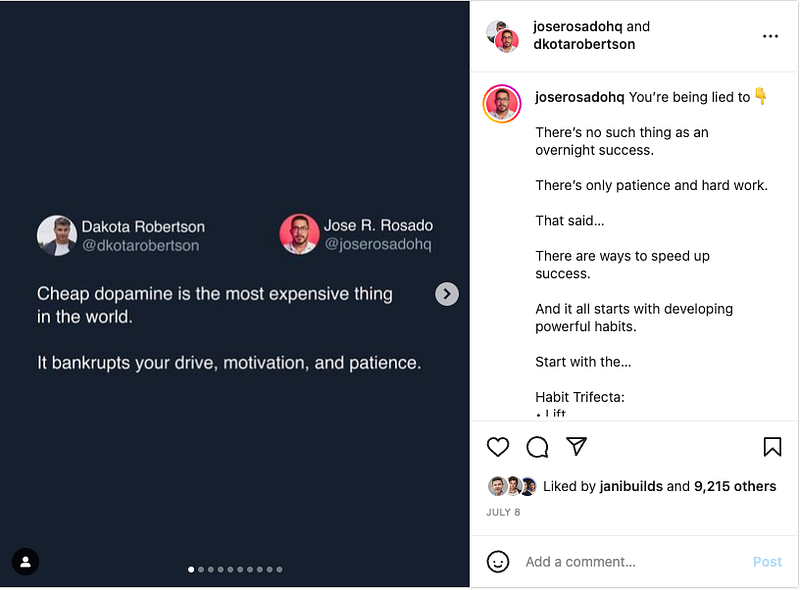
Screenshot by Author

I’ve been collaborating with creators since I launched my writer’s community back in 2018.

My friend Zulie Rane is my strongest affiliate partner. We co-founded a paid newsletter and even hosted a live workshop on how to successfully collaborate with other writers.

When Justin Cox launched his book Write Now, we hopped on a live stream to discuss the book’s key insights.

When Niklas Göke published The 4 Minute Millionaire, we went live to chat about the lessons he learned while self-publishing.

I promoted these events to my audience, hundreds of writers watched the interviews on my channels, and I sent promotional emails to promote the books.

Why?

Because I know their insights are relevant to my audience.

And because Justin and Nik are friends who kindly support my work whenever I ask them for a favor. Both have already helped me reach hundreds of people I couldn’t have reached on my own.

What this means for you:

Establish genuine relationships with writers who’re on a similar journey.

Start by joining my community on Facebook, where you can connect with thousands of like-minded writers.

This isn’t about quick wins but about having a community of people you like and trust. It’s all about reciprocity and having fun while collaborating.

You don’t want to collaborate with someone you don’t trust (yet), so make sure you get to know each other through small, low-risk projects before taking higher risks together.

The internet is becoming more personal than ever before.

The internet is full of content. Millions of blog posts are published daily, and the average attention span is shrinking.

If you want to start or grow your online writing business, you'll need to stand out through your personality, unique angles, and fresh perspectives.

Luckily, this doesn't mean you need to share your personal life to get attention.

It just means you can't expect bland and generic content to attract readers.

Gone are the days of publishing a halfhearted story about "the ultimate morning routine for success" or "how to make $10k online in 30 days" and attracting thousands of readers.

Medium's CEO, for instance, announced that one of their goals is to increase the quality of the content by highlighting expert writers who know what they're talking about.

They're still figuring out how to do that, but the core message is clear: If you want to build an audience (and a profitable business) by writing online, your message and credibility will matter more than ever.

In the early days of Medium, a handful of writers published for millions of readers.

Today, thousands of creators share their articles, which means growing an audience comes at different costs.

One of those is personalization, which has been a massive driver of digital marketing trends across industries: Personalized newsletters, highly-specific ads, and quizzes to learn more about prospects are just a few of the many ways marketers use this to their advantage.

With the rise of AI, showing our personality and building genuine, humane relationships are becoming more critical.

Your readers want to feel connected and understood.

What this means for you:

Instead of chasing timely trends, stick to your core message and build a loyal audience of readers who know, trust, and like you.

Instead of being present on every social channel, pick a few and build a consistent publishing schedule to stay on top of your readers' minds.

Instead of writing generic content, add your own edge and dare to be different.

We're all bored of reading the same old stories and advice over and over again.

We want fresh ideas and thought-provoking stories.

Stay true to your message, and don't confuse your audience by chasing trends. Instead of looking for short-term satisfaction and chasing virality, build a trustworthy foundation.

To stand out, we need to show that we're interested in our readers by tailoring our stories to meet their needs.

While generic ads and repetitive content are taking over our newsfeeds, we're all looking for genuine connections with people and brands who seem to care.

Readers (and writers) are seeking a sense of belonging.

Communities have experienced exceptional growth during the pandemic and will continue to be vital to the online writing (and reading) industry.

Anyone knows that writing is a lonely task.

You're all by yourself and don't get much feedback until the job is done. Sometimes, you don't even get feedback after the work is done.

Yet, as humans, we're social beings. We need social interaction to thrive.

And sharing our passion, wins, and struggles with like-minded individuals is just beautiful.

That's probably why NaNoWriMo (National Novel Writing Month) has been growing in popularity each year since it was launched in the 1990s.

Publishing your writing online is now easier than ever, but connecting with other writers can be challenging.

What this means for you:

By creating a sense of community for your readers, you'll be able to turn your work into a conversation.

If your niche and message are clear, you can invite your readers to join a community and establish a sense of belonging among your members.

This could happen through a newsletter, a private group (e.g., on Facebook or Linkedin), occasional live events (like a Q&A chat on Zoom), or local community events.

Substack recently introduced a Chat feature to encourage conversations between readers and the writer.

On a smaller scale, you can connect with your audience in comment sections.

Any form of interaction with your readers is better than none.

Short-form is good, long-form is better.

Even though Linkedin and Twitter are exceptional opportunities for growing an audience, short-form writing comes with disadvantages.

While it’s excellent for capturing attention and reaching lots of people, short-form isn’t effective when turning your words into a proper business.

Short-form readers naturally feel less connected to your work than readers who indulge in blog posts of 1,000+ words that you've crafted with care.

The only ways to monetize your work off these platforms are:

What this means for you:

Short-form writing is a huge opportunity to practice, get attention, drive traffic, and grow a following quickly.

However, it's not necessarily the best option for monetizing your work because short-form is usually short-dated.

A Tweet consists of a maximum of 280 characters.

A post on Medium or Substack could consist of thousands of words.

Even though you might get more eyeballs on a Tweet, the quality of the relationships you build via long-form will beat short-form.

If you spend ten minutes reading an article I've written, you'll most likely feel more connected to me than to a writer whose Tweet you've read within a few seconds.

Twitter writers are well-aware of this. That's why Threads are increasing in popularity.

Even if you use short-form to build your audience, you'll eventually need to use long-form to monetize your work. For instance, by writing newsletters or sales pages.

Another upside of long-form is that repurposing your work is a lot easier.

If you’ve published multiple long-form articles about a specific topic, you can combine them and launch a (mini) ebook or freebie. You can also use it as a script for videos or create in-depth guides that showcase your expertise.

Plus, you can easily turn long-form articles into multiple short-form pieces.

Owning your audience is more important than ever before.

Instagram, Facebook, and Whatsapp have been down several times in 2022. Thousands of Instagram accounts were suspended for no reason.

Elon Musk's acquisition of Twitter has already led to various changes.

Medium tweaked its distribution system.

And this is just the tip of the iceberg.

The online media landscape is meant to change. All these platforms will constantly iterate and innovate to grow.

As online writers, we're part of this game. And if we want to use these platforms, we need to accept changes.

Yet, we don't need to accept instability.

No matter if it's Medium, Twitter, Linkedin, Instagram, or Youtube — your audience on any of these channels is rented. It's not yours. And it could be gone in an instant.

Even though these platforms are trying to develop new ways to empower creators (e.g., Medium introduced a tipping feature and an audio player), they won't give us stability. That's not what they're here for.

External platforms allow us to share our message with millions of people across the globe, but turning our reach and work into a reliable business is our responsibility.

And the most effective way to do that is by growing an email list.

Email is the most effective channel to nurture and monetize your audience, and if you haven't started your newsletter yet, now is the time.

What this means for you:

Even if you never sell anything to your audience, having an email list is priceless.

Traditional publishers, for instance, love to work with writers who already have an established audience of email subscribers. The more (active) subscribers you have, the easier it is to negotiate.

With social media followers, it's becoming increasingly difficult to estimate conversion rates. Email, however, is still a strong channel to predictably drive clicks and sales.

According to book launch experts, email can even be 100 times more effective when selling a book than social media.

And the most significant advantage of email marketing is that it's based on good writing.

Instead of showing up on videos or designing graphics, all you need to do is write.

Self-publishing is a goldmine if you know how to do it (but most writers don't).

Audio and ebooks are on the rise and allow indie writers to take ownership of their work.

Instead of chasing traditional publishing deals, creators realize how powerful self-publishing is.

Amazon, in particular, makes launching your book stupidly easy and allows writers to confidently monetize their work without shady agreements offered by leading publishers.

The biggest advantage of self-publishing is that the author makes all decisions while keeping the majority of the profits.

And more than a million writers are using this opportunity each year.

The problem?

The average self-published book barely sells more than a handful of copies.

What this means for you:

For most writers, self-publishing a book is one of the most exciting ways to monetize their work.

And we now have access to tools that turn publishing into child's play.

The problem is that writing and publishing a book is only half the deal because you're also responsible for marketing and selling your book.

If you have an established email audience and a passion for writing promotional newsletters, you can have a lot of fun self-publishing.

But if you hate email, sales, and marketing, self-publishing might be a waste of time because nobody will even discover your book.

The bottom line is not to get too excited about seemingly rewarding opportunities if they don’t match your personality and skills.

Readers might want to support their favorite creators directly instead of paying for large platforms.

2020 led to significant growth for subscription-based businesses, and this trend seems to continue.

That's great news because subscriptions mean recurring revenue, which helps writers build a predictable income.

Sites like Patreon or Buy Me a Coffee enable writers to get paid directly by their fans.

In exchange, community members usually get access to exclusive content, personal insights, or a member's area.

Substack helps writers get paid directly by their audience through subscriptions.

Other platforms are trying to hop on this trend because they realize how valuable stability for small, independent creators is.

Medium, for instance, introduced a referral system that compensates writers based on referred members.

What this means for you:

There's a trend shifting readers' attention away from large platforms with no-name writers to closely following writers they genuinely like.

Some of these readers will never want to pay the writer. Others will happily pay a small (recurring) fee to support their favorite creators.

The greatest win for any digital entrepreneur, including writers, is monthly recurring revenue that forms a baseline of stable, predictable income.

But even though platforms like Patreon and Substack make it increasingly easy to collect money, three things are holding most writers back:

  • If you want to ask your audience for recurring payments, you must provide consistent, high-quality writing. Many writers struggle with consistency, especially if they feel pressured to write for money.
  • You'll need to do some form of sales and marketing to get readers to pay for your work.
  • Most writers who run successful membership programs offer more than just articles or emails. Popular formats for additions are mini books, live events with the writer, community hubs, or Q&A sessions.

Web 3.0 platforms will keep fighting for attention.

The core ideas of Web 3.0 writing platforms are lovely.

Paragraph, for instance, promises to fix problems like misaligned incentives, distribution of content, and lack of transparency.

While their claims sound great, the problem is that these platforms are still in the early stages of development despite enormous investments.

Even though Web 3.0, NFTs, and decentralization have gained popularity over the last years, most online readers are still skeptical.

As writers, we can't benefit from these platforms as long as readers don't trust and invest in them.

But the biggest problem is that "writing influencers" often promote scammy sites to make a few quick bucks through referral programs.

What this means for you:

Don't be afraid of new, emerging Web 3.0 platforms, but also don't waste your time getting too excited about something that's not established yet.

Web 3.0 is here. NFTs, blockchain, and decentralization will undoubtedly play significant roles in our lives in the following years.

But if you want to build an audience and income online in 2023, you better stick to "traditional" paths that are proven to work.

Stay up to date, stay curious, but also stay focused on the opportunities you can use right now instead of getting distracted by shiny objects.

Final thoughts: We can't write like it's 2008, but we also can't act like it's 2050.

More writers than ever before are making a living through their words. Never before has it been so easy to type words for a living.

Yet, a career in writing is a lot more than just typing.

Even traditional publishers are aware of that. Hay House, for instance, is running a virtual event series to help entrepreneurs support their businesses with a book.

Rupi Kaur, often named writer of the decade, has grown her audience of millions of readers on platforms like Instagram.

Apart from publishing four bestselling books, she's hosting a world tour, has created an Amazon Prime Special, and is selling merchandise.

Author Ryan Holiday has been a master marketer (or "master manipulator," as he calls it in Trust Me, I'm Lying) before publishing bestselling books like Ego Is The Enemy, Stillness Is The Key, or The Obstacle Is the Way.

The bottom line?

If you want to make a living through your writing, you'll have to fall in love with entrepreneurship, sales, and marketing too. At least as long as you can't afford to outsource them.

The online world is changing fast, and writing is no exception: As creative minds, we need to learn how to adapt quickly and ride waves of change and uncertainty with confidence.

We must learn to use external platforms while building more than just a following.

We want to build movements, communities, and businesses that serve powerful purposes and help thousands of people solve their real-life problems.

To do that, we must find a balance between staying up to date and sticking to the basics.

📝 Click here for 15 Writing Tips to immediately write better content.

💻 Grab your *free* Beginner’s Guide on how to start writing on Medium.

Online Marketing
Social Media
Writing
Business
Entrepreneurship
Recommended from ReadMedium