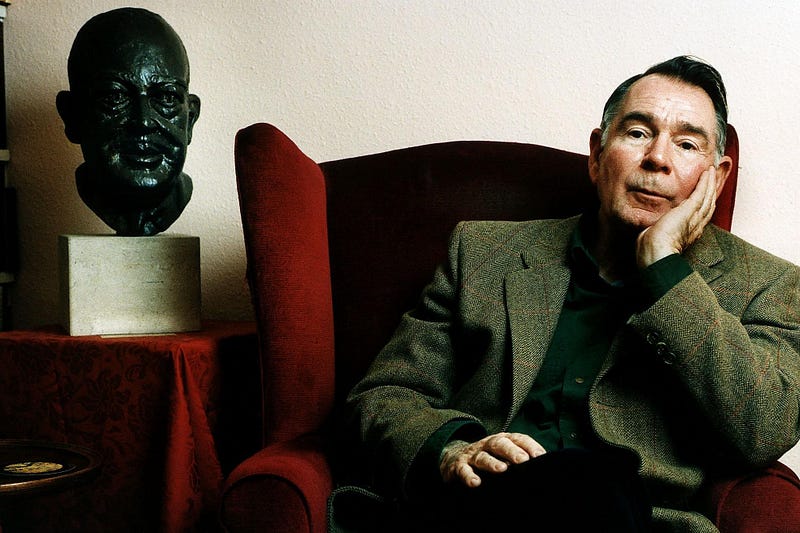
Was C.S. Lewis…heterosexual?
Let’s look at the sex life of a Christian hero
It isn’t easy to catch a Christian hero in the act of being a heterosexual. The religion doesn’t much like people who are just…normal? Consider C.S. Lewis.
He’s taken to be heterosexual, but on what evidence? In 1955, his friend Dorothy L. Sayers wrote: “One just has to accept that there is a complete blank in his mind where women are concerned.”
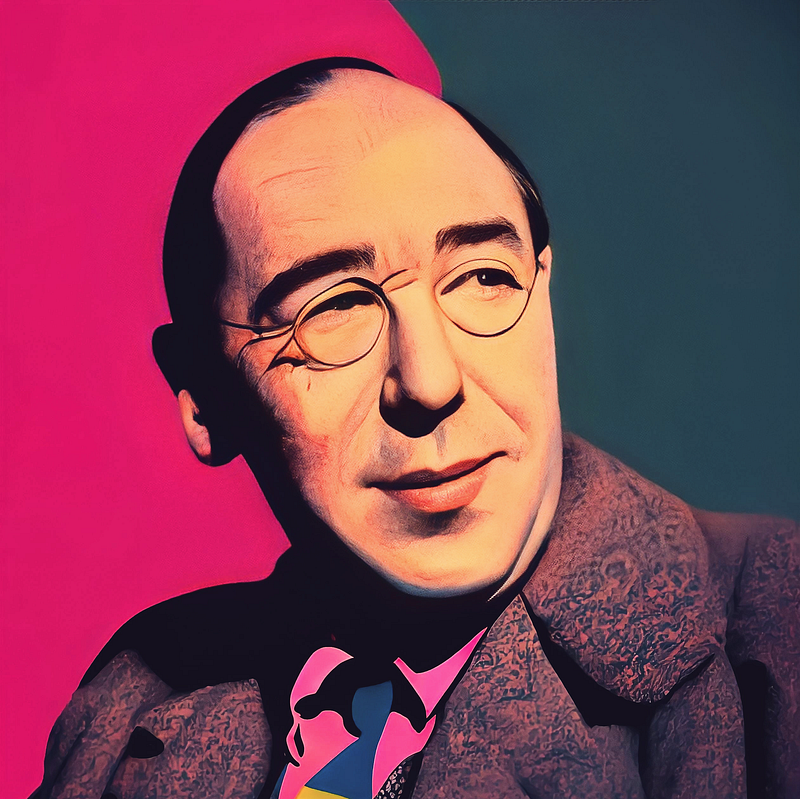
Lewis was born in 1898, the younger of two sons.
He was named Clive, but didn’t like it. As his brother Warren, known as ‘Warnie’, recalls the story, little Clive marched up to his mother, pointed to himself and said: “He is Jacksie.”
Warnie adds: “Jacksie it had to be, a name contracted to Jacks and then Jack.”
Warnie doesn’t note that ‘jacksie’ was British slang for the ‘anus’. But Lewis’ life is full of unexpected references to anality and bathrooms. Apparently, as a child, there was a lot of scat talk around the house—or the “Watercloset element,” as Lewis would put it.
The brothers’ pet nicknames for each other all their lives were “Big Piggybottom” and “Small Piggybottom.”
Lewis’ mother died when he was nine.
It was an experience from which, he’d say, he never really recovered. In 1953, he writes to a female correspondent that “there has never been any sense of security or snugness since.”
He called himself “Mammy’s little lost boy.”
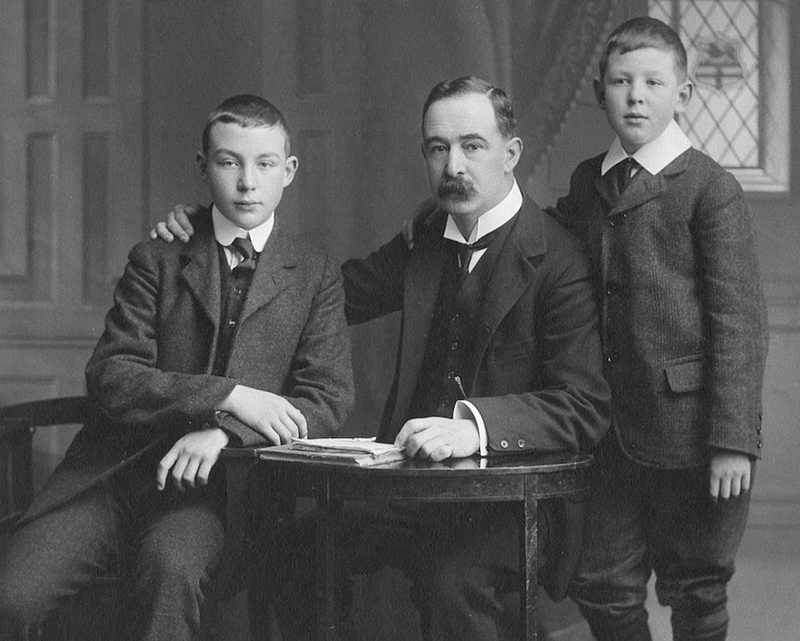
Both boys were packed off to boarding school.
In the great British style, it was hell on earth. In Lewis’ 1955 memoir, Surprised by Joy, he writes of a class of older boys called ‘prefects’ being monsters of ego, like when making sexual use of younger boys.
It was odd to be talking about schoolboy sex, a very taboo subject. As Alfred Lord Douglas put it in 1925: “convention demands that what is perfectly well known to all men who have been at a public school and a university should be kept quiet…”
But Leiws says the sex was actually a bright spot in a world that was mostly just cruel. “In his unnatural love-affairs,” Lewis writes, the prefect “forgot for a few hours that he was One of the Most Important People There Are.”
Lewis doesn’t say he was a participant in such scenes, but how else would he know about it? Another clue: he made his father take him out of one boarding school by saying he’d otherwise kill himself.
Warnie later said the sex talk was exaggerated.
Lewis biographers follow the lead in dismissing the schoolboy sex passage. An important exception: in a 2012 study, C.S. Lewis, Poetry, and the Great War 1914–1918, John Bremer observes that Warnie had never married, never showed interest in women, and became a chronic alcoholic.
A classic profile, he thinks, of “probable homosexual inclinations.”
He suggests the repressed gay man Warnie downplaying sex in boarding school might be tricky as Warnie had been a prefect.
At age 16, Lewis made his ‘first friend’.
In Surprised by Joy, he frames his meeting Arthur Greeves in 1914 as a “first love.” Greeves was a few years older and considered an invalid after being diagnosed with a heart condition — wrongly, he later learned.
Both boys were bookish, and into poetry and myth. They’d be lifelong friends and correspondents. Lewis writes later of Arthur as not being an intellectual, but he had feelings, and “he taught me to share.”
Lewis writes about his ‘first friend’ in very elevated terms:
“…the man who first reveals to you that you are not alone in the world by turning out (beyond hope) to share all your most secret delights. There is nothing to be overcome in making him your friend; he and you join like raindrops on a window.”
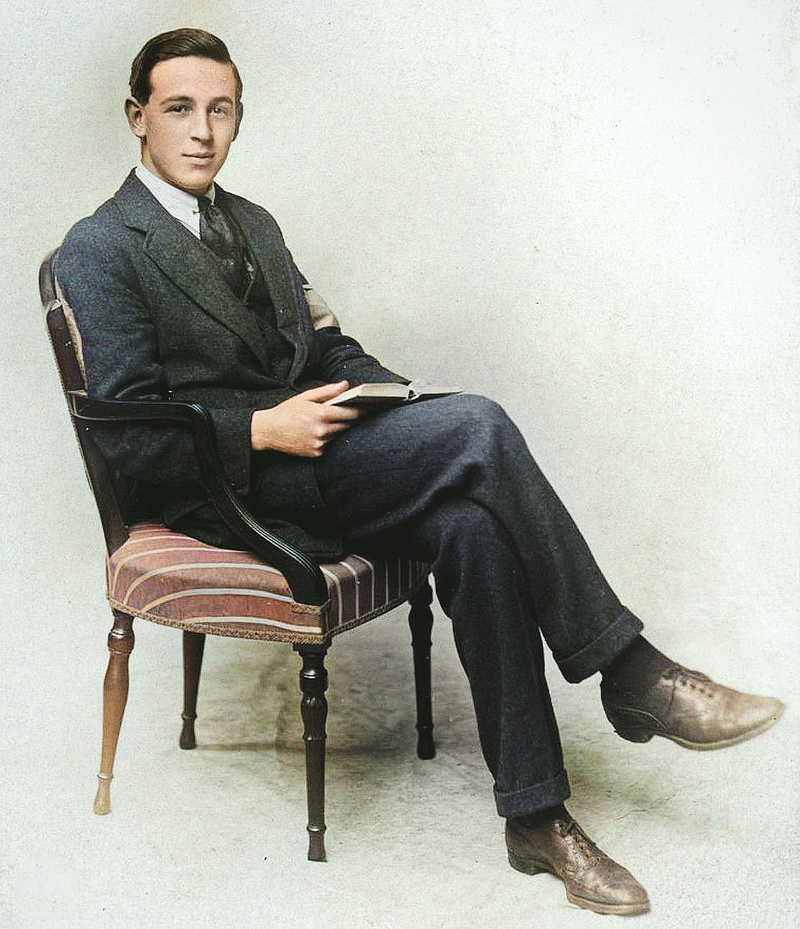
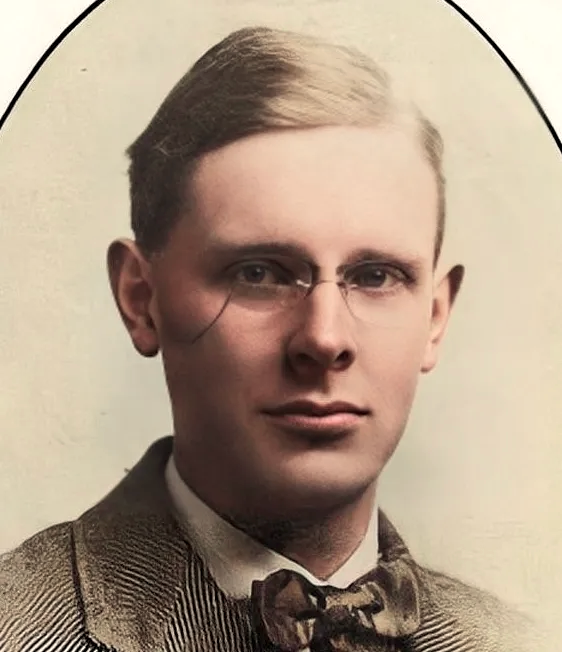
Arthur wrote a ‘coming out’ letter.
In this, he clarified that he didn’t like being called a ‘pederast’, a prevailing term for a ‘gay’ person. The word ‘Uranian’ was being used at the time, and Arthur liked that better. Lewis replied:
“I admit the associations of the word paederasty are unfortunate but you should rise above all that.”
Arthur seemed to have had an eye out for queer Christian role models, and he and Lewis talk about Edward Carpenter, the advocate for homosexual acceptance, and historical figures, like the sculptor Cellini. They talk about a boy Arthur likes. Lewis replies, jokingly: “Are you still bound to him by the chains of desire as well as by ‘pure’ friendship?”
Lewis never told his readers that Arthur was gay.
But it was delicately suggested, as when Warnie recalls of Arthur: “He bears a remarkable resemblance to his sister Lily, even physically.”
Biographers have been left to wonder: was Lewis attracted to Arthur? Some language in the letters is a bit suspicious. George Sayer writes in 1988:
“Jack was sensitive all his life to every sort of beauty, and he was attracted by Arthur’s charm and striking good looks — his fair hair, fresh complexion, and blue eyes. I have been tempted to suppress this obvious fact, because I know it may encourage some people to speculate that they may have had a sexual relationship. However, I feel confident that they were not lovers.”
The relationship can seem somehow in love. In 1916, Lewis writes in a poem for Arthur that has them together:
“Roaming — without a name — without a chart — The unknown garden of another’s heart.”
Arthur was often discussing religion.
Jack laughed it off. The world, for him, felt godless and bleak. But in their letters, Lewis first calls himself ‘C.S. Lewis’.
Biographer A.N. Wilson, offers:
“We could very definitely say that if it had not been for Arthur Greeves, many of Lewis’ most distinctive and imaginatively successful books would not have been written. The letters were the dress rehearsal for that intimate and fluent manner which was to make Lewis such a successful author.”
Lewis became interested in erotic spanking.
The references here are a bit curious. Alister McGrath notes a scene in Lewis’ letters to Arthur in which he was at some dinner party and “went around imploring everyone to let him “whip them…”
Lewis talks in the letters to Arthur about erotic spanking. A 2019 biography by Harry Lee Poe offers: “How this bizarre perversion arose, one cannot say…” But, he continues:
“…he was surprised that Arthur could even engage him in conversation about it when it did not appeal to him. On the other hand, Arthur may have been attracted to the topic from the other way around. Jack suggested that Arthur would enjoy being whipped by ‘some Eastern queen.’ Jack did not mind telling Arthur that he would enjoy whipping Arthur’s sister and that it would do her good.”
If I’m understanding this, Arthur might’ve liked to be spanked but Lewis, alas, never offered. Lewis did want to spank Arthur’s sister Lily. That’s the girl who, according to Warnie, looked like Arthur.
But it’s not clear that Lewis ever spanked anyone other than himself.
He wrote to Arthur about his masturbation, as had driven him to despair.
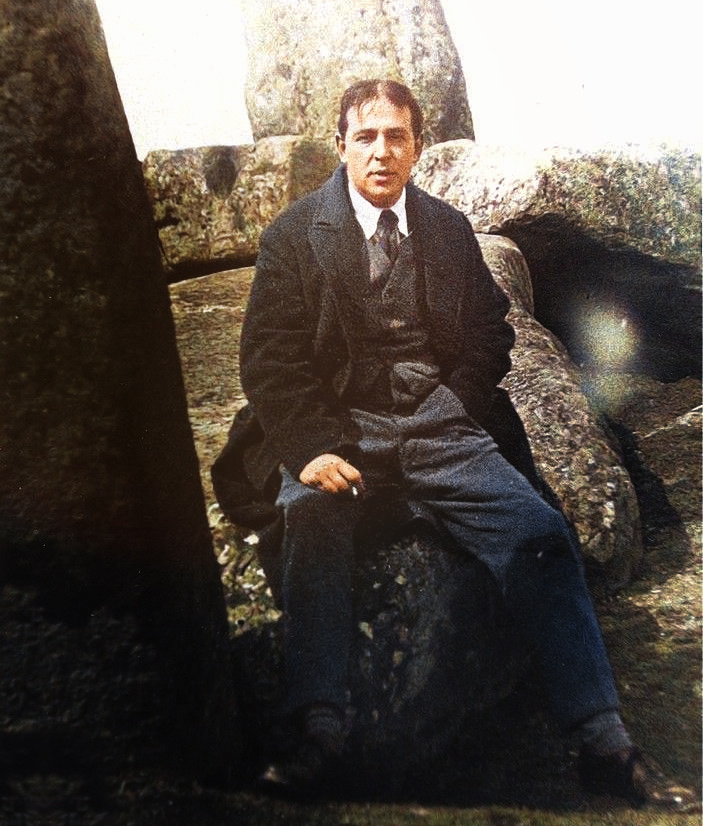
Then Lewis had a…girlfriend?
When they met, he was 18, as Janie Moore was 45 — the age at which his mother died. She was the mother of a friend who died in World War I. As the story goes, Lewis and this guy had made a pact to care for each other’s families should the other die.
But Lewis liked Janie. He’d call her “Mother.” To others she was “Mrs. Moore,” and they lived together as man and wife, with Warnie too, though Warnie really didn’t like her. He later writes in his diary:
“It fills me with both admiration and irritation to see how completely the whole of J’s life is subordinated to hers — financially, socially, recreationally: the pity of it is that on his selflessness her selfishness fattens…”
Lewis seems never to have discussed Janie in his Christian writings.
But in Surprised by Joy, he does write that “one huge and complex episode will be omitted.” It wouldn’t do to tell his Christian fans about his much older live-in girlfriend, I guess.
He does add that, until that point, he’d been unemotional and cold, but this chilliness was “very fully and variously avenged.”
He’d become an emotional mess? And didn’t wish to speak of it.
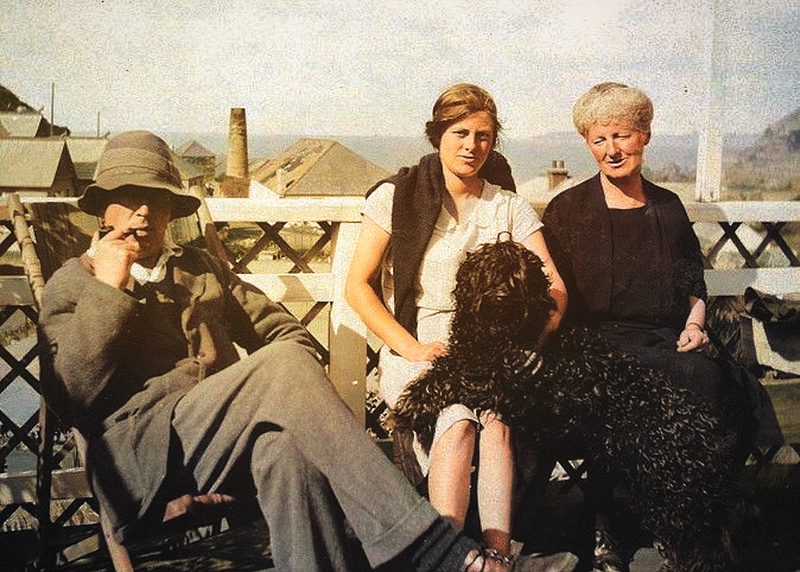
Surely he and Janie weren’t having sex.
That’s what everyone supposed — when they were Christian. In 2017, Janie Moore’s daughter, Maureen, confirmed the relationship had been sexual.
So there was…a little bit of heterosexuality?
Also, the sexual relationship may be why C.S. Lewis became Christian. As biographer A.N. Wilson, suggests, Lewis’ religious conversion seems to have been an effort “to give himself an excuse to abandon sexual relations with Mrs. Moore…”
An anti-sex religion can come in handy when you’re trying to break up.
Lewis was close to J.R.R. Tolkien.
The references here get a little…odd. Lewis calls Tolkien “a smooth, pale fluent little chap — no harm in him: only needs a smack or so.”
Did Lewis want to spank Tolkien? The two were longtime friends, but there’s more odd details. Lewis got on very poorly with Tolkien’s wife Edith. The scholar Nicole duPlessis writes about that:
“Lewis, although friendly to the children, seemed unable to interact with Edith in what might be considered a normal manner, being instead ‘shy and ungainly’ — indicative, perhaps, of a general difficulty interacting with adult women in domestic contexts.”
But then Lewis continued to strike most all women as basically very unfriendly. As Tolkien’s biographer Humphrey Carpenter put it, “women found Lewis as unbearable as he found them.”
Lewis had a new gay bestie in Nevill Coghill.
In Surprised by Joy, Lewis calls the fellow Oxford professor “a man after my own heart…a Christian and a thoroughgoing supernaturalist.”
Coghill became a member of the Inklings. Somehow, it’s often not mentioned that Coghill was gay. Harry Lee Poe does mention it, and suggests Lewis “did not know” this information.
Is that so, however? Recollections of Coghill seem to be packed with queer coding. The book C.S. Lewis and His Circle, had a portrait by a former student who recalled Coghill loved to travel, loved art, opera. He writes:
“Nevill had a natural grace. It was a beautiful quality of gentleness and humour and kindliness and hospitality, and he was very, very easy to get along with, but he wasn’t a pushover, I mean he wasn’t flaccid.”
I think ‘flaccid’ here is being used in lieu of ‘faggy’. Nevill Coghill wasn’t that, but he still read as gay.
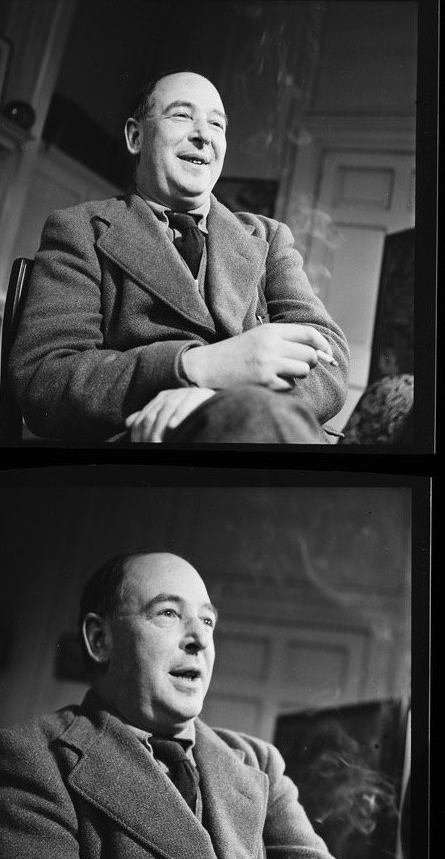
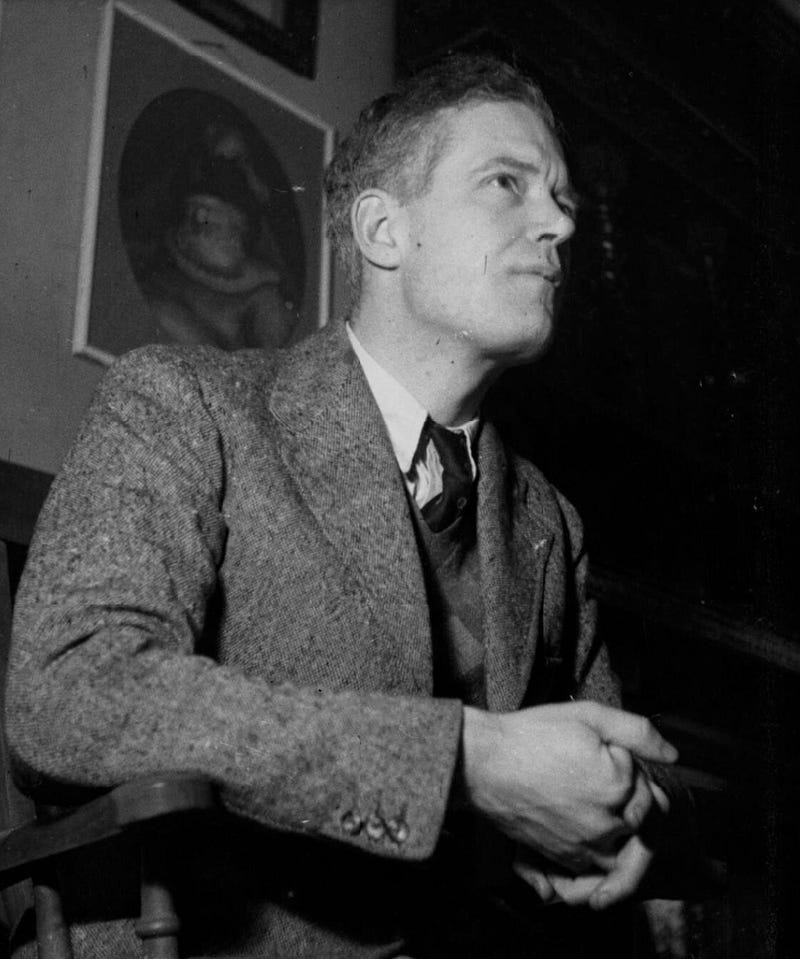
Was it odd that C.S. Lewis was a bachelor?
Then he married, but that was quite a bizarre story. Joy Davidman, a Jewish divorcee with two sons, came to England to meet him in 1952. They married in a civil ceremony on April 23, 1956, and had a Christian ceremony the following year.
Was it a love story? Lewis did love her boldness in asking to use the bathroom. He writes in a letter that she was:
“…quite extraordinarily uninhibited. Our first meeting was lunch at Magdelen, where she turned to me in the presence of three or four men, and asked in the the most natural tone in the world ‘Is there anywhere in this monastic establishment where a lady can relieve herself?’”
Lewis married a woman he barely knew in order to help her avoid deportation.
He explained to friends that sex was out of the question, since she was divorced. On the Christian logic, it would be ‘adultery’. Lewis adds in a note to Arthur: “An easy resolution when one doesn’t in the least want it!”
But then, the marriage became — real? That’s the story. A fake marriage turned deeply passionate…supposedly. There might be a case that Davidman had wanted to be sexual, even though both were at advanced ages, and both often unwell. Interestingly, a cycle of poems that Joy wrote in her final years was recently found and published.
She seems to be writing of her husband, C.S. Lewis:
“O my Antarctica, my new-found land Of woman-killing frost!”
In a poem following she depicts her husband as sexually remote. She writes: “I wish you were the woman, I the man…”
The context, notes the scholar Don W. King, does seem to be the marriage, but he dismisses the poems as “hyperbole.”
Joy Davidman died of cancer.
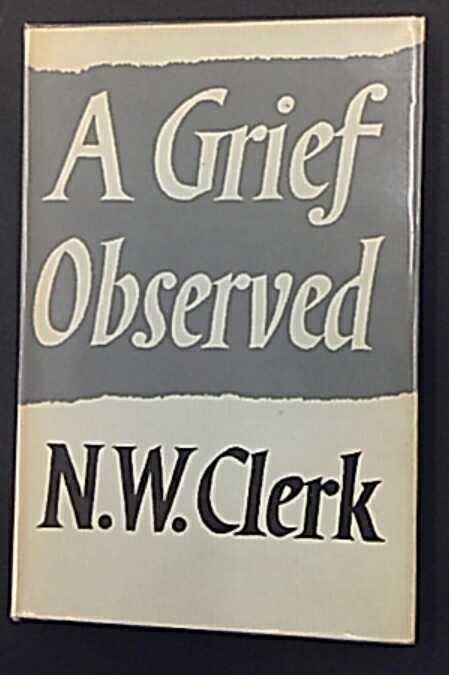
Then Lewis wrote a brief 1961 book, A Grief Observed, published under a pseudonym, about a man mourning his deceased wife. Christians have read it as a memoir. It’s the story of a very sexual marriage (i.e. “No cranny of heart or body remained unsatisfied…”).
The manuscript of A Grief Observed reads like a journal Lewis was keeping, but curiously it was found only as a polished text, not a diary. Even Christians have wondered if it was ‘real’.
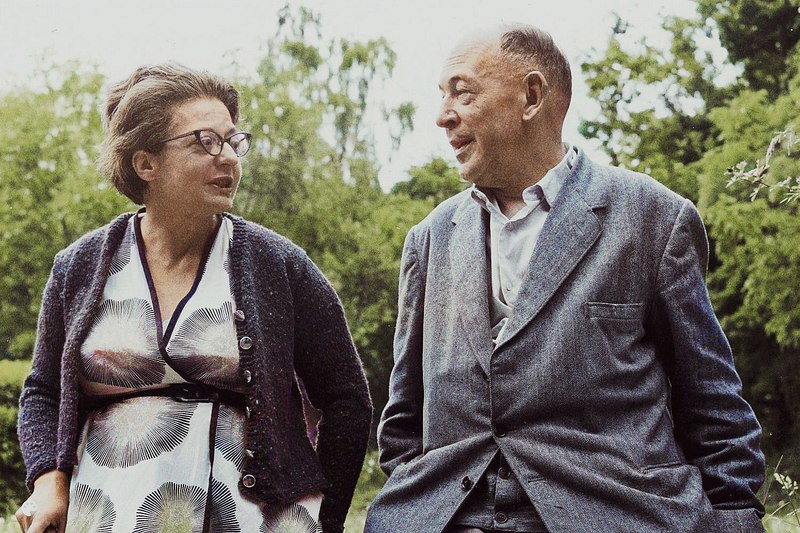
In 1963, a young American came to visit.
That would be some more bonding over urination. When Walter Hoooper, after drinking all that tea, asked to use the ‘bathroom’, Lewis went to draw a bath — knowing he’d wanted what the Brits call the ‘lavatory’.
As Hooper recalls, Lewis asked him to stay on as a secretary. Warnie had done much of the paperwork, but his alcoholism had gotten bad.
In a memoir, Douglas Greshman, the younger of Joy Davidman’s two sons, recalls of Hooper: “He was a handsome young man about fourteen years older than I, and he had a charm and gentle manner about him.”
Douglas recalls Lewis, in contrast, as “a tired, sick and grieving man, old beyond his years.”
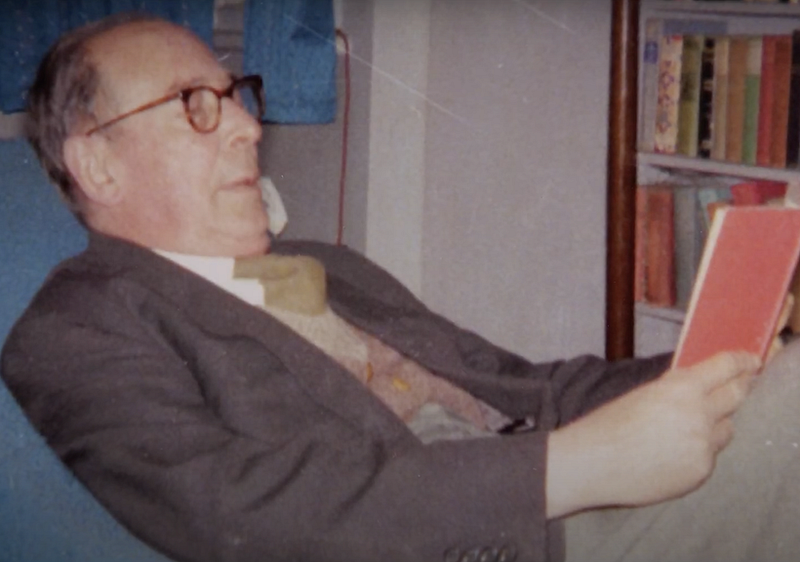
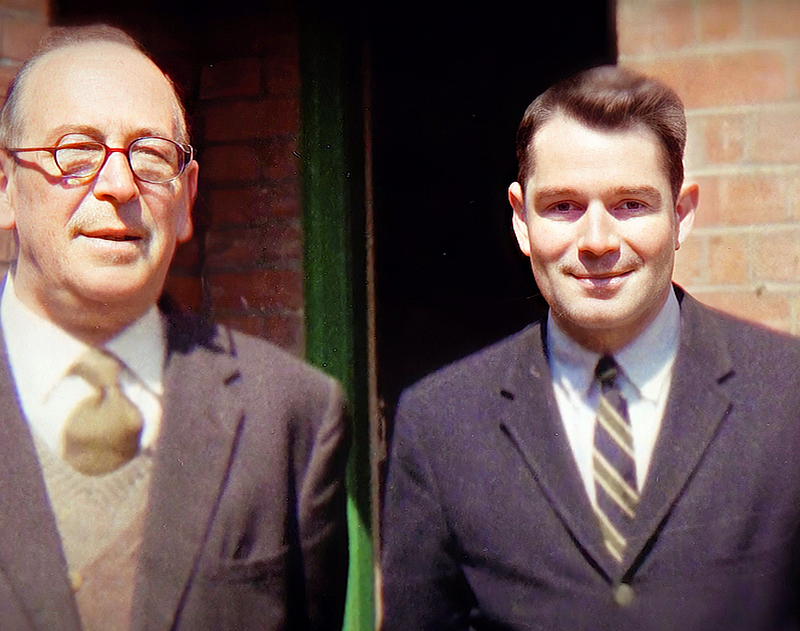
In later years, Hooper describes his bond to Lewis in curiously wifely terms.
He writes in a 1979 memoir of their time together:
“Lewis and I became more intimate, and finally he asked me to become his companion-secretary and I moved into his house… I don’t think I’ve ever known anyone quite so intimately as C.S. Lewis.”
In a 1974 biography that Hooper co-authored. Lewis is quoted telling friends: “I want you to like him. I want all my friends to like him. He is a young American. Very devoted and charming.”
This account continues:
“While Hooper was out of the room, Mrs Farrer said to Lewis, ‘Jack, Austin and I have always thought you guarded your private life very jealously. Is it uncomfortable having Walter living in your house?’ He answered, ‘But Walter is part of my private life!’”
Hooper returned to America, intending to resume as Lewis’ secretary. But Lewis’ longtime urinary problems had caught up to him. He’d had a catheter installed during his marriage. That caused a kidney infection, which caused a heart problem, which killed him.
Lewis seemed on the fast track to being forgotten.
Hooper recalled arriving in London and seeing in a bookstore “a whole table of his books remaindered.” On arriving at Lewis’ home, he found Warnie burning his brother’s papers.
Hooper saved what he could. Then over the next years he undertook a massive archival search for all Lewis’ work. Lewis hadn’t even kept copies of his own work. Hooper canvassed friends for letters.
Hooper seemed particularly interested to know what had gone on with Arthur Greeves. Their letters were given to him after Greeves had blacked out several passages. Hooper arranged for them to be X-rayed, and so the text was recovered, and Greeves’ sexuality became known.
It was no easy task re-presenting Lewis publicly.
There was no video of him, just some black & white photos, and snippets of audio. Lewis was rather vague. He was “a somewhat inscrutable figure,” as Malcolm Muggeridge puts it in 1974, when reviewing the new Lewis biography that Hooper had co-authored.
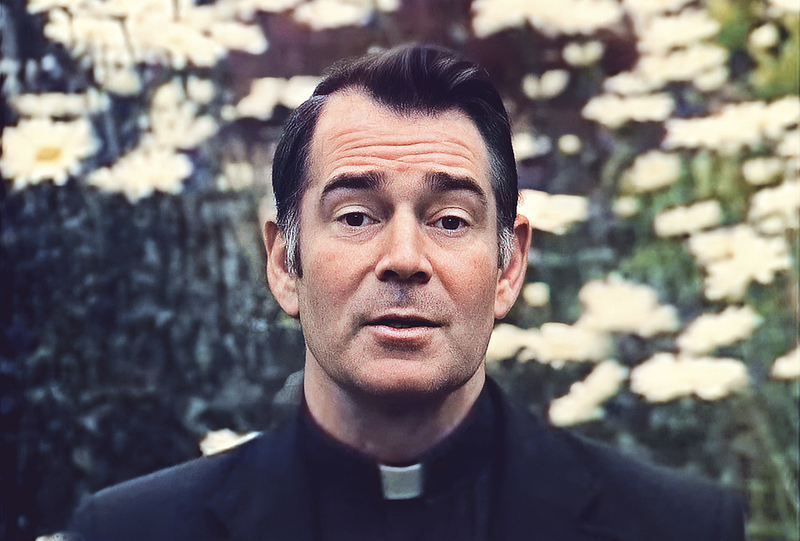
A new generation got to knew Lewis through Hooper’s eyes. In 1979, Hooper starred in a documentary about Lewis, Through Joy and Beyond. Watching it, honestly, Lewis feels remote. An antique.
But he comes alive as an object of Hooper’s evident love.
Many “new” C.S. Lewis books appeared.
Then a whole narrative world opened — as Narnia, the Inkings, Mere Christianity, Surprised by Joy, adjoined to Tolkien’s fiction. It seemed like a new room in Christianity itself. A space for being colorful, fantastical, feeling, intelligent, joking, querying, and yet devout.
There were odd moments, to be sure. Hooper produced from Lewis’ semi-burnt archive an unpublished novella titled The Dark Tower. The plot simmered with perverse erotics: rape, homosexuality, and Lewis himself appeared as a character named…Lu-Lu.
There would be an ongoing effort to suggest Hooper himself forged it. That turned out to be nothing, but it helped to deflect attention as Lewis was becoming even an Evangelical enthusiasm. Hooper was careful in creating an anthology, God in the Dock, marketed to their concerns.
Hooper passed on things he said Lewis told him.
They could be unexpected, like, “I’ve always been a bachelor at heart.”
Hooper said that Lewis told him that A Grief Observed was a novel.
Was Hooper oddly eager to discuss the subject of Lewis’ sex life? The scholar Michael Christensen recalls meeting Hooper in 1979, and entering into an unexpected conversation:
“We were talking about C.S. Lewis’ marriage, sexuality and whether Lewis enjoyed — consummated their marriage. This was on Walter Hooper’s mind.”
Year after year, Hooper toured the world, giving speeches, often re-enacting the shy young man he had been when meeting Lewis, and being served tea—as he’d serve tea to others. The prefaces and endorsements Hooper wrote became the gold standard for books about C.S. Lewis.
But what was Hooper’s story?
I go on a little search. He was born in 1931 in Reidsville, North Carolina. One profile mentions he had brothers and a sister, who’d remained in the same small town — as Hooper left.
He attended University of North Carolina at Chapel Hill. The first event of his life he ever really references seems to be the scene when the captain of the football team introduced him to the work of C.S. Lewis.
He served two years in the Army, then decided to be an Episcopal cleric. He went to the Virginia Theological Seminary for two years, 1958 to 1959. He was never ordained. Later, he left it off his resumé.
In a 1987 profile in Carolina Alumni Review, Hooper addresses that situation. The bishop had made him undergo a psychiatric exam. He remembers, in particular, this question being put to him:
“What would you do if you were locked in a room with a naked woman and a bed?”
Hooper didn’t say what his reply had been, only that the psychiatrist reported back to the bishop that he’d been “boiling with rage.”
Hooper was assigned to twice-weekly visits to a psychiatrist. He went for two years. The effort, he suggested, was to “monkey about with one’s psyche.” The bishop kept asking for reports on the sessions. Hooper said the psychiatrist replied: “It’s none of his damn business.”
Finally, realizing there would be no ordination, Hooper left.
He got an M.A. in Medieval literature.
From 1960 to 1963 he seems to have taught at the University of Kentucky, as a low-level instructor in English. He had exchanged a few notes with Lewis, and thought to visit him.
They met. “I think he knew that I liked him very much,” Hooper says in 2015. “He may have liked me.”
In another of Hooper’s well-worn stories, Lewis walked him to the bus stop. “I didn’t know whether I’d ever see him again,” Hooper says. “But I thought: I really love this man.”
He moved to take over the Lewis estate.
Warnie wrote in his diary about Hooper’s “astonishing talent for infiltration” — not at all pleased about it. Warnie writes:
“I’ve written to him of course, but he has a front of brass and will no doubt continue to present his false front to the public.”
Over the next years, Hooper trained to become an Anglican priest — at St. Stephen’s, a seminary near Oxford. Lewis biographer A.N. Wilson attended the same school, and recalled it as “a homosexual world of a particularly high-camp kind — a girls’ names and feather dusters sort of world…”
I think over Hooper’s story.
A young American kicked out of Christianity after a check of his sexuality, he came to England to pursue a semi-forgotten Christian author whose work had some quality he loved.
Almost singlehandedly, he’d raised Lewis’ memory from the dead.
Hooper died on December 7, 2020. The Lewis scholarly community did a podcast memorial series in five parts. Many spoke of Hooper’s amazing labor, and his warmth and generosity. Many called him ‘Christlike’.
No one mentioned that he was gay. 🔶