avatarArgumentative Penguin

Free AI web copilot to create summaries, insights and extended knowledge, download it at here

3533

Abstract

a/File:A._A.Milne_with_his_son_Christopher_Robin_Milne_and_Pooh_Bear-Howard_Coster-_NPG_P715.jpg">CREDIT: Public Domain</a></figcaption></figure><p id="b6a4">The first appearance of the fictional Winnie (not yet a pooh) was in a poem ‘Teddy Bear’ featured in Punch Magazine in 1924 and republished in a book of poetry called <i>‘When We Were Very Young’ </i>the same year. <a href="https://en.wikipedia.org/wiki/Winnie-the-Pooh_(book)"><i>Winnie-the-Pooh</i></a><i> </i>was published in 1926, followed by <a href="https://en.wikipedia.org/wiki/The_House_at_Pooh_Corner"><i>The House at Pooh Corner</i></a> in 1928. A second collection of nursery rhymes, <a href="https://en.wikipedia.org/wiki/Now_We_Are_Six"><i>Now We Are Six</i></a>, was published in 1927.</p><p id="173d">Milne regretted his choice to go into children’s literature and the fame it brought him and his son.</p><blockquote id="6f40"><p>“I feel that the legal Christopher Robin has already had more publicity than I want for him. I do not want CR Milne to ever wish that his name were Charles Robert.</p></blockquote><p id="6e64">Sadly this turned out to be the case. Milne and his wife became estranged from their son, who came to resent what he saw as his father’s exploitation of his childhood. Eventually, he came to hate the books that had thrust him into the public eye and largely withdrew from public life.</p><figure id="7572"><img src="https://cdn-images-1.readmedium.com/v2/resize:fit:800/0*SGyAHP93ru2dT1ep.png"><figcaption>The Real Winnie and Christopher Robin. CREDIT: London Zoo (Fair Use)</figcaption></figure><p id="629c">After A.A Milne’s death in 1956, his widow Daphne sold her rights to the Pooh characters to <a href="https://en.wikipedia.org/wiki/Stephen_Slesinger">Stephen Slesinger</a>, whose widow subsequently sold the rights after Slesinger’s death to <a href="https://en.wikipedia.org/wiki/The_Walt_Disney_Company">the Walt Disney Company</a>.</p><p id="3ce7">The younger Milne was not pleased. He earned a mathematics scholarship at <a href="https://en.wikipedia.org/wiki/Stowe_School">Stowe School</a>, where he was bullied without mercy, he wrote: <i>“It seemed to me almost that my father had got to where he was by climbing upon my infant shoulders, that he had filched from me my good name and had left me with the empty fame of being his son.”</i></p><p id="370b">Christopher Robin never properly reconciled with either of his parents. His father died in 1956, and his mother refused to see him on her deathbed. Christopher Robin Milne married his first cousin and ran a bookshop in a quiet part of the UK before he died in his sleep from complications of <a href="https://en.wikipedia.org/wiki/Myasthenia_gravis">Myasthenia Gravis</a> in 1996.</p><p id="a821"><b>Meanwhile, Winne the Pooh related products bring in roughly £3.6 billion per year for Disney.</b></p><h2 id="e36a">What about Winnipeg?</h2><p id="a324">The sweet treats from Christopher and other children were so frequent and the bear so tame that she could be fed honey from a spoon. Giving a bear honey from a spoon comes at a cost though, by the time she died Winnie had lost almost all of her teeth.</p><p id="ebba">Wait. Winnie the Pooh is dead?!</p><p id="994e">Yeah, the original Winnipeg the black bear died in 1934 likely from gastric distress brought about by all the sugary treats. Her body was donated to science.</p><p id="dfad">If you’re the sort of person who wants to follow things further you can find plenty of statues and plaques of Winnipeg a

Options

t London Zoo. The original stuffed toys were donated by Christopher Robin to the original publisher and are now at the New York Library.</p><p id="969d">Most of them will be familiar — though it should be pointed out that Roo is not in the lineup, she was lost when Christopher Robin was nine years old.</p><figure id="64da"><img src="https://cdn-images-1.readmedium.com/v2/resize:fit:800/1*zGzN2z_ZPhygOrMayHbk-w.png"><figcaption>CREDIT: Public domain</figcaption></figure><p id="cab1">You can still see the original “100 Acre wood’ in <a href="https://en.wikipedia.org/wiki/Ashdown_Forest">Ashdown Forest</a> in East Sussex, with Shepard’s original sketches of pine trees and other forest scenes are now exhibited at the <a href="https://en.wikipedia.org/wiki/Victoria_and_Albert_Museum">V&A Museum</a> in London. You can also find the now replaced <a href="https://en.wikipedia.org/wiki/Poohsticks">Pooh-sticks bridge </a>in said forest (with original timbers and rebuilt original bridge on the Estate of <a href="https://en.wikipedia.org/wiki/William_Sackville,_11th_Earl_De_La_Warr">Lord De La Warr</a>).</p><p id="cb83">There are statues aplenty of Winnie the Pooh at London Zoo and simply because I like to end on a macabre note and I hate clickbait. I can indeed bring you the head of Winnie The Pooh. Complete with her total lack of teeth.</p><p id="97ed">The original skull has been stored at the Hunterian Museum along with 11,000 other bits of dead animals. The last time the real Winnie appeared in a book was in a 1930s textbook about the dental health of animals.</p><p id="d42b">In 2015 her skull was brought out of retirement to deeply traumatise the people of London and to assist in education.</p><blockquote id="07cc"><p>“We thought really hard about bringing her out on display, because this isn’t Winnie-the-Pooh, a cuddly fluffy bear wandering around. This is a skull. But it’s why the skull is here that is the take-home story for us. The skull is here alongside the skulls of many other animals. We took a lot of animals who died in London Zoo to understand their anatomy, the science behind these animals. So the story for us is a happy one, we have this research collection to understand how animals behave and the diseases they’re subject to.” — Dr Sam Alberti</p></blockquote><p id="966b">And because if I write a title like <i>‘Bring me the head of Winnie The Pooh’ </i>then I have to follow through on my no clickbait policy. Here she is in all her glory.</p><figure id="21fd"><img src="https://cdn-images-1.readmedium.com/v2/resize:fit:800/1*zMXsySH_PZebjo6MW479fA.png"><figcaption>CREDIT: Hunterian collection (Fair use)</figcaption></figure><p id="02dc">Enjoyed that random bit of Penguin nonsense trivia? You’d likely enjoy some of my older stories about quirky bits of British social history. Try this one on for size.</p><div id="0124" class="link-block"> <a href="https://readmedium.com/where-exactly-is-the-house-of-the-rising-sun-38b1cfdecae0"> <div> <div> <h2>Where Exactly Is The House Of The Rising Sun?</h2> <div><h3>It may have ruined many a poor boy, but it might not be anywhere near New Orleans.</h3></div> <div><p>medium.com</p></div> </div> <div> <div style="background-image: url(https://miro.readmedium.com/v2/resize:fit:320/1*LAwYK6lsm1q9PN2iF3-ELA.jpeg)"></div> </div> </div> </a> </div></article></body>

Bring Me The Head Of Winnie The Pooh

Because what else are you going to do write about on international Winnie The Pooh Day?
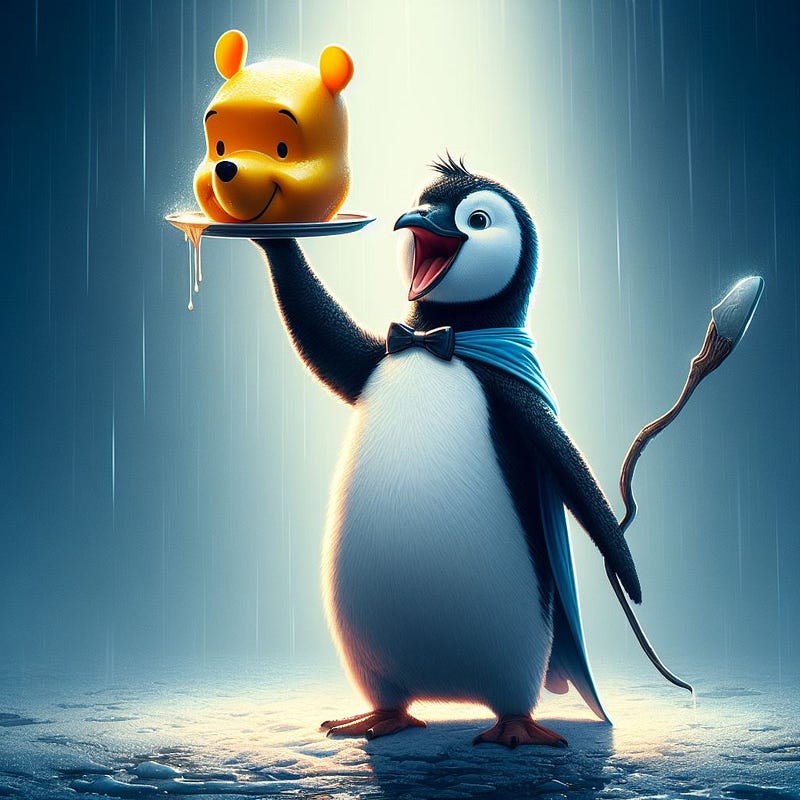
CREDIT: Author generated AI

If you’re attempting to put your loveable British bears in order then Winnie has to be somewhere near the top. I’ve never had a lot of time for Ruxspin or Rupert and only Paddington comes close, arguably only because he’s voiced by Ben Wishaw.

Also, Disney owns Marvel don’t cha know? So by the transitive properties of creative thinking Winnie the Pooh is a Marvel superhero and that means he needs a kick-ass origin story. He has one, and it’s a doozy.

Luckily for you I’m here to tell it- and boy is it darker than you think.I’m going to enjoy explaining this one.

Winnie is short for Winnipeg

Harry Colebourn was a vet, in both senses of the word. He was a World War One veteran soldier and also a veterinarian, WWI being the sort of war long enough ago where everyone used pigeons, horses and whatever dogs were available to run errands, send messages and generally do all the dangerous stuff that was too important to trust to the working classes.

Harry was with the Canadian Army Veterinary Corps and being Canadian, he obviously had a pet bear cub he’d bought at a train station. He named her Winnipeg Bear after the town he’d grown up in. Winnipeg rose through the animal ranks very quickly becoming the regimental mascot at a very young age.

Here are Harry and Winnipeg enjoying a moment together.
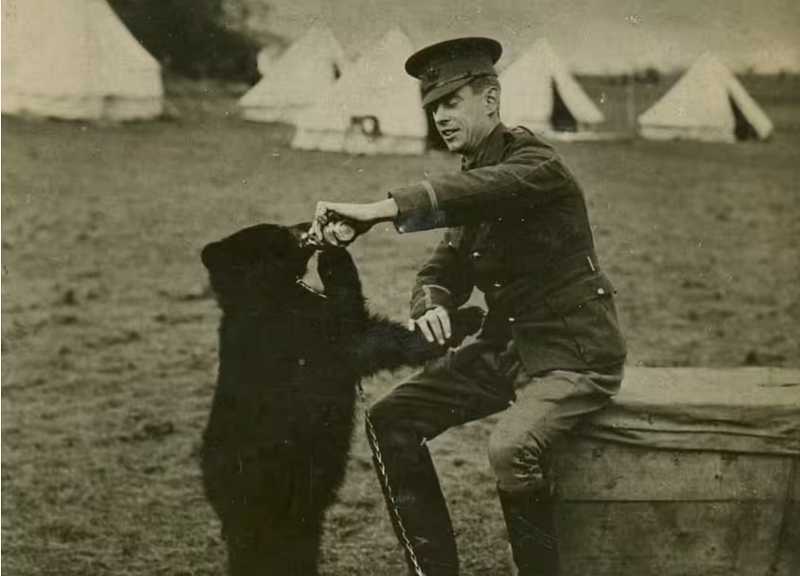
CREDIT: Linday Mattick/AP/Canadian Press (Fair use)

Winnipeg travelled with Harry when he was called over to England in 1914 but could not go with him when he was eventually transferred to the front lines over in France.

Winnipeg wasn’t destined for the front line along with the horses, pigeons and other animals who were pressed into service, instead she was given as a gift to London Zoo.

It was here that Winnipeg, soon shortened to Winnie would see out the rest of her days. She became a cultural icon

Winnie and Christopher

Winnie was a huge draw and quickly became a firm favourite with many youngsters in and around London. That included a young Christopher Robin Milne who would sometimes show up and feed the bear with honey and other sweet treats.

He liked her so much that his dad wrote a story about it

Christopher Robin’s father was Alan Alexander Milne, an up-and-coming playwright tutored at a small independent school by H.G Wells. His plays and novels are largely forgotten today but Milne decided he would take a foray into writing poems for children.

Specifically for his son Christopher Robin and his teddy ‘Edward’ who he’d got for his first birthday.
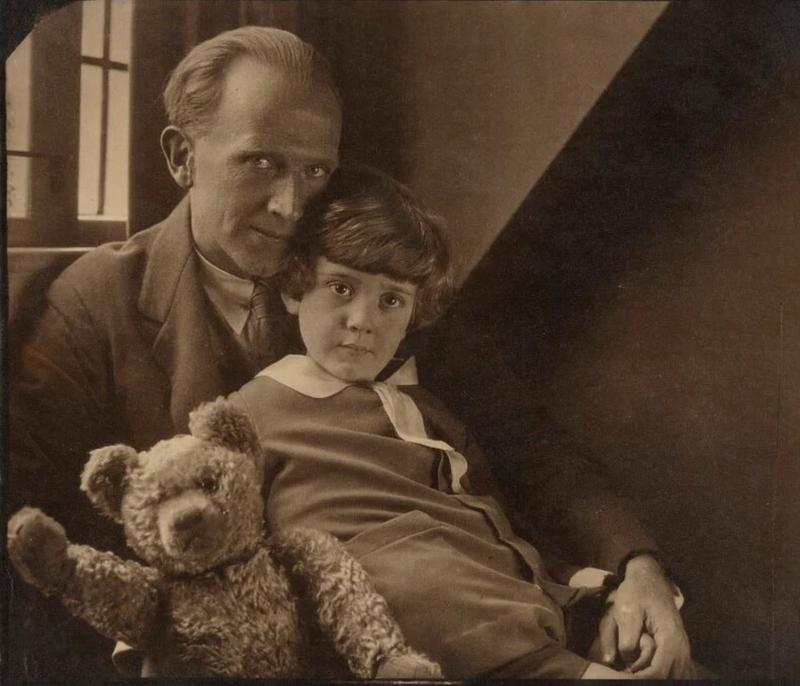
A.A Milne, Christopher Robin and Winnie the Pooh. CREDIT: Public Domain

The first appearance of the fictional Winnie (not yet a pooh) was in a poem ‘Teddy Bear’ featured in Punch Magazine in 1924 and republished in a book of poetry called ‘When We Were Very Young’ the same year. Winnie-the-Pooh was published in 1926, followed by The House at Pooh Corner in 1928. A second collection of nursery rhymes, Now We Are Six, was published in 1927.

Milne regretted his choice to go into children’s literature and the fame it brought him and his son.

“I feel that the legal Christopher Robin has already had more publicity than I want for him. I do not want CR Milne to ever wish that his name were Charles Robert.

Sadly this turned out to be the case. Milne and his wife became estranged from their son, who came to resent what he saw as his father’s exploitation of his childhood. Eventually, he came to hate the books that had thrust him into the public eye and largely withdrew from public life.
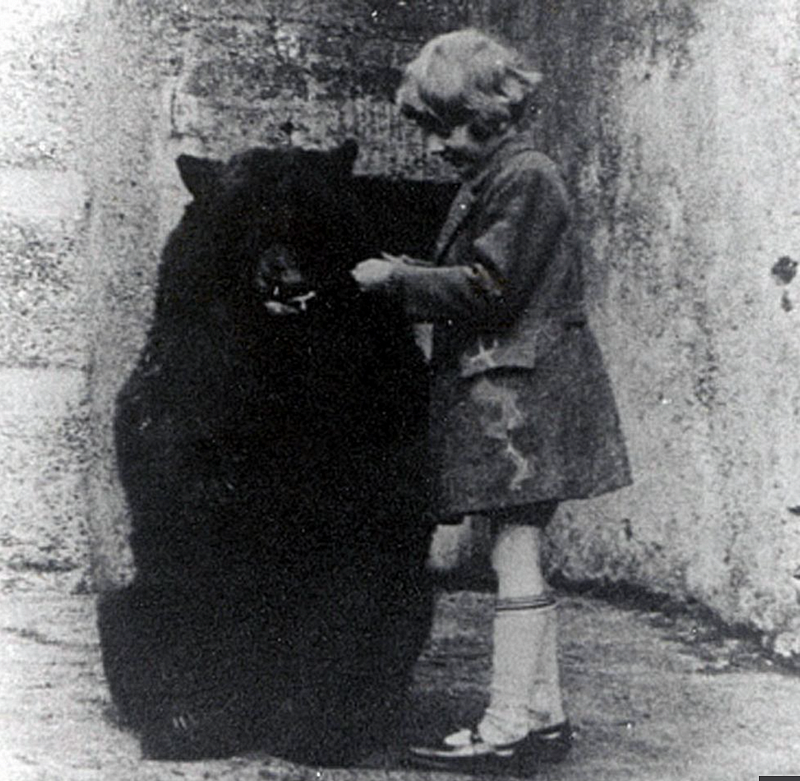
The Real Winnie and Christopher Robin. CREDIT: London Zoo (Fair Use)

After A.A Milne’s death in 1956, his widow Daphne sold her rights to the Pooh characters to Stephen Slesinger, whose widow subsequently sold the rights after Slesinger’s death to the Walt Disney Company.

The younger Milne was not pleased. He earned a mathematics scholarship at Stowe School, where he was bullied without mercy, he wrote: “It seemed to me almost that my father had got to where he was by climbing upon my infant shoulders, that he had filched from me my good name and had left me with the empty fame of being his son.”

Christopher Robin never properly reconciled with either of his parents. His father died in 1956, and his mother refused to see him on her deathbed. Christopher Robin Milne married his first cousin and ran a bookshop in a quiet part of the UK before he died in his sleep from complications of Myasthenia Gravis in 1996.

Meanwhile, Winne the Pooh related products bring in roughly £3.6 billion per year for Disney.

What about Winnipeg?

The sweet treats from Christopher and other children were so frequent and the bear so tame that she could be fed honey from a spoon. Giving a bear honey from a spoon comes at a cost though, by the time she died Winnie had lost almost all of her teeth.

Wait. Winnie the Pooh is dead?!

Yeah, the original Winnipeg the black bear died in 1934 likely from gastric distress brought about by all the sugary treats. Her body was donated to science.

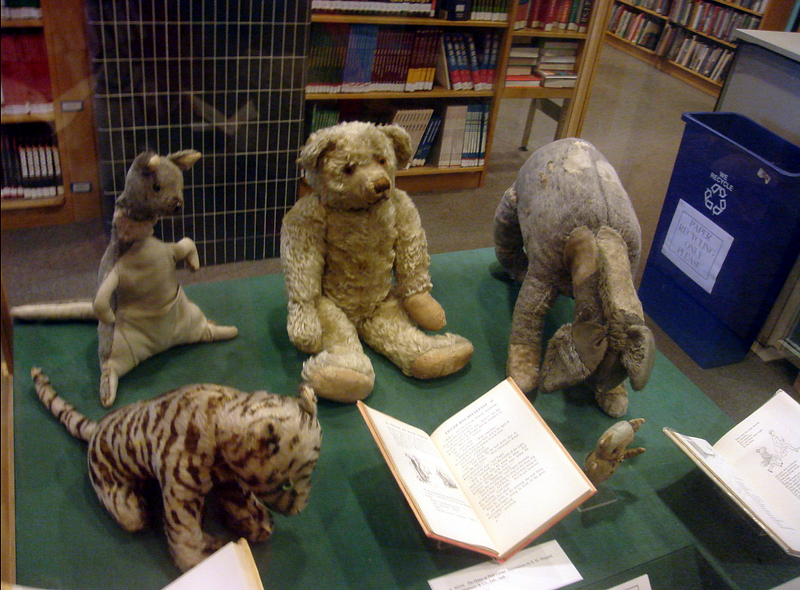
If you’re the sort of person who wants to follow things further you can find plenty of statues and plaques of Winnipeg at London Zoo. The original stuffed toys were donated by Christopher Robin to the original publisher and are now at the New York Library.

Most of them will be familiar — though it should be pointed out that Roo is not in the lineup, she was lost when Christopher Robin was nine years old.
CREDIT: Public domain

You can still see the original “100 Acre wood’ in Ashdown Forest in East Sussex, with Shepard’s original sketches of pine trees and other forest scenes are now exhibited at the V&A Museum in London. You can also find the now replaced Pooh-sticks bridge in said forest (with original timbers and rebuilt original bridge on the Estate of Lord De La Warr).

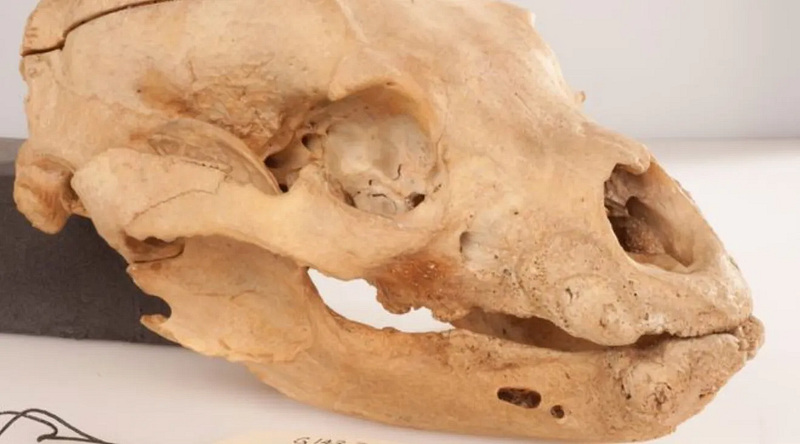
There are statues aplenty of Winnie the Pooh at London Zoo and simply because I like to end on a macabre note and I hate clickbait. I can indeed bring you the head of Winnie The Pooh. Complete with her total lack of teeth.

The original skull has been stored at the Hunterian Museum along with 11,000 other bits of dead animals. The last time the real Winnie appeared in a book was in a 1930s textbook about the dental health of animals.

In 2015 her skull was brought out of retirement to deeply traumatise the people of London and to assist in education.

“We thought really hard about bringing her out on display, because this isn’t Winnie-the-Pooh, a cuddly fluffy bear wandering around. This is a skull. But it’s why the skull is here that is the take-home story for us. The skull is here alongside the skulls of many other animals. We took a lot of animals who died in London Zoo to understand their anatomy, the science behind these animals. So the story for us is a happy one, we have this research collection to understand how animals behave and the diseases they’re subject to.” — Dr Sam Alberti

And because if I write a title like ‘Bring me the head of Winnie The Pooh’ then I have to follow through on my no clickbait policy. Here she is in all her glory.
CREDIT: Hunterian collection (Fair use)

Enjoyed that random bit of Penguin nonsense trivia? You’d likely enjoy some of my older stories about quirky bits of British social history. Try this one on for size.

United Kingdom
Literature
History
Fiction
Childrens Books
Recommended from ReadMedium