
Where Exactly Is The House Of The Rising Sun?
It may have ruined many a poor boy, but it might not be anywhere near New Orleans.
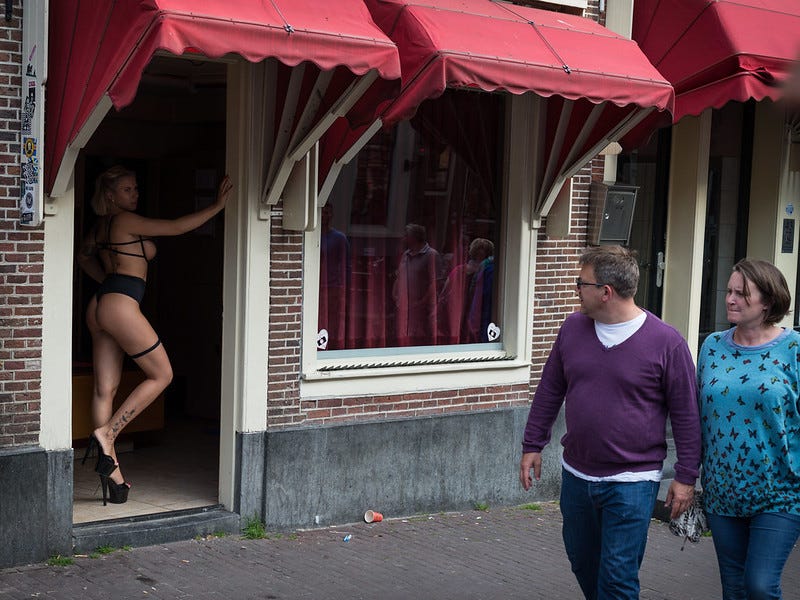
In 1964, the British band The Animals recorded and released the most famous version of The House of The Rising Sun.
They didn’t write it and the song had been around for a long time before this. I mean a long time. If you’re not heavily into music then chances are the version you’ve heard is the one by The Animals.
It’s the version most of us are familiar with.
I’m not a musician and nor am I musical, but I do love to delve into the creativity engine of popular things to see what makes things tick. I don’t have the musical know-how to tell you why the song gets stuck in your head but I am prepared to follow a rabbit hole wherever it leads.
And at the moment it leads to Appalachia.
I am reliably informed Appalachia is in the USA. I’m actually better informed than most UK citizens because I know Appalachia stretches from southern New York to the northern parts of Alabama, Mississippi, and Georgia — and it’s named after the Appalachian mountains.
Give me a gold sticker and a fish.
Being on the East of the US and a geographical melting pot for international incomers means Appalachian music was both influenced by and subsequently shaped many other forms of music. It has left a lasting imprint on a wide range of genres, from bluegrass and country to folk, Americana, and even rock and roll.
It’s Folk and Rock and Roll that are important to this story.
The House of the Rising Sun was first collected and recorded in Appalachia sometime in the 1930s. It was recorded by Tom Clarence Ashley & Gwen Foster in 1933 and you can have a listen if you like.
It’s quaint and wonderful. Like a sepia hug.
Sixteen-year-old Georgia Turner also recorded the song in 1937. In her version the song is sung in the first person, with the singer playing the part of a young woman lured into a life of prostitution and lamenting how the House of the Rising Sun ruined her life.
In the traditional folk version this seems to be the main thrust of the song, the main character is either a prostitute or a prisoner. Many versions also urge a sibling or parents and children to avoid the same fate.
The oldest published version of the lyrics is that printed by Robert Winslow Gordon in 1925, in a column titled Old Songs That Men Have Sung in Adventure magazine. The lyrics of that version begin
There is a house in New Orleans, it’s called the Rising Sun It’s been the ruin of many poor girl Great God, and I for one.
The song was recorded by Woody Guthrie in 1941 and then again twice by Lead Belly. Nina Simone had a stab at it in 1960. In late 1961, Bob Dylan recorded the song for his debut album, released in March 1962. That release had no songwriting credit, but the liner notes indicate that Dylan learned this version of the song from Dave Van Ronk.
When The Animals came to record their version in 1964 they made their lead character a gambler. This was probably to ensure it would be allowed air time on the radio. They injected a bit of rock into the folk song and created ‘Folk Rock’.
Despite them being British they covered the American version which tells of a person’s life gone wrong in the city of New Orleans.
But is the House of the Rising Sun in New Orleans?
If the American origin story is to be believed then this song is about a brothel in New Orleans.
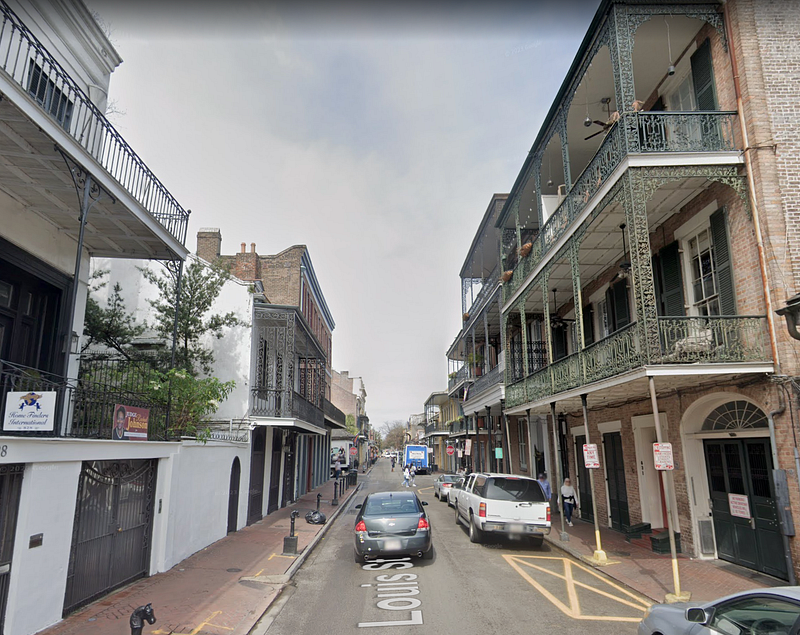
The real ‘House of the Rising Sun’ was named after the Madame who ran it, Marianne LeSoileil Levant. It was open for business between 1862 and 1874 before being closed down due to noise complaints.
If that’s the case, then Googlemaps says it’s here.
But it’s also worth noting that Appalachian music borrowed heavily from across The Atlantic. The folk music heard in the mountains of the Eastern seaboard has some of its origins in the diaspora of people leaving the UK for a brighter future as well as those heading North to be freed from slavery.
The combination of these two groups allows musically minded people to posit the melody is a traditional English ballad, but the song later became popular as an African-American folk song.
The House of the Rising Sun is considered by many to resemble “The Unfortunate Rake, a folk song from the 16th century. The oldest known version of this involves the tale of a young man’s health deteriorating from syphilis.
Have a listen, what do you think?
The Rising Sun is a popular lyric in a number of English songs that pre-date the American Revolution. American Ethnomusicologist Alan Lomax notes that “The Rising Sun” was the name of a bawdy house in two traditional English songs, proposing the location of the house was then relocated from England to the US by White Southern performers.
Cultural appropriation y’all! I knew there’d be a villain involved somewhere.
And things are about to get properly filthy.
There’s s an interesting lyric similarity to the (I don’t advise you click it if you’re sensitive) traditional English song “She was a Rum One”. As Lomax recorded in a discussion with walking traditional song encyclopedia Harry Cox there are two alternative opening lines to this song.
“if you go to Lowestoft, at the hole in the wall, there you’ll find Polly Hamstrung, she ain’t got a hole at all.
and
“If you go to Lowestoft, and ask for The Rising Sun, There you’ll find two old whores and my old woman is one.”
That second lyric is interesting because it fits the melody and tone of the song recorded in Appalachia, it’s just that Lowestoft is in Suffolk and that’s nowhere near the Eastern Seaboard. I doubt there are many people in England who would be able to point at Suffolk if they weren’t from round those parts.
The iconic song’s link to Lowestoft is ‘The Rising Sun’ pub- formerly known as ‘The Japanese Embassy ‘— which was located in the north of the town until it closed its doors in November 1968. The name probably refers to the Rising Sun Flag of the Imperial Japanese military. Japan is sometimes called the land of the Rising Sun.
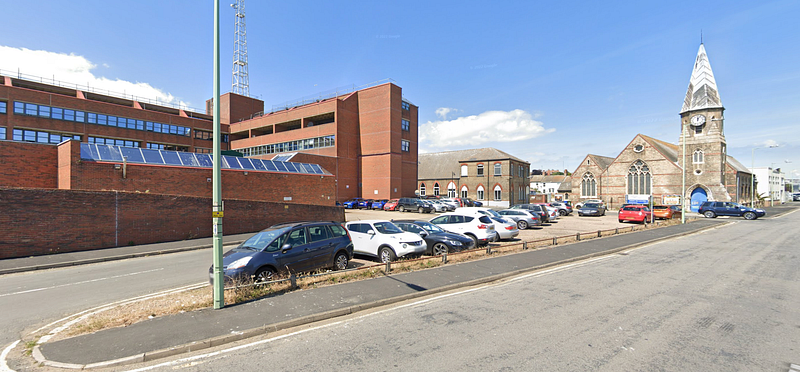
According to the census that pub was located at 54 Whapload Road, in a building which no longer exists. According to local legend, the original House of the Rising Sun was tucked somewhere here.
And that’s awesome because if you were going to locate a brothel and you worked in city planning this would be ideal. Whack it somewhere between a police station and a church and you can catch the punters and forgive them their sins in the same afternoon.
This leaves us with one question, where is the real House of the Rising Sun? It could be both places, it could be neither. It could have vanished into history but wherever it is or was — the song itself certainly has a fascinating backstory.
Thanks for coming to the TED talk I’m not qualified to give but sassy enough to try anyway.
Sources:
https://www.songfacts.com/facts/the-animals/the-house-of-the-rising-sun
https://en.wikipedia.org/wiki/Alan_Lomax
https://www.lowestoftjournal.co.uk/news/22924227.fall-rising-sun/