
Brewing Homemade Health Potion
Fermented honey with garlic. Who knew?
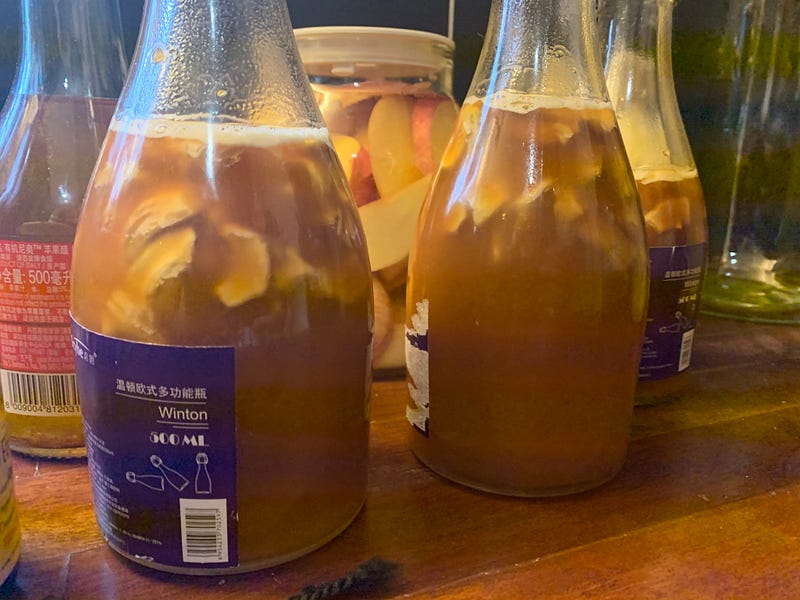
Bottles of a strange liquid adorn my kitchen counter, mystifying casual onlookers as they walk past…
“What in the world?”
They wonder as they keep walking, wondering aloud whether they saw something bubbling.
You did see something bubble good sir. You saw bottles of fermented goodness slowly working away, preparing for winter.
Winter is coming
Just like with a certain disappointing fantasy epic, winter is indeed coming. With winter comes sickness and disease, this sickness coming for those especially who dare to teach elementary aged school kids.
These kids will spit and splutter wherever they please, including directly into my face. Even worse, teenagers in China tend to communicate a little closer than they do elsewhere. So I have three months of teens my height telling me information mere inches from my face as bacteria pours out of their diseased mouths like smoke from a volcano.
Grossed out yet?
It’s time to prepare. It’s time to get brewing so that the defenders are ready to guard the tower when the time comes.
Let’s get fermenting.
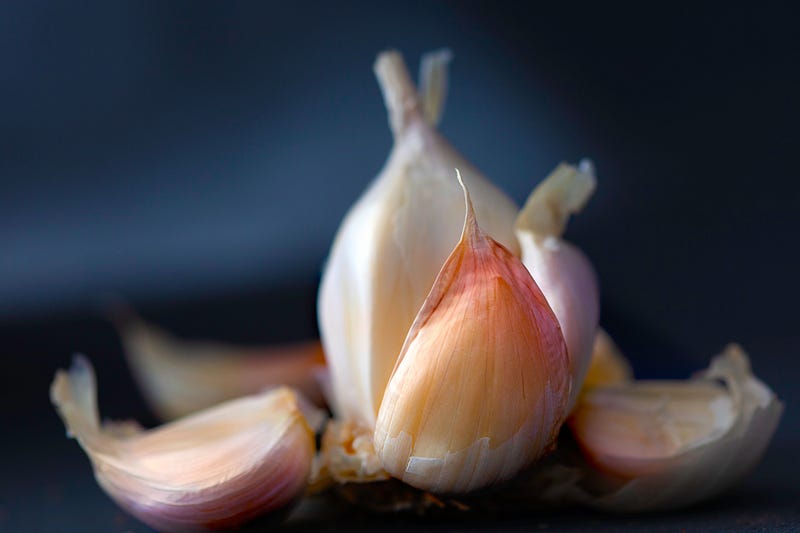
The power of garlic and honey
Honey is an interesting thing.
It contains very little water, and actively fights invading bacteria. In fact it’s famed for its medical use because of how effective it is against fighting bacteria.
So how could it ever be a useful ferment? Fermented ingredients need to literally breed bacteria by the billions.
Never fear, garlic is here.
When you add garlic to your honey, the garlic is immediately swarmed and attacked by the honey. The garlic begins producing an enzyme to protect itself (an enzyme that happens to be super duper healthy for us to eat).
Garlic is a fierce fighter, and puts everything it can into its battle against the honey. But as it fights, it bleeds. In the early days of the ferment, the garlic will bleed noticeable amounts of water and liquids.
The liquids weaken the honeys defences over time, until it eventually gets inside.
Once the liquid has infiltrated the honey, its ability to kill bacteria is destroyed. The wild yeasts that live inside are activated by the moisture bled out by the garlic. The honey and garlic are now both fermenting, each powered on by the natural processes of the other. A beautiful battle of nature.
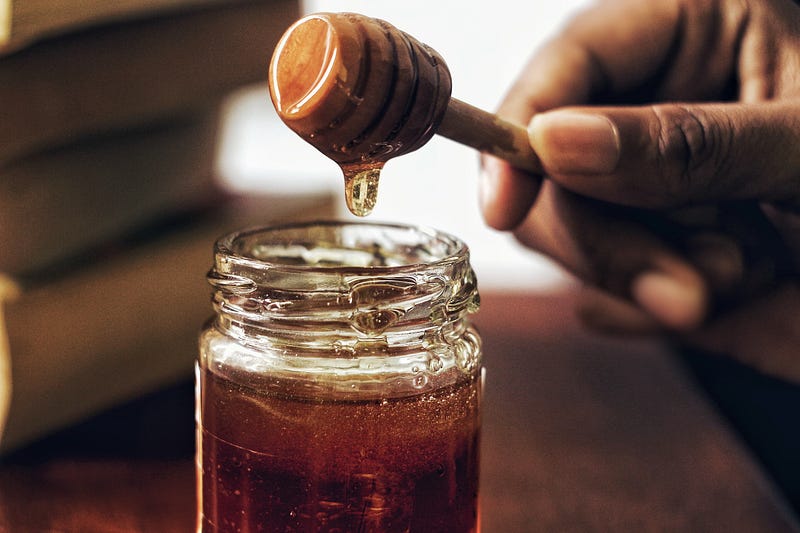
It’s alive!
The yeast that lay dormant in the honey has now come to life, and it’s starving. It begins eating the glucose in the honey and the garlic. Like most bacteria, it’s ravenous for sugar.
As it eats, it farts out carbon dioxide. This CO2 floats to the top and forms the bubbles that you’ll start to notice appearing in the jar.
The yeast will also produce acetic acid, a beautiful and valuable product of fermentation.
Over time the honey will start to change in composition. Thanks to the garlic, it will get thinner and thinner over time until it’s eventually as runny as water.
The entire concoction will look completely different over time, eventually becoming a delicious potion that tastes neither like honey nor garlic.
Some like to brush it onto pizza, some throw it into a salad. I like a straight spoonful each day all throughout winter.
Benefits?
As this potion is laden with beneficial bacteria, even a spoonful is going to flood your gut with billions of little soldiers fighting off kid-induced sickness.
Studies show that it’s also good for your heart and your kidneys, but I love it just for killing off the bad bacterias I don’t want swimming inside my body.
Let’s get started
I like to add a head of garlic to about 500 grams of honey. Add both to a glass jar and shake it to combine.
Never use metal for ferments, and plastic is no good either because this is a long ferment.
Plastics are never a good idea for long ferments because over time the harsh acids can strip chemicals out of the plastic and into your food. (The plastic was made out of crude oil after all) plus this ferment can last a year and beyond, so you’ll need a sturdy container. Fermentation-grade glass is perfect.
Some people recommend waiting an entire year before consuming, but I can only wait about 4 to 6 months. (But I’ve heard the taste is incredible after a year). I’ve also heard that the ginger becomes chewy!
Best of luck with your winters everyone, and may your body remain ever free of bacteria …. aaah the bad ones.


