
Why Ferment?
Could you use trillions of lil’ doctors?
If there’s one thing you should know about the rules-based world of fermentation, it’s that there are no rules… sorta.
There’s never been a better time to be “into” fermentation. Scientists are discovering things about our bacterial ecosystems that are challenging everything we thought we knew, and hipsters are spending more time than ever being photographed holding bottles of kombucha.
Sure, it’s the health trend of the minute; but thankfully it’s a damn delicious one. Plus it’s finally one that doesn’t require me to cut down on eating something I love. In fact, I actually get to eat more of something delicious!
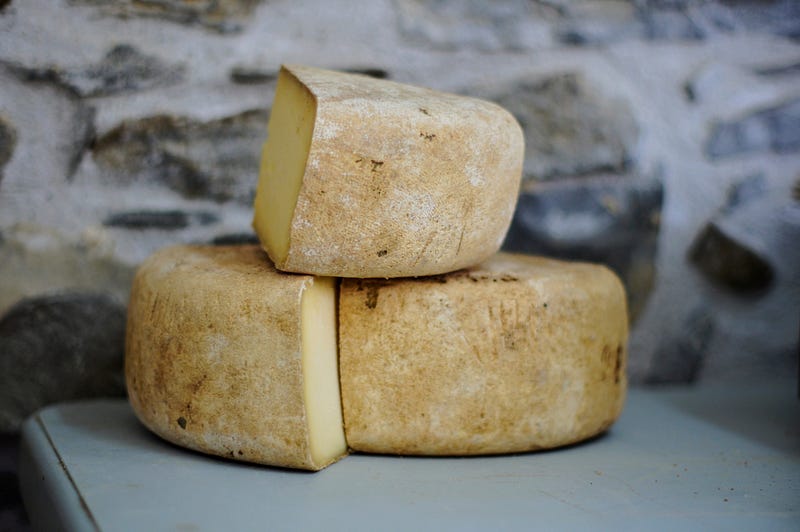
Now pass the wine… And the cheese.
10 to 1
Right now I’m reading ‘The Art of Fermentation’ by Sandor Katz, and after the boring chapters about various kinds of crock-ware, it’s a damn fascinating read.
He says that not only are there more bacteria cells in our body than our own DNA cells, they actually out-number us 10 to 1.
Cue the gasp..
We are 10 times more the bacteria that fill and cover our bodies than we are… ourselves! That kind of fact is mind-numbing to me.
This is why scientists are discovering that bacteria are responsible for a lot more consequential activity than people previously thought possible.
Everything from obesity to cancer can be tracked back to the ecosystems of bacteria living in our guts.
Scientists are beginning to realise that there is a direct connection between the bacteria living in our guts, and our brains. They could even be giving us direct instructions about everything from what to eat, to when to sleep.
By all accounts, they could be at the steering wheel of our bodies more than we are.
This research is shedding a whole new light onto how we understand health, and a big bright shiny spotlight onto fermentation.
An army of microscopic doctors
It was only a generation ago we believed that eating boiled vegetables would give us all the nutrition we could possibly need to live long and healthy lives.
After that, we believed that we had to eat vegetables fresh, rather than cooked. We understood that boiling them drained all the goodness away.
The needle of time has moved again, except this time to a hundred years ago. We’re remembering the days when we had to preserve food to survive.
In those days, we thought we were just stopping veggies from going bad, desperately trying to prolong their life. Our priority was survival, but little did we know about what was going on beneath the microscope…
Trillions of bacteria multiplying in the perfect conditions created inside a fermentation jar. An army of microscopic doctors that would plunder the gut and fight the kinds of bacteria that cause havoc on our systems and literally influence our thinking and decision making.
We didn’t realise that these bacteria species live on the skins and inside the vegetables we take for granted. That throwing them in a jar with some water and salt or sugar would bring them to life.
How could we have known that they would devour the food we provided them, fart out carbon dioxide, and multiple like crazy.
Then when the day came, we’d devour them. They’d fill our guts and invade the inner-spaces, killing off weaker bacteria species that were feeding off burgers and instructing our brains to stay on the couch.
How could we have known?
If there’s one thing we know, it’s that we know nothing.
I’m forever reading guide after guide telling me how to ferment.
They always spout very specific rules and measurements of how much to add of this and that – and when. But what I’m swiftly learning is that none of that matters.
That specific sugar measurement isn’t going to stop your ginger beer from failing. Neither is the wrong brand of tea going to cause a poisonous scoby.
You can’t affect how the air introduces species of bacteria you couldn’t have possibly accounted for.
You couldn’t of predicted that today would be this cold, and that the bacteria wouldn’t multiply. Nor that it would be so hot tomorrow and they’ll breed like crazy.
A lot is out of your control, so many people are scared; when they should just be getting started!
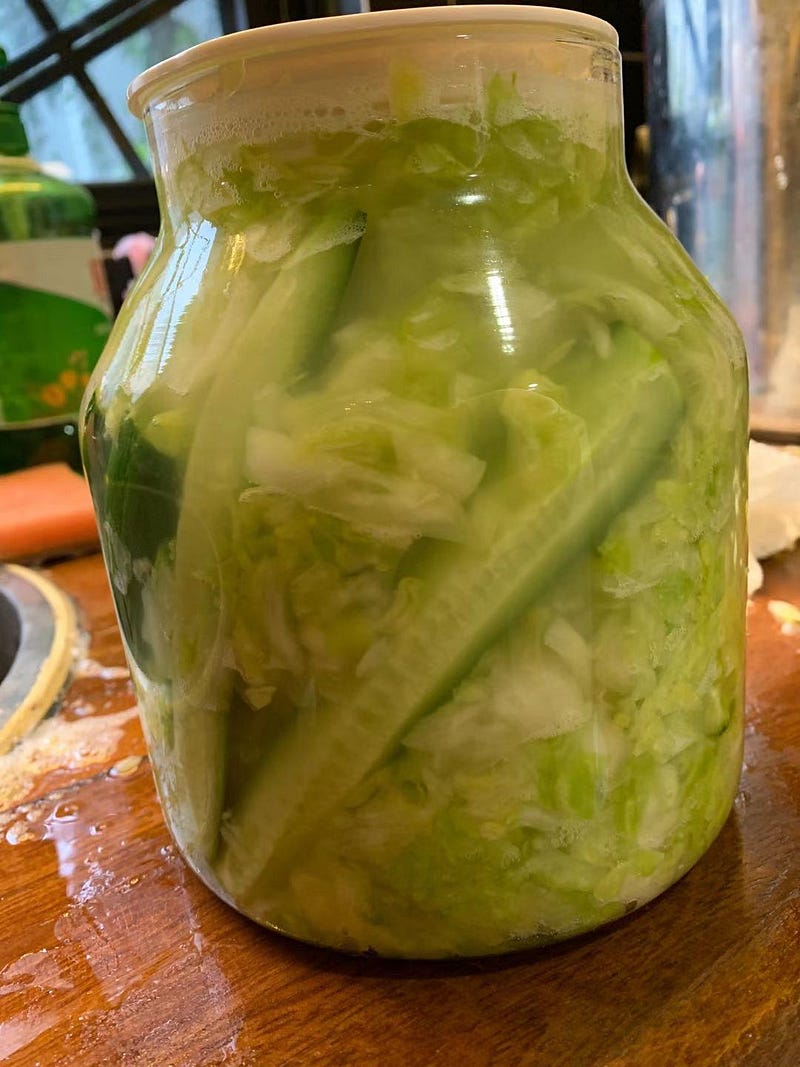
Why not just make some sauerkraut? I made one yesterday and added cucumber! Why? I felt like I wanted pickles too, so why not? Recipes be damned.
How do you do it?
Rather than write a super specific recipe, let me tell you the parts that matter.
- Use cabbage. The more the merrier. Cut small.
- Add salt. About 2.5% of the weight of the cabbage.
- Mix with your hands, really go to town.
- Add the watery mess to a glass jar. (Not metal, metal goes nutso because of all the acid generated during fermentation).
- Wait two weeks or more.
- Yum yum!
I like to add garlic and stuff too. Some people add bay leaves and other such things, why not? I’ve added cucumbers and somehow I’ve created a witches cauldron (pictured above).
It’s the bubbliest ferment I’ve ever made, so I’m super excited to eat it. I can almost see the bacteria species eating up the salt and growing big and strong.
I’m also fermenting honey and garlic, ginger beer, and kvass. I’ll be sure to write more about those soon, so stick around! And get breeding! (Bacteria that is).