
How to Break Down a Skill and Practice Effectively

Most skills are complex, which means that they consist of different smaller skills (sub-skills). Surfing, for example, consists of paddling, popping up, staying balanced, reading waves and a range of other sub-skills. Your performance on the complex skill depends on your proficiency and coordination of many (sub)skills at the same time.
Some sub-skills can be mastered relatively fast, while it usually takes years to become proficient at a complex skill.
Trying to become better at all parts of a complex skill at the same time isn’t the most effective way to improve. This would be an overwhelming amount of new information for your body and brain.
When learning a skill, it is essential to break it down and choose which sub-skill(s) to focus on. Some will be more important for performance than others.
The most effective way to become better at a complex skill is one sub-skill at a time.
But what should you focus on?
If you’re starting to learn a new skill, the fastest way to improve is to get very good at the basics. These are the sub-skills that you will see most often in the performance of the complex skill. And since they are done all the time, your performance on the basics will have the most substantial contribution to your performance on the complex skill. You want to do them well.
This means performing the skills without having to think much, and that you’re able to do them under stressful and distracting circumstances.


You can never get too good at the basics, so mastering them is critical both to learn a new complex skill fast and to reach high levels in a skill.
Deconstruct
The first thing to do when you’re planning to improve a complex skill is to deconstruct it, to understand and decide what sub-skills it consists of. You want to decide which of these skills are most key to performance. What are the absolute musts?
Becoming good at deconstructing a skill and deciding what is most important to practice next, will help you improve the way you practice. It will also make you a better teacher/coach, either for yourself or someone else.
Choose what to practice next
When first learning a skill, this means focusing on the basics. No matter what level you’re at; however, the basics should always be part of your practice. Even elite performers practice the most common movements daily.
As you get better, you will move on to more intermediate and advanced sub-skills. These are usually more difficult to learn and perform. And they often require that you do some basic skill at the same time.
As you get more advanced, you will have to choose if you want to focus on becoming extremely good at some sub-skills (specialise) or try to improve in a more balanced way.
But more important than what you select is that you choose something at all! Too many people practice without any focus, and this type of practice will not lead to much improvement.
Keeping a balance between improving your weaknesses and strengths is essential. You want to get very good at some sub-skills, but not be so bad at others that it limits your performance. There is no one correct recipe for success. You have to make your own decisions on what parts you want to improve.
If we had infinite time to live and practice, there would be enough time to master every sub-skill. But time is limited. So we have to choose where to focus and spend it.
Remember that everyone else also has limited time, so they will also not be able to practice everything to perfection.
The best performers will often be those who are best at deciding how and where to spend their practice time.
When choosing what to practice next, it is necessary to have some knowledge of a skill. Complete beginners will, therefore, benefit from experienced teachers/coaches that select appropriate exercises. As you advance, you will become better at choosing activities that specifically target what you want to improve.
Focus
It is better to fix one thing at a time, than everything at once. If you try to improve too many things at the same time, there will be no focus at all. When you’re learning or improving a sub-skill, you need to pay a lot of attention while performing it. If you’re trying to attend to too many things at once, it usually means that you’re not able to do any of them well.
Be specific about what to improve. You want to break the skill into components you can repeatedly do(many repetitions) and analyse when you’re doing well or not.
We can see an example of this in tennis. Instead of trying to improve everything at once, a coach can set up an exercise to focus on enhancing a smaller part; e.g., a backhand volley, with hundreds or thousands of training opportunities, with feedback and a chance to see improvement.
If there hadn’t been a specific focus on improving this sub-skill, it could have gone a long time between each opportunity to practice this shot in a regular game. After improving the sub-skill, it can then be integrated into shorter rallies and eventually into the full game.
I think we all see the benefit of practising this way in tennis, but the same method is useful when it comes to learning all types of complex skills.
It’s about creating each piece (read: sub-skill), and then about putting together the puzzle (read: complex skill). If the pieces aren’t there, it will not be possible to finish the puzzle. Or you will have a simple puzzle (like a two-piece puzzle, age 1+). If you have 100 pieces, it will be much more challenging to put the puzzle together.
Incorporate
After you’ve learnt a sub-skill, your next goal is to gradually make it part of your performance in the complex skill.
When focusing on practising a specific sub-skill, you can put all your attention on this detail, and you may be able to perform it well. But can you still perform while having to think about many other things? This is much more challenging.
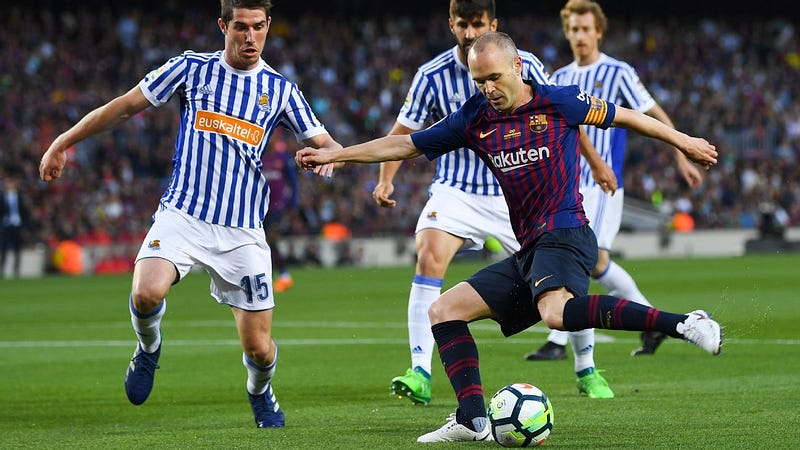
As you are learning a sub-skill, you need to add complexity and practice it under more difficult circumstances gradually. You can, for example, add more defenders or players. You can do it fast. Do it while performing another task. In a smaller space. Or add some other restrictions.
If you can still do it, you probably know it very well. If you can perform the sub-skill only under straightforward conditions, you will have trouble performing the complex skill consistently in a game situation.
Incorporating it can take time, but eventually, as you practice enough times, it will start to become something you do instinctively. When you’ve reached this point, you have managed to add a sub-skill to your complex skillset. Time to move on to the next sub-skill.
PS: Remember that there is also the thing we call forgetting ;) and you may need to strengthen the sub-skill now and then to keep it in your repertoire.
Take home message
How good you are at a complex skill depends on how well you can combine and perform a lot of different sub-skills.
Each of these sub-skills must be learnt, practised and incorporated into the performance of the complex skill.
It is most effective to improve only one or a few sub-skills at a time. First, you practice them in isolation. Then you gradually add complexity to challenge your ability to perform under more difficult circumstances. Eventually, your goal is to add it while performing the complex skill.
Thanks for reading, following and sharing! :)
If you liked this article, you may also like:


