
Botticelli or Bust — How My Husband Taught Me to Appreciate My Body As-Is
Learn how to love your body
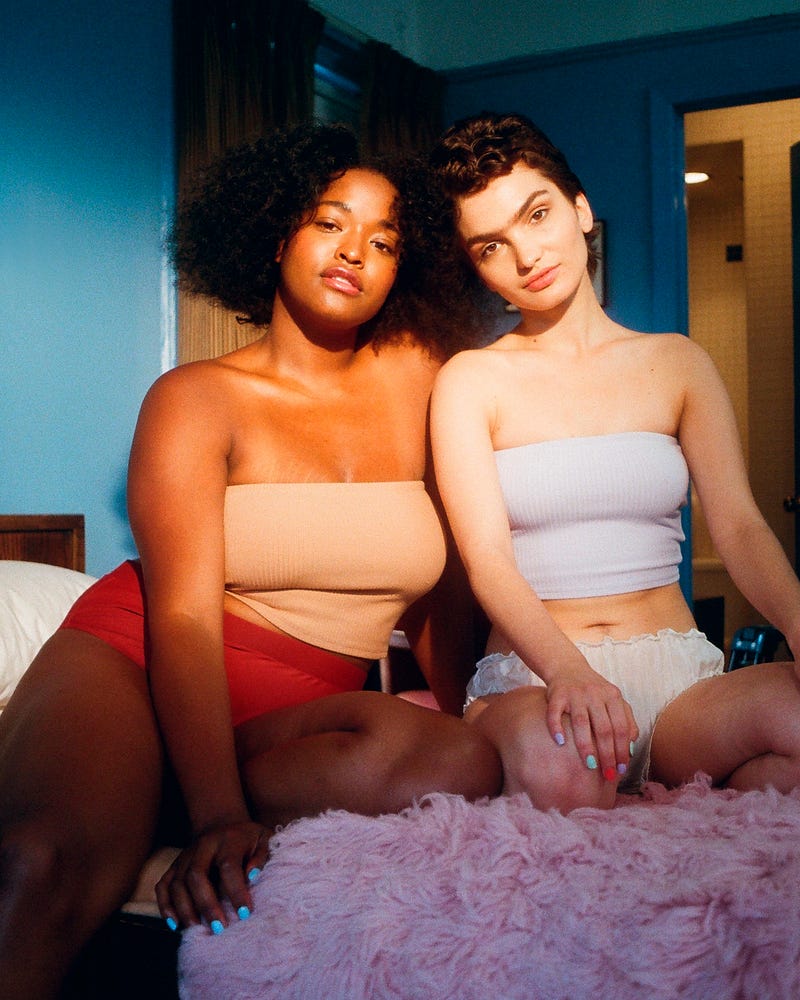
The best body compliment I have ever received was when my husband saw me relaxing in the bathtub. He looked over at me admiringly and compared me to a Botticelli painting. I was on the north side of 40 years old and I soaked in the substance of his words. For a brief moment, I saw my body through his eyes, and I finally saw beauty in my hips, my rotund belly, my mismatched breasts — even if just for a fleeting moment.
My journey to loving my body has been a long one. Throughout my life, I have been both underweight and overweight. As a child, I was very thin. Friends’ parents would often say, “You eat like a bird and we’re worried you might fly away.” I would try to shrug it off, but it bothered me that I didn’t look how others thought I should.
As a grown woman, I am heavier through my hips than I am through my breasts. I don’t have the coveted hourglass shape displayed on the female body type charts. Instead, my body most resembles a pear. Why are we comparing our bodies to fruit and hourglasses anyway? Why is the hourglass considered the ideal? Can we please modify our lens to see an endless amount of beauty in all shapes and sizes?
My breasts are asymmetrical and didn’t fill into a fuller cup size until I was in my 20s. When I met my partner I wished I weighed more. I went to the nutritionist at my college health center to ask how to put on weight. She looked at me with puzzlement and took me through the appointment. I got the impression she did this because she had to.
I didn’t tell her, but what I wanted was to gain weight specifically in my breasts. I wanted that coveted hourglass shape. I wanted to turn heads when I walked into a room. I didn’t like being called Toothpick when I was young. I didn’t like being almost flat-chested through most of my school days. I thought if I gained weight, especially in my breasts, I would become more attractive. And, if I became more attractive I would become happier.
Why was I putting so much power in the hands of others to define my self-esteem through my body image? Unfortunately, I think this is a common experience for young women in American culture.
In researching this story, I found a blog post by Tanya where she explains that there is pretty much one very narrow American standard of cultural beauty for breasts, specifically. Loving our breasts seems to be the last frontier of body positivity. In her post, she links to Laura Dodsworth’s Bare Reality Project, which shows images of all shapes, sizes, and colors of breasts. I found these images both reassuring and fascinating (nudity ahead).
Discussing and celebrating our unique bodies is certainly a huge step in the right direction for a more body-positive culture.
One day, shortly after I had moved in with my partner — I was 23 years old — I confessed to him that I was worried he didn’t find me attractive because of my breast asymmetry. Do you know what he said to me?
Everyone is asymmetrical to some degree. I get the best of both worlds. And, I love all of you and all of your body.
That helped me let go of the embarrassment of my less-than-perfect physique.
We got married when I was 24 years old. I was mostly happy with my body at this point. I was able to see myself as an attractive person, although I let culture assign what female attractiveness meant to me and then tried my hardest to fit into that culturally-designated box.
At 29 we had our first child and at 32, we had our second child. After having 2 kids, and entering my fourth decade on earth I noticed my breasts pointing towards the floor. Now, they weren’t only asymmetrical, but they were droopy, too! Of course, the smaller one was perkier, which made me appreciate it more than I had before. One of the perks of aging is knowing what to appreciate, right?!
I also had one c-section scar. I began noticing the appearance of stretch marks and varicose veins. What?! And, as I dropped my pregnancy weight I noticed my belly not flattening out. There was loose skin where the babies had been taking up room. My once perfect belly button was stretched out of shape forever. I had taken its perfection for granted pre-pregnancy. And, now I put on weight very easily.
When I was a little girl, I remember looking at my mom’s unshaved armpits and pot-belly (her words) and feeling like I was seeing something that should be hidden from view. That’s because our culture had, and has, a certain image of an ideal body that is in the appropriate-to-display category and a whole array of bodies that are in the inappropriate-to-display category.
Heaven forbid a woman has hairy legs, hairy armpits, a pot-belly, stretch marks, neck wrinkles, etc. That’s why there’s a whole anti-aging industry raking in big bucks in America.
The truth is my mom was, and is, beautiful. I was, and am, beautiful. We are all beautiful. And, in reality, our bodies come in an array of different shapes, sizes, and colors. This variety makes the world a more beautiful and inherently interesting place to live in.
Aging gracefully is a hard line to straddle. I’d like to look good as I age, but I would also like to celebrate my aging without hiding it behind the cultural ideal that I should continuously chase and display a younger version of myself.
I decided a couple of years ago to quit dyeing my hair, which I had done for fun since 8th grade! But, no, I did not want to dye my hair to cover up my gray! I did not want to perpetuate the very American illusion that we never grow old. I’m not saying others shouldn’t dye their hair. I am saying this decision has helped me embrace that yes, I am aging. I want you to know my age. I am proud of my age and my gray hair. I think it’s beautiful.
This weekend, I donned my new tank top sans bra and asked my husband what he thought. “That’s not like the other one,” he said.
“You mean the one with the shelf bra?” I asked, annoyed.
He mumbled something about support.
We both knew he’d gotten himself into a bit of a pickle. I tried to make light of the comment and he reminded me how much he loves me and my breasts.
But, his comment had reminded me that my breasts have moved downward since all those years ago when we first started dating. And, I made a bit of a fuss about it. I was aware of the gaze of imperfection because for several years now I have prioritized an effort to love my body just the way it is. Especially as I age. But, when a perceived “flaw” is noticed it’s hard not to feel a bit self-conscious.
I know I’m still beautiful and lovable. We’re all beautiful and loveable. And, we don’t have anything to hide. How are we going to allow our partners, ourselves, to love our bodies if we don’t love our bodies?
I wish I hadn’t been so embarrassed when I was a young woman by my “imperfect” breasts, to the point that I wondered which guy would no longer date me because of my lack of symmetry. I hope we are moving towards a more accepting and body-positive cultural shift.
The trend for body positivity is a great pivot away from these impossible cultural standards that made me feel like I had to fit into the perfect-body-box when I was a young woman.
Let’s be real though — it’s hard not to compare ourselves to the picture-perfect images of women being constantly shown on television, the internet, billboards, everywhere.
And, I once did not have chicken flappy arms, saggy breasts, and a flattening derriere. It’s not easy to quit comparing, but I do think it’s possible.
I wonder if you’ll join me on my mission to find beauty in that which is aging, in our whole selves, stretched skin, cellulite, stretch marks, pot bellies, saggy breasts, and all? In loving ourselves just the way we are.
Can we honor ourselves, our aging bodies?
Yes?
Yes!
Let’s remember that with our aging bodies come years of wisdom and emotional growth.
I would love for all of us to see our beautiful bodies through the eyes of artists. Let’s find ourselves in paintings by Frida Kahlo, Henri Matisse, Faith Ringgold, or — you fill in the blank.