
Bort
Beauty is in the eye of the beholder
Today’s New York Times Spelling Bee letters:
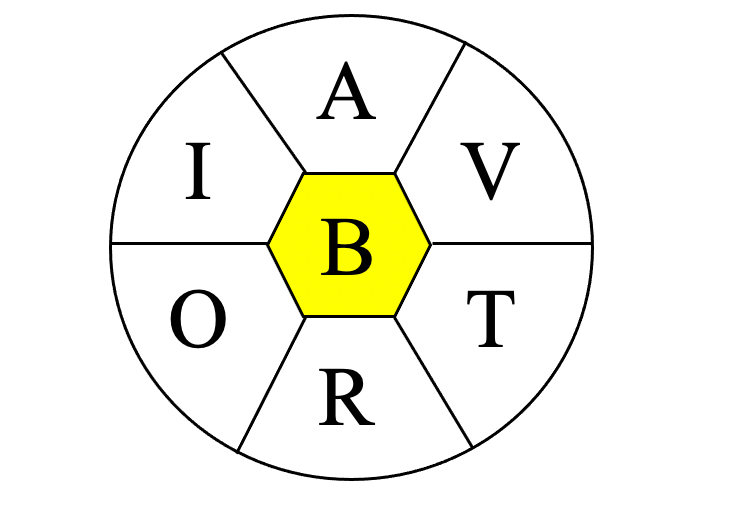
A, I, O, R, T, V, and center B (all words must include B)
Merriam-Webster says…
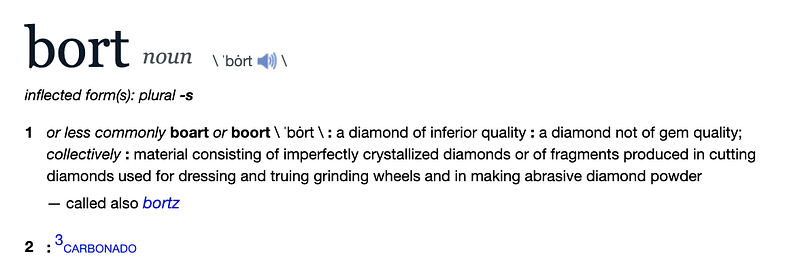
Silly little dictionary! Don’t you know that bort can’t possibly be a word if The New York Times says it ain’t?
For further fascinating facts, check out the Spelling Bee Master.
What’s your favorite dord* from today’s puzzle?
My Two Cents
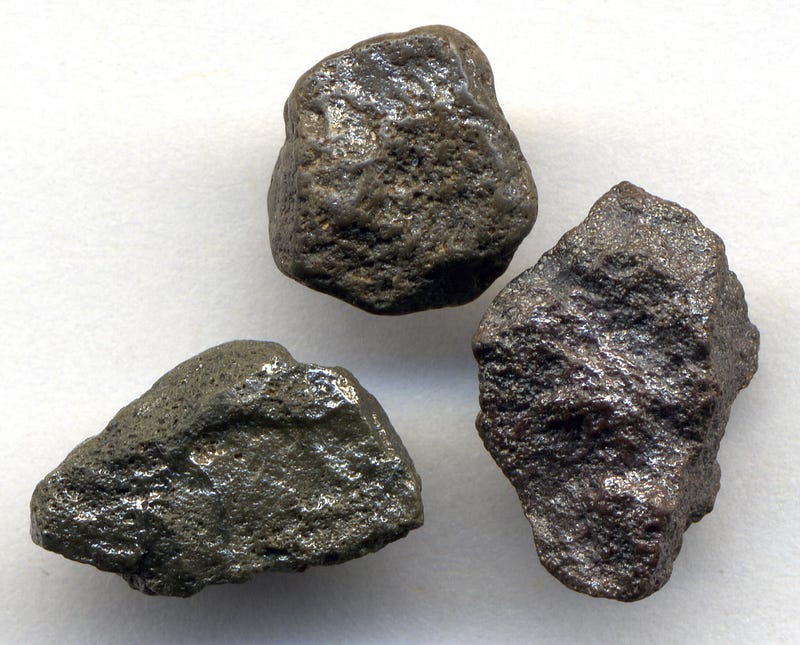
As the 1960 episode of the Twilight Zone taught us, beauty is indeed in the eye of the beholder. Take those rocks in the photo at the top of today’s column. They don’t seem very pretty; they probably look just like any old stone you may find by a riverbed or on the beach. Perhaps you’ve clanged upon them while digging in your back yard.
Well, would you be surprised to discover that those rocks are, in fact, diamonds?
Yeah, I doubt any bride (or groom) would wear these on an engagement ring, but these diamonds do have industrial uses. So don’t go dismissing them because of their appearance.
Speaking of that famous Twilight Zone episode, if you’ve never seen or heard of it, you can try to search for it online or, if you’re in the U.S., wait for the annual SyFy channel marathon that showcases many of the episodes. It used to run on a few three-day weekends throughout the year, but now appears to have shifted to New Years eve and day, airing between December 31st and January 1st. So you’ll have to wait five months and change for the next one.
I found clips of parts of the episode on Youtube. You could probably watch them in succession and figure it out, or watch the entire 2002 remake (quite faithful, by the way) here. Everyone always remembers the big reveal and the subsequent ending, but few recall the underlying “fascism is bad” message that is not-so-subtly hammered by the leader of the State while the main character is ping-ponging around the hospital.
We know now that there must be a single purpose, a single norm, a single approach, a single entity of people, a single virtue, a single morality, a single frame of reference, a single philosophy of government. We must cut out all that is different. Like a cancerous filth! It is essential, in this society, that we not only have a norm, but that we conform to that norm! Differences weaken us! Variations destroy us! This norm is what has ended nations and brought them to their knees! Conformity, we must worship in all interests! Conformity is the key to survival!
Frankly, I find the speech more chilling without the last two sentences, but what is really odd is how this criticism of (probably) Communism can be applied to some far-right mindsets today. As they say, political extremes are two sides of the same coin. You can read the entire transcript of the episode here:
Okay, now on with our daily dord*.
Diamonds are forever
Our friends at Merriam-Webster explain that bort probably came from probably from the Dutch boort, possibly from the Middle French bourt, meaning “bastard”, from Latin burdus, meaning “hinny”. Not as in your rear end, but as in the cross between a male horse and a female donkey. (A mule is the cross between a male donkey and a female horse.) In essence, bort is a bastard gem.
In the picture below, the bort has been bastardized even more by getting mixed up with crystallized diamonds. Sort of like the Brundlefly of gemstones, really.
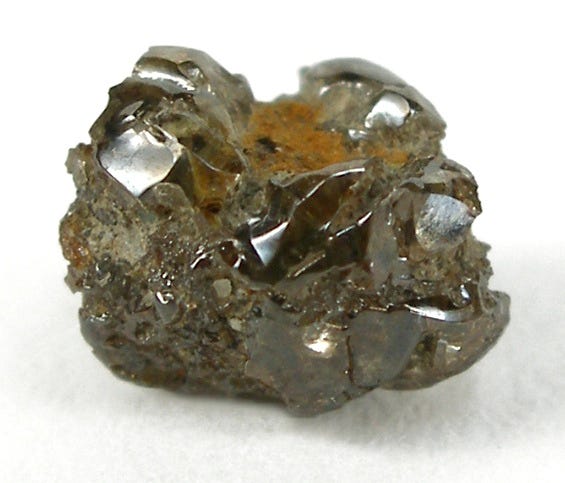
In the diamond industry, bort refers to any diamond that does not have the quality or grade to become a gemstone.The manufacturing and heavy industries distinguishes between two major types. Drilling bort are small, round stones (about 20 per carat), used in diamond drill bits. Crushing bort is considered the lowest grade of diamond. It receives its name because it is crushed in steel mortars and graded into abrasive grits of various sizes.
The Congo supplies the world with about 75 percent of its bort, mainly used to make grinding wheels for sharpening carbide metal-cutting tools. Loose grains of bort can be suspended in oil or water and then used for polishing.
Carbonado, which Merriam-Webster lists as a synonym of bort, is a black opaque diamond that is as hard as the gemstone-quality diamond but less brittle. It’s sourced in great quantities from Brazil. The photo at the top of today’s article shows three carbonados. Here it is again:
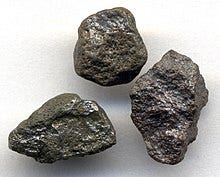
Carbonado is recognized as one of the toughest natural materials out there. Cutting tools made with this type of diamond last longer and require less maintenance. The online Britannica explains that “Rock-coring drills, widely used in exploring for new mineral deposits, are made by mounting diamonds around the rim of a hollow metal drill crown. Other important applications include saws for cutting rock and other hard materials, lathes and other types of cutting tools, glass cutters, phonograph needles, hardness testers, and wire-drawing dies.”
Wait… what? “Phonographic needles”? Was this internet encyclopedia entry written one hundred years ago? Could this be proof that time travel exists?
Fruits are temporary
There are several Borts with a capital B. Notably, Bort is a surname whose origin Ancestry.com explains as “Jewish (eastern Ashkenazic): nickname for a man with a remarkable beard from Yiddish bord combined with German Bart both meaning ‘beard’. Polish: from borta ‘braid galloon’ a loanword from German (Borte).”
Fans of The Simpsons may remember a 1994 episode (“Itchy & Scratchy Land”) in which Bart cannot find merchandise with his name, but does find items with Bert… and “Bort” .
Bort is also one of the settlements (towns? hamlets? the Swiss have weird names for stuff) in the municipality of Habkern administrative district in the canton of Bern in Switzerland. (See? Told ya!)
And Bort appears to be a cultivar, or variety of plant bred for specific purposes, of the karuka tree in New Guinea. The karuka (Pandanus julianettii) is a species of Pandasus tree, also known as the screw pine or screw palm. Not because it likes to have sex with pines or palms, but because of the appearance of their fruit.
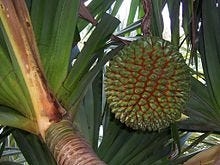
Hmmm… okay, maybe that’s not the reason. Wait… I think I found it in this explanation by the Britannica time travelers:
Pandanus species typically have slender palmlike stems and produce from their trunks and stems aerial prop roots that are often huge; those, together with their terminal crowns of swordlike leaves, give the plants a distinctive appearance. The genus is characterized by numerous long, narrow, parallel-veined, palmlike leaves with spiny margins and midribs that are produced in tufts at the branch tips in three or four close twisted ranks around the stem, forming the screwlike helices of leaves that give the common name screw pine to these plants.
The fruits of many Pandanus species are heavy aggregates that look like balls or cones, and when the developing ovaries of many adjacent flowers stick together. This is the cluster of fruit of the karuka:
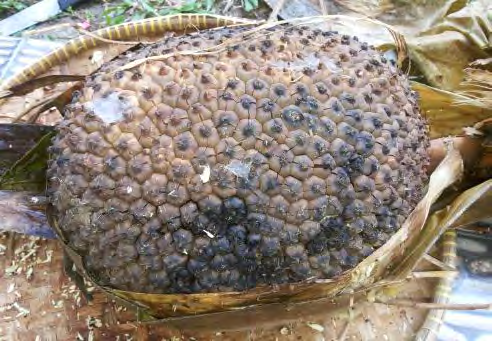
I must admit, that does not look very appetizing. However, it’s supposed to be more nutritious than a coconut.
Karuka is a loanword from Tok Pisin, a creole language spoken in Papua New Guinea, where people use the entire plant. The fruit is eaten, the trunk and buttress roots are used for building, sheets of bark make good house walls, and the leaves are used to make shelters and rain-protective capes.
Oh, and also as the name of the Goilala District’s rugby team in Papua New Guinea’s Central Province Premier Rugby League.
Now you know. Next time shows you some very ordinary-looking rocks, advise them to keep them in case they are borts. Don’t be surprised if they ignore you and chuck them away regardless… because the editors of the Spelling Bee decided that bort is a dord*.
You can check out my previous entry on another dord* here:
*What the heck is a dord, you ask? Here’s the answer: