
Intersectional Body Positivity | Illumination | Informational Article
Body Positivity Has to Become Intersectional, or It’s Doing More Harm than Good
We can’t ignore the barriers that people who are oppressed face.
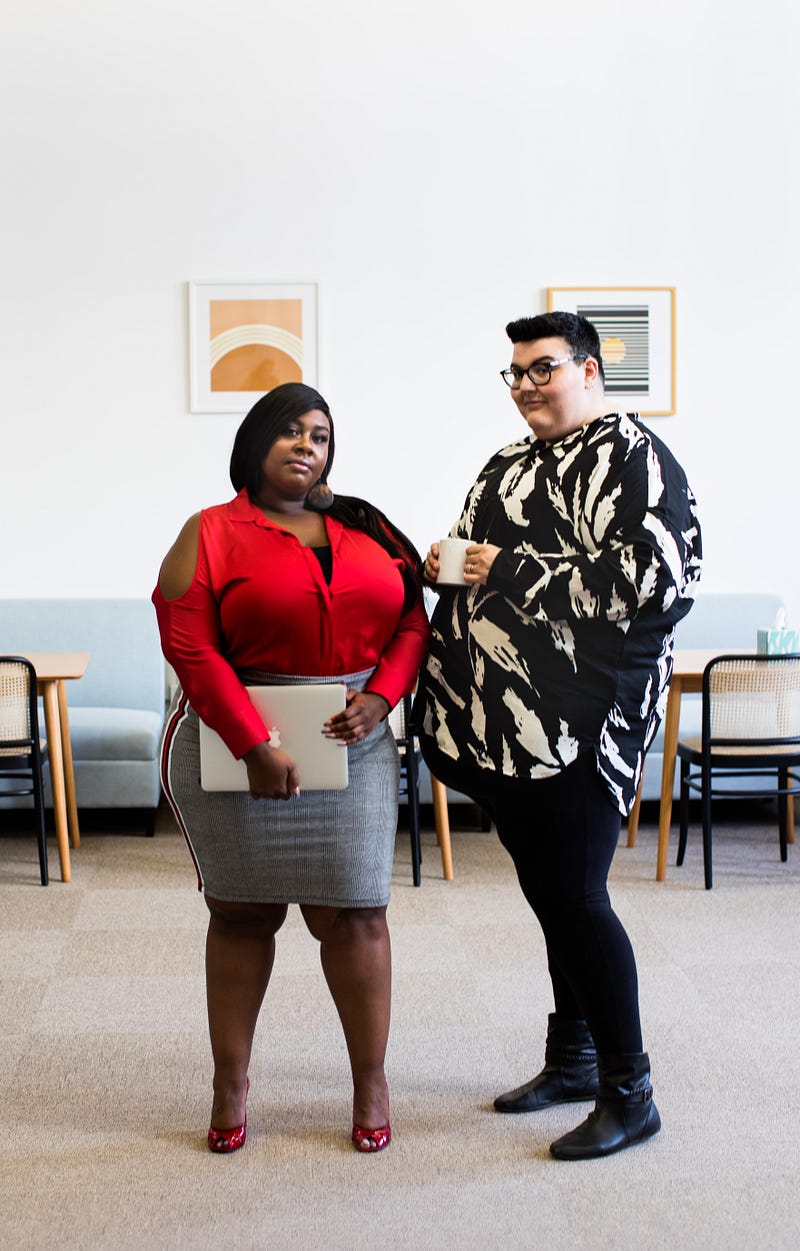
Body positivity, while claiming to celebrate all bodies, praises only one kind: that of a thin, young, beautiful, able-bodied white woman.
Even ads that proclaim “body positivity” are hardly diverse in any way. The majority of women are conventionally attractive, able-bodied, white and have thin privilege. Dove’s Real Beauty Campaign is an example.
Few people fit the “qualifications” of being “allowed” to feel body positive. Let’s talk about who doesn’t:
Keep in mind, “thin privilege” doesn’t necessarily mean “skinny.” If you can easily find clothes in your size, if your health problems aren’t ignored by your doctor because of your weight, if people don’t tell you regularly to diet or ask to pay for two seats on an airplane, you have thin privilege.
Let’s think about all the other kinds of people who don’t fit the qualifications to be body positive: people who aren’t traditionally beautiful by society’s standards, who are old, who are in wheelchairs, who have skin diseases, who are Black, who are Latinx. Think about the men who are made fun of for being “feminine” by wanting to feel body positive. Think about transgender people who don’t feel at home in their bodies.
And those are only a few examples.
If you fit into any of those demographics, not only may people scoff at the idea of you being body positive, but feeling body positive will also be much harder due to the oppression you face because of your identity.
Think about Black people who are murdered because of the color of their skin. Think about people who aren’t able-bodied and can’t easily get into buildings because of the lack of an elevator. Think about people who are mistreated by doctors who dismiss them because of their weight, and then get sicker.
Think about people who have multiple of those identities.
It’s a lot harder to love your body when it feels like everybody and everything is working against you, when your body is a war zone and makes you feel unsafe.
We can’t solve these problems by simply saying something as empty as “Be body positive! Love your body! You’re beautiful! Everyone’s beautiful!” because these statements ignore the serious oppression others go through and are a form of “slacktivism” that isn’t helpful.
Instead, we have to dig deep and truly empathize as best as we can with people of marginalized identities. Nursing scholar Theresa Wiseman explains the four attributes of empathy, in which one is seeing the world as others see it. Brene Brown expounds upon this, talking about how empathy is feeling the pain along with someone else rather than saying “at least…” or trying to make the situation seem better. Empathy is about fueling connection.
But simply changing the way we think and the way we talk to those who agree with us on these issues isn’t enough. We have to really enter the world of social justice and what it means to pursue it.
The small and the big actions we can take to fight against injustice can look a lot of different ways. The following examples are a start, but by no means fully inclusive:
- Don’t talk poorly about your body size or someone else’s body size
- Hosting events in spaces that are accessible and have gender-neutral bathrooms
- Donating to the Black Lives Matter movement and educating your ignorant and racist friends and family
- Using your voice to amplify voices that are being silenced through oppression
- Advocate for your loved ones that live in larger bodies when they have to go to the doctor, if they want for you to
- Have conversations about problematic ads that portray body positivity in only one way
- Don’t engage in diet culture
- Don’t ask people who are transgender if they’ve “had the surgery yet”
- Don’t ask people who are marginalized to perform emotional labor for you by asking them questions about the oppression they undergo. Instead, educate yourself utilizing options such as books and knowledgeable white people
- Research how marginalization can play a role in eating disorders and attend a training on how to be an ally
By trying to more fully understand what people who are marginalized because of their body go through, we can learn how to advocate for them better. We can understand why body positivity is hard for them and how important it is to advocate for intersectional body positivity.
Education about fatphobia can play a role in helping people experiencing oppression feel more body positive. Here’s some examples of important facts to know:
- Fatphobia is the fear or hatred of fat bodies, deeming fatness as something deeply negative and perpetuating stereotypes that discriminate against people who are fat. “Fat” is not an insult, just a descriptor, but it’s used in derogatory ways. Fatphobia is rooted in many harmful misconceptions.
- Fatphobia is racist in that it’s rooted in the slave trade. Racist people created the idea that Black people, especially Black women, are greedy and sluggish.
- Fatphobia is sexist in that it’s a way of controlling and judging women’s bodies, classifying women as subhuman and often inadequate. Women deal with the impacts of fatphobia more than men do, in which people judge them more harshly and push them more lose weight if they want to be “beautiful.”
- Fatphobia is ableist in that doctors are more likely to misdiagnose fat clients, not giving them and their issues the time of day and therefore putting their health at risk. Then, after not treating them adequately, doctors blame their patients’ health issues and even death on their weight, furthering fatphobia and its falsities. Additionally, dieting is the biggest predictor of an eating disorder, and anorexia nervosa is the deadliest mental illness.
- Fatphobia is homophobic in that society makes gay men feel the need to gain muscle to be “real men.” Gay men are also put into boxes depending on their body size and body hair. Gay men are more likely to have eating disorders than straight men. Society also pushes lesbian women to look more masculine and the internalized homophobia lesbians deal with can lead to eating disorder behaviors.
- Many factors go into health, not just weight. Understanding misconceptions about health and the social determinants of health, such as handwashing, socioeconomic status, safety, biology and more is crucial.
But not only do we need to stay educated, we need to move forward with that education in helpful ways. Here are some examples as to how we can do this:
- We can stop talking about “fat” as a bad thing, because not only is that dangerous and unhelpful, it’s also rooted in racism, sexism, ableism, homophobia and more. Without those -isms, nothing is wrong with fat.
- If you are or know a doctor, you can educate yourself or them on the mistakes that fatphobic doctors make and the misconceptions around fatphobia.
- We can question people who associate negative factors with someone’s fat. “Why do you think they’re lazy? Why do you think health and weight are solely about food and exercise, when it in reality they deal with many other factors?”
- We can take steps to further social justice, such as the examples listed above.
Because if we don’t acknowledge intersectional barriers to body positivity, we’re hurting those people further. Here are a few ways in which body positivity is harmful when it’s not intersectional:
- We’re further marginalizing and isolating people by ignoring their barriers and concerns.
- We’re not educating others on all of the -isms and -phobias that disenfranchise and endanger people who are oppressed.
- We’re fueling diet culture by saying that if you want to be body positive, you have to be at least somewhat “thin,” according to society’s standards.
- We aren’t amplifying the voices and safety needs of people who are marginalized and ignored.
It’s time for us to acknowledge our privilege and educate ourselves on the challenges that people who are marginalized face. It’s time to stop shouting “Be body positive!” without thinking about how that makes someone feel or how we can help them feel it, despite the oppression people place upon them. It’s time to educate ourselves on marginalization, intersectionality and how the body positive movement can be harmful if its not truly for everybody and every body.


