
7 Unpopular Truths about Health that We All Need to Know
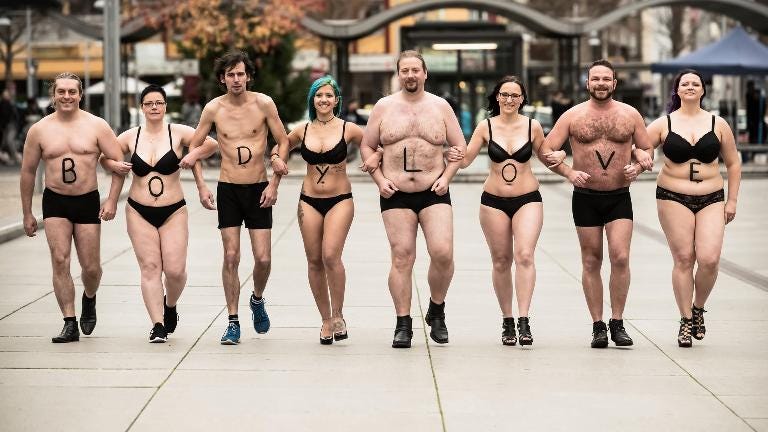
As an advocate for the Health at Every Size movement and eating disorder recovery, I hear a lot of misconceptions from other people about what health is. We live in a society that glorifies losing weight and shames gaining weight, regardless of the reason. People moralize both weight and food, in which having an unhealthy relationship with them is common.
Furthermore, dieting is the biggest predictor of an eating disorder, and both weight loss and body size can be affected by genetics, according to the National Center of Excellence for Eating Disorders.
In order to have a better relationship with food and your body, read the following truths as many times as you need:
- Health can’t be defined by body size. Some people are smaller because of a disease or malnutrition. Some people in larger bodies eat more nutrient-rich foods than people in smaller bodies. Health is determined by so many factors, such as socioeconomic status, biology, safety, policy and more. The Health At Every Size movement emphasizes celebrating all body types, finding enjoyment in moving your body, trusting your body’s hunger and society signals, and accepting your size.
- Health isn’t about only eating fruits and vegetables or skipping dessert. All foods have a place in a healthy diet. Moralizing food as “good” or “bad” will make us feel like we are “good” or “bad” people simply depending on what we eat, which isn’t true. Furthermore, the more you restrict a certain food group or tell yourself you can’t eat it, the more you’ll want it and may even binge on it.
- Health isn’t obsessing about what you eat, how much you exercise or how much you weigh. Health is about trusting your body’s signals and honoring your body’s needs. Some days you might want a cheeseburger. Some days you may want a salad. Some days you may feel like going to a workout class, and other days you may need to rest. Your weight may fluctuate. All of that is okay!
- Health isn’t purely physical — it’s also mental. Mental health is just as important, and the two can play off of each other. Talk to friends, go to therapy, do something you enjoy, engage in mindfulness, take care of yourself. Despite the stigma around mental health, you don’t have anything to be ashamed of.
- Health isn’t always about “should” or “shouldn’t.” Our bodies know what they need and will let us know. They know how to maintain homeostasis within us so everything is in balance. Our bodies work so hard to keep us alive and functioning as well as possible. Be careful when you start to have thoughts like “I should go work out” or “I have to go work out.”
- Health doesn’t include food-related detoxes. Our body has learned over many years how to take care of itself. We have livers and kidneys that do all the detoxing we need, and human-invented detoxes aren’t healthy, effective or sustainable.
- Health-related judgments have roots in racism, sexism, ableism and classism. Those judgments are ways of defining and limiting women. For black women, being fat is correlated with savagery and racial inferiority. People who are fat are often misdiagnosed. And accessing a wide variety of nutrients isn’t always an option for people who live in food deserts or have low incomes.
It’s time to get rid of the unhealthy messages we’ve received about food and our bodies. I suggest living by therapist and dietitian Ellyn Satter’s definition of normal eating:
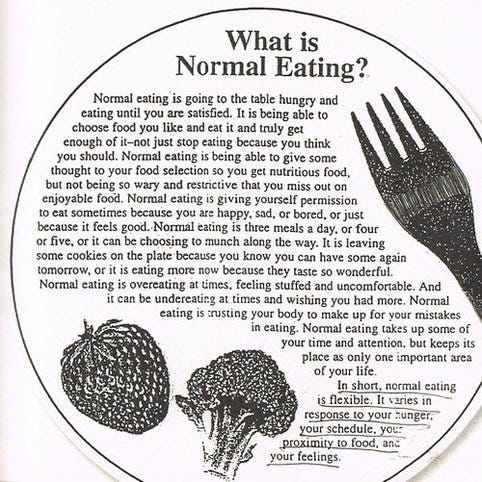
Our bodies are different, and that’s okay! Health is not a one-size-fits all kind of situation and it entails a lot of flexibility. Be understanding of your body and its needs, and keep judgmental comments to yourself for everyone’s sake.
Resources
While not everyone who struggles with their body and/or food has an eating disorder, the following resources can still be helpful and are worth checking out!
National Eating Disorders Association Helplines
National Center of Excellence for Eating Disorders resources for you and for someone else
Feel free to comment more!


