
Boccia
This Paralympic sport gets no love from the Spelling Bee… or Merriam-Webster!
Today’s New York Times Spelling Bee letters:
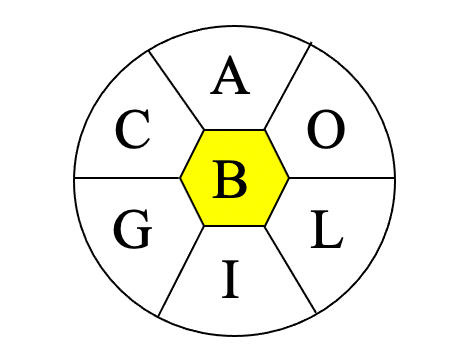
A, C, G, I, L, O, and center B (all words must include B)
Merriam-Webster says…
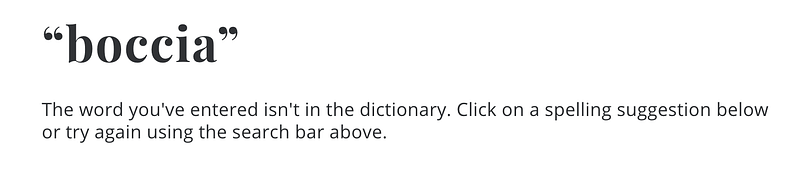
Silly little dictionary! You’ve disappointed all of us today by agreeing with the New York Times that boccia is not a word!
For further fascinating facts, check out the Spelling Bee Master.
What’s your favorite dord* from today’s puzzle?
My Two Cents
When I say the dictionary has disappointed “all of us” I mean me as the writer of this column and you as the dedicated and faithful readers. And I’d like to take this opportunity to thank the three of you from the bottom of my heart.
A word is a word is a word
Except when it’s not, obviously. But who decides? In Spanish there is an official and sometimes officious(1) organization called the Real Academia Española (Royal Spanish Academy), that, according to Wikipedia, has the odd mission of guaranteeing “the stability of the Spanish language”. Which sounds like the academics in Spain are trying to suppress some kind of linguistic revolution that none of us has heard of yet. (Or perhaps we have: looking firmly at you, Spanglish!)
The official motto of this official group of official Spanish-speakers is this:
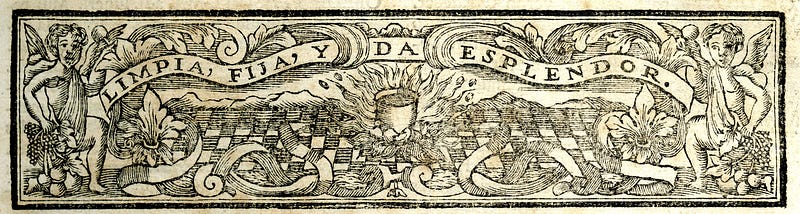
Some have translated the above phrase as “It purifies, it fixes, and it dignifies”. I think “It refines, sets (or determines), and shines a light on [the Spanish language]” might better express the objectives of the “RAE”, as it is commonly known.
Interestingly, in the above illustration the Oxford comma is archaic, as it’s typically not used when writing lists of words in Spanish.
Traditionally a term did not become an official Spanish word until it was sanctioned by the RAE and its twenty-two affiliate organizations around the globe. Back before the interwebbings, one had to buy the dictionary published by the RAE and hope that the word one wanted to use appeared there. If it didn’t, you could always employ said word, but you risked getting arrested by the RAE’s secret agents, agents so covert even the RAE knew nothing about their existence.
Back then the DRAE (as the dictionary is fondly known) got updated every few years; today this happens much quicker. Also, there are now official regional dictionaries, like the one for Latin American Spanish, that collect terms with distinct usage in that part of the world.
English has always been faster and looser when it comes to coining new words; usage always was and still remains the queen. Once a word becomes vox populi it basically is forced upon the editors of dictionaries across the English-speaking universe, who then grudgingly add it to the publications they’re in charge of.
This may explain why English dictionaries have between 400,000 and half a million words while the DRAE has about a quarter of that. By some estimations the English language now totals over a million words!
(By the way, if you want to help me “recoin” a word, join my efforts to get Merriam-Webster to embrace their dordy past by signing my petition here.)
After being denied by dictionary.com and Merriam-Webster, I turned to the old faithful Oxford English Dictionary, or at least it’s free online version, Lexico. And they delivered!
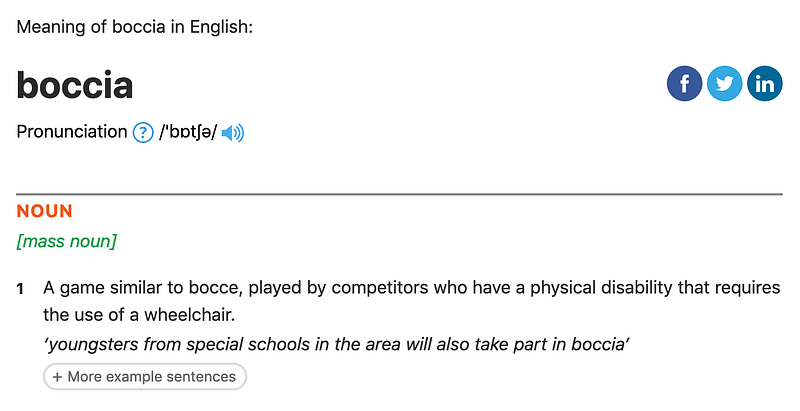
I’m not exactly sure what a “mass noun” is, though. If anyone does, feel free to comment.
Turns out that boccia made the list of new words way back in March of 2013. The OED does quarterly updates and publishes them online. So… boccia has been around for almost nine years, the sport itself gained entry into the Paralympics almost four decades ago, and right now there are more than 75 national organizations for the sport.
I mean, I understand why the Spelling Bee rejected it: without rejections, I wouldn’t have anything to write about on a daily basis.
But you, Merriam-Webster? What the eff?!?
A sport is a sport is a sport
The Boccia International Sports Federation, which governs the sport worldwide, boccia is “ a precision ball game similar to bocca bowls and pétanque”. The term is derived from the Italian word for “bowling”.
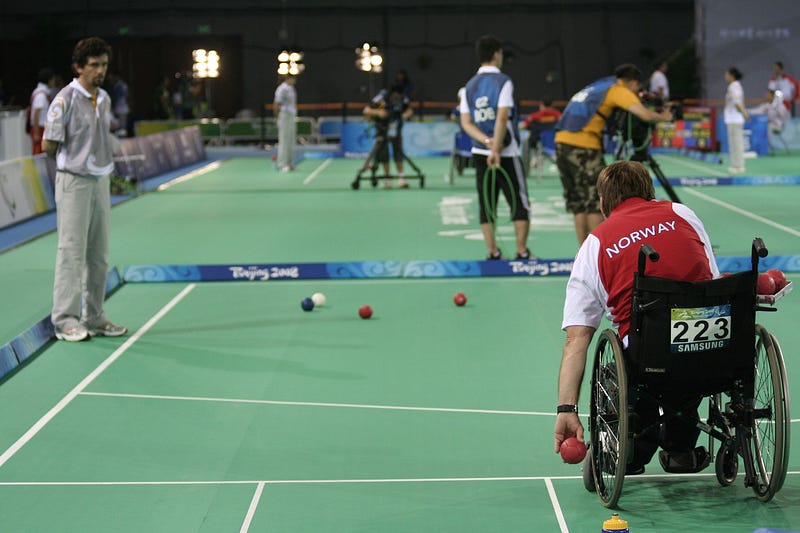
The difference between bocce or pétanque and boccia (pronounced bot-cha) is that the latter was created specifically for athletes who use wheelchairs because of disabilities. Per the BISFed rulebook, the main criterion for player eligibility is that “Competitors must be seated in a wheelchair to compete.”
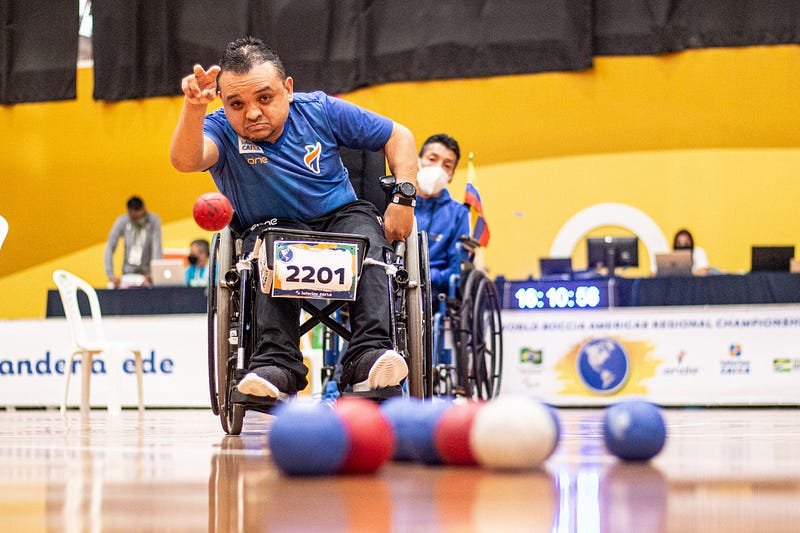
What’s cool is all events are mixed-gender, and when competing in pairs and teams of three, the teams must include one male and one female athlete. Athletes are further classified into one of four categories depending on their functional ability:
- BC1 — Players in this class throw the ball with the hand or foot. They may compete with an assistant who stays outside the competitor’s playing box, to stabilize or adjust their playing chair and give the ball to the player when requested.
- BC2 — Players in this class throw the ball with the hand. They are not eligible for assistance.
- BC3 — Players in this class have very severe locomotor dysfunction in all four extremities. Players in this class have no sustained grasp or release action and although they may have arm movement, they have insufficient range of movement to propel a boccia ball onto the court. They may use an assistive device such as a ramp to deliver the ball. They may compete using an assistant; assistants must keep their back to the court and their eyes averted from play.
- BC4 — Players in this class have severe locomotor dysfunction of all four extremities as well as poor trunk control. They can demonstrate sufficient dexterity to throw the ball onto the court. Players are not eligible for assistance.
Similar to pétanque, the main objective in boccia is to throw red or blue leather balls (depending on the team’s color) as close as possible to the jack, or white target ball. The jack, which is smaller than the other balls, is thrown first. Then, the player who threw the jack throws a colored ball, followed by the opposing side. After that, the side furthest away from the jack goes next. The players have the option of trying to get closer to the jack or knocking an opponent’s ball out of the way.
The match is played in rounds; when one side has played all their balls, the opposing team will play theirs, however many are remaining. As mentioned in the categories, in boccia the balls can be moved with the hands, the feet, or even an assistive device like a ramp, if needed.
At the end of each round the referee measures the distances of the balls nearest the jack, and gives out the points. Each ball that is closer to the jack than the opponent’s closest ball gets one point. So, for example, if the red team has two balls closer to the jack than the blue team’s closest ball, the red team will get two points at the end of that round.
Matches can have several rounds, and the team or player (in individual matches) with the highest number of points at the end of the match is the winner. If both teams have the same number of points after all the preset rounds have been played, an additional round is added to determine a winner.
At the 1984 New York City Paralympic Games, five countries sent 19 boccia athletes. By the 2008 Beijing event, 19 countries sent 88 athletes to complete. The 2007 World Cup in Vancouver had even more participants: 179 from 24 countries!
Here is a short video in which you can the game being played.
Who knows why the Spelling Bee and Merriam-Webster colluded to try to make this interesting sport disappear off the face of the printed world. What’s clear is that both of them thought that the word boccia is a dord*.
You can check out my previous entry on another dord* here:
*What the heck is a dord, you ask? Here’s the answer: