
Black Power is Empowerment | White Power is Oppression
These terms are not interchangeable
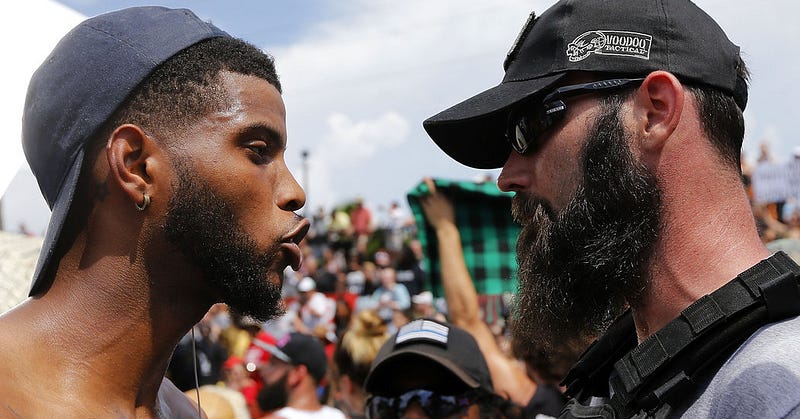
Lift a stone in America and you will find racism. Even after the original sin of slavery, white people used their power to oppress black people and their communities. This dynamic has created an adversarial relationship between two groups of Americans.
“Black Power was a revolutionary movement that occurred in the 1960s and 1970s. It emphasized racial pride, economic empowerment, and the creation of political and cultural institutions. During this era, there was a rise in the demand for black history courses, a greater embrace of African culture, and a spread of raw artistic expression displaying the realities of African Americans” (Black Power, 2020).
In honor of this revolutionary movement the term, “black power,” became a popular term amongst members and allies of the movement. Communities of black people wanted to change the power dynamic in the country so they embraced their power and felt a sense of pride. America was developed as a direct result of colonialism and white supremacy. They maintained power over black people after slavery using the Black Codes and Jim Crow Laws. White supremacists groups used the term, “white power,” to instill fear in black people. This group of white people wanted black people to feel a sense of fear in their presence. These groups committed many crimes against black people after slavery. Most notably, they used lynchings to send an intimidating message to others in the community.
Under constant threat of violence, black people were being terrorized by people yelling “white power”. Many white supremacists claim that their pride was righteous. However, they never exerted this pride to uplift impoverished white people. Instead, they used their movement to oppress black communities. Members of the KKK would often burn crosses in front of black people’s homes as a threat of violence to come.
“The Klan primarily performed heinous crimes against African Americans, especially those running for office in the South. Besides, many white Republicans and sympathizers were also targets of Klan violence. It is estimated that the KKK performed over 3500 racially-motivated lynchings in the South between 1865 and 1900. Furthermore, white Republicans who sympathized with African Americans, decried as ‘carpetbaggers’ and ‘scalawags,’ were frequently attacked” (The First KKK, 2020).
Although they claimed this was about having white pride, this pride was only exerted over black people. It was not used to uplift impoverished white people.
In contrast, the black power movement was inclusive. Men and women from different socioeconomic backgrounds felt united in their cause. Black power was never about supremacy. It was about a human right to equal rights and justice. The concept of black liberation instilled pride in black people. This pride was necessary because black people were conditioned to feel inferior. Under these circumstances, having pride in your blackness was revolutionary.
White power is and has been a deliberate threat to black lives and livelihoods. It is an assertion of superiority that is ungrounded in science or real-life experiences. Racist people often say that the black power movement is racist. This is a blatant spin tactic to discourage black people from pursuing equal rights. After being gaslit for generations, many black people thought that the black power movement was racist as a direct result of this smear campaign.
“Routinely, the FBI and local police spread rumors that the Panthers were teaching the children to kill or that they were poisoning the food, as in California, New York, Philadelphia, and Chicago” (Meister, 2017).
The FBI made it their goal to destroy the Black Panther Party which was focused on uplifting black communities through social programs like the Free Breakfast for Children Program. The FBI spread rumors that the BPP would teach children racism. Their campaign against the BPP was eventually successful. Some members were killed, others were put in jail, and some still walk among us. Angela Davis, for example, is still a social icon and an activist for justice.
To be clear, the FBI’s assertion that panthers were teaching racism couldn’t be further from the truth. Using their Intercommunal Youth Institute, they taught young black and poor students analytical skills.
“It is not, I believe, our duty to impose our limited interpretation this past on the next generation. Surely the future belongs to those who will live it” (Hillard, Newton, & West, 2010).
They were not trying to manipulate the minds of children. They developed a program to address the deficiencies they saw within society. Yet, their efforts were ineffective because of the fear campaign imposed by the FBI and local law enforcement officials.
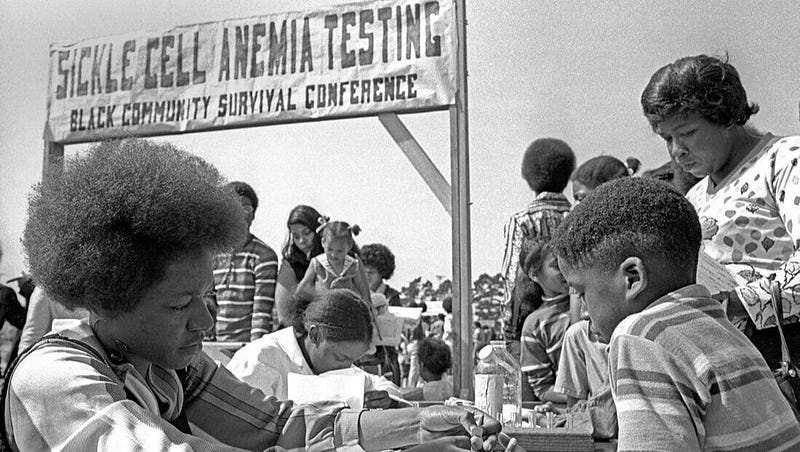
The panthers had many other programs. Notably, they had a free ambulance program, free clinics, a sickle cell anemia testing, an adult learning center, and SAFE (a program that provided safety for elderly people in the community). All of these programs were provided to the community for free and were done under nonprofits so those who donated received a receipt. Their donation was tax deducible. Yet, they were persecuted like criminals.
The white power movement in the past and in its current form is dangerous and doesn’t serve the community. In 2015, a self-proclaimed white supremacist named Dylan Roof shot and killed nine black people in a South Carolina church. Although black people commit crimes, those associated with the black power movement do not have a history of committing hate crimes against white people. Terrorism, systematic racism, and history have created a clear distinction between these terms.
If you like this story, you can read more about the dynamics of race and equity:


