Summary
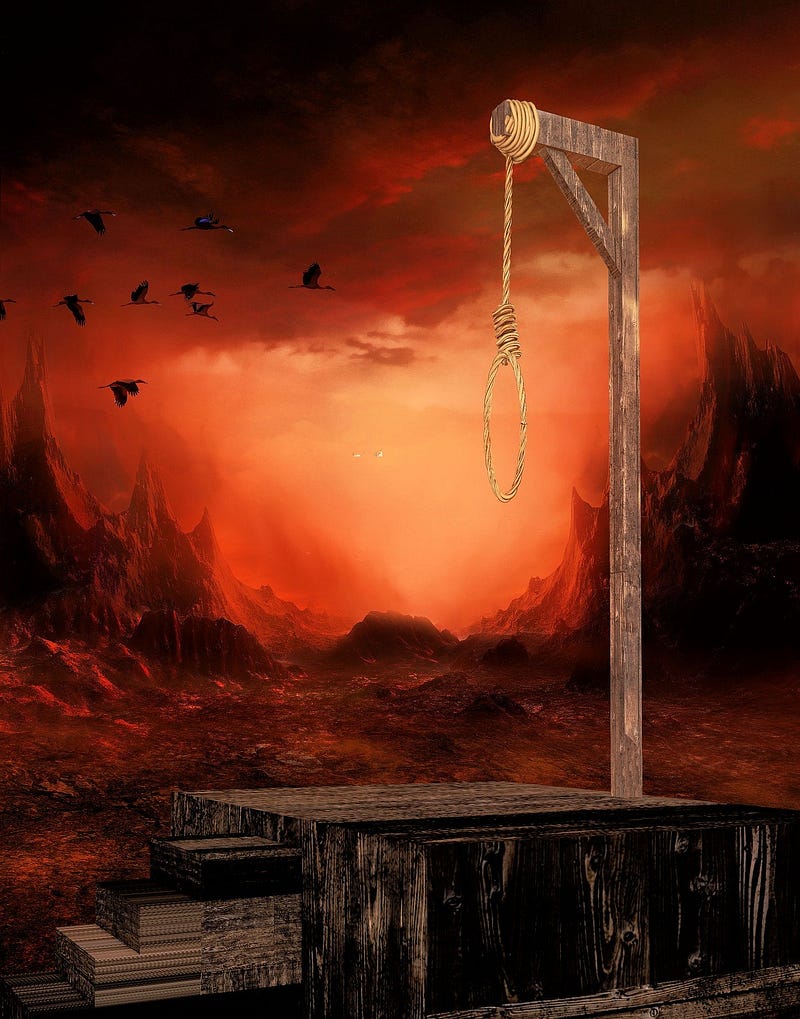
A wrongfully convicted man, sentenced to death for aiding a stabbing victim, reflects on the injustice of his conviction, which he perceives as racially motivated.
Abstract
The narrative titled "White Noose" is a poignant 100-word story that encapsulates the tragic final moments of an innocent man. He is on the verge of execution, having been swiftly convicted of murder within six months of aiding a stabbing victim by calling 911. Despite his innocence, societal biases and a flawed justice system have led him to a death sentence. As he stands with a noose around his neck, ready to deliver his final statement, he expresses a profound wish that his skin color had been different, suggesting that racism played a role in his unjust conviction and sentence.
Opinions
- The story conveys a critical view of the justice system, highlighting its rapid and flawed conviction process.
- It suggests that societal prejudices, particularly racism, can significantly influence legal outcomes.
- The man's final wish implies a sense of resignation and a belief that his race contributed to his wrongful conviction.
- The story is a commentary on the broader issue of racial injustice within society and the legal system.
- The use of the term "eternal heaven" juxtaposed with "death sentence" underscores the irony and injustice of the situation.