
Black is Now a Global Brand and Here’s Why That’s a Good Thing
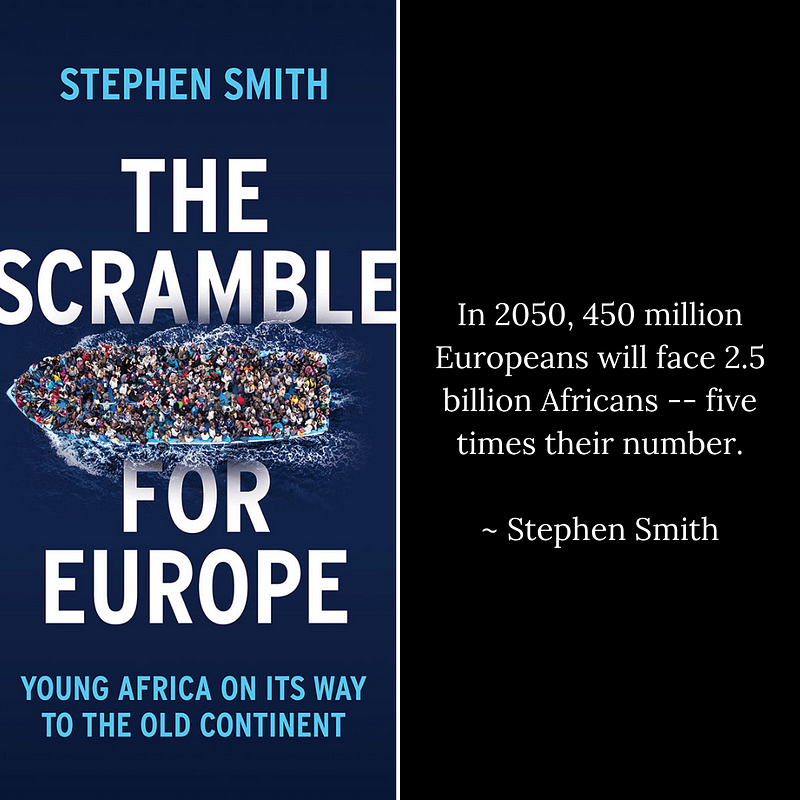
While listening to a recent episode of In Class with Carr, I smiled when Professor Hunter and Dr. Carr echoed some of the thoughts I’ve been holding for a while. They said a lot in that session, but most germane to this story is the observation that, globally, African-descended people are coming together under the single banner of Blackness. A potent movement is forming before our eyes and it couldn’t be happening at a better time since so many European nations are experiencing declining populations.
They’ve always been the global minority, but as we close ranks we are becoming an even stronger global majority. Ok, maybe we aren’t the global majority, but there are a whole lot more of us when we organize under one banner. This can be a good thing if we let it.
A Quick Walk Down Memory Lane
Does anyone else recall a time when not all African-descended people outside of the United States identified as Black? I do. I remember having conversations with Continental Africans and Jamaicans when I was coming of age in the 70s and 80s in Los Angeles. Most would indignantly cling to their countries of origin (or those of their parents) while passionately rebuking the Black label anytime someone even thought about applying it to them.
I even recall some rather passionate discussions where American CHOSSA (Children of Stolen & Sold Africans) would flat out insist that “we know our people” while immigrants who looked just like us would deny all association with a “color”. Many Hondurans, Belizeans, Guatemalans, El Salvadorans, Mexicans and others of darker hues were increasing in hoods all over the city, yet wanted no part of the word ‘Black’. I remember lips curling in disgust around the word as though it was beneath the person speaking and one of the most offensive things they could be called. Where we American CHOSSA were proudly Black, others who liked us, lived beside us, fell in love with us and had children with us loved our culture, but wanted no parts of the Black label.
(Perhaps that’s why it’s so puzzling to me why some American CHOSSA have made an about face from the days of embracing all Blackness — and even insisting on it despite contrary claims — to now ostracizing certain groups of people and rendering their Black cards null and void. It’s especially weird this appears to be happening at a time when White populations are shrinking and our numbers could be expanding even more if we’d stop kicking people out the family. But that’s a topic for other days.)
Black is Where it’s At
These days, however, I’m noticing that everybody’s Black. All of the aforementioned groups are, thankfully, holding the banner high now. Not sure exactly how this happened, I’m just glad it did. If I’m being honest, I suspect American CHOSSA had a lot to do with the effectiveness of the branding campaign.
Some might be tempted to credit White supremacy since it was those folks who first slapped the black label on Africans, especially CHOSSA whom they believed they owned. I recall a college professor once identifying ‘black’ as a hybrid race. One that was no longer purely African and one that was created by the White man through coerced breeding and outright rape. Even if that were true — and it’s certainly debatable — that was black with a lowercase b. As CHOSSA, we turned that label around and inside out as we created an entire culture from that gross color-coded discrimination until, today, our use of Black is the only one that matters and it’s the only Black we recognize.
Say it Loud…
Thanks to the Black Power movement, the cultural pride we’ve long held as Black people, the Black Lives Matter movement, Black music and even Black Twitter, Black has been in. I think it’s because we’re so fly, so committed to our Blackness and so incredibly loud about injustices surrounding anti-Blackness that we’ve gained a reputation as a powerful people. Yes, we have our flaws — deep, deep flaws — but we still manage to make Blackness look oh so good! So good that now something our enemies created to demean us is actually something spectacularly great and something we can rally around, globally.
As proud as I am to be CHOSSA, Black on both sides and in love with my people, even I must not get it twisted. We may have made Black popular, but every last drop of our Blackness belongs to Africa. Seeing Africans now proudly claiming Blackness in unison with CHOSSA everywhere, it’s clear that it’s always been a substitute for ‘African’. Pay no mind to those who stubbornly refuse that tag because it simply is what it is and just like everyone is flocking to Blackness now, I have every confidence that we’ll be the same way about identifying as African someday soon.
Unity in Progress
Black people worldwide are at last realizing that we come from the same root, Mama Africa. As her children, we have ALL experienced similar traumas at the hands of both slavery and colonialism. Because of this, we also fight a common enemy, White supremacy. It’s all well and good that we have our cultural differences and it’s perfectly ok that we rep multiple different flags, but, when it’s all said and done we stand strong when we stand as one.


