
Black Colleges and Universities are Invisibile to Some Black Students
How HBCUs offer education and inclusion for all students.
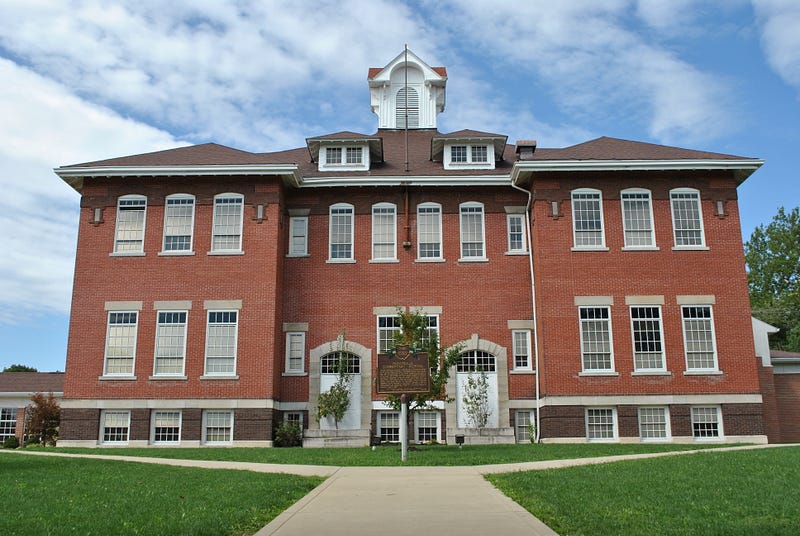
Back in the day when I graduated college, there was little to no knowledge regarding attending a historically Black college or university. Particularly, during the high school years, all students should be introduced to all options when choosing a college or university to attend.
There are more than 100 designated historically Black colleges and universities (HBCUs) in the United States. Most are in southern states. California has only one, and it’s in Los Angeles: Charles R. Drew University of Medicine and Science.
Others include Spelman College, Howard University, Xavier University of Louisiana, Hampton University, Morehouse College, Tuskegee University, Florida A&M University, North Carolina Agricultural and Technical State University, Alabama State University, Alcorn State University (MS), Arkansas Baptist College, Benedict College, Bennett College (NC), Bethune-Cookman University (FL), Bowie State University (MD), Central State University (OH), just to name a few more notables.
HBCUs have graduated many greats and well-known figures who have gone on to become very successful in their endeavors, even though quietly kept. Some are recognized for having done so and others equally successful continued their lives in pursuit of dreams.
Like all colleges and universities, HBCUs have their specialties and benefits for students that want to relate and have a sense of belonging. These students would discover HBCUs provide something that cannot be gotten from traditional schools and colleges for a lot of Black students or students of color.
Attending college, like buying a home, is a major investment in one’s journey in life and all options should be considered. When a student is more informed, he/she makes better choices.
Ruling out an experience that cannot be gotten from any other school, would be a huge mistake in so many aspects from recognition, pride, patronage, respect, quality education, and better future viable employment.
Blatant systemic racism, racial microaggressions, and feelings of isolation have affected more students than can be counted and the numbers are increasing daily therefore other schools should be a choice. Why not an HBCU?
Eliminating all these negatives will afford students of color to focus on their education and future. Why pay tuition at a college that discriminates? Instead, support a college or university that supports its students in all aspects of education, culture, and academia.
HBCUs are not hard to find. Given the advantage of the internet, a student can find out much information regarding these schools and make initial contact. All it takes is a will and the rest is history.
HBCUs afford Black students opportunities unlike any other while getting an education. The schools go to great lengths to ensure the success of their students due to their small minority yet visible noteworthy status.
Ideally, since enrollment has been dropping for Black students in various states for various reasons, perhaps an HBCU may be what is needed as a positive replacement.
The lack of visibility being overshadowed by other white colleges’ narratives, has caused many students to make biased decisions about college based on hearsay and/or false claims of inclusion and equal access.
Attending college is a student’s first introduction to real independence and should be the right fit, otherwise, the students may feel like a misfit at the hands of the many who discriminate.
Teachers, professors, and other educational facilitators of color can relate to students of color, unlike their white counterparts where some teachers do this superficially. Similar culture, background, history, convictions, etc. relate to its own.
In high school, I always skipped American history class as it only focused on White America, and instinctively I knew American history books were written to exclude the accomplishment of Blacks and people of color who built this country on their back.
While HBCUs are open to all students of color, Black students are the main focus due to much inequity and exclusion faced in other colleges and universities.
There has been a surge in Asian, Latinx, and international students across racial groups. Many of these students choose an HBCU for its campus climate, accessibility, and competitive STEM programs, (Science, Technology, Engineering, and Mathematics).
Having a first vice president female and woman of color who attended an HBCU, Kamala Harris, along with equal rights activists, Stacey Abrams and the likes of Dr. Martin Luther King, Jr., Marian Wright Edelman, Langston Hughes, Alice Walker, Toni Morrison, and many many more have brought high recognition to various HBCUs putting them on the recognition map.
Due to much racial strife and division within the country, politicians and other high-profile activists have given more attention to HBCUs with the hope of not only raising awareness of these schools but providing access and hope to students of color.
HBCUs, unlike white colleges and universities along with high standards, continually foster a climate of inclusion and highlight the true entire American experience.
In conclusion, HBCUs are known for their success with their students’, high academic achievement, retention, and college completeion rate. Monies are needed for their survival, while dollars as of 2020 are coming in, some has had to close due to lack of funding. Visiblity and funding are key in survival. HBCUs deserve the same financial support as White colleges and university.
For additional reads:


