avatarAvi Kotzer

Free AI web copilot to create summaries, insights and extended knowledge, download it at here

3571

Abstract

0/0*oyPrxVx5nNd0gxxE.jpg"><figcaption>Photo by Joe Mabel</figcaption></figure><p id="6e7c">The mooring lines are wrapped around each bitts or in a figure-8 pattern when two bitts are used. Each turn increases the friction against tension, which can help stabilize the movement of a moored ship. Back in 1736 (when the term originated) word coiners were a bit lazy and decided to use <i>bitt</i> as a verb, too:</p><figure id="64df"><img src="https://cdn-images-1.readmedium.com/v2/resize:fit:800/1*y7_lbCTpmZd_Djq7mX7jLw.png"><figcaption>Credit: merriam-webster.com</figcaption></figure><p id="e39f">Because of the fact that lines are wrapped around them, <i>bitts</i> need to be manufactured with care so that their finish is smooth with no sharp edges that can slowly eat into the mooring ropes.</p><figure id="a8ce"><img src="https://cdn-images-1.readmedium.com/v2/resize:fit:800/0*y2m1ayGv8Brv1a1Z.jpg"><figcaption>Photo by Mass Communication Specialist 1st Class Cynthia Clark, U.S. Navy</figcaption></figure><p id="4da4">Alternatively, you could always use the humongous <b>hawsers</b>, those thick cables used by regular humans to moor or tow a ship…</p><figure id="9513"><img src="https://cdn-images-1.readmedium.com/v2/resize:fit:800/0*UE-D2aK7Y_1h4YAY.jpg"><figcaption>Photo by Royal Navy official photographer, Russell, J E (Lt)</figcaption></figure><p id="b01d">…and by giants to sew buttons that fell off their shirts.</p><p id="4208">And so we’ve arrived at our juvenile joke of the day: these hawsers pass through a gap in the ship called the… <b>hawsehole</b>. Yes, read that last word out loud, slowly.</p><h2 id="8281">Dolphins aweigh!</h2><p id="a1a2">The dictionary sent me on a short chase that ended up with the discovery of a new meaning for an old word. The caveat is that, when it comes to everything nautical, I confess my overwhelming ignorance regarding most of the terminology. Perhaps this reveal won’t surprise you, my savvy and eagle-eyed readers (all three of you).</p><p id="4d18">The second definition of <i>bitt</i> was one word, “bollard 1a”, with a hyperlink. I clicked.</p><figure id="342d"><img src="https://cdn-images-1.readmedium.com/v2/resize:fit:800/1*0Tt4YMTTUCp0P7zFTUauGQ.png"><figcaption>Credit: merriam-webster.com</figcaption></figure><p id="a97c">Hmmm… dolphin? How is that even possible. Let me click that…</p><figure id="2ae5"><img src="https://cdn-images-1.readmedium.com/v2/resize:fit:800/1*-_IUnG0YC0yJwkg2vk7CDg.png"><figcaption>Credit: merriam-webster.com</figcaption></figure><p id="e084">So many definitions! And even an illustration! You may have noticed that entry 1a for bollard didn’t specify which definition in dolphin we should refer to. Not to worry, I read through them all so you wouldn’t have to. It’s number 5, more specifically 5c ––a mooring post–– which takes us back to <b>bollard</b>.</p><p id="6140">I had heard of the dolphin mammal, the dolphinfish, and even the dolphin football team… but not the dolphin mooring post.</p><p id="57ce">Now, the etymology of dolphin as an animal goes back to the ancient Greek <i>delphys,</i> meaning “womb”, due to the supposed similarity of their shapes. Which just proves the ancient Greeks had not seen many wombs. And just so you don’t get confused, dear readers…</p><figure id="f763"><img src="https://cdn-images-1.readmedium.com/v2/resize:fit:800/1*aWbNxf54GiFzWQZ8OmOv-g.png"><figcaption>Screenshot collage by Iva Reztok</figcaption></figure><p id="030f">I did manage to find a photo of the dolphin posts, and they don’t look like wombs, either. Or d

Options

olphins, for that matter. To recap…</p><figure id="b328"><img src="https://cdn-images-1.readmedium.com/v2/resize:fit:800/1*k63lfF-K6GSEPGzIozqzBQ.png"><figcaption>Screenshot collage by Iva Reztok</figcaption></figure><p id="24e1">So why are these mooring posts called dolphins? I haven’t been able to find out yet, despite spending a long and grueling 10 minutes doing research online. So, if you happen to read this column and happen to know the reason and happen to feel like writing it in the comments section… I will be eternally grateful for the entire week.</p><p id="7698">I also discovered that there was a thing called the “dolphin weapon” used by ancient Greek galleys (those ships propelled by a lot of oars that usually make an appearance in movies taking place two thousand years ago). In a story about a wreckage where the dolphin weapon was found, Discover Magazine described it as “a teardrop-shaped lead weight dropped from a ship’s sails to smash the deck of hostile vessels”. I’m not sure how much trust I should put in that article, though, because this is the photo they had right underneath the quote:</p><figure id="2a5b"><img src="https://cdn-images-1.readmedium.com/v2/resize:fit:800/1*wz_HT8Q8nSEcPIp86NgRqA.png"><figcaption>Credit: Discover Magazine</figcaption></figure><p id="6821">I know the ancient Greeks had advanced tech for their era, but I doubt they had <b>war dolphins</b> made of metal with 4140 Nm of Axle Torque.</p><p id="1b02">I smell a conspiracy here. Perhaps the <b>Moon Landing</b> was faked… by the ancient Greeks using their Cascadian Motion thingamajig! Maybe that’s why the Moon turns into a dolphin once a month:</p><figure id="9f38"><img src="https://cdn-images-1.readmedium.com/v2/resize:fit:800/0*6-vwHxP4w0e6SLld"><figcaption>Photo by <a href="https://unsplash.com/@tegethoff?utm_source=medium&amp;utm_medium=referral">Mark Tegethoff</a> on <a href="https://unsplash.com?utm_source=medium&amp;utm_medium=referral">Unsplash</a></figcaption></figure><p id="6322">Well, that’s all folks. I hope you didn’t get all tied up with today’s explanations. If you did, at least it wasn’t tied up to a <i>bitt</i>… because the editors of the Spelling Bee decided that <i>bitt</i> a dord*.</p><p id="b444">You can check out my previous entry on another <b>dord* </b>here:</p><div id="2d22" class="link-block"> <a href="https://readmedium.com/tarn-f9a6677e8afe"> <div> <div> <h2>Tarn</h2> <div><h3>Cirque du lake, not du soleil</h3></div> <div><p>medium.com</p></div> </div> <div> <div style="background-image: url(https://miro.readmedium.com/v2/resize:fit:320/0*2aVP6-qw67xvhUt4)"></div> </div> </div> </a> </div><p id="3538">*What the heck is a <b>dord, </b>you ask? Here’s the answer:</p><div id="2ac6" class="link-block"> <a href="https://www.merriam-webster.com/words-at-play/dord-a-ghost-word"> <div> <div> <h2>'Dord': A Ghost Word</h2> <div><h3>One of the questions people like to ask lexicographers is this: Can you sneak something into the dictionary? Can you…</h3></div> <div><p>www.merriam-webster.com</p></div> </div> <div> <div style="background-image: url(https://miro.readmedium.com/v2/resize:fit:320/0*XG3y1YayipNcvRDC)"></div> </div> </div> </a> </div></article></body>

Bitt

There’s a bit more to this word than just an extra “t”

Photo by Ranae Smith on Unsplash

Today’s New York Times Spelling Bee letters:
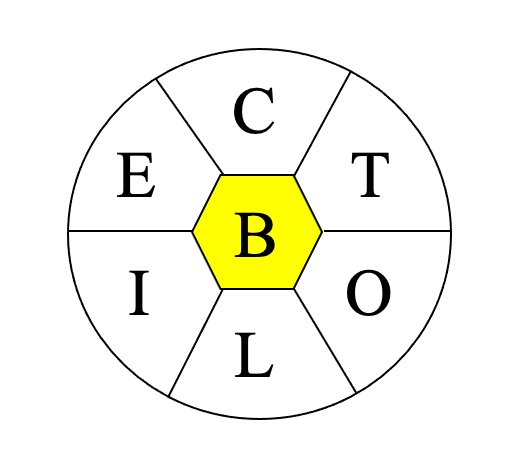
Art: Iva Reztok

C, E, I, L, O, T, and center B (all words must include B)

Merriam-Webster says…
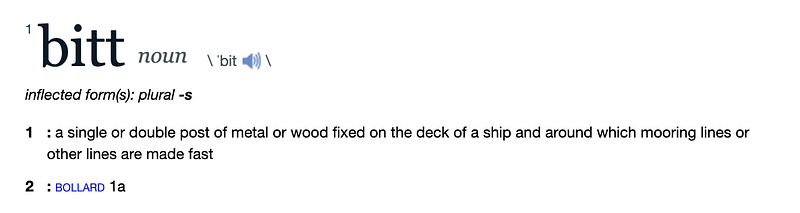
Credit: merriam-webster.com

Silly little dictionary! Don’t you know bitt can’t possibly be a word if the New York Times says it ain’t?

For further fascinating facts, check out the Spelling Bee Master.

What’s your favorite dord* from today’s puzzle?

My Two Cents

Often the Spelling Bee allows for creative word coining. You just plug in letters to make up realistic words, only to both have them rejected and discover even the dictionary doesn’t list them. Today there was a plethora:

§ icebolt, a lightning rod thrown by Batman’s Mr. Freeze

§ octobill, when something goes awry with Netflix and they charge your credit card not once, not twice… but eight times!

§ bootlice, vermin that attach to your unkempt thigh-highs

§ celibot, a mechanical sex doll that refuses to make the beast with two backs

§ bittcoin, a newfangled cryptocurrency worth just a tiny bitt moore than that other everyone talks about (from a suggestion made by eagle-eyed read Bruce Thomas. Thank you, Bruce!)

What new and creative words can you make up with today’s seven letters?

Sitting on the dock of the bay

According to our good friends at Merriam-Webster, bitt may have come to the English language from the Old Norse biti meaning “beam”. In that sense, it is related to the words boat and bite. Boat comes from the Middle English boot, from Old English bāt; akin to Old Norse beit (boat), biti (beam), and probably to Old English bītan (to bite), Latin findere (to split). And this likely had to do with the fact that early boats were made by hollowing out tree trunks.

That Latin findere also developed into the Gothic beitan (to bite) then wove its way through Old Norse, Old High German, Old English, and Middle English until it became the word known today as “bite”.

Bitts are usually set as paired vertical posts, made of wood or metal. They can be used on both the ships or boats themselves, as well as on the piers.
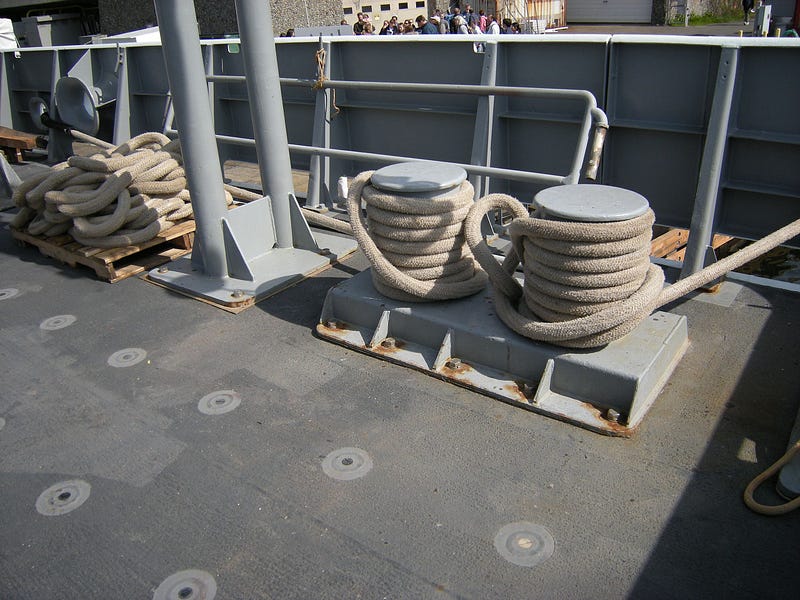
Photo by Joe Mabel

The mooring lines are wrapped around each bitts or in a figure-8 pattern when two bitts are used. Each turn increases the friction against tension, which can help stabilize the movement of a moored ship. Back in 1736 (when the term originated) word coiners were a bit lazy and decided to use bitt as a verb, too:
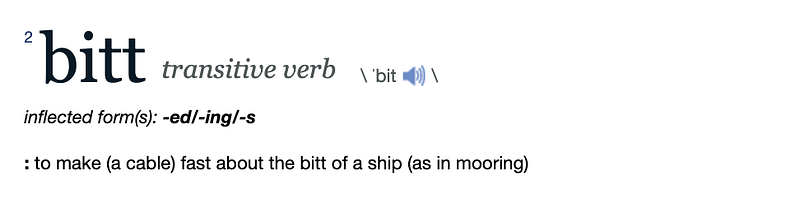
Credit: merriam-webster.com

Because of the fact that lines are wrapped around them, bitts need to be manufactured with care so that their finish is smooth with no sharp edges that can slowly eat into the mooring ropes.

Photo by Mass Communication Specialist 1st Class Cynthia Clark, U.S. Navy

Alternatively, you could always use the humongous hawsers, those thick cables used by regular humans to moor or tow a ship…
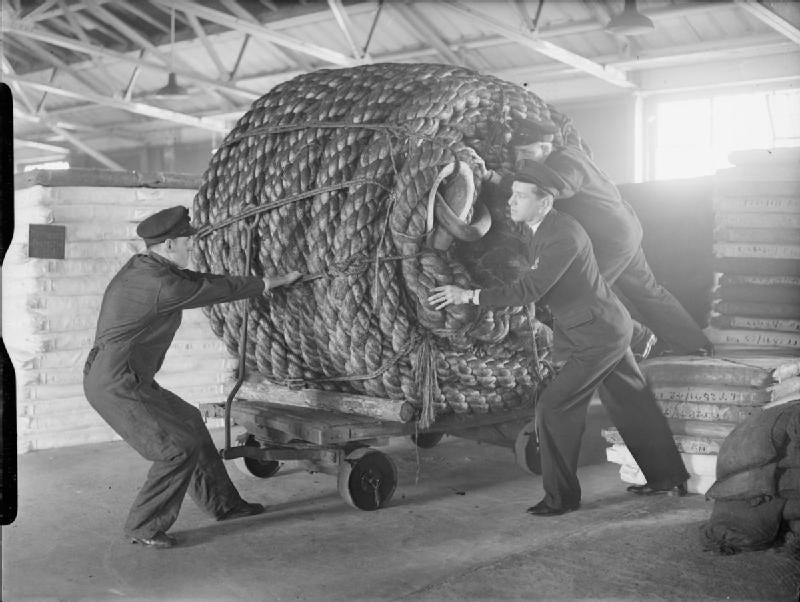
Photo by Royal Navy official photographer, Russell, J E (Lt)

…and by giants to sew buttons that fell off their shirts.

And so we’ve arrived at our juvenile joke of the day: these hawsers pass through a gap in the ship called the… hawsehole. Yes, read that last word out loud, slowly.

Dolphins aweigh!

The dictionary sent me on a short chase that ended up with the discovery of a new meaning for an old word. The caveat is that, when it comes to everything nautical, I confess my overwhelming ignorance regarding most of the terminology. Perhaps this reveal won’t surprise you, my savvy and eagle-eyed readers (all three of you).

The second definition of bitt was one word, “bollard 1a”, with a hyperlink. I clicked.
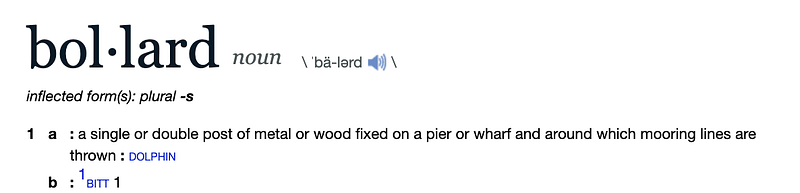
Credit: merriam-webster.com

Hmmm… dolphin? How is that even possible. Let me click that…
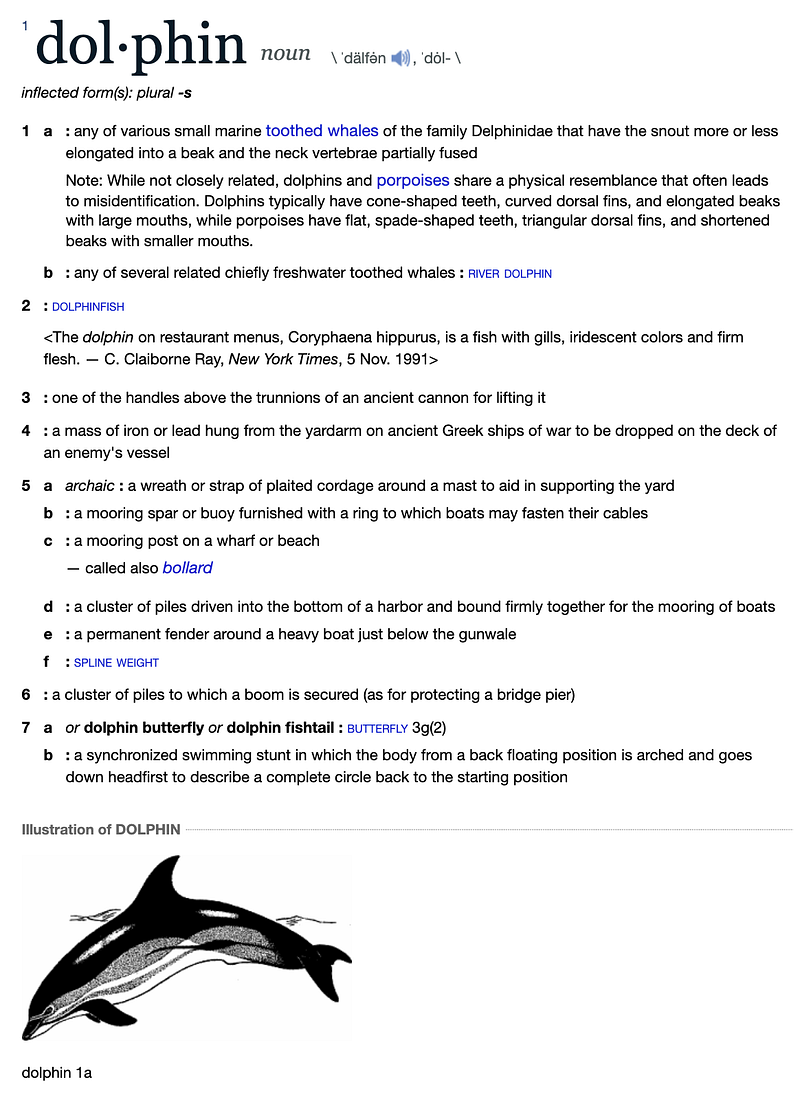
Credit: merriam-webster.com

So many definitions! And even an illustration! You may have noticed that entry 1a for bollard didn’t specify which definition in dolphin we should refer to. Not to worry, I read through them all so you wouldn’t have to. It’s number 5, more specifically 5c ––a mooring post–– which takes us back to bollard.

I had heard of the dolphin mammal, the dolphinfish, and even the dolphin football team… but not the dolphin mooring post.

Now, the etymology of dolphin as an animal goes back to the ancient Greek delphys, meaning “womb”, due to the supposed similarity of their shapes. Which just proves the ancient Greeks had not seen many wombs. And just so you don’t get confused, dear readers…

Screenshot collage by Iva Reztok

I did manage to find a photo of the dolphin posts, and they don’t look like wombs, either. Or dolphins, for that matter. To recap…
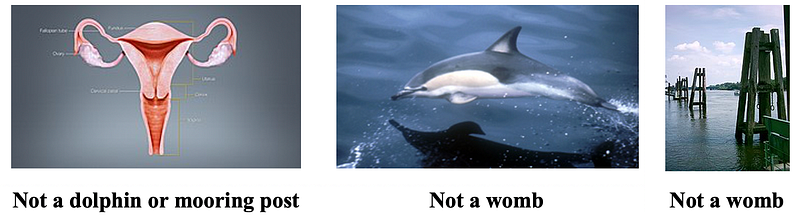
Screenshot collage by Iva Reztok

So why are these mooring posts called dolphins? I haven’t been able to find out yet, despite spending a long and grueling 10 minutes doing research online. So, if you happen to read this column and happen to know the reason and happen to feel like writing it in the comments section… I will be eternally grateful for the entire week.

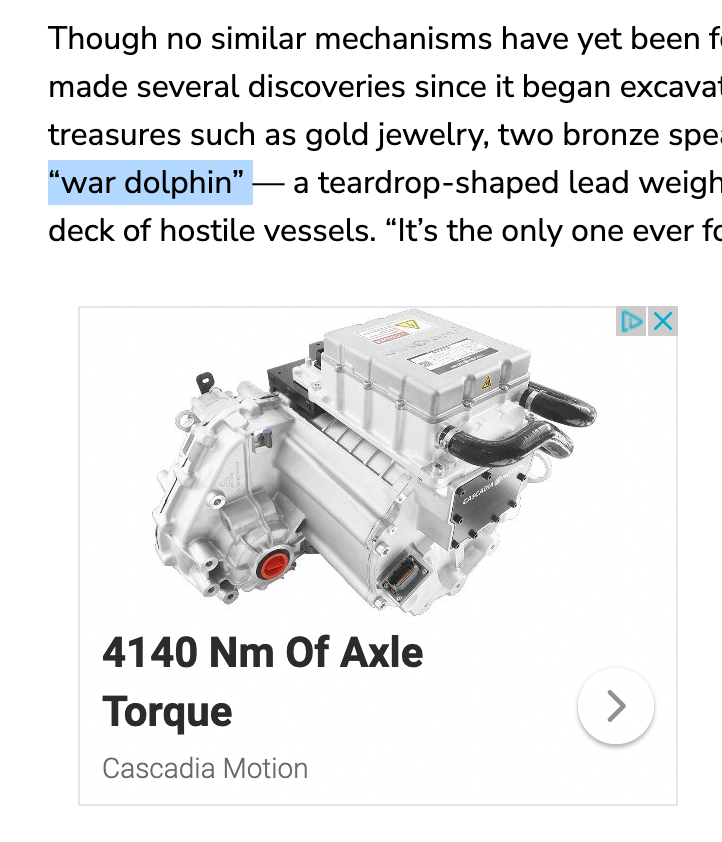
I also discovered that there was a thing called the “dolphin weapon” used by ancient Greek galleys (those ships propelled by a lot of oars that usually make an appearance in movies taking place two thousand years ago). In a story about a wreckage where the dolphin weapon was found, Discover Magazine described it as “a teardrop-shaped lead weight dropped from a ship’s sails to smash the deck of hostile vessels”. I’m not sure how much trust I should put in that article, though, because this is the photo they had right underneath the quote:
Credit: Discover Magazine

I know the ancient Greeks had advanced tech for their era, but I doubt they had war dolphins made of metal with 4140 Nm of Axle Torque.

I smell a conspiracy here. Perhaps the Moon Landing was faked… by the ancient Greeks using their Cascadian Motion thingamajig! Maybe that’s why the Moon turns into a dolphin once a month:
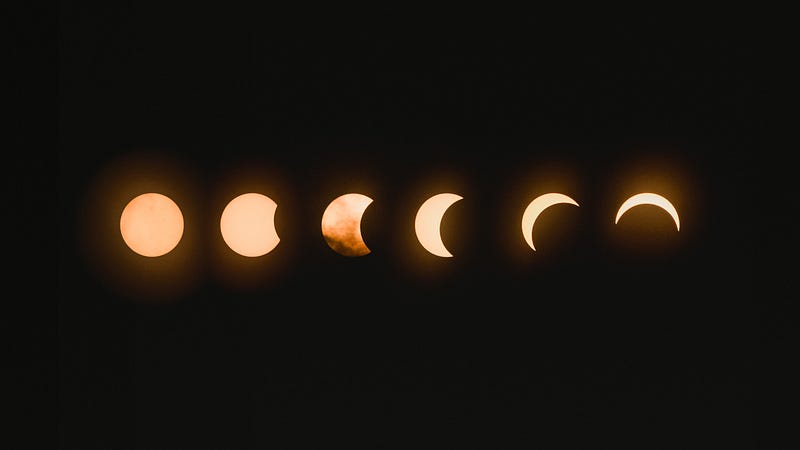
Photo by Mark Tegethoff on Unsplash

Well, that’s all folks. I hope you didn’t get all tied up with today’s explanations. If you did, at least it wasn’t tied up to a bitt… because the editors of the Spelling Bee decided that bitt a dord*.

You can check out my previous entry on another dord* here:

*What the heck is a dord, you ask? Here’s the answer:

Spelling Bee
Language
Humor
Dolphins
Boats
Recommended from ReadMedium