
Current Events in Blockchain
Bitcoin is Homeless
Crypto eviction from China is revealing flaws in the system

The Chinese crackdown on bitcoin mining is serious and miners in China are taking this very seriously and looking for new locations. For a currency that is supposed to be independent of nation-states, it appears the tables are getting turned.
The blockchain algorithm takes into account various methods of trying to corrupt or cheat the system. It eliminates the manipulation of entries in the ledger by using a census-based audit process. Distributed validation, or mining, was supposed to make the currency nation agnostic as the validation would be performed anywhere and everywhere on the Internet.
In reality, the massive energy consumption of the mining process is rendering the coin both vulnerable to state controls and cheap energy sources. Until now, China has been the ideal location; a stable government with minimal corruption and plentiful energy sources. What was not accounted for was the possibility of blockchain being both useful to and a threat to fiat currency. The worldwide banking system is already a virtual trading entity with need for high security.

What state-backed currencies have that cryptocurrency lacks is violence. The ownership of laws, courts, and the armies or police to enforce the will of the state is an important factor in whether crypto will find a home. What was ideally a free-floating virtual entity is, in reality, reliant on a plentiful energy source, unfettered Internet access, and a friendly government.
Bitcoin farmers have tried Iran but ended up being banned after blackouts occurred from a lack of hydropower. Other Middle Eastern countries have banned crypto from the banking system while in Russia miners have encountered corruption leading to the confiscation of equipment.
Meanwhile, some Western countries like Sweden are considering building their own cryptocurrency (e-krona) and removing miners from the equation entirely. This might lead to thinking a state-backed coin might lack the security of distributed validation but price stability would be an attractive trade-off. These fiat coins could also perform distributed validation on the existing Bitcoin network or through private sector services.

With the development of Proof-of-Stake (PoS) cryptocurrencies like Cardano (ADA) or Polygon (MATIC), it would no longer be necessary for the validation to use massive amounts of energy and would thus be economically (and ethically) viable for new services to evolve. Keep an eye on the big players getting into PoS services.
In the meantime, Bitcoin has lost its thundering growth and as the crypto market becomes lackluster and the trading volume goes down, so do the fees that miners collect. The financial blow is not enough to put them out of business but international relocation of massive data centers will not be cheap.
There is also the political barrier of moving to a country with a stable, minimally corrupt, government. A recent migration to Connecticut purchased and restarted a natural gas power plant to run its operations; the result was blowback by locals and New York state considering a bill to prevent this type of carbon production.
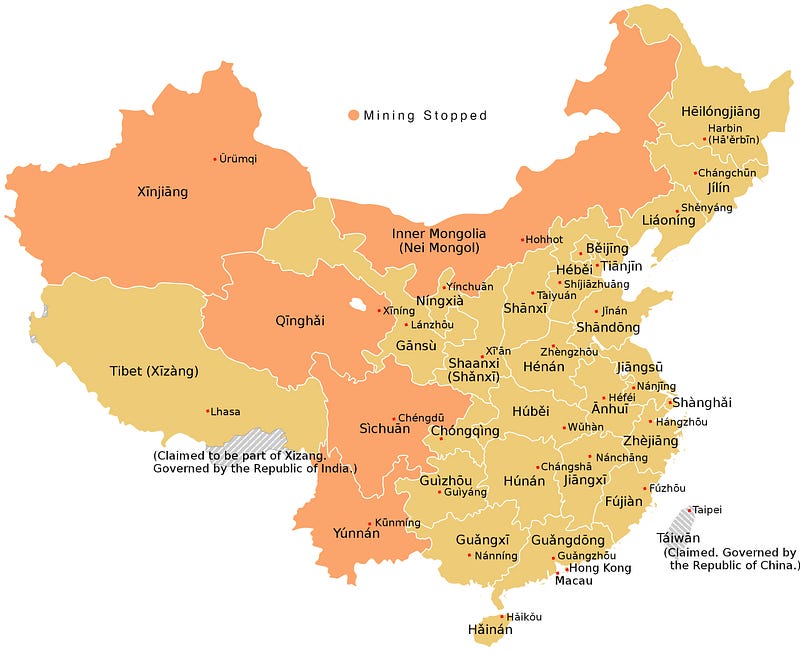
Not every location is hostile to the idea of crypto mining, Kentucky sees coal currency as an economic benefit and is offering tax incentives to mining operations looking for a new home. Tennessee and Texas are also targets of these investors but Texas comes with a flaw that may come as a surprise once those shipping containers of computers arrive. The power grid was revealed last winter to be particularly fragile and more importantly lacking alternative routes to pull power from neighboring grids.
Jiang Zhuoer, one of the leading mine operators, is a climate change denier so risk assessment on the impact of climate change by his organization will probably be weak and the hotter summers and colder winters already impacting the state will not be considered as part of his West Texas relocation. When Texas utility operators have to choose between saving lives or keeping money flowing to China, the choice will be obvious and swift.
Governor Greg Abbott announcing the flaws in power delivery have been fixed through legislative reforms is not going to prevent future outages. Severe weather accounts for more than a quarter of all outages in transmission and over-demand accounts for a similar proportion of outages in delivery.
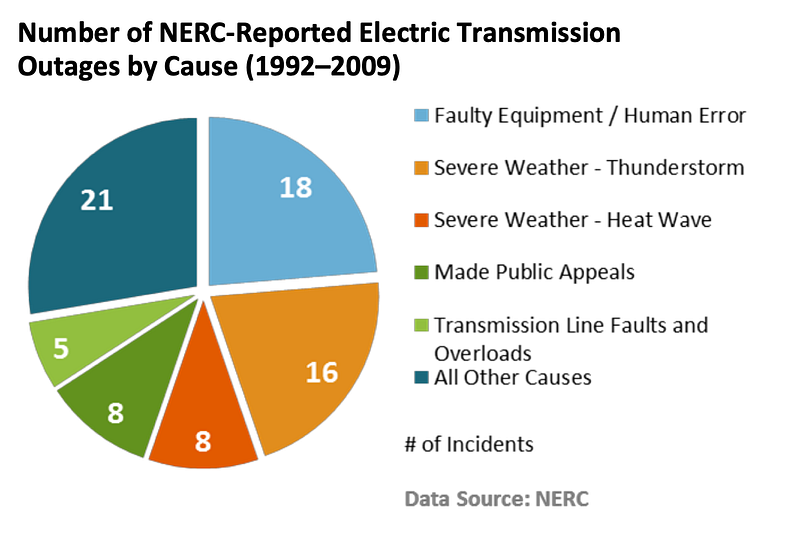
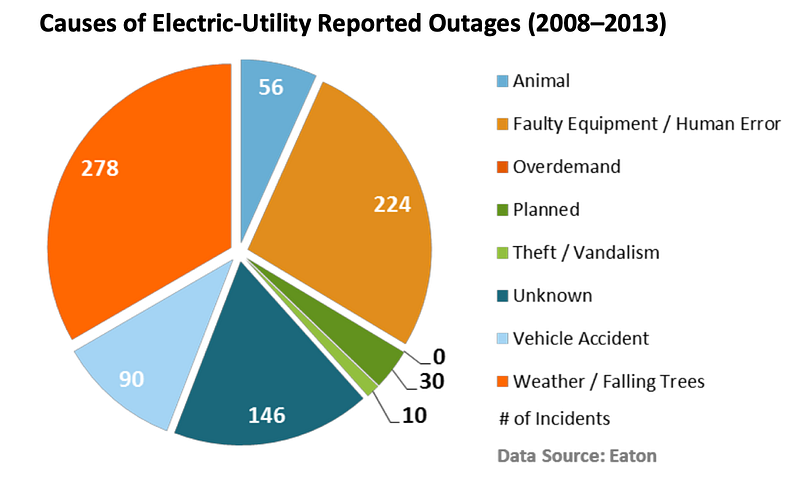
Bitcoin is facing existential threats from governmental policy, national banking system competition, loss of investor enthusiasm, and energy costs. The underlying technology of blockchain remains healthy and will become as ubiquitous as the Visa/Mastercard sticker on the merchant’s front door but don’t expect the new sticker to be “Bitcoin -It’s everywhere you want to be”.
More on Bitcoin and Proof of Stake.
Sources:
Shih, Gerry. “Bitcoin miners exit China, beat a path to the U.S. as crypto climate shifts” Washington Post, 17 Jun. 2021, https://www.washingtonpost.com/religion/2021/06/18/biden-catholic-president-bishops-abortion-communion/ Accessed 20 Jun. 2021.
“State of Texas Energy Sector Risk Profile” Department of Energy (DOE), Office of Electricity Delivery & Energy Reliability (OE) https://www.energy.gov/sites/prod/files/2016/09/f33/TX_Energy%20Sector%20Risk%20Profile.pdf Accessed 20 Jun. 2021.
“Sweden — GovChain” GovChain https://govchain.world/sweden/ Accessed 20 Jun. 2021.


