avatarDouglas Rushkoff

Free AI web copilot to create summaries, insights and extended knowledge, download it at here

1397

Abstract

is available is being distributed justly. The ultra-wealthy 500 families, who own 80% of the world’s assets, are so worried about the impoverished classes staging an uprising — either now or after a disaster — that they feel they must continue to build up cash, land, supplies, and security.</p><p id="9c7a">They hire futurists and climatologists to develop strategies for different scenarios and then purchase property in Vancouver, New Zealand, or Minneapolis — regions predicted to be least affected by rising sea levels, social unrest, or terror strikes. Others are investing in vast underground shelters, advanced security systems, and indoor hydroponics in order to withstand a siege from the unruly world. The most energetic billionaires are busy developing aerospace and terraforming technologies for an emergency escape to a planet as yet unspoiled by their own extractive investment practices.</p><p id="4fb7">These oligarchs deploy an “insulation equation” to determine how much of their fortunes they need to spend in order to protect themselves from the economic, social, and environmental damage that their business activities have caused. Even the new headquarters of the biggest Silicon Valley firms are built more like fortresses than corporate parks, micro-feudal empires turned inward on their own private forests and gardens and protected from the teeming masses outside.</p><p

Options

id="4ffc">Such expenditures, no matter how obscene, represent what investors consider a calculated “hedge” against bad times. They don’t actually believe the zombies are at the gate; they just want some insurance against the worst-case scenario.</p><p id="7259">Of course, there’s a better, more human way to calculate the insulation equation: Instead of determining the investment required to insulate oneself from the world, we can look at how much of our time, energy, and money we need to invest in the world so that it doesn’t become a place we need to insulate ourselves from in the first place.</p><p id="269f"><i>This was section 49 of the new book </i>Team Human<i> by Douglas Rushkoff, which is being serialized weekly on Medium. Read the previous section <a href="https://readmedium.com/the-digital-economy-is-capitalism-at-its-worst-230b2eeb38d4">here</a> and the following section <a href="https://readmedium.com/we-need-to-restore-an-economy-for-the-common-good-21e967dd55c3">here</a>.</i></p><figure id="d946"><img src="https://cdn-images-1.readmedium.com/v2/resize:fit:800/1*[email protected]"><figcaption>From <a href="https://books.wwnorton.com/books/Team-Human/">Team Human</a> by Douglas Rushkoff. Copyright © 2019 by Douglas Rushkoff. Used with permission of the publisher, W.W. Norton & Company, Inc. All rights reserved.</figcaption></figure></article></body>

Billionaires Should Reform. Instead, They’re Preparing for Apocalypse.

The ultra-wealthy are so worried about an uprising that they feel they must continue to build up cash
Image: Jesper Klausen/Science Photo Library/Getty Images

Some of the more farsighted tech billionaires are already investing in plan B. Instead of undoing the damage, reforming their companies, or restoring the social compact, they’re busy preparing for the apocalypse.

The CEO of a typical company in 1960 made about 20 times as much as its average worker. Today, CEOs make 271 times the salary of the average worker. Sure, they would like to take less and share with their workers, but they don’t know how to give up their wealth safely. As Thomas Jefferson once described the paradox of wanting to free his slaves but fearing their retribution if he did, it’s like “holding a wolf by the ear.” But why do you think his slaves were so angry in the first place?

Similarly, the perception of inequality is itself the main reason human beings treat one another less charitably. It’s not the total amount of abundance in the system that promotes goodwill, but the sense that whatever is available is being distributed justly. The ultra-wealthy 500 families, who own 80% of the world’s assets, are so worried about the impoverished classes staging an uprising — either now or after a disaster — that they feel they must continue to build up cash, land, supplies, and security.

They hire futurists and climatologists to develop strategies for different scenarios and then purchase property in Vancouver, New Zealand, or Minneapolis — regions predicted to be least affected by rising sea levels, social unrest, or terror strikes. Others are investing in vast underground shelters, advanced security systems, and indoor hydroponics in order to withstand a siege from the unruly world. The most energetic billionaires are busy developing aerospace and terraforming technologies for an emergency escape to a planet as yet unspoiled by their own extractive investment practices.

These oligarchs deploy an “insulation equation” to determine how much of their fortunes they need to spend in order to protect themselves from the economic, social, and environmental damage that their business activities have caused. Even the new headquarters of the biggest Silicon Valley firms are built more like fortresses than corporate parks, micro-feudal empires turned inward on their own private forests and gardens and protected from the teeming masses outside.

Such expenditures, no matter how obscene, represent what investors consider a calculated “hedge” against bad times. They don’t actually believe the zombies are at the gate; they just want some insurance against the worst-case scenario.

Of course, there’s a better, more human way to calculate the insulation equation: Instead of determining the investment required to insulate oneself from the world, we can look at how much of our time, energy, and money we need to invest in the world so that it doesn’t become a place we need to insulate ourselves from in the first place.

This was section 49 of the new book Team Human by Douglas Rushkoff, which is being serialized weekly on Medium. Read the previous section here and the following section here.
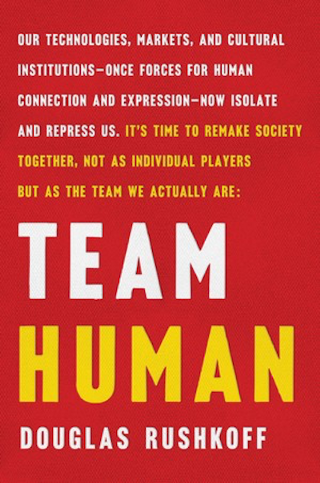
From Team Human by Douglas Rushkoff. Copyright © 2019 by Douglas Rushkoff. Used with permission of the publisher, W.W. Norton & Company, Inc. All rights reserved.
Book Excerpt
Money
Economy
Inequality
Society
Recommended from ReadMedium