
Bikepacking Spain. Part 2. From Valencia through Castilla-La Mancha.
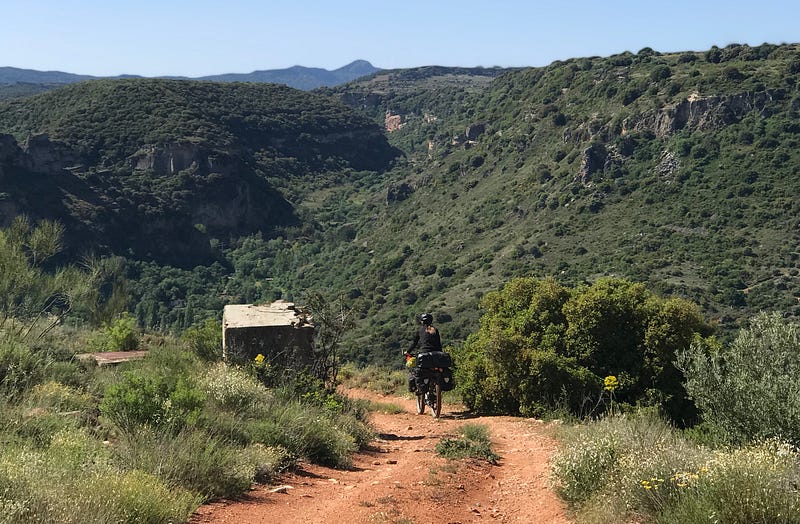
After the adventure in Catalonia, new terrain and unique life experiences await us in Valencia and Castilla-La Mancha. Part two.
Valencia and Dos Aguas
We arrive by train in Valencia where we stay for a few days. Our friends we haven’t seen for two years are waiting for us here. Great news was that my dreamed-of Bedrock Sandals were also waiting for me here.
Valencia is such a stunning city! We ride our bikes through the 9-kilometer-long Turia park built in the bed of a river whose flow was rerouted after catastrophic floods. We pass giant old trees, playgrounds, people practicing yoga, running, slacklining, reading books near the fountains, learning to skate, sitting in cafés and so on. The masterpiece of Valencia is always the City of Arts and Sciences designed by the famous architect Santiago Calatrava. The architecture has a spectacular exterior, but we were blown away by the interior. We had to split the visit to Oceanographico and Bioparc into two days.
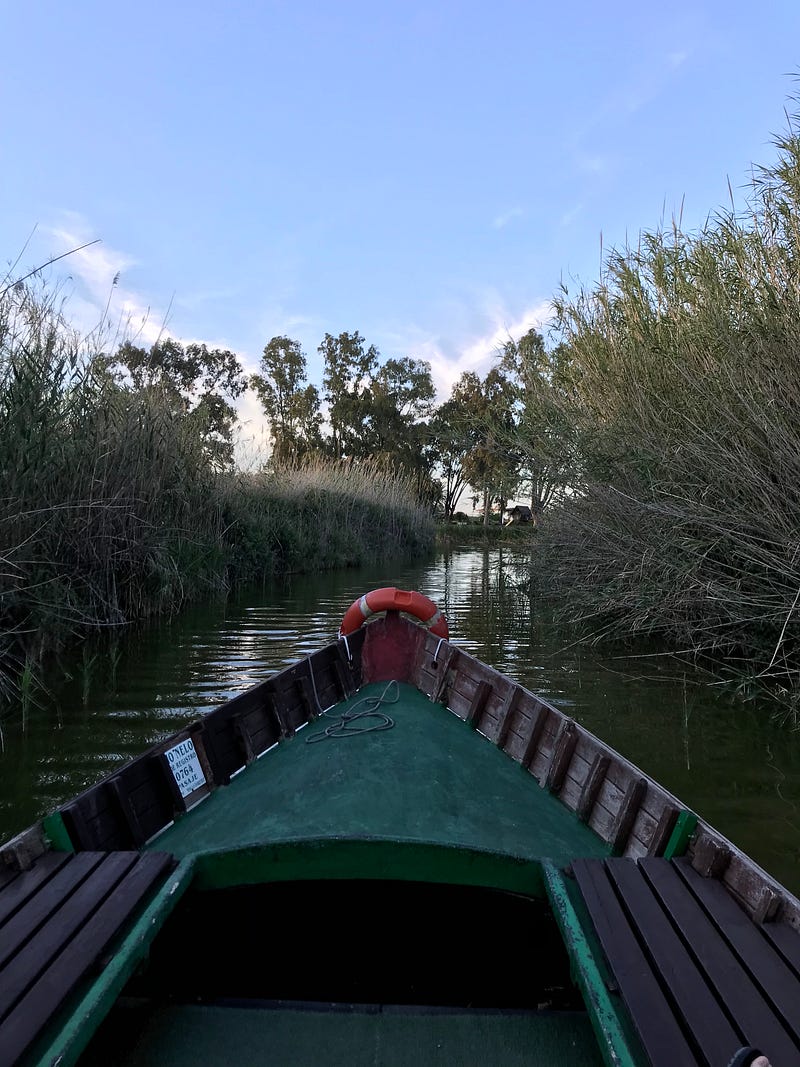
Our friends took us to the Albufera Natural Park. A local fisherman takes us on a boat trip, shows us a typical fisherman’s house (barraca), and, at sunset, talks about fishing and rice growing in the area for the famous paella valenciana. The water from the lagoon is gradually disappearing. It was salty sea water, now it is fresh. A large number of birds nest here.
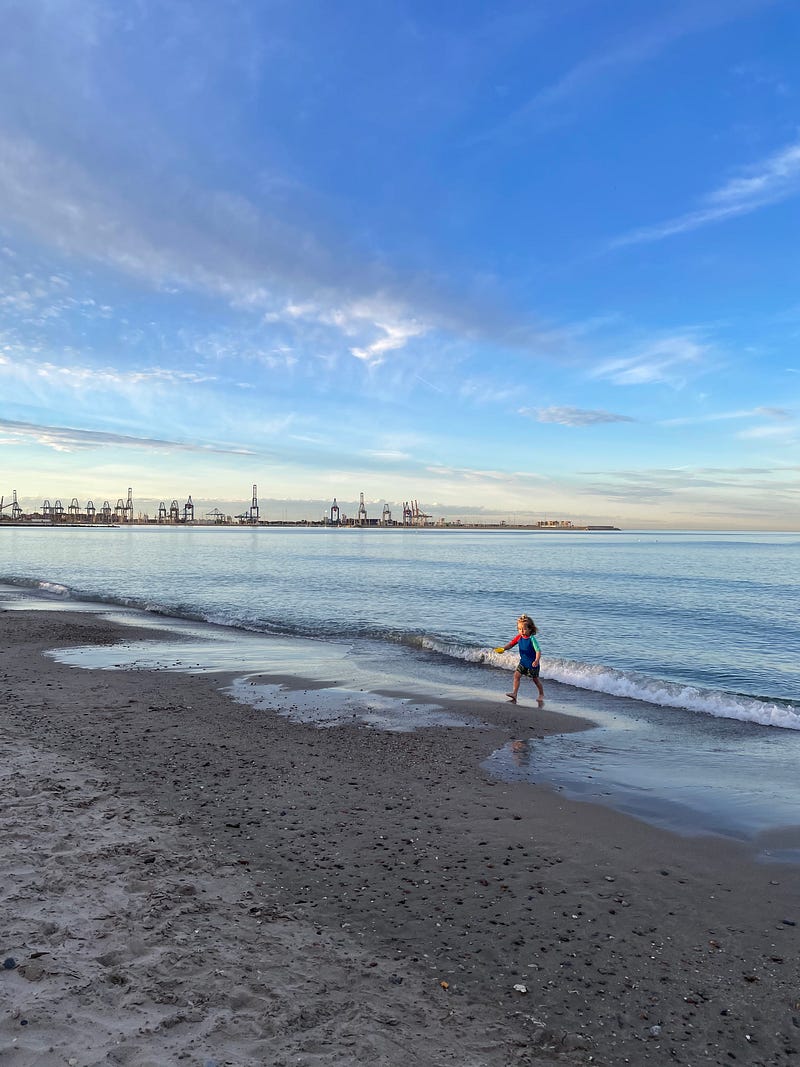
It’s great to know locals who show us beaches without crowds. The sea is not as crystal-clear as on Costa Brava — I would call it highly organic, but Oskar lives to the fullest.
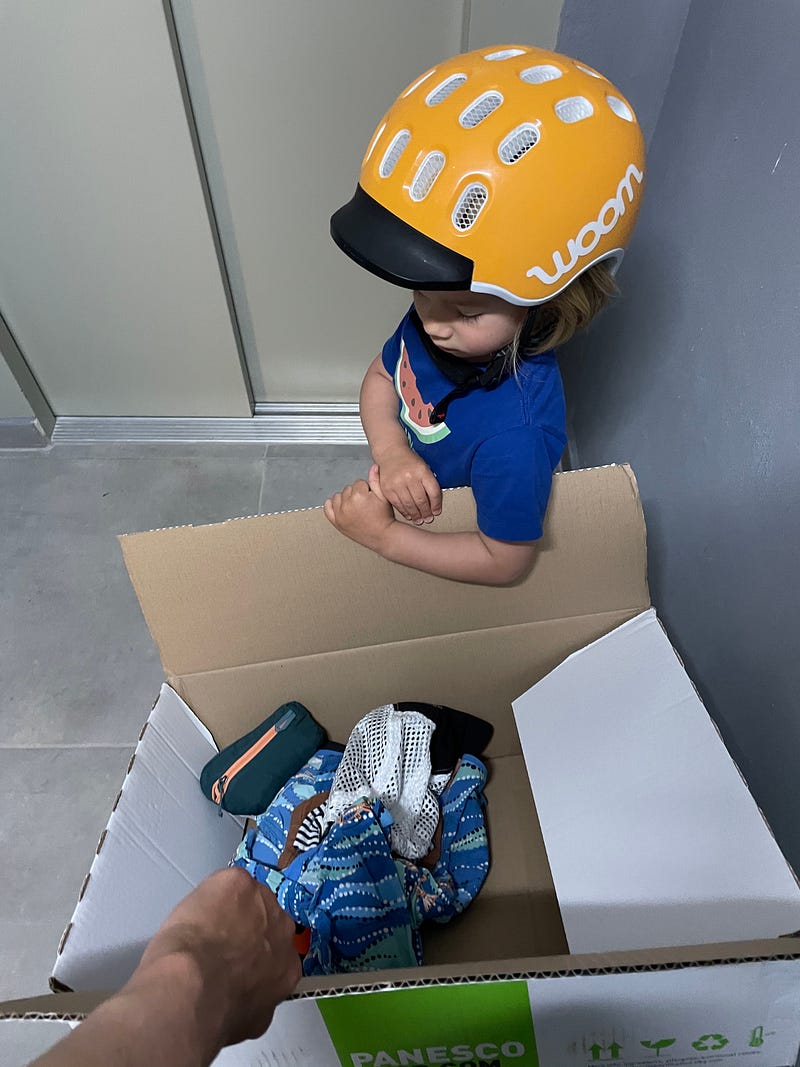
We made a life decision to send Oski’s bike back home along with our mudguards — or their remains after the accident in Priorat. We only needed to get a cardboard box. After we asked around a couple of Spanish grocery shops with no success, Silvo’s legs were sticking out of the cardboard container, accompanied by dull looks from the passers-by.
Relieved, we set off from Valencia towards Castilla-La Mancha. Silvo nosed out somewhere that there is a lovely town of Dos Aguas along the way, so we head there for the night. While getting snacks on the way we are stopped by a young man from Colombia who wants to follow us on social media and asked for our profile names.
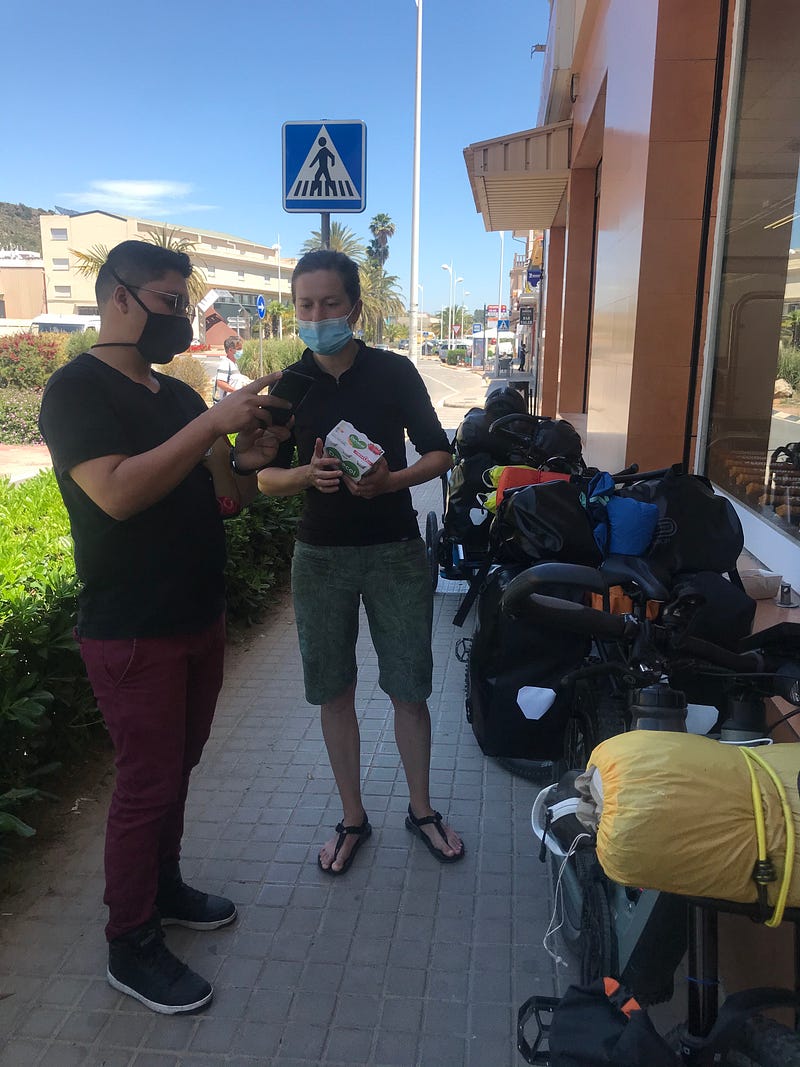
A little while after my autograph session, the beautiful scenery begins to appear, along with Oski’s daily mantra: “Mom, where will we stay today?!”
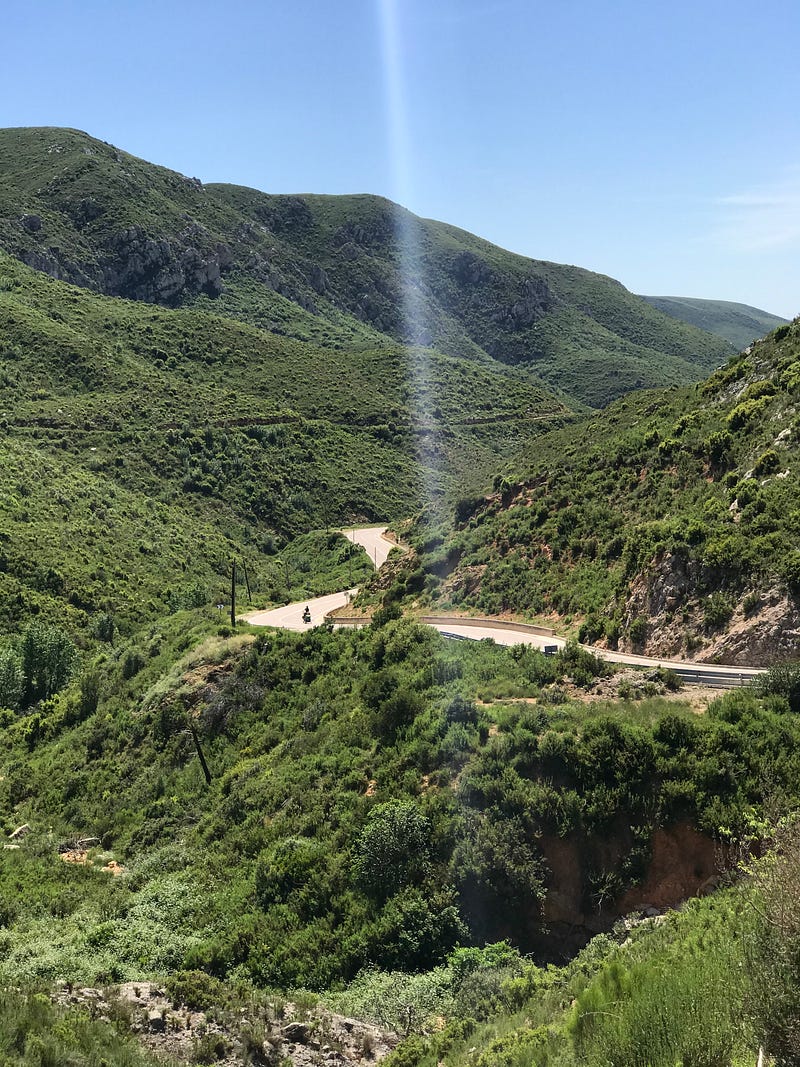
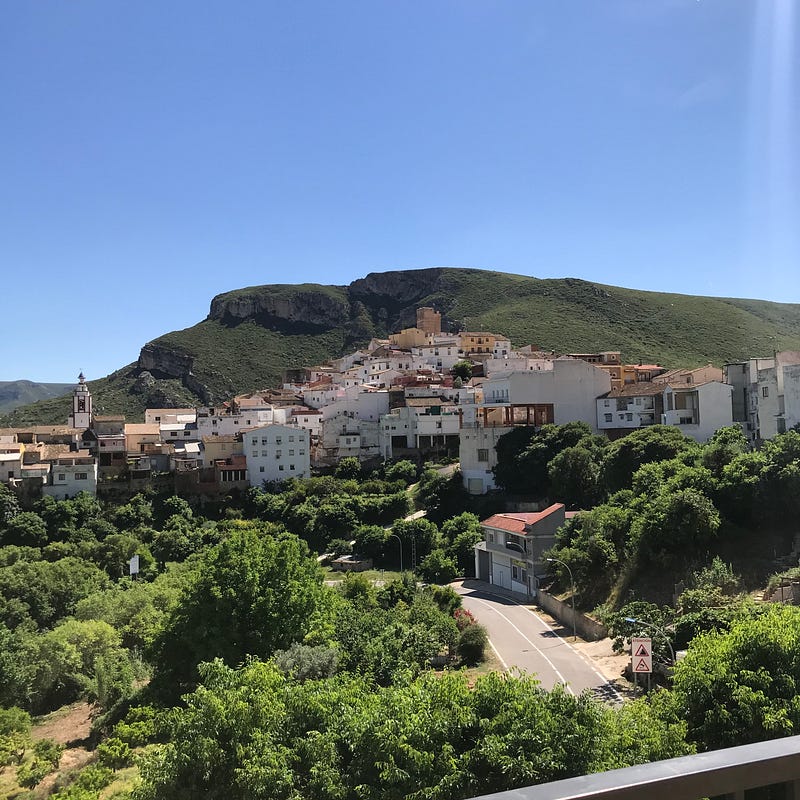
Dos Aguas is not the most visited Spanish destination and only one of the two hotels is open, so the choice is clear. An older couple has owned this small hotel with a restaurant by the road for quite a long time, which affected their relationship. At first, I wanted to figure out what they were arguing about, but when I translated a few sentences, I quit trying.
The gentleman asked us if we were going to Morocco. That’s when we realized that’s where he’s from, though he reveals that he’s been living in Spain for decades. I see a twinkle in his eyes when we mention that we have been to a few places in Morocco. But the moment of nostalgia ends quickly, and he continues to verbally put down his wife, who readily reciprocates.
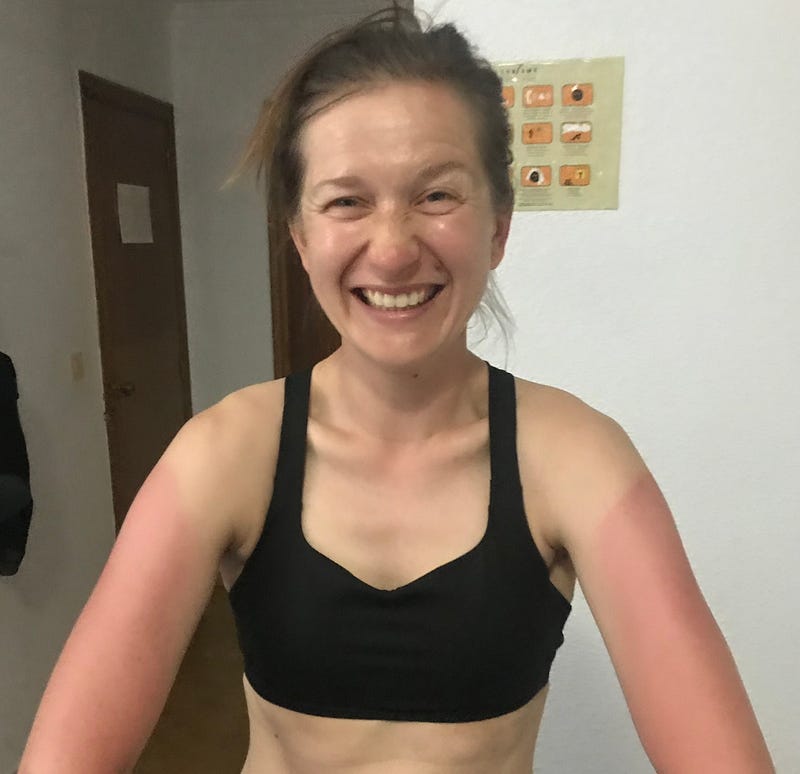
I scream in pain in the evening! Dressed head to toe in functional Patagonia gear, I was too lazy to apply sunscreen during the day.
We spend the night in this “Twin Peaks” with constant arguments and the terrible screeching of the wind in the background. The next morning, we stopped at the children’s playground to eat a self-made breakfast. We preferred not to have a romantic breakfast with our hosts.
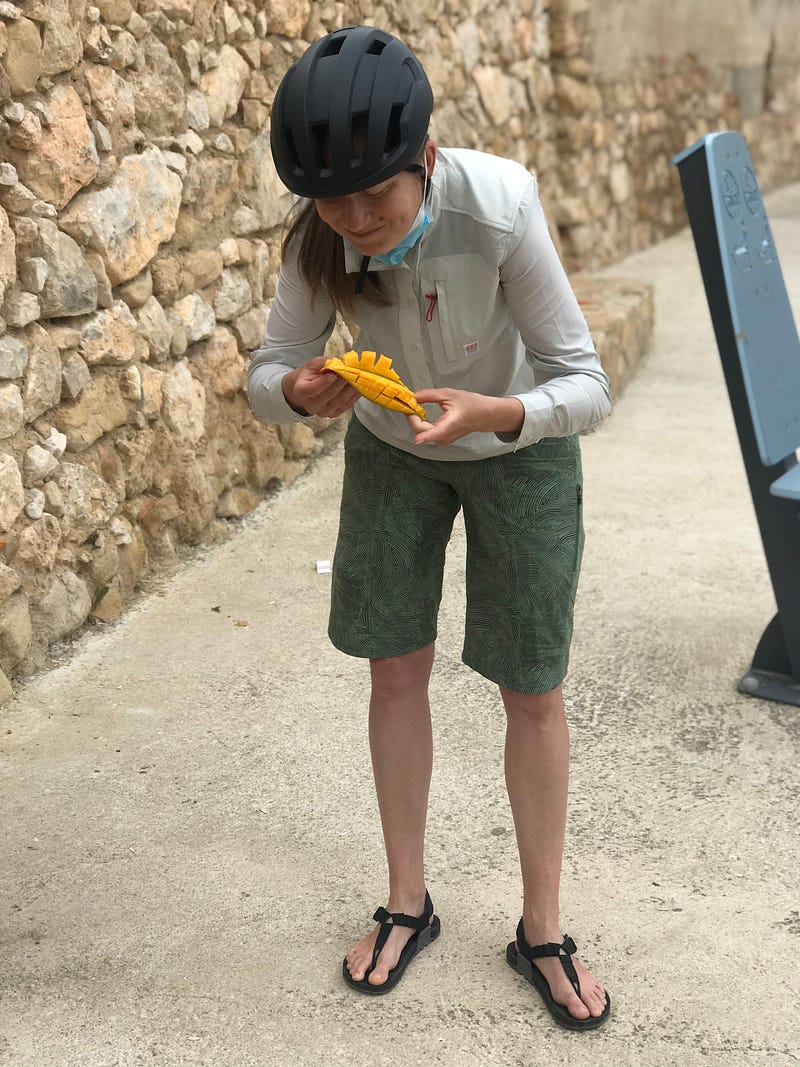
We rush along the main road through the hills, but later, following the instructions of Komoot, we go down the side switchbacks.
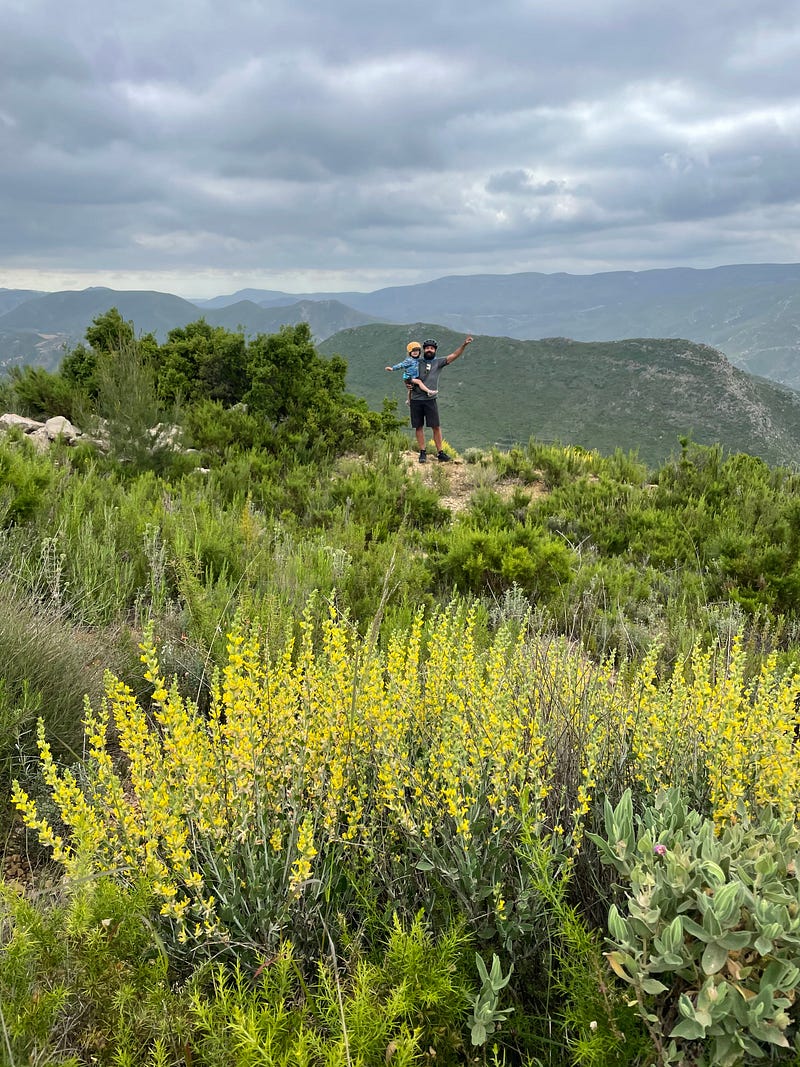
However, soon comes the overwhelming realization that there is no road here, and the water dam in front of us only allows us to swim across.
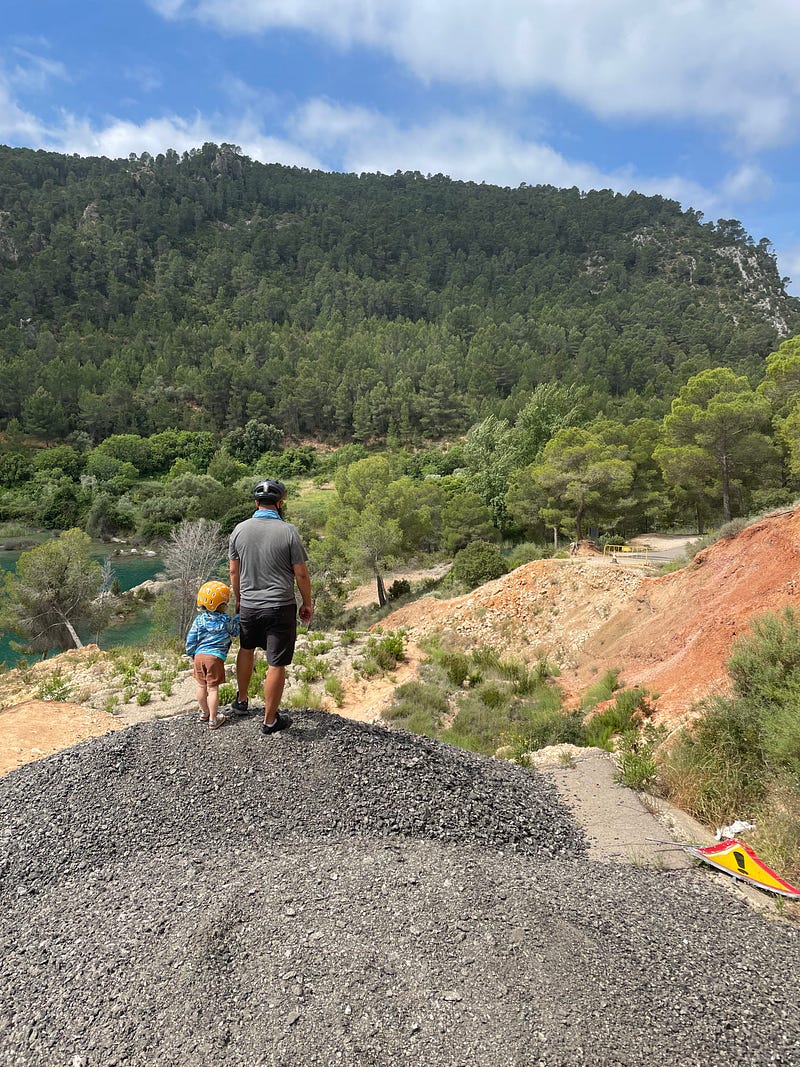
So we continue taking a 17 km detour.
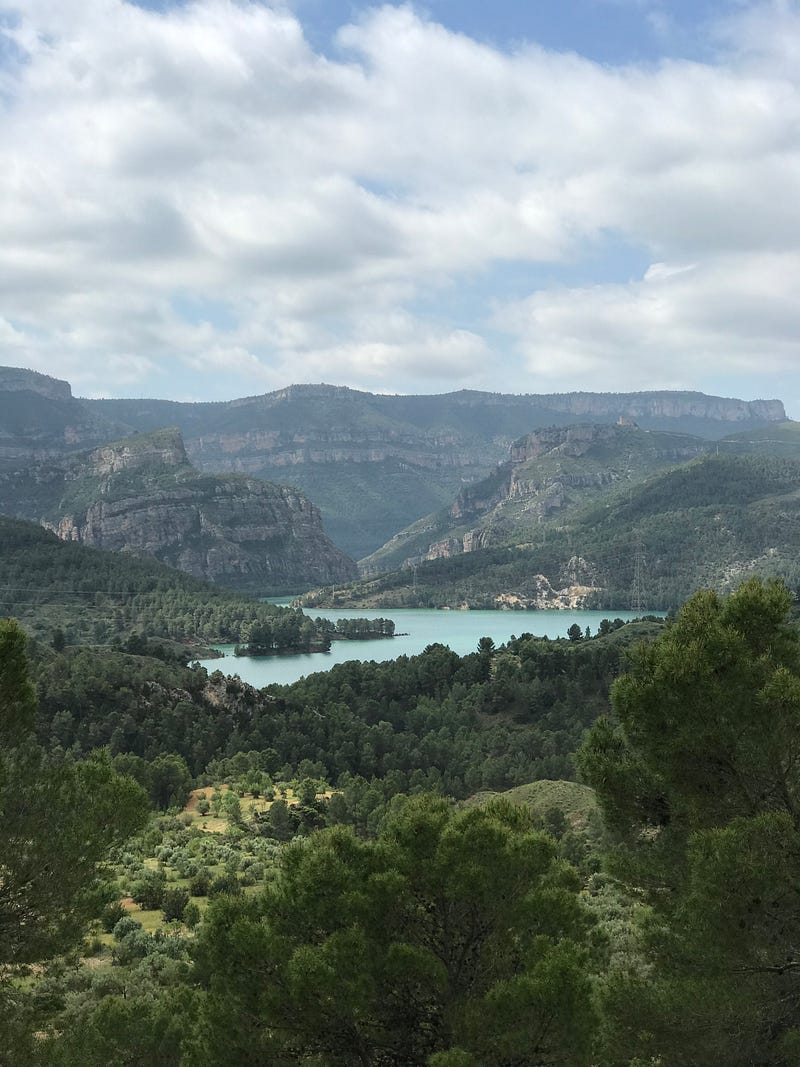
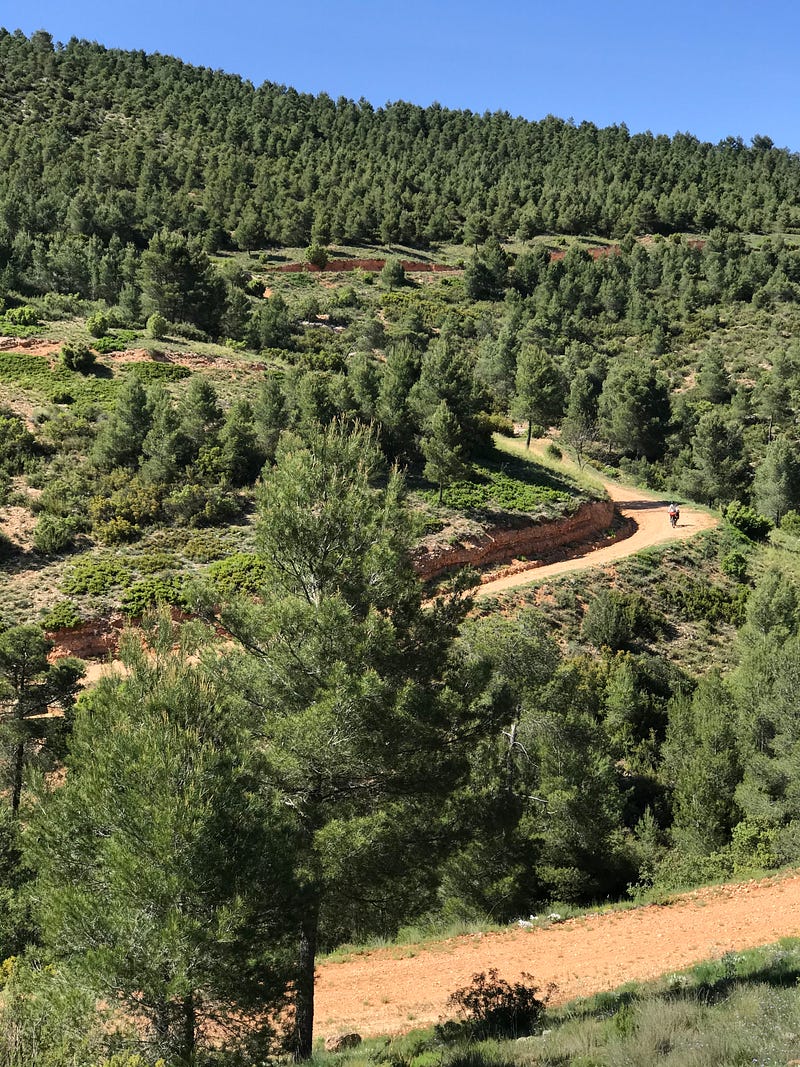
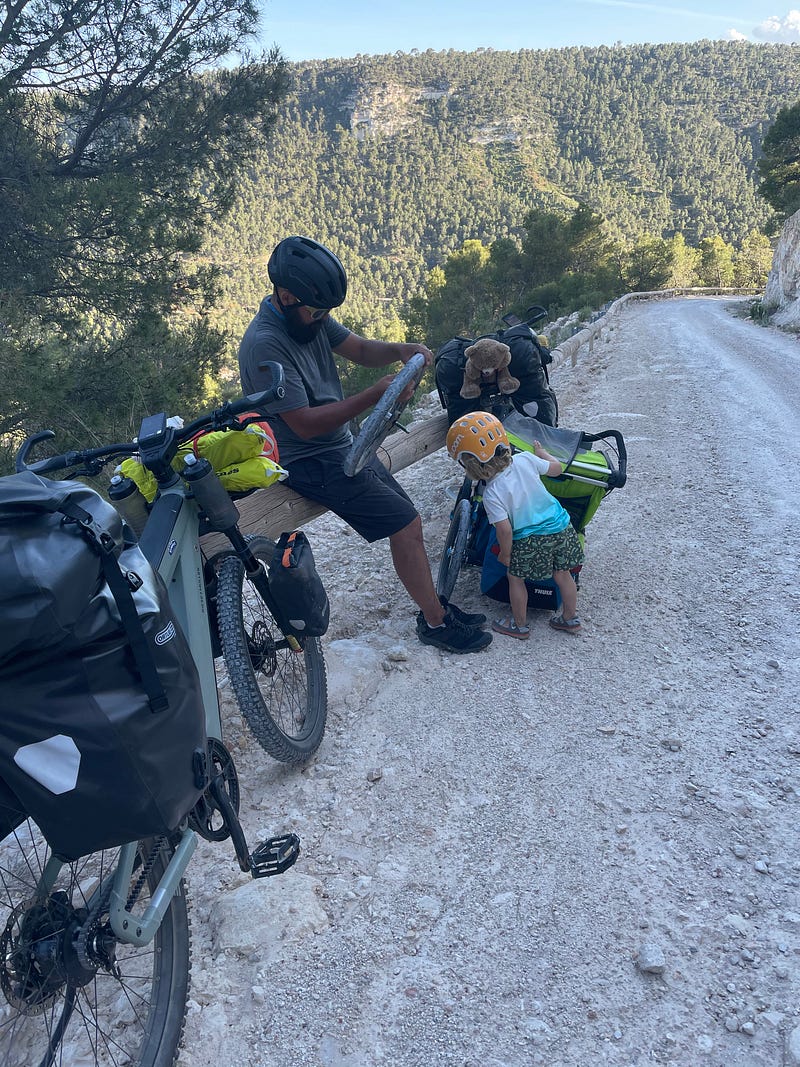
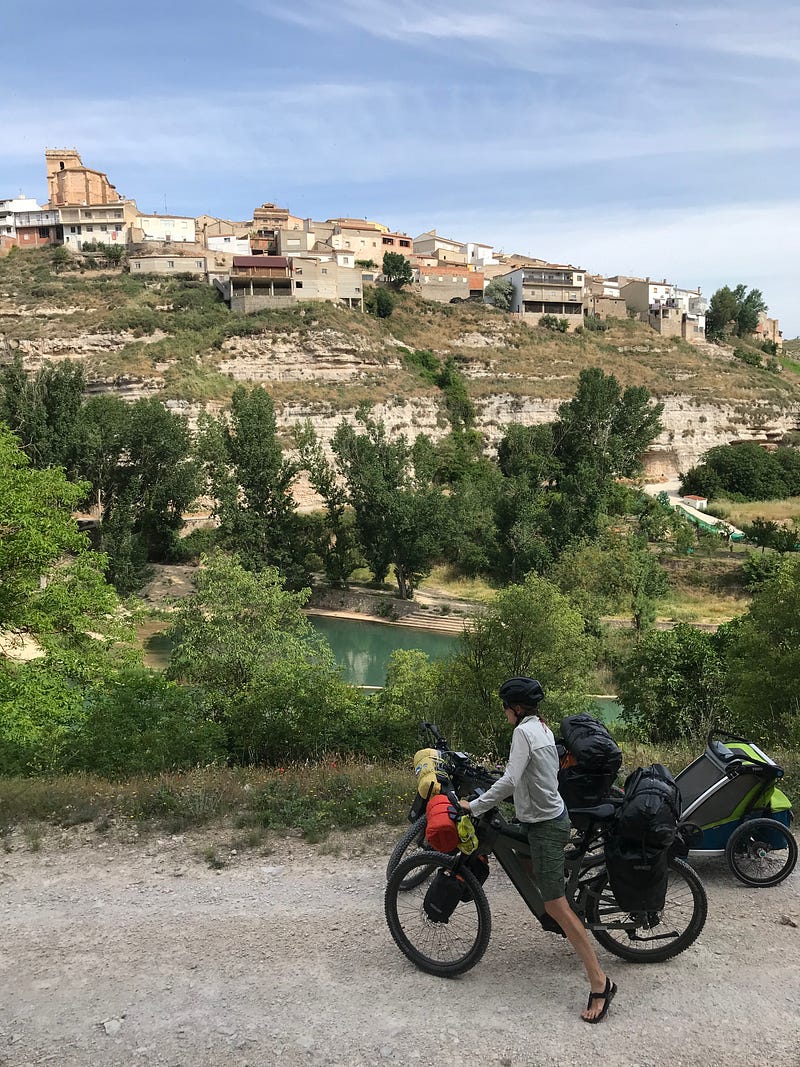
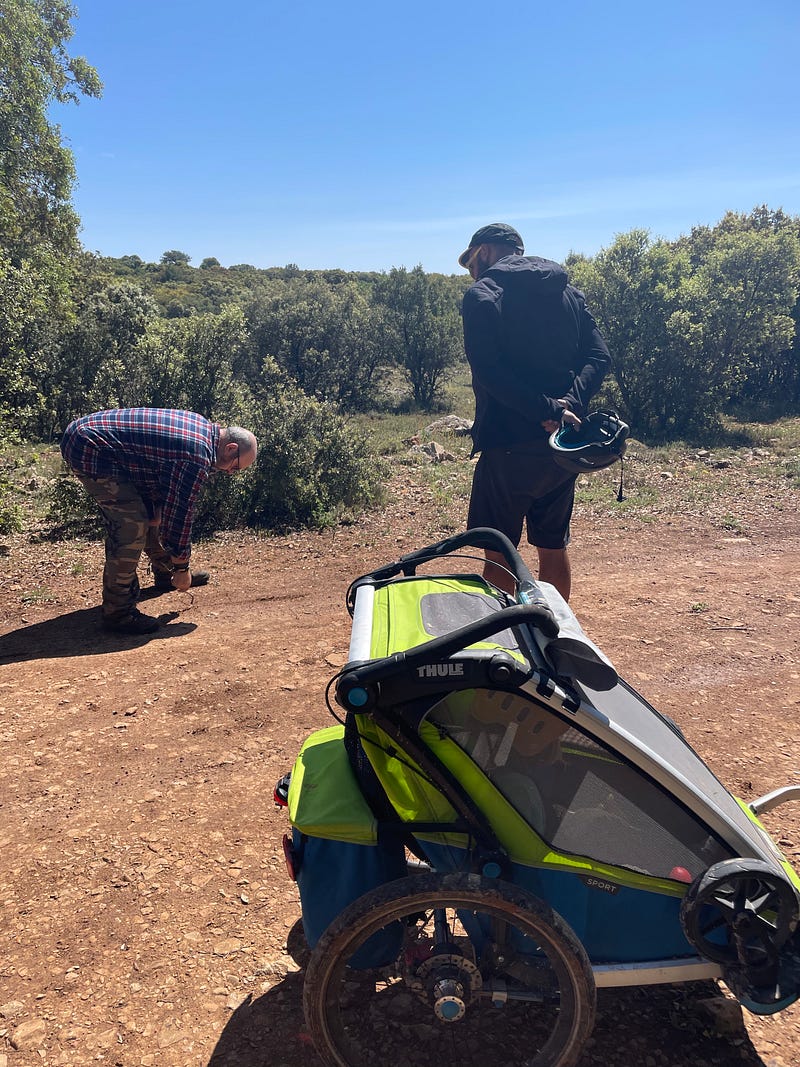
Around 7 p.m., during a big descent down the dirt road into the Júcar river canyon, I notice that one wheel on Oski’s Thule chariot looks like it’s going to fly off at any moment. The next hour Silvo spends fixing the spikes on his knee, and then we ride the home straight along the river to the town of Alcala del Júcar.
From Castilla-La Mancha to Albacete and Via Verde de Don Quijote
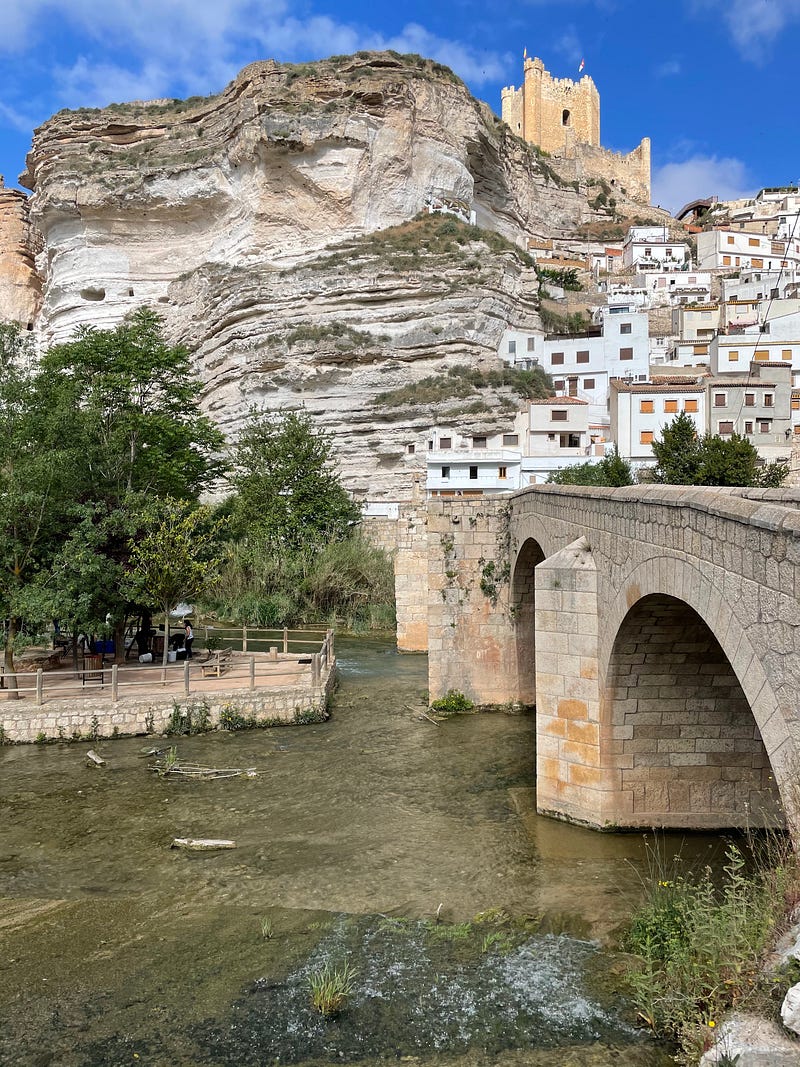
Since we arrived late in the evening and the trailer needed a general repair, we stayed here one night longer. Oski runs around the playground all day with a popsicle in his hand while Silvo tries to mend the wheel on Thule. In the evening, we wander the narrow streets under the castle and the surrounding cave houses, and the old Roman bridge reminds me of the one in Sarajevo.
Hundreds of swallows accompany us on the road in the morning. Oski sings along with the birds in the pleasant breeze and everything seems to be alright.
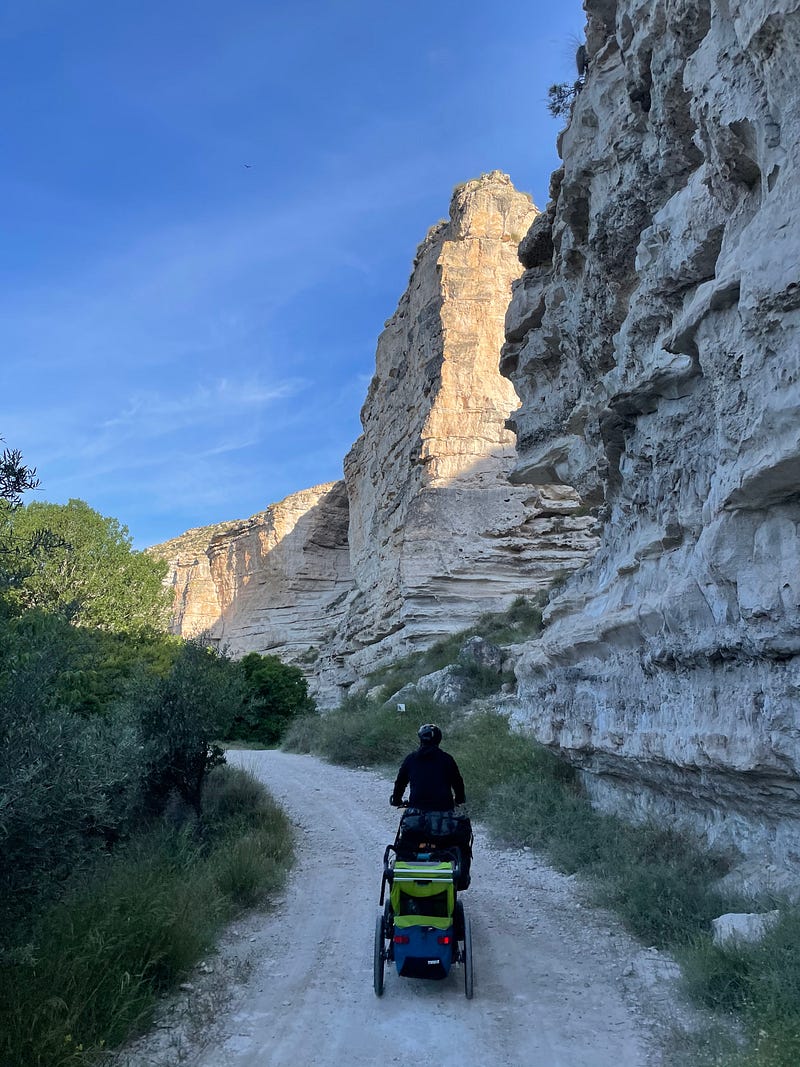
Until Komoot navigates us down the road to enter the lush vegetation along the river, just before the town of Jorquera.
At first, we are having fun, but gradually I start to stress about tearing my blouse on the spines of wild roses and different kinds of berries. Subsequently I stop caring about clothes and I am worried about Oski’s skin. I am getting angry, and Silvo keeps his distance ahead, so he doesn’t have to listen to me. We get off the bikes and push them through the thick bush. Oski jumps in meter-long grass and fights with thistles but we really don’t want to go back.
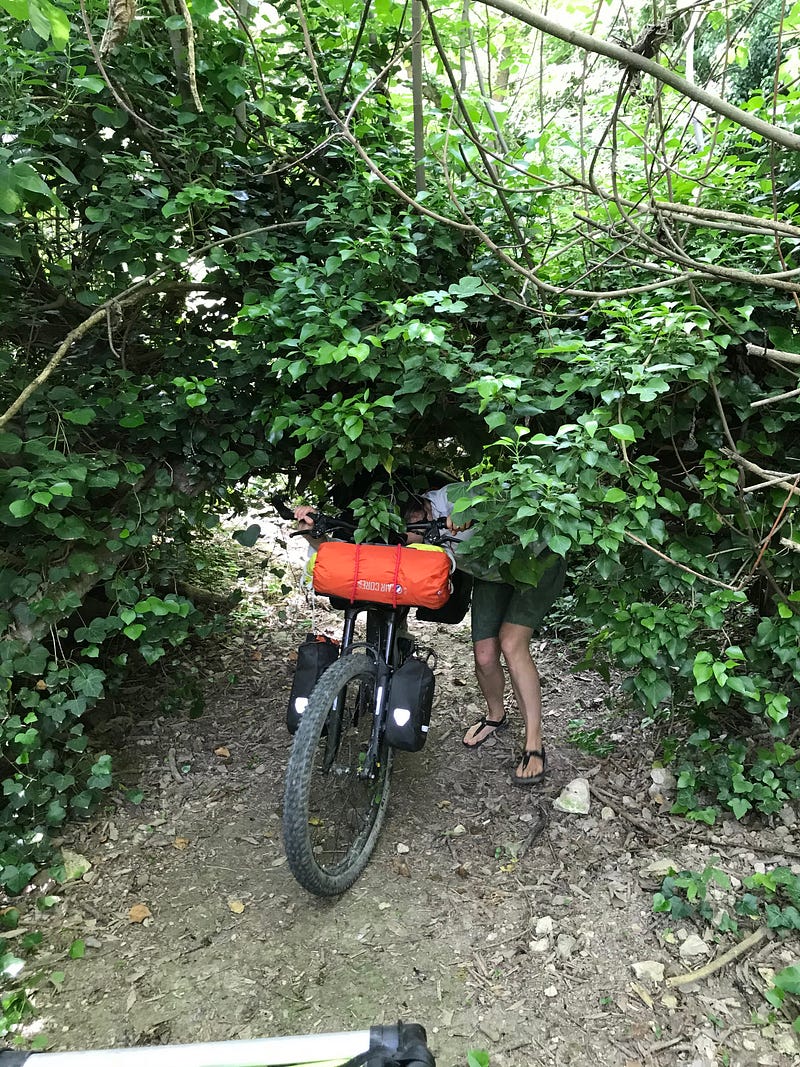
The ride through Mordor takes two hours. Oski’s cart is covered in wild barley, and our calves, hands, and clothes are stained with blood. Fortunately, the wilderness spits us out right next to the newly built mini eco-hotels, which unexpectedly appeared behind the bushes.
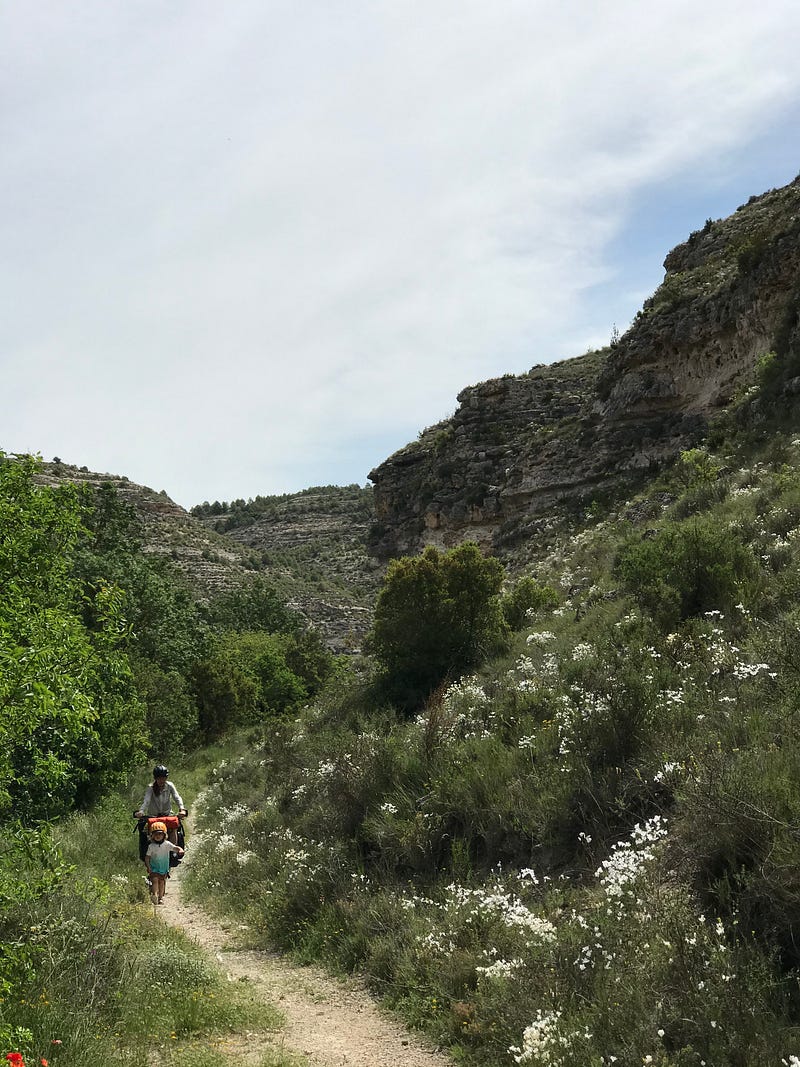
Then I started to realize that in Castilla-La Mancha cultivated fields are everywhere and as far as the eye can see, so we have to cut through one. We must crawl under barbed wire, tripping over some clover, we argue horribly, and the temperature rises.
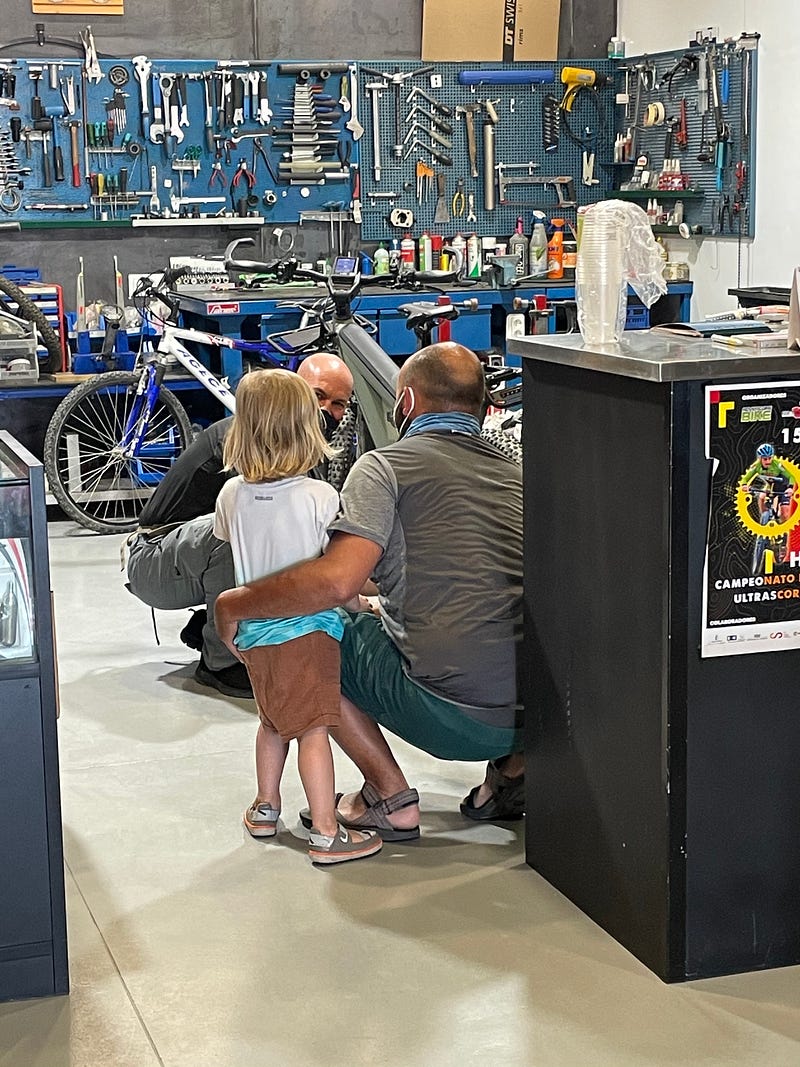
When we finally get to the city of Albacete, Silvo’s brake pads are totally dead, so we go directly to a bicycle repair shop. The guys immediately put aside all their work, attend to us and offer us cold water. I feel that pilgrims have a really special status in Spain.
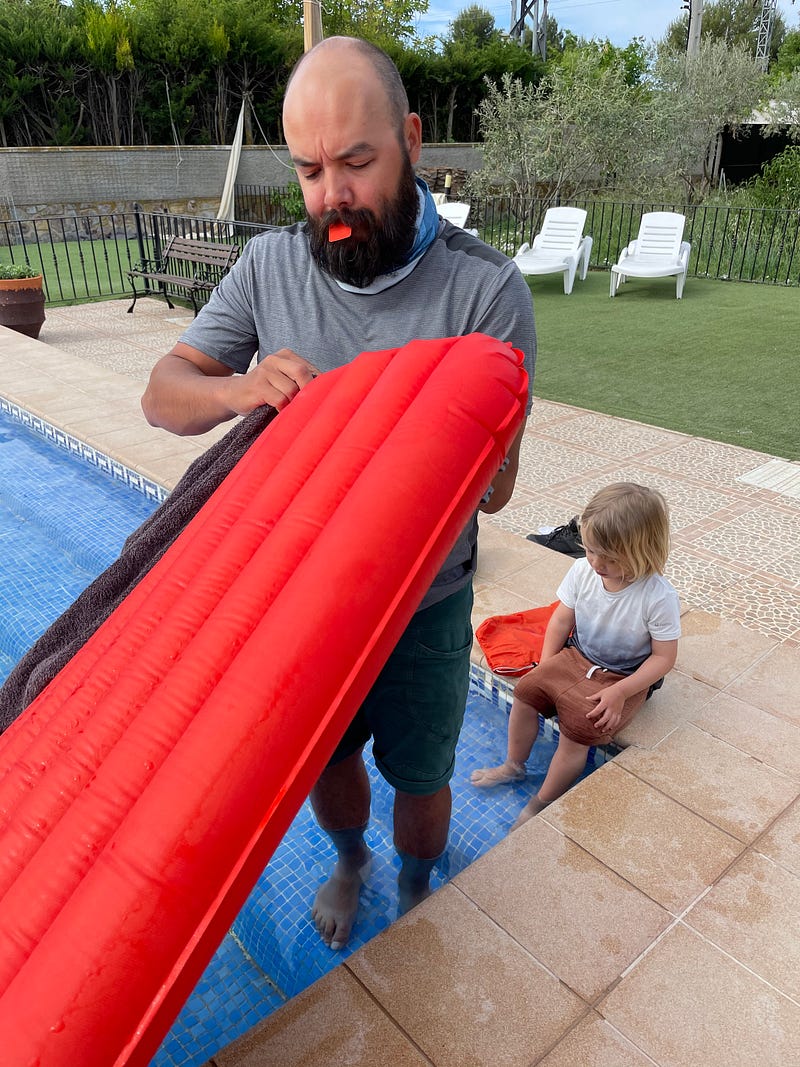
We stay in a cheap villa with a pool, where only the owner and his pack of sharp dogs accompany us. Oski and Silvo are frolicking in the water, and I’m lying on a deckchair nearby, trying to treat my bruised legs.
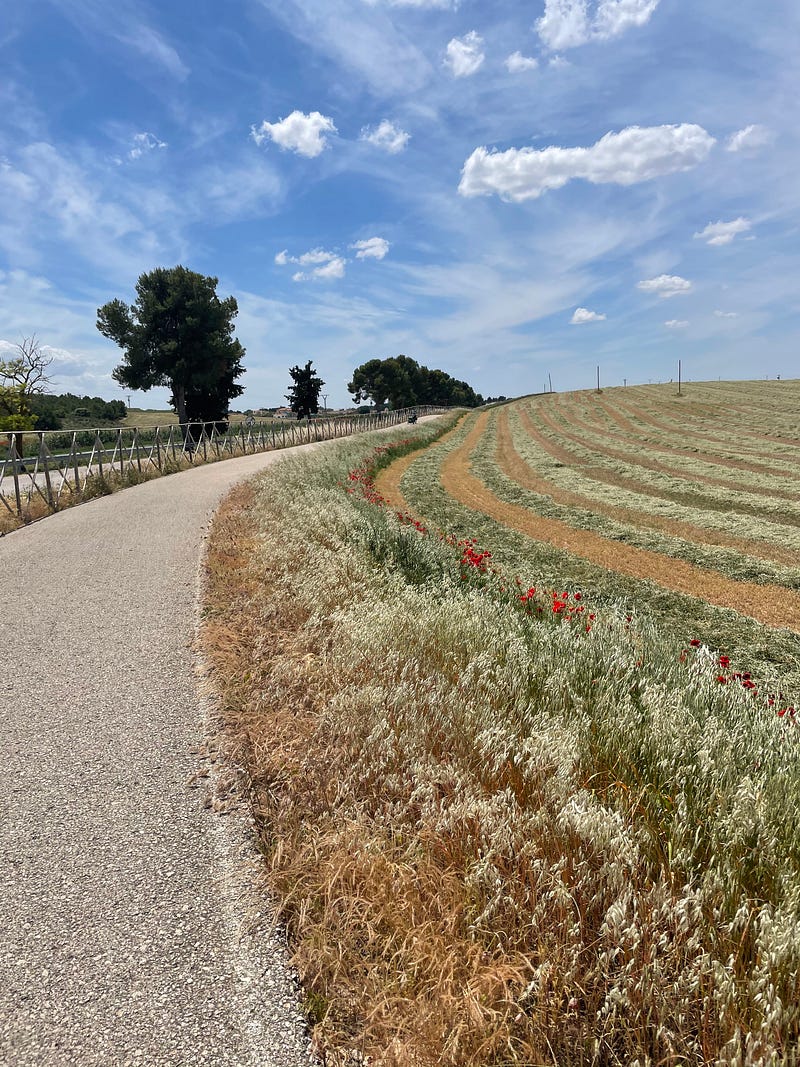
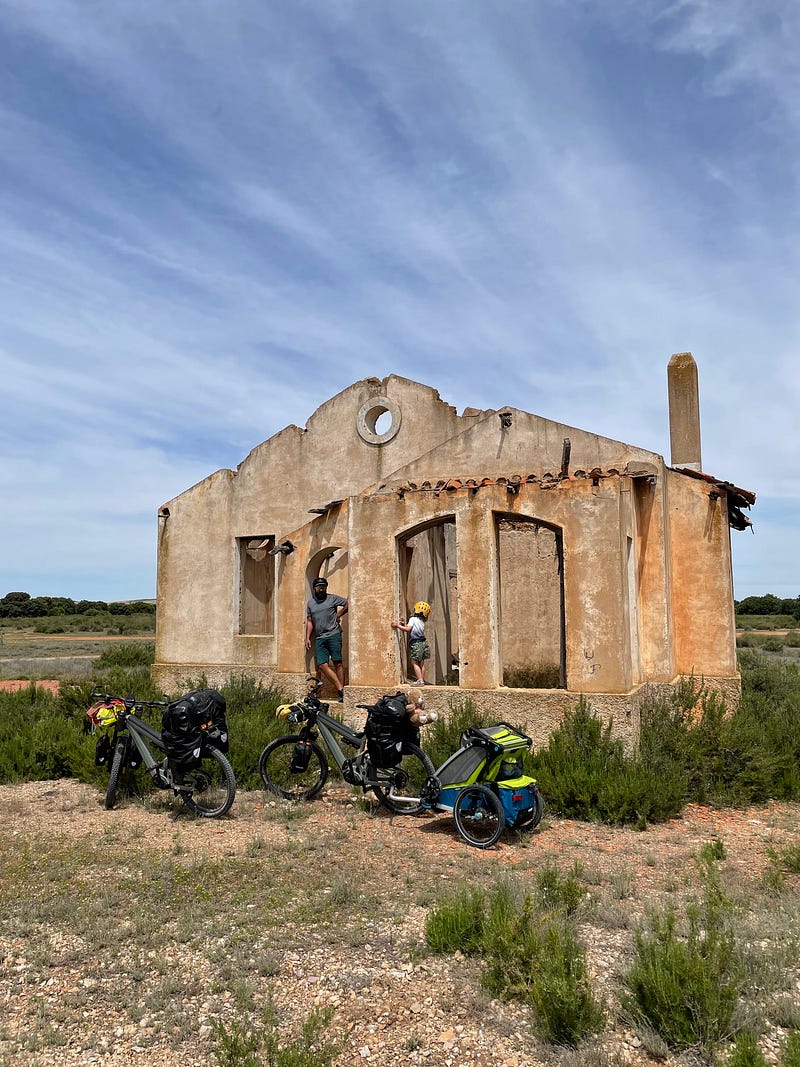
Despite everything, the next day we are looking forward to the Spanish Vias Verdes. This cycle path is a result of converting old disused railway lines. We pass the preserved ruins of buildings that once served as railway stations.
We pass through part of the Via Verde called Ruta de Don Quijote, which amuses us with statues, graffiti, or figurines of Don and his horse. Former railways were built here during the Spanish Civil War in the 1930s. Today, they are guarded only by hares, lizards, predators, and some unknown creatures that surprise us by sprinting across the road and crawling into huge holes.
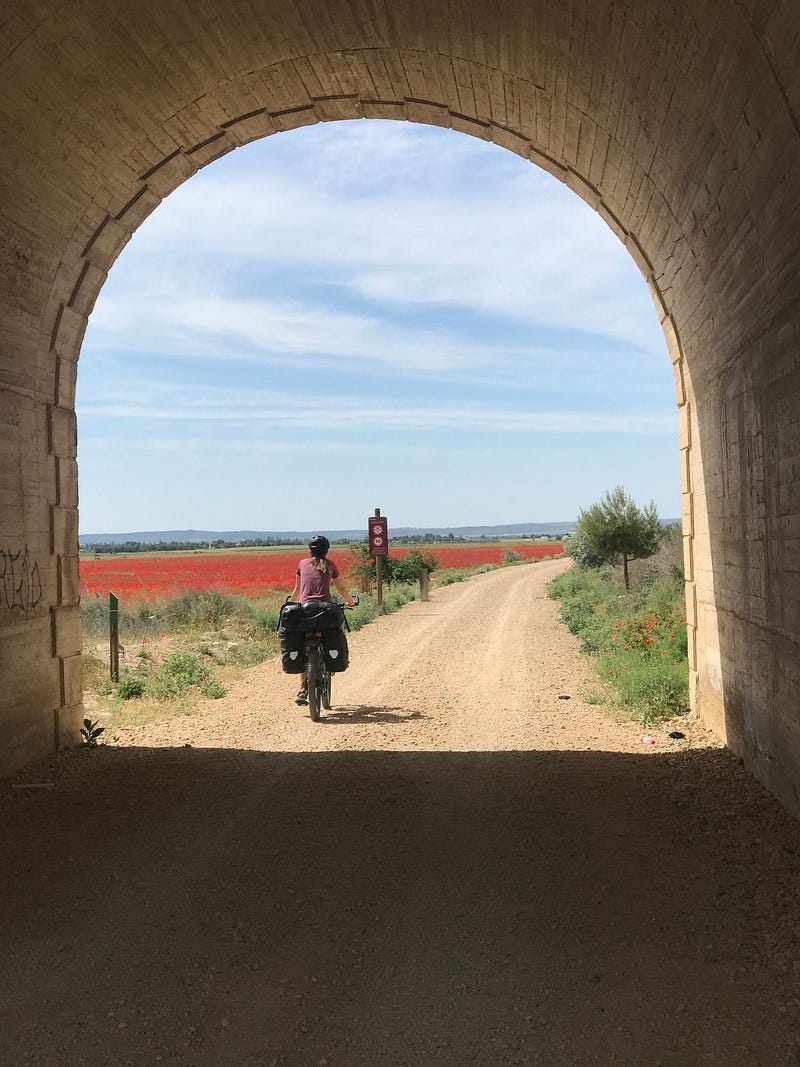
Silvo turns on the speaker not to fall asleep on this endless plain. The tunnels, often unlit, sometimes eerily long, quite cold, and buzzing with bats, bring some excitement. Dripping water from the ceiling is quite unpleasant to me in this atmosphere. Oski is enjoying this horror and even crosses the last tunnel on foot.
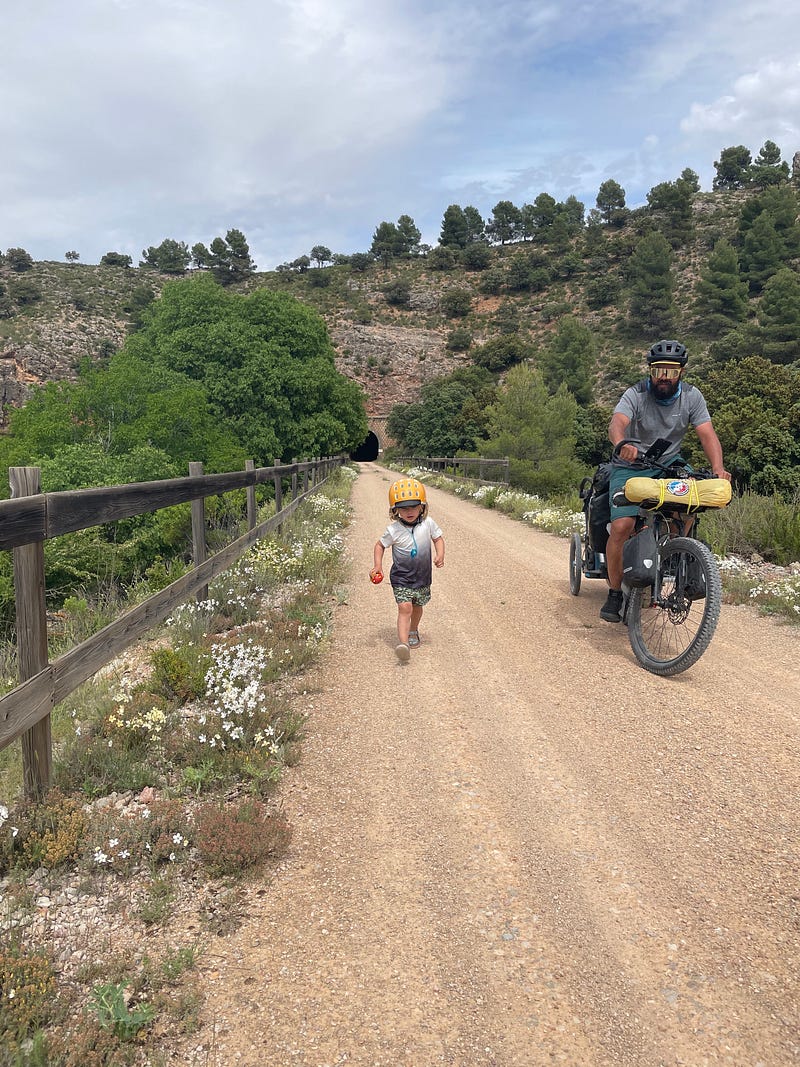
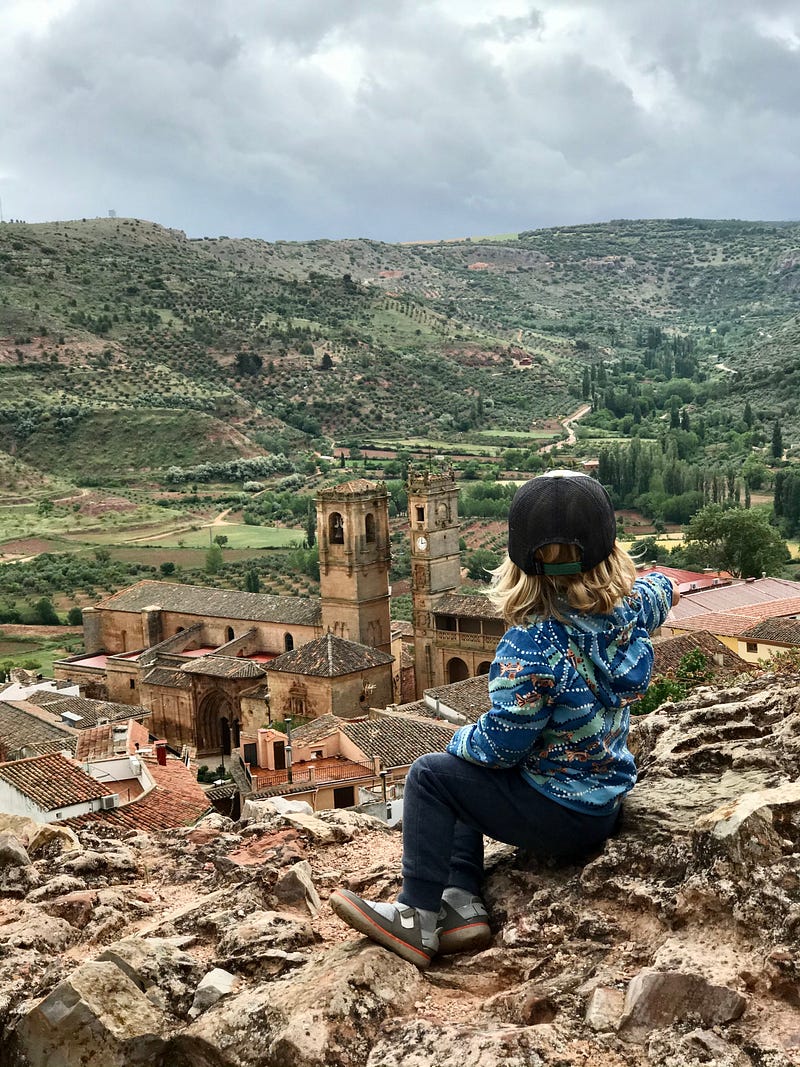
Keeping our good habit, we arrive in the town of Alcaraz late in the evening. We expect rain the next day, so we stay one night longer, and we’re surprised that this beautiful city isn’t in the tourist guide at all.
When we move on the next day, Silvo immediately turns off the main road into the mud, and he has to open a gate marked “private property”. I foresee trouble.
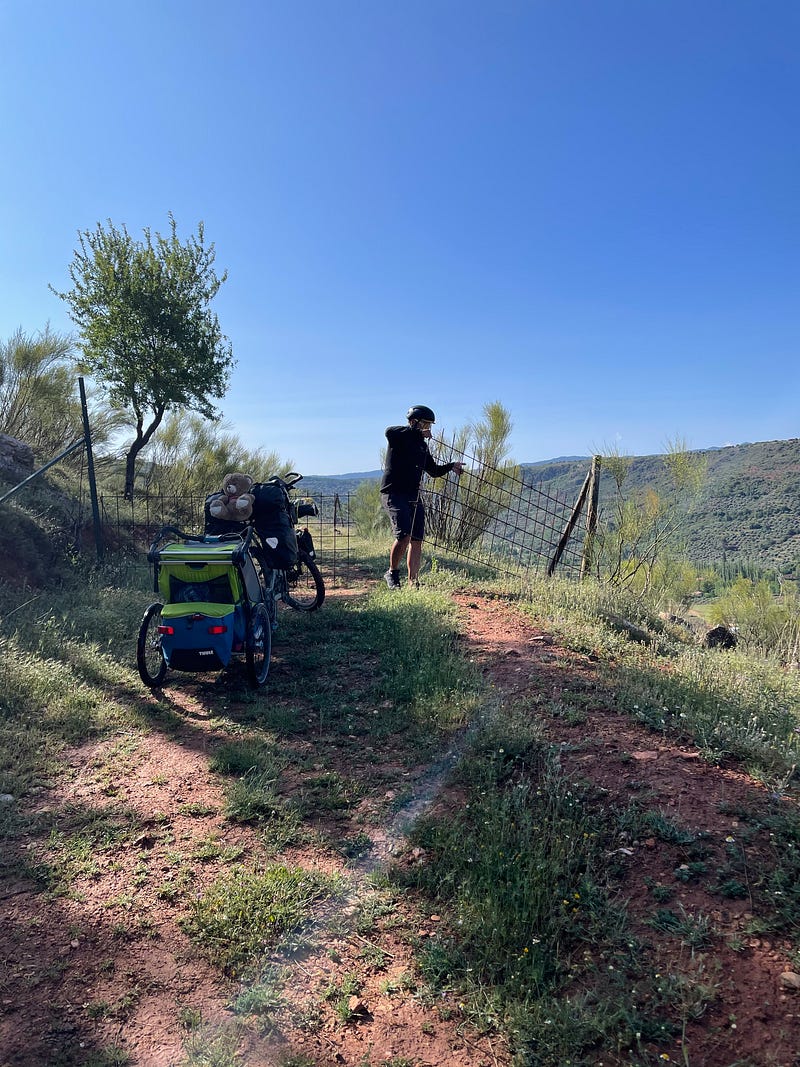
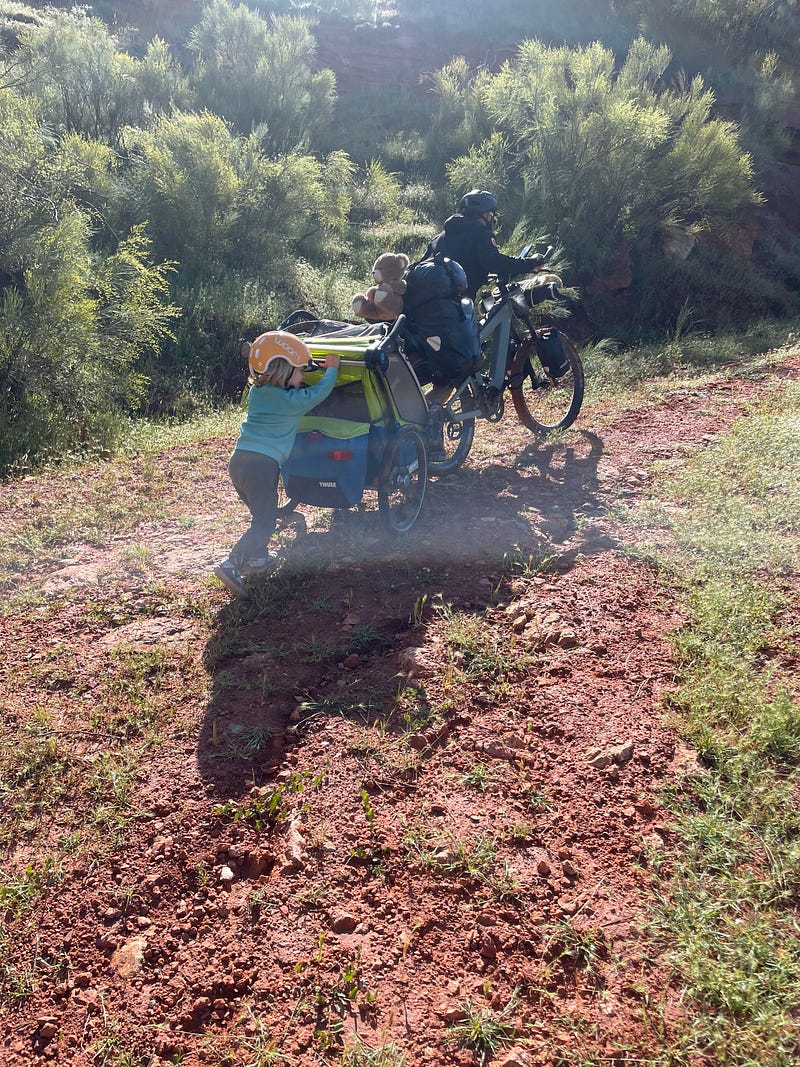
The heavy rain the previous day had brought fresh air, but the tires on our bikes were far from the pristine condition. The mud sticks to our wheels pretty well, but they still keep spinning. Through the farms, we worked out by pushing bikes on the hike-a-bike sections and had to pass through various gates several times.
When we start to stray a bit, and just as Silvo is trying to enquire Komoot where to go next, the first jeep appears. In a minute, the second one. Oski, pooping into the grass at that moment, almost falls out of my hands. The farmers’ tone of voice makes it clear that we have no business here. I try to soothe them down by saying that we got lost. Then they start drawing maps on the ground, and when they say the word “asphalt”, I can see the disappointment on Silvo’s face.
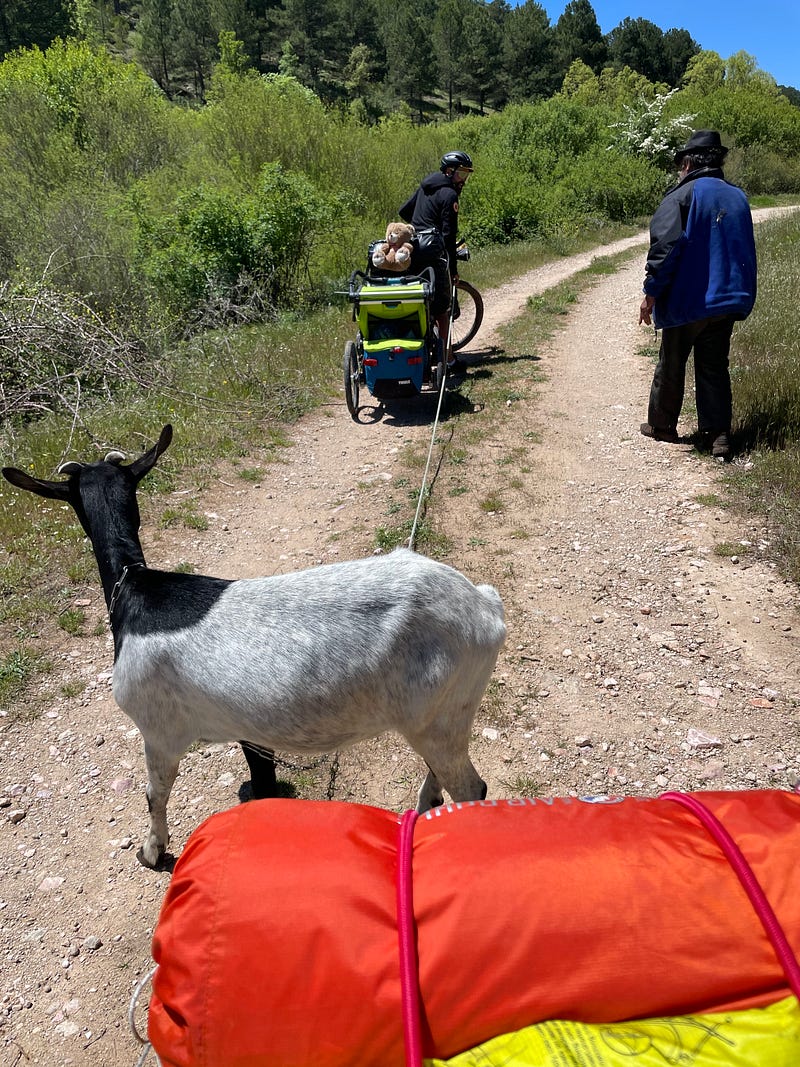
They send us on a smooth wide road with no obstacles — I am happy, Silvo bored to death. We see two herds of wild horses running free and after a few kilometers, we come out onto the tarmac track. Silvo and Komoot have one more unsuccessful attempt to turn us off the road, but it ends up with a goat’s leash coiled around a bicycle. So, after lunch with a view of the Sierra de Segura, we have to return to the asphalt again.
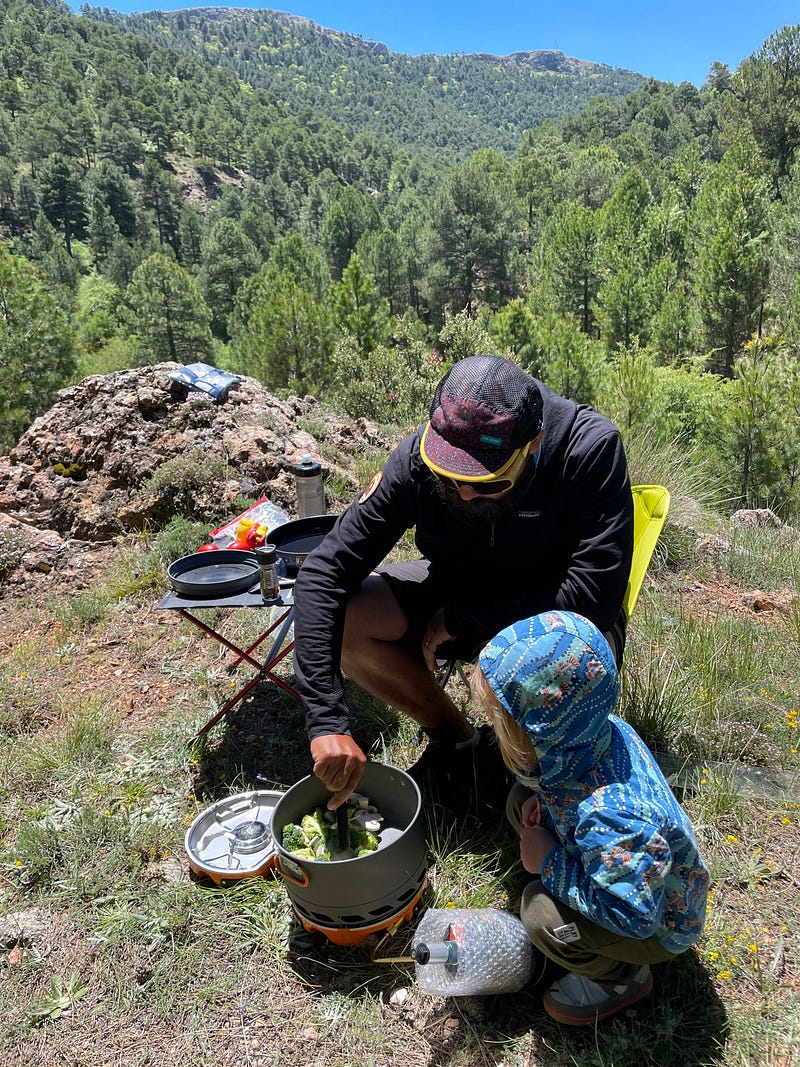
We can’t get enough of the views of the Sierra along the old road, where we don’t meet anyone except for one car.
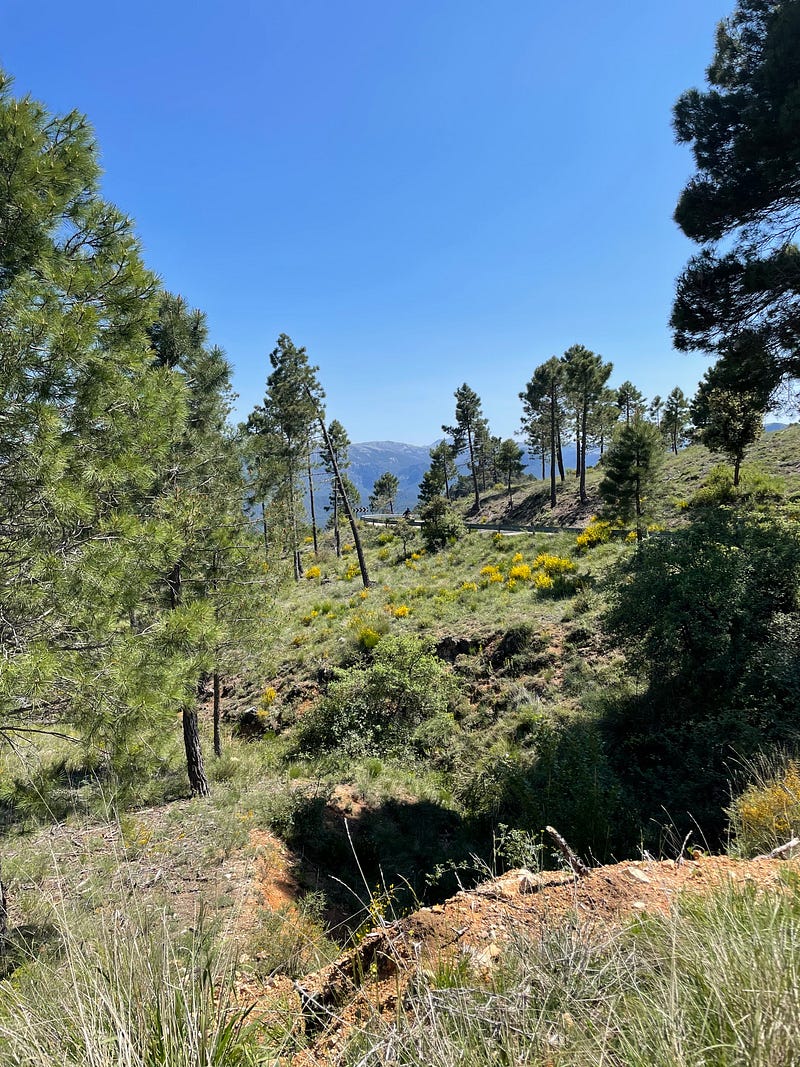
We arrive in the city of Riopar and regret that we hadn’t booked a room in one of the many “casas rurales” that look like from a movie and are surrounded by numerous hiking trails.
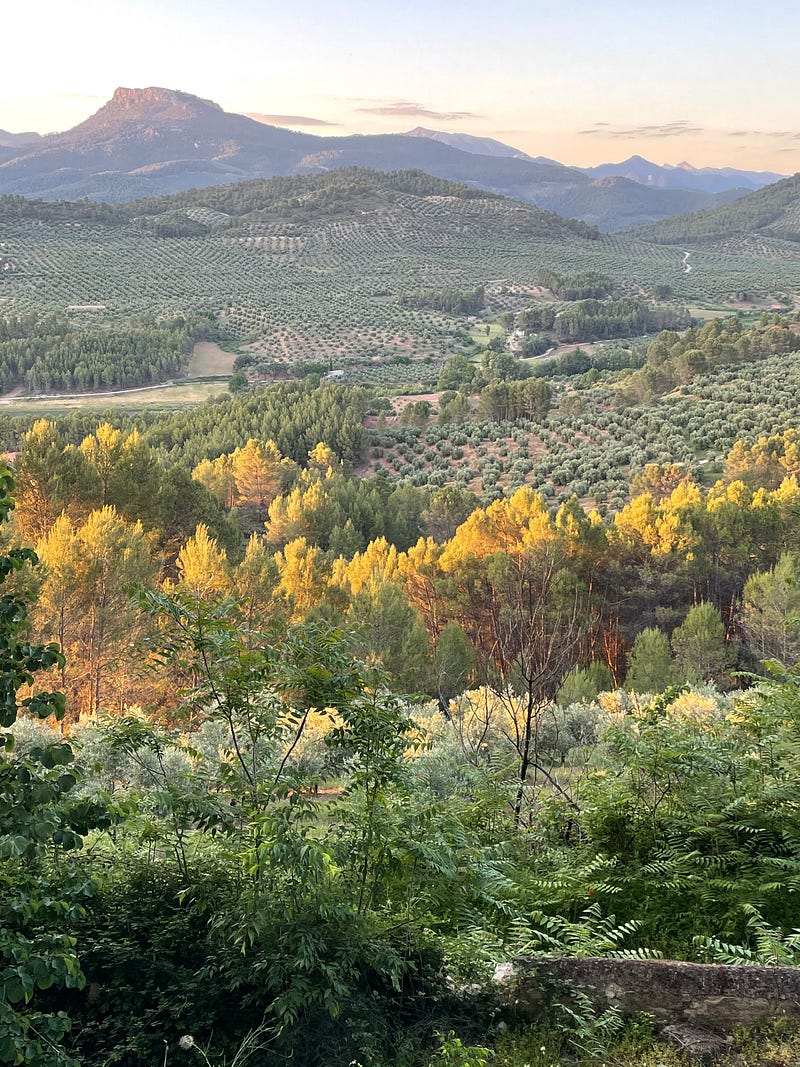
The last part of the day is just a pleasant descent on the asphalt, which makes me forget the morning’s pitfalls again. We cross the borders of Andalucia and stay in the town of Siles. Oski fools around on the playground in the park with Spanish chicas until almost midnight, and we enjoy a beer with a view of the Sierra de Cazorla and Sierra de Segura national parks and olive groves. We have a few beautiful but challenging weeks waiting for us in Andalucia.
You can read my previous chapter here.


