
Bikepacking Spain. Part 1. Catalonia.
The hardest thing is to start. To quit your job, permanently take your child out of the daycare, break the news to your parents, and when you have finally pissed off everyone enough, suddenly you can take a deep breath and start packing. I had less than a weekend for that. On May 1, I became happily unemployed, and from May 2, three months under the Spanish sun were waiting for us.
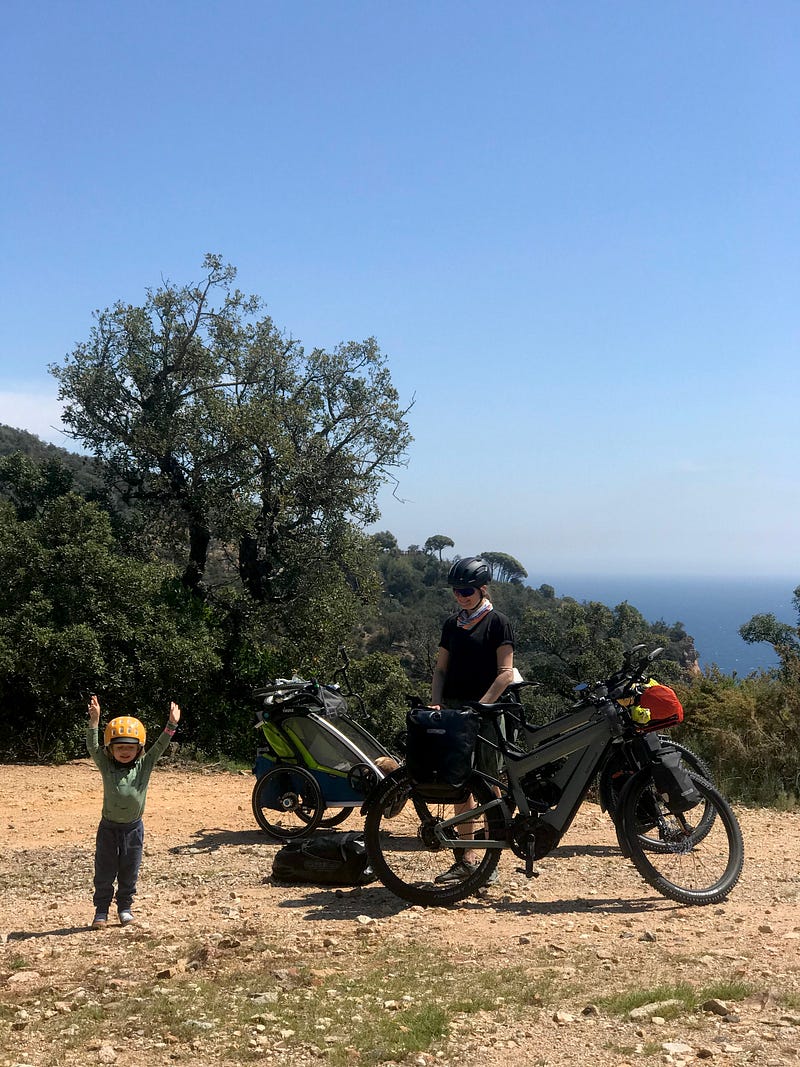
People had a lot of questions: What about Covid? What about your shop? What about Oskar? But we knew we wanted to take this trip long before Covid, our shop, Oskar. And when we realized we liked biking, but it was not enough for the Olympics, that due to Oskar, we had more luggage than we needed and that we had only three months, we decided on e-bikes. Many people judged us for that, but we did not care.
How did we get to Spain with e-bikes?
You can find anything on the internet. Well, not really. There is not much about e-bike packing or touring, not even speaking about e-bike touring with kids. We found a logistic company with a truck scheduled directly to Spain. We bought the tickets to Barcelona cheaply as we didn’t take many things, only one rucksack for the first few days until the bikes arrived with the rest of the luggage.
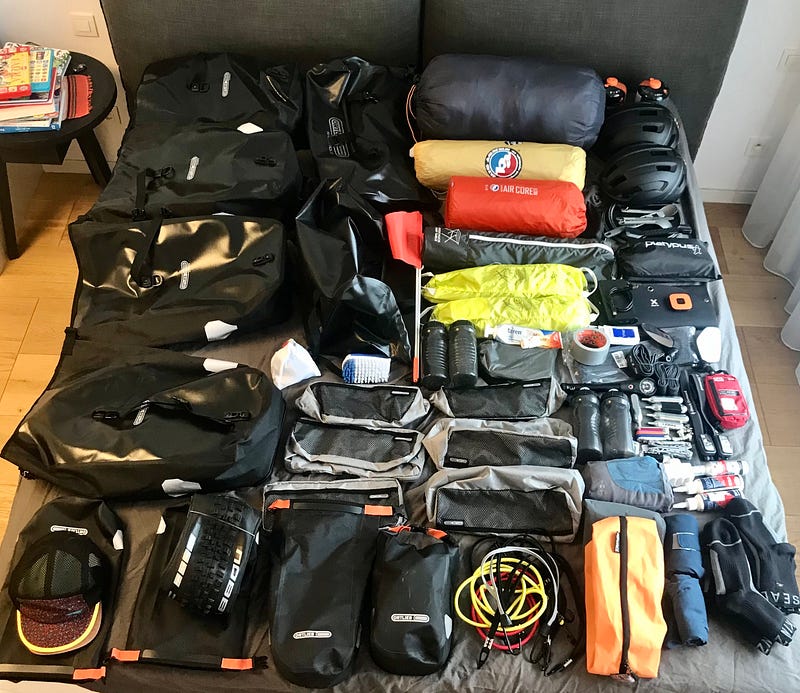
What to pack for such a trip?
You pack the same as for one week but for any weather. Public laundries are a matter of course in cities and campsites. Actually, the advantage of synthetic fibers and recycled plastics of our functional Patagonia clothing, which did not suffer from frequent washing or the dryer, proved itself.
All you need is a few pieces of underwear, a few T-shirts, ideally functional ones that dry quickly, are light, and you can use them for cycling, as well as for a walk in the city. Bike shorts that dry quickly and have chamois are essential. You can’t do without a membrane jacket either. We left out the waterproof pants because bike shorts dry quickly, and we didn’t plan to cycle in heavy rain anyway. I packed one functional dress so I could wear it on a hike or in the city heat.
We all had one pair of sneakers (all-season Danner Trails 2650) and one pair of sports sandals (I tested Bedrock Sandals). I wanted to smuggle rubber boots to Oskar, but Silvo rebuffed me by saying that, at my insistence, he was taking a children’s bike instead.
I bought cosmetics on the spot, but I found out that not everyone needs a separate shower gel, shampoo, body cream, and sunscreen. We survived partly on mini hotel shampoos when I got my hands on some here and there. In addition to clothes, of course, you pack a thousand other small big things that you need much more.
Costa Brava — Parc del Montnegre and El Corredor — Priorat
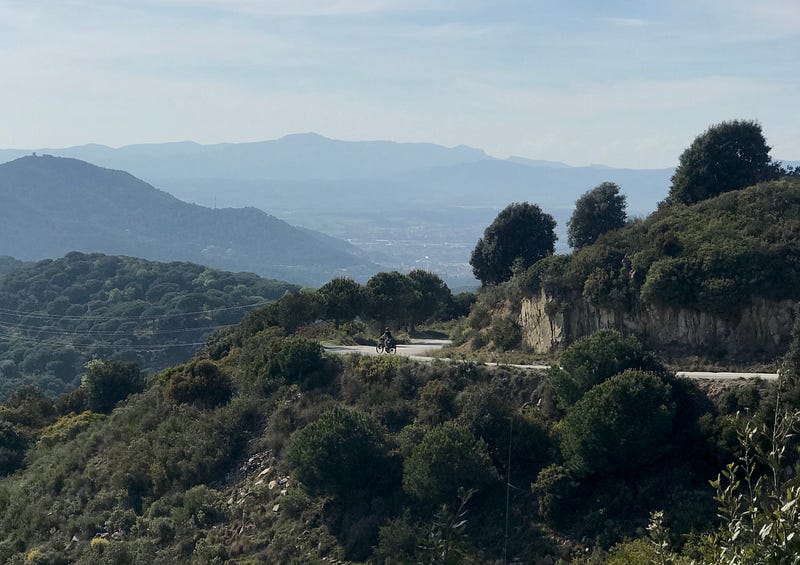
If you’ve read this far, congratulations, you’ve got a beer on me, and we’re off to the Costa Brava! Costa Brava, or the wild coast, probably needs no introduction. Catalonia pleasantly surprised me with its beautiful national parks, and the wonderful smell of pine trees in the shape of broccoli still lingers in my nose. We planned to bring the bikes to this otherwise very touristy destination due to its proximity to Barcelona airport, where we arrived late in the evening. We stayed in a hostel near the airport, and the next day we took a bus to Platja d’Aro.
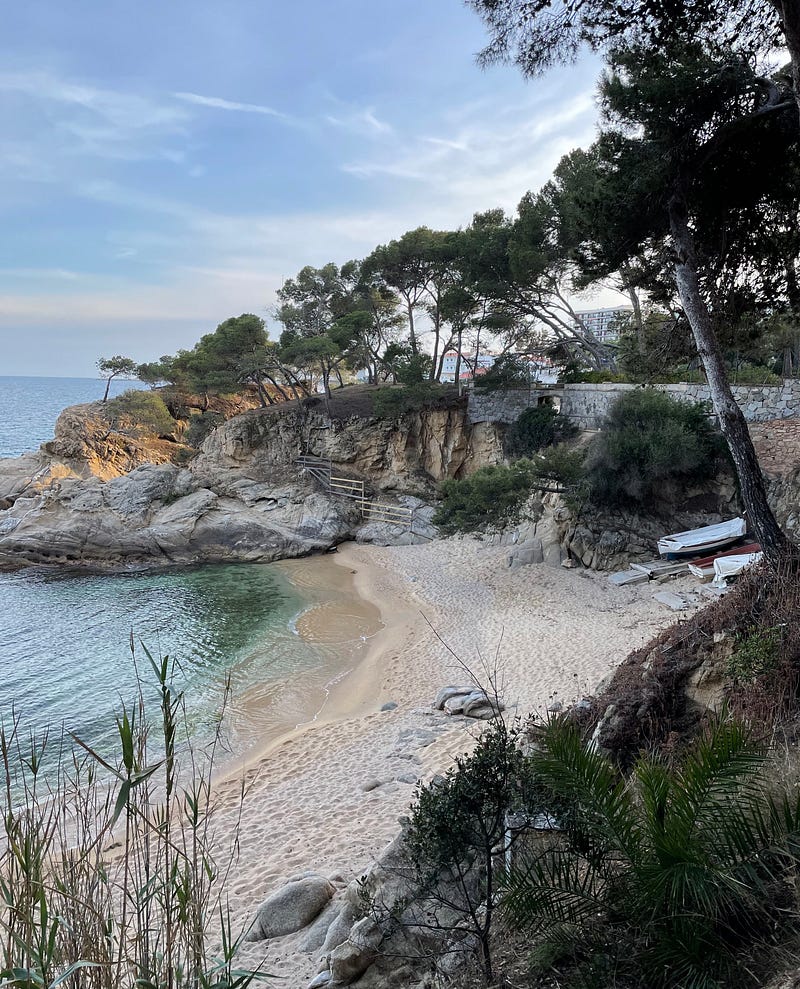
Luckily, the bikes arrived the very next day completely fine. When we finally packed up and set off, Silvo cursed me for Oskar’s bike, and I cursed Silvo for every route where I had to jump off the bike and push uphill. We were even. The ride along the Costa Brava was beautiful, although it was rather windy on the descents.
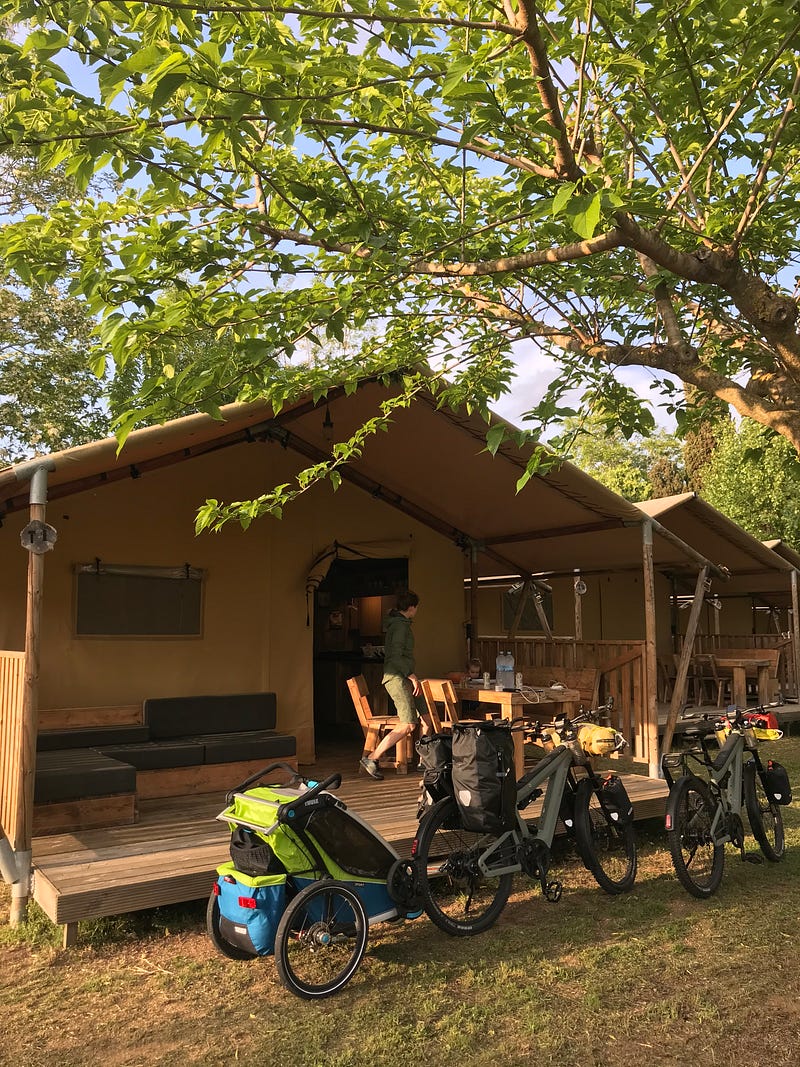
We pedaled along the coast to Lloret de Mar, where, for the love of Oski, we paid for a “safari tent” at the Lloret Blau campsite. The African feeling was a bit spoiled in the camp as it was empty except for one Swiss woman with a van. Being located in the city, the residents of the nearby blocks of flats waved at us from their balconies while having breakfast. Nevertheless, the tent was world-class, Oski found a snail friend in the shower, and we had an exotic night under a mosquito net.
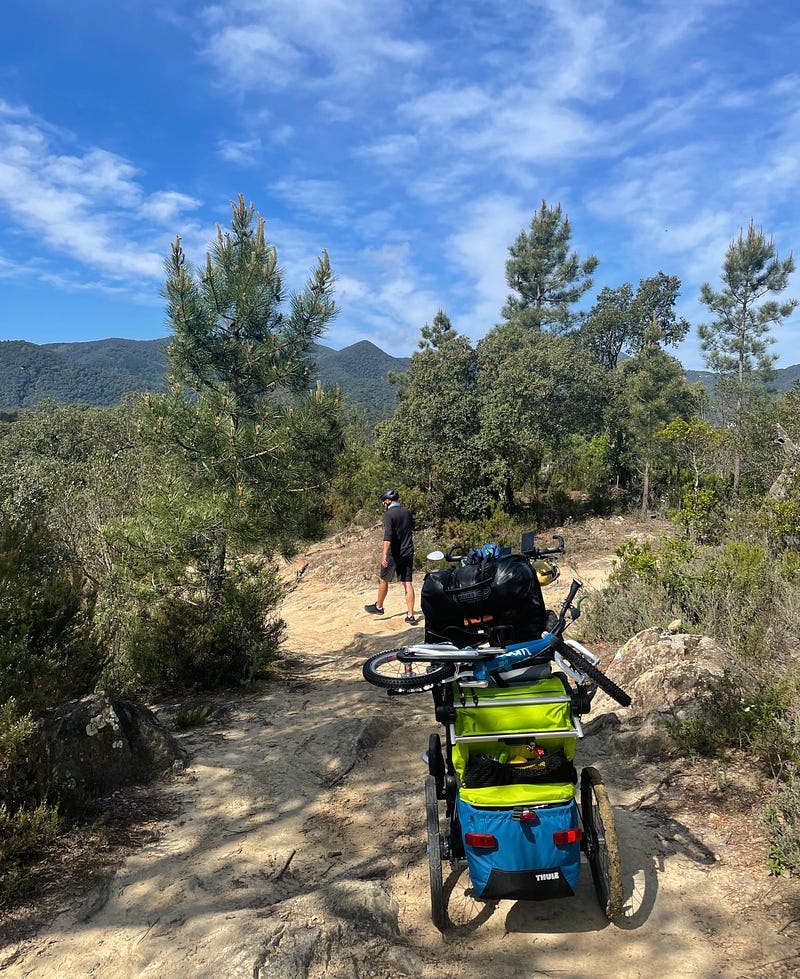
After Lloret de Mar, the first offroad was waiting for us — we headed to the national park Parc del Montnegre and El Corredor. Then I slowly began to understand that I would have to learn how to handle the bike on those rocks. At first, it meant pushing it uphill on foot or riding downhill at the speed of the Slovak state administration services. Of course, Silvo always had to walk through the fire of my emotional outbursts. Along the way, we met some cyclists here and there. Many of them were over 60. And they were pretty fit.
We had to postpone the hike to the top of El Corredor until the next morning because the rain was coming. We emerged from the forest in the town of Vallgorguina. We stopped for the first lunch menu, which was then almost eaten by a herd of goats rushing through the “center” to graze. They gave us a few phone numbers at the restaurant, and after a few phone calls using my Spanish sign language, we found the only accommodation around. It was an 18th-century villa where we slept alone, without owners.
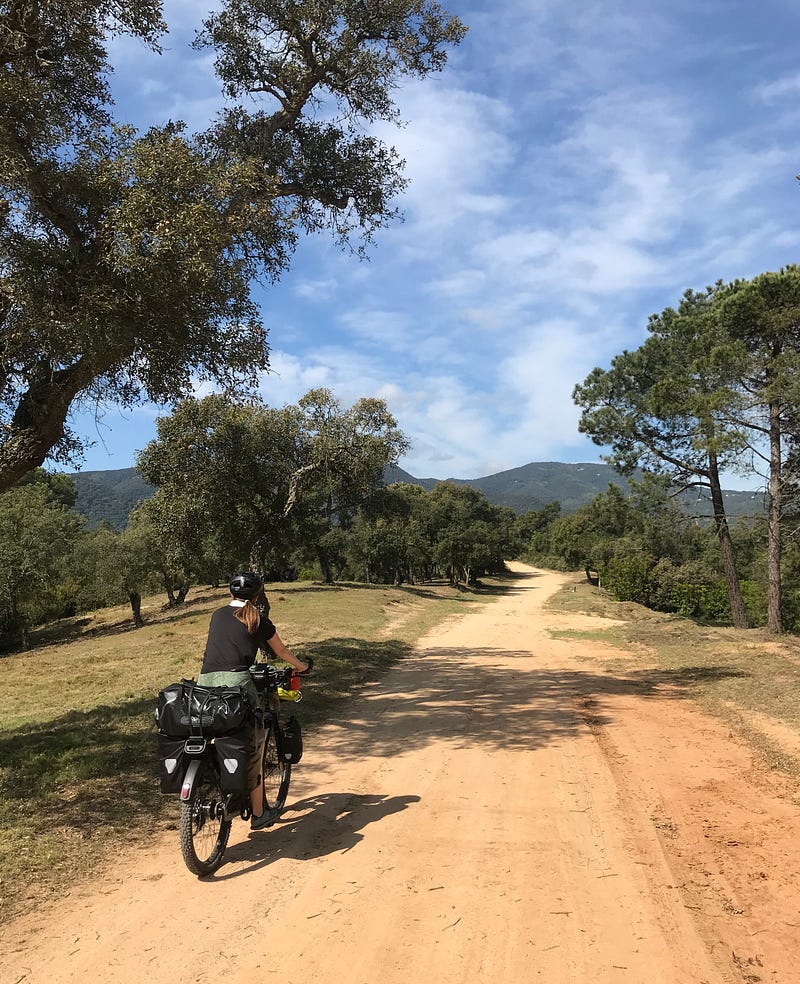
The morning after the rain, we rode to the top of El Corredor, accompanied by the fresh smell of damp pine needles.
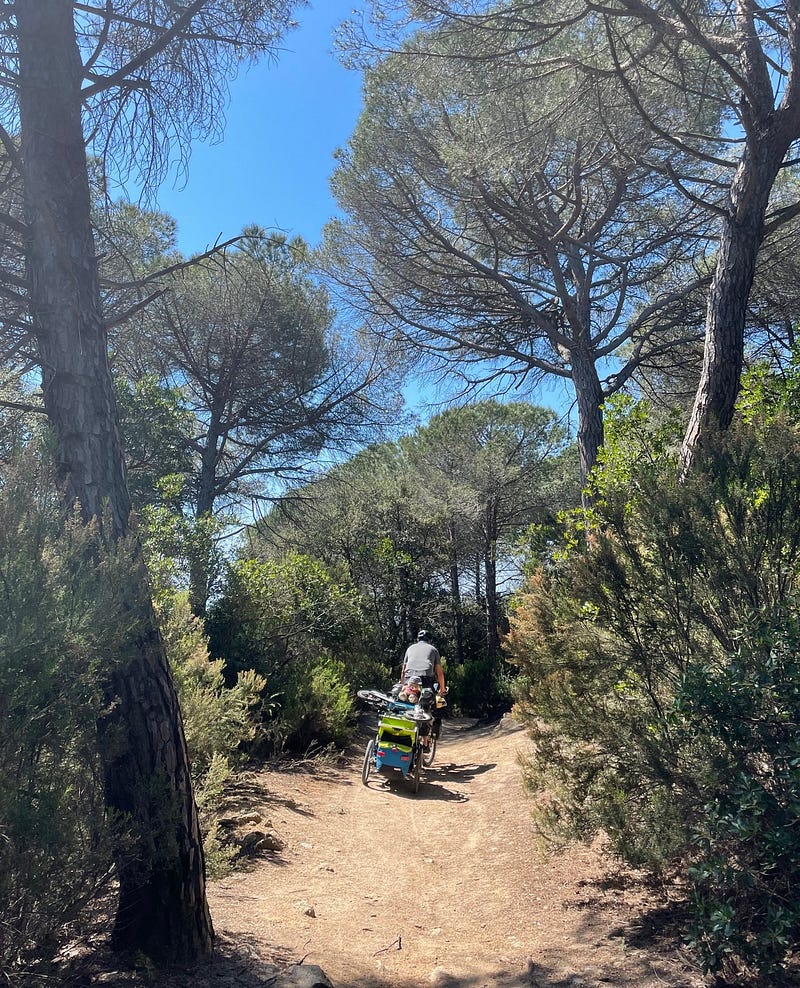
From the top, we started rolling down the hill to Barcelona, which we couldn’t avoid if we wanted to get on the train the next day. On dusty roads, through farms and small towns, we reached the reserved hostel at 8 p.m. The hostel was very narrow, with no garage, no elevator, and no willingness. We had to look for new accommodation and remember that from now on we must always call in advance to ask about bicycle parking.
In the morning, a brand new adventure began with getting on the train to Priorat. This first loading onto the train was easier than we expected because the train was departing from Barcelona, and we had enough time at the station. Getting off at the short stop in Falset was a challenge. We went a bit hysterical as we needed to get everything done very quickly, and Oski screamed all the time, thinking we could forget him somewhere. Fortunately, the approaching conductor smiled at us and indicated there was no need to hurry: “Tranquilo!”
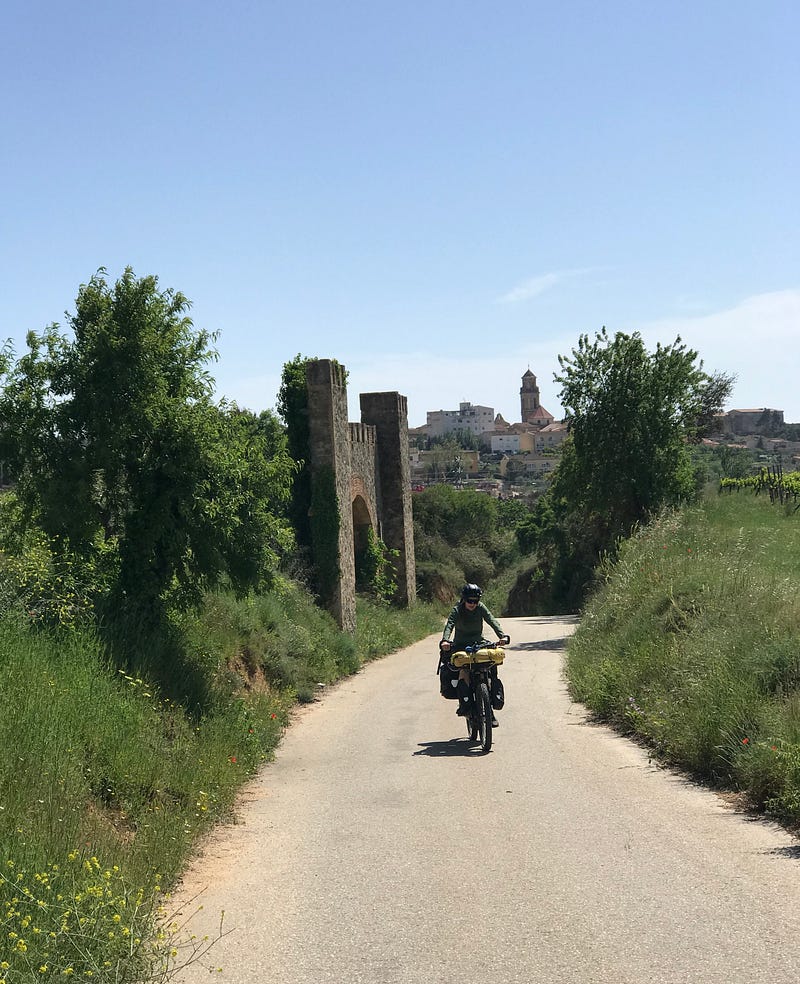
Falset is considered the center of Priorat, a popular wine-growing area. Silvo had been here before for this reason, but this time he did not indulge in this pleasure. Most restaurants were closed (we were there both off-season and during corona), and traveling with a child can also change your plans. And so we thirstily drove past those vineyards to the campsite in Siurana. Here, the wine area turns into a climbing one. The surroundings of Priorat with the red sandstone rocks of the Serra de Montsant National Park left me speechless.
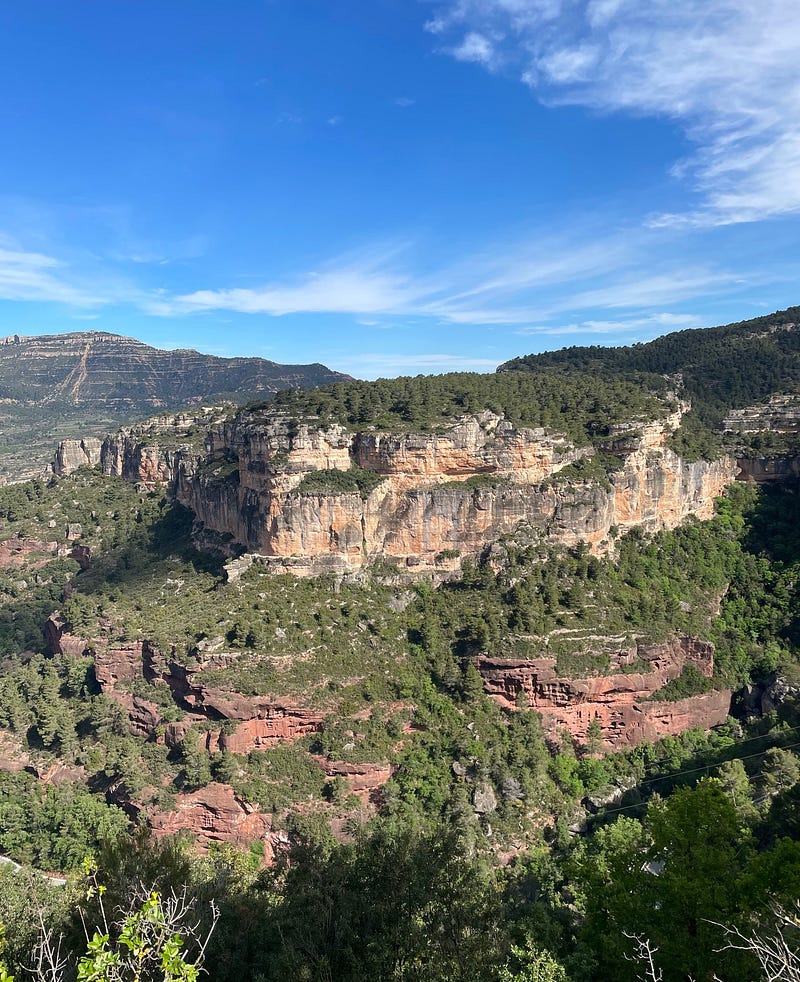
We booked a cabin for two nights at the Siurana campsite. The owners are the prototype of a cool tanned couple of climbers who will sit down with you at dinner and enjoy the climbing enthusiasm of a bunch of British kids, probably the only visitors in the camp beside us. The fire crackles in the stove at the bar, and everyone lives an isolated life in a bubble, far from crowds and corona. In the evening, we take vino de casa in a jug to our cabin, and Oski, wearing a headlamp, collects pine cones and chases cats.
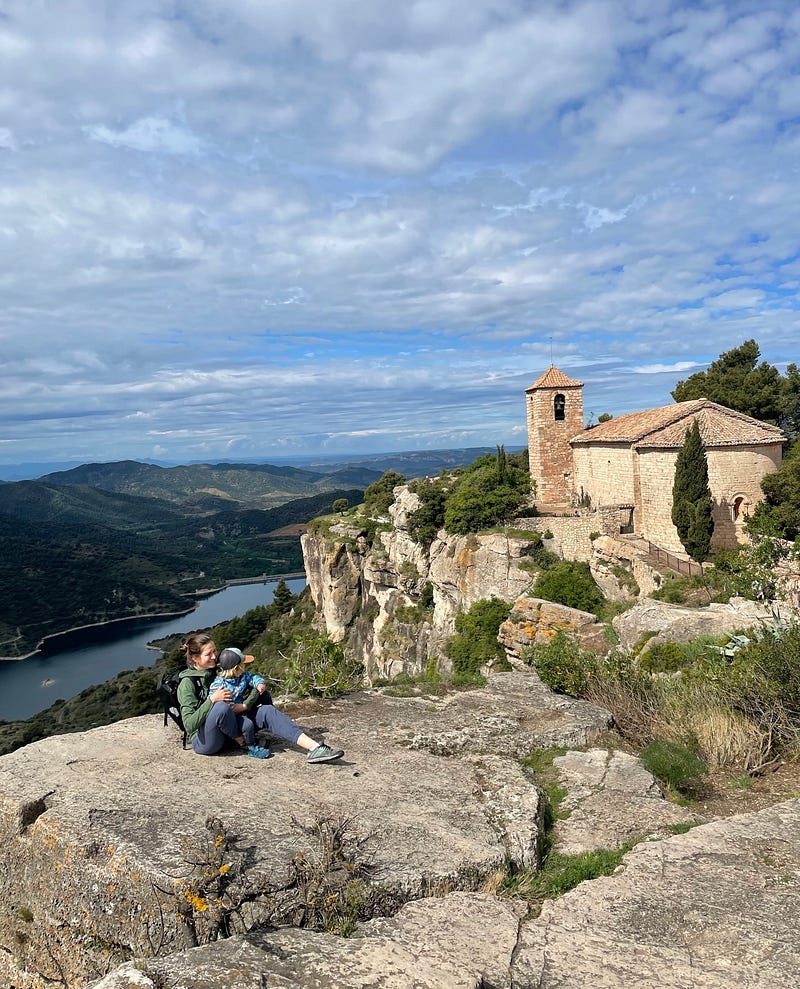
We are off to explore the surroundings. The campsite is at the entrance to the village of Siurana, surrounded by rocks from which there is a beautiful view of the river and the water reservoir. We sit on a rock next to the church and read about this last Muslim bastion in Catalonia. The Moorish Queen Abdelazia decided to cast herself with her horse off the cliff we are sitting on rather than be captured. The Muslims were subsequently definitively pushed out of Catalonia, but the horse left its imprint on the rock. Siurana left beautiful memories in me — even as I am writing this, I can feel the excitement that resonated in me a the beginning of our journey.
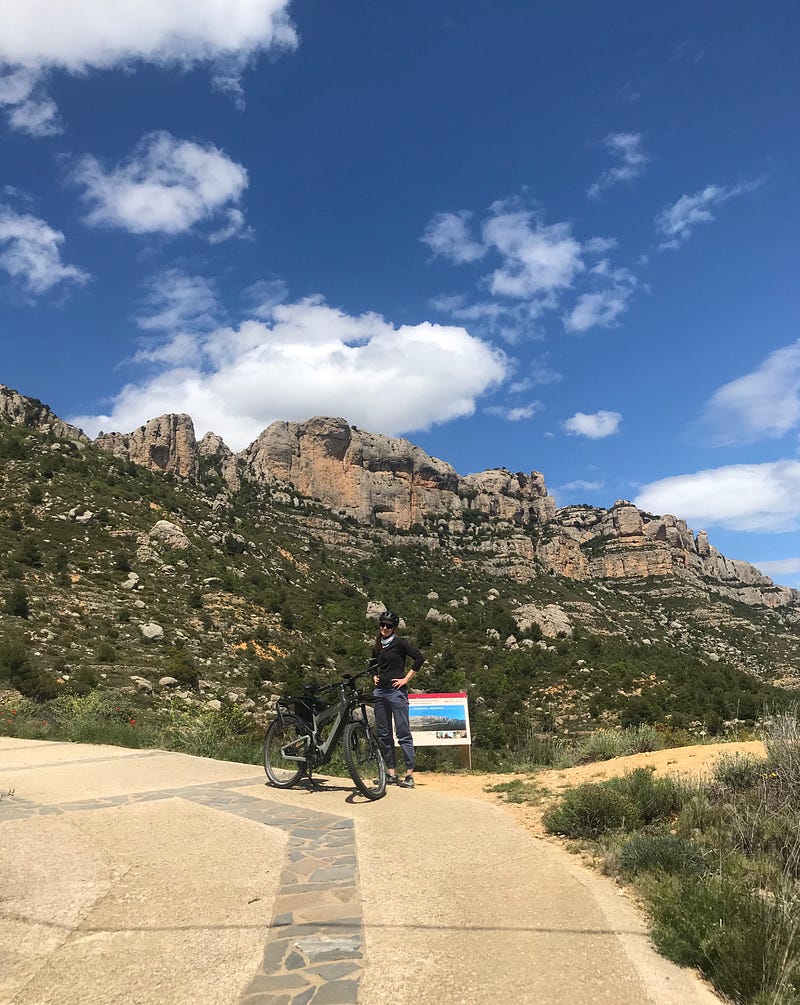
The morning of leaving the camp came, and the rough descent on the tarmac took away half of Silvo’s mudguard when he tumbled over Oski’s chariot in a sharp turn. I — a mother in distress, throw my bike to the ground and gallop toward them, doing much more damage and twisting my handlebars. Fortunately, Oski is the only one on top of things, and his hearty laughter convinces us that everything is fine.
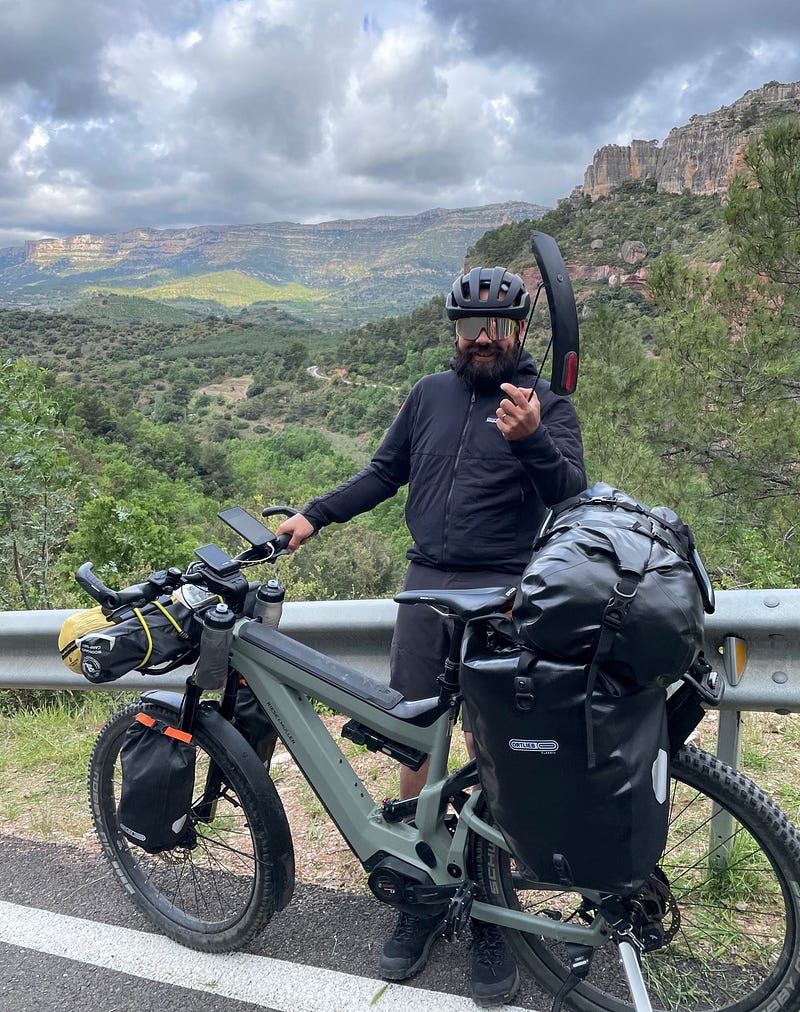
From Priorat we return to the coast, passing sleepy little resorts. In one village, we stop for lunch and find out that a bottle of wine that lands on our table is included. We cheerfully sit back on bikes, and when we manage to roll over obstacles that the Komoot application prepared for us, we arrive at the Ebro river delta.
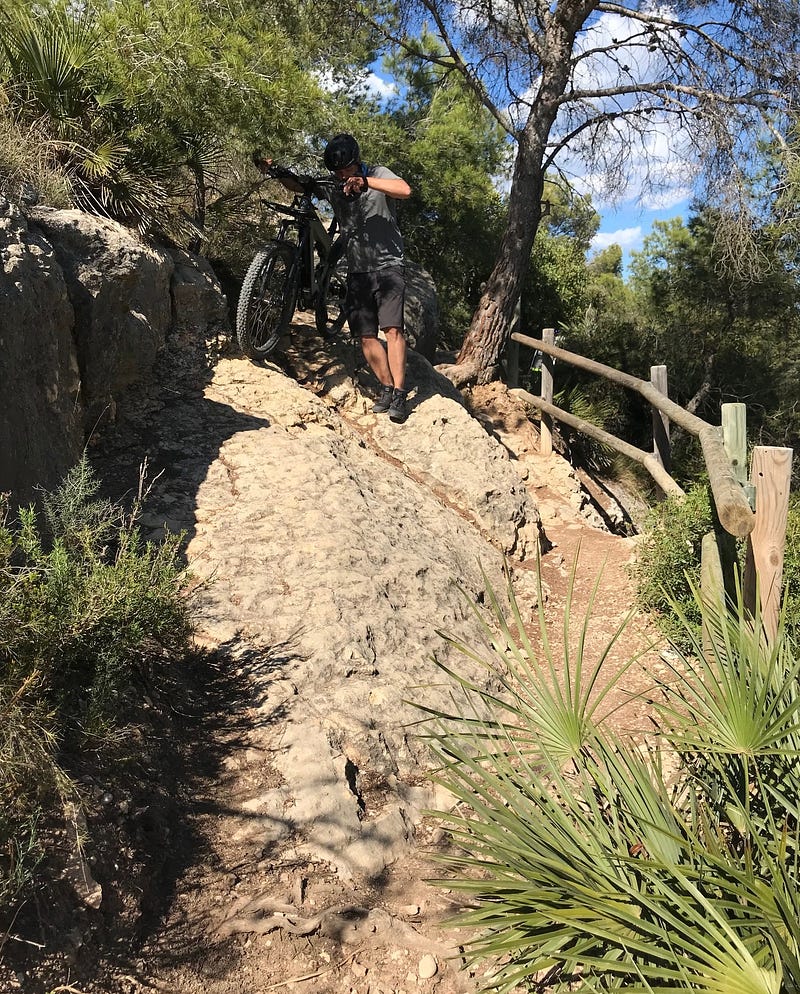
We can’t help but wonder about how rice is grown here on a large scale. But it makes sense. How else would they make that great paella from Valencia? As we assumed, paella must be the result of Arab influence — rice spread in the Iberian Peninsula thanks to the Arabs in the 8th century.
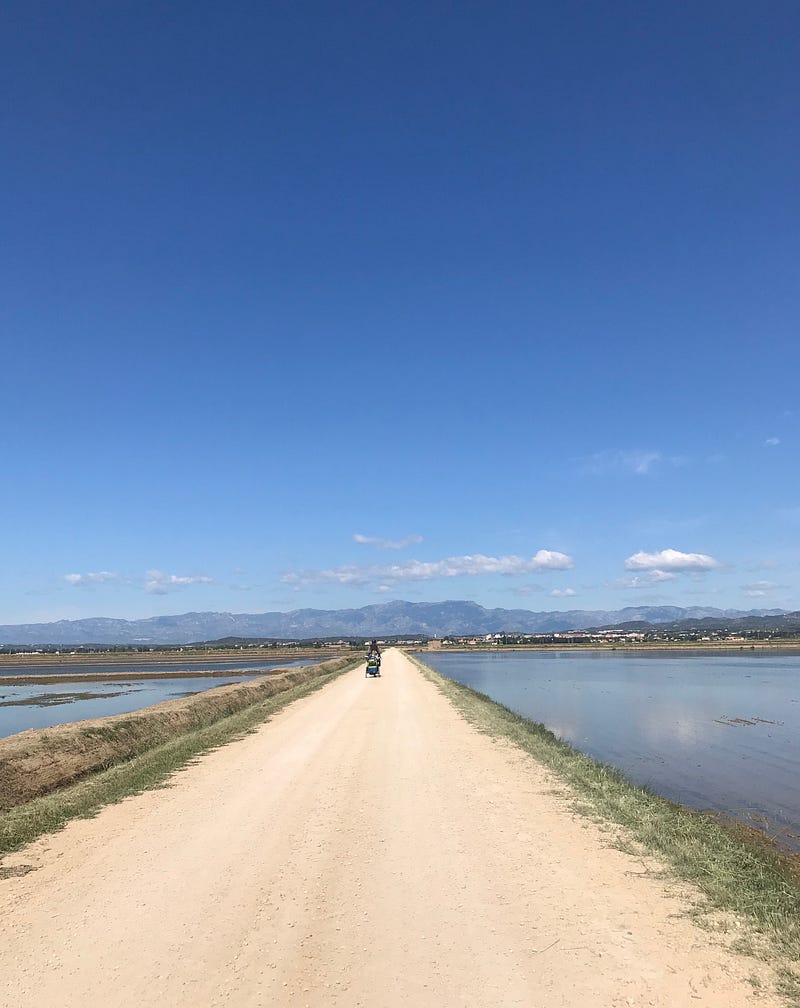
Our expedition does not conquer the delta of the Ebro river until around six p.m. The wind starts blowing, I start blowing, too, and Oski loudly announces that he has had enough. We manage to reach the campsite around seven. It’s been a long day, but the Eucaliptus campsite looks fantastic and smells likewise! After 116 km, Oski breaks sleep records, so we let him sleep until 10 in the morning.
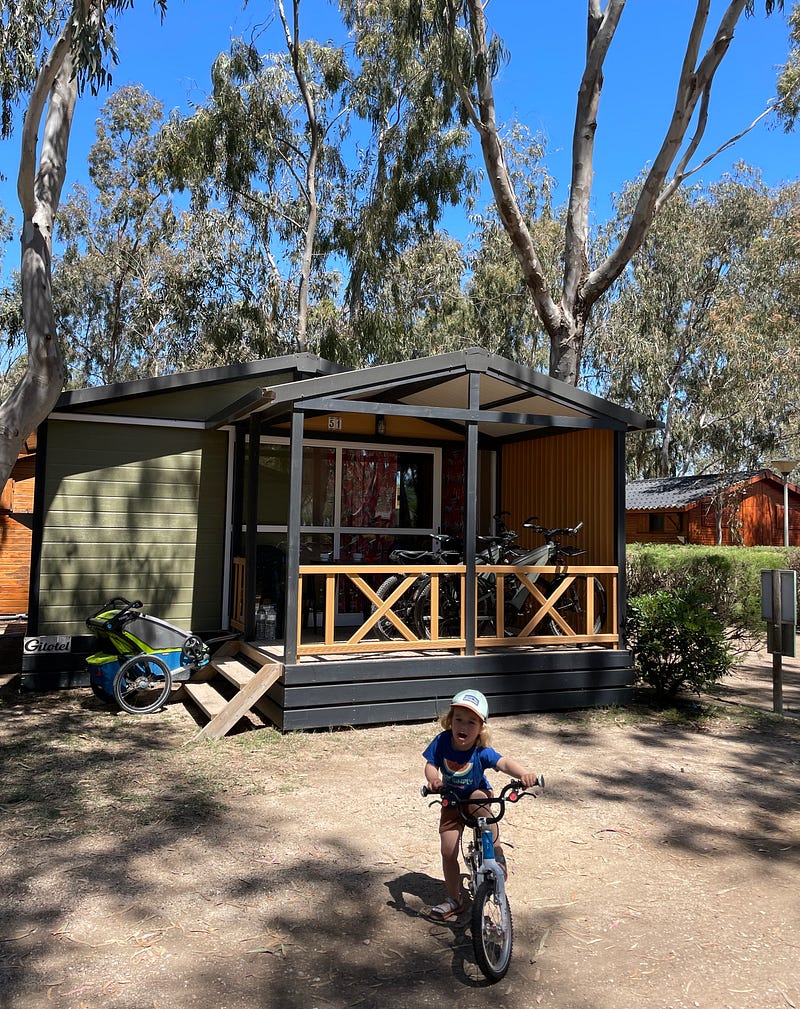
The Eucaliptus camp, which is part of the Parque Natural del Delta del Ebro, wins our hearts and after a short discussion, we unanimously agree on two nights here. After lunch, we finally get rid of luggage and 30 km there and back along the sea await us. We enjoy the salty wind, Silvo even puts on his Hawaiian Patagonia. Along the way, we meet flamingos, swim in the sea, and at the end of the trip, we have our well-deserved beer at the kitesurfing buffet.
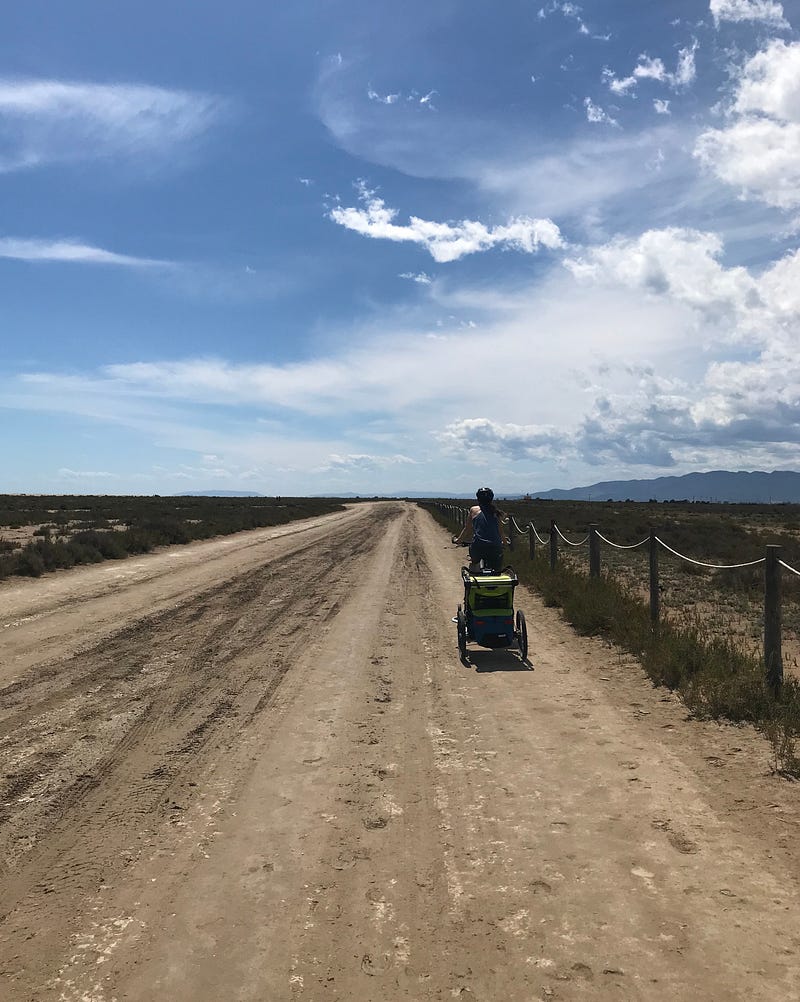
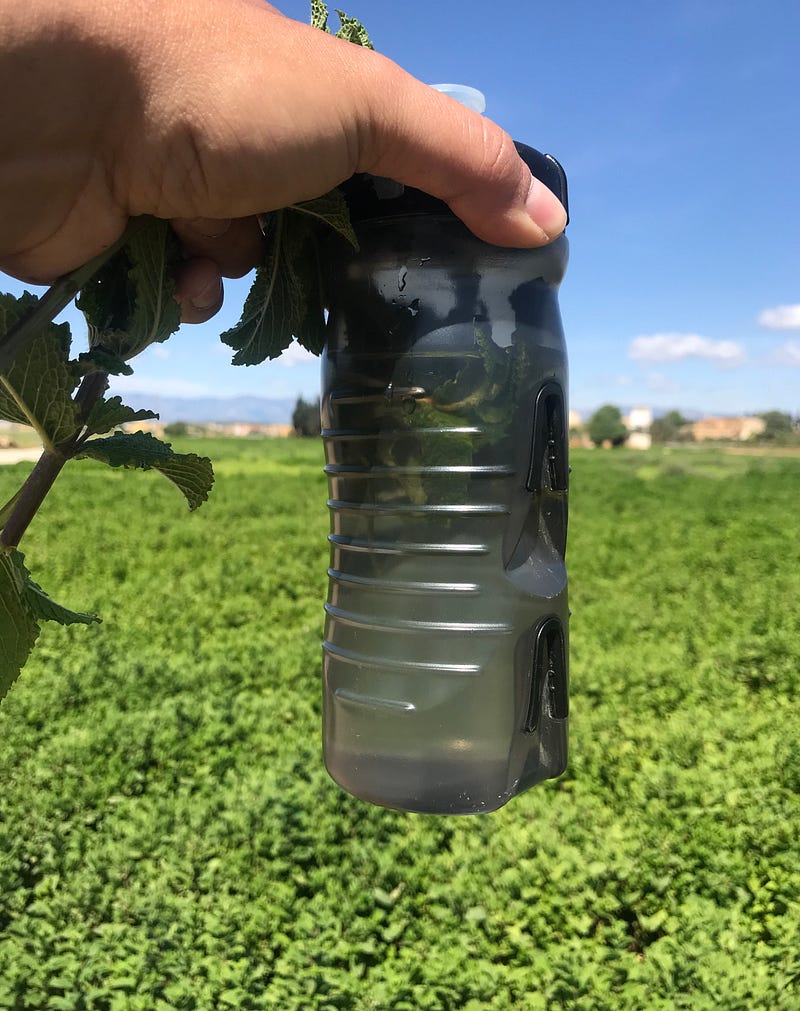
After we had enjoyed enough rice and flamingos under the eucalyptus trees, we headed to the nearest train station. The Vietnam vibe from the rice fields changes into other curiosities — we traveled across a field of artichokes and saw the farmer selling them on the spot. Suddenly we smell a fresh scent, and I wonder where it came from and what it reminds me of. Soon we come to the mint fields. It cheers us up, and Oski throws a few leaves into our bidons. Just rum is missing.
But we still have to deal with the challenge “Load the train, don’t forget the child!” After arriving at the station, the situation is critical, Silvo rides up and down the elevator to the platform with all the luggage, we only have a few minutes till departure. I try with all my might to make even more chaos, and I see myself taking one bike to another train car, rushing wherever I can fit. Several volunteers are already helping Silvo with the bags. The train door is closing, I have no idea if we have everything, but a stranger lady handed Oski to me, so I have everything important with me. The conductor arrives and with my rudiments of Spanish I can understand that at the next stop, we must get off and load the bicycles into the designated carriage. Life is not a feather. We finally made it, and another lady held Oski for me again. I felt ten years older when we spectacularly landed in Valencia.