
Beyond Kung Fu: The Multifaceted World of Chinese Martial Arts
Chinese martial arts have a centuries-old tradition. It is impossible to determine unequivocally when they originated. However, it is known that mentions of various styles appeared already in the oldest historical sources. What are the characteristics of Chinese martial arts? Below we list and describe the most characteristic types and styles.
Fighting has accompanied humans since time immemorial. Battles were already fought by the first representatives of the genus Homo, not only with animals, but also with other humans. As man developed, he began to create more and more effective weapons and developed various systems of fighting without weapons.
Where were martial arts born? The answer to this question is lost in the depths of history, but the oldest traces of the use of advanced techniques combined with tactics come from China.
The origins of Chinese martial arts
Hand-to-hand fighting and using primitive wooden weapons were carried out in China in the earliest times, but the actual development of fighting systems, used on the battlefield and in individual duels, did not occur until the Spring and Autumn and Warring Kingdom eras.
Between the 8th and 5th centuries BC, the sword became the primary weapon of warriors. Initially, the weapons were made of bronze. It was not until the 5th century BC that iron swords began to be forged. The art of wielding these weapons then became a valued skill. As proof of this, in the Qin state, every official was required to carry a sword.
In the era of the Warring Kingdoms, martial arts ceased to be the domain of warriors and sons of the nobility, and began to penetrate the lower classes of society. The rulers of each country encouraged the civilian population to excel in the art of war.
With the emergence of xia warriors — representatives of simple folk familiar with the art of war who earned a living as mercenaries — there was a division of martial arts into systems of warfare and individual defense. While soldiers had a limited set of techniques at their disposal (their goal was to maintain formation, even at the cost of their own lives), the folk martial arts were for individual defense and were meant to be accessible to everyone, regardless of gender, age or fitness level.
The complex techniques developed at the time laid the foundation for all later styles. Not only that, but they also initiated other eastern martial arts, including Japanese karate.
What are the characteristics of Chinese martial arts?
Chinese martial arts are primarily a multitude of techniques. Eastern systems involve the use of traditional weapons (both wooden and white) and hand-to-hand combat without weapons, using punches, dodges, blocks, kicks, throws, uppercuts and levers. The various styles differ in terms of tactics, defensive methods, fighting distance or the method of supposing an attack. However, at their core are several common features. They use knowledge of human body anatomy, tactics and strategy to successfully incapacitate an opponent.
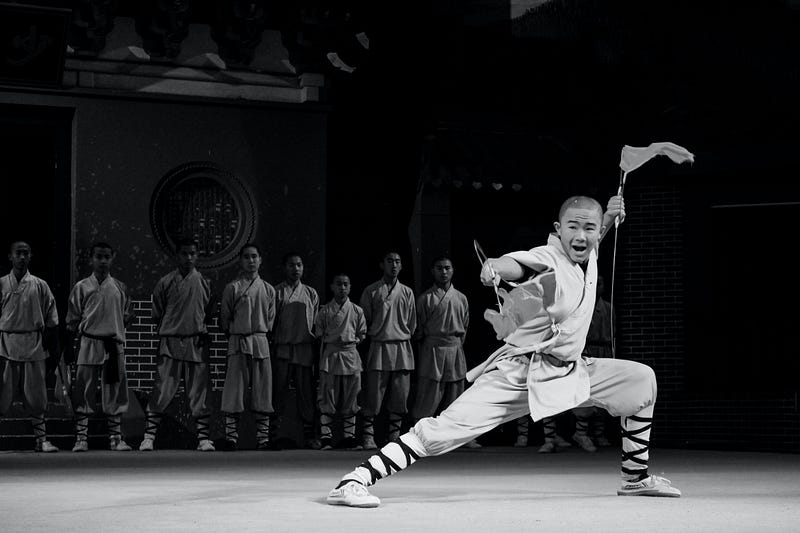
Chinese martial arts cannot be denied their spectacular nature. Smoothly executed movements, extremely fast punches and kicks create an amazing, almost mesmerizing spectacle. However, it is worth noting that real fights are not so “theatrical”. Instead, the elements typical of show fighting have practical applications in training, as a great form of perfecting motor coordination.
What martial arts originated in China?
In Western countries, Chinese martial arts are most often referred to as kung fu. However, there is an inaccuracy to be pointed out here. The term kung fu, or more precisely — gōngfu, means reaching a master level in a particular field. It does not necessarily involve martial arts. So why is it associated in the West with martial styles originating in China?
It is impossible to determine who first used the term in the context of Chinese defense systems. What is certain, however, is that the popularization of the term in the Western world was largely due to the film productions of Bruce Lee and other cinema and television titles that enjoyed enormous popularity in the 20th century.
The correct term for Chinese martial arts is zhongguo wushu, colloquially shortened to wushu. The term was not coined until the 20th century, when some elements of Western culture began to infiltrate the Middle Kingdom. Prior to that, the term wuyi, indicating martial tactics, was used. To sum up, wushu is the totality of Chinese martial arts, and individual styles are variations of wushu.
Xingyiquan
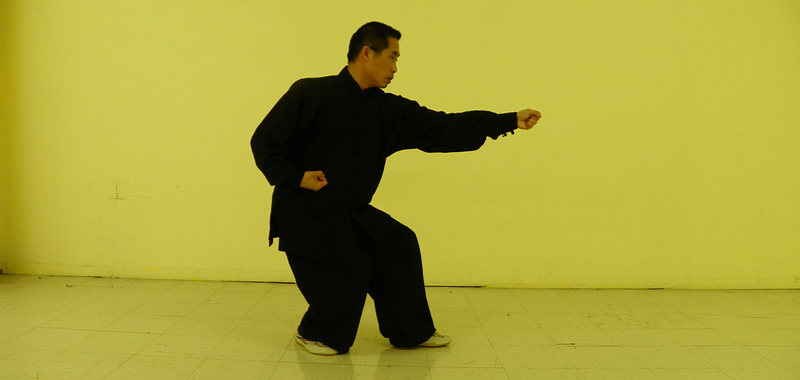
Xingyiquan, or mind boxing (boxing of strong will or fist of form and intention), is one of the most famous internal wushu styles. The essence of this martial art is the rapid movement of the body, providing an outlet for strength balanced by inner softness.

At its core, xingyiquan was intended to be a simple, effective style. Its author is most likely Yue Fei — a Song Dynasty general who achieved mastery in spear wielding. Based on this, he developed a fighting technique, which he then passed on to his officers.
Over the years, the xingyiquan style has undergone numerous changes. Successive masters supplemented the technique with new elements, thus creating an increasingly complex system. The first master of this art after the author, Ji Long Feng, adapted xingyiquan to manual techniques. From his school came two outstanding students, Ma Xueli and Cao Ji Wu.
From the school of the latter adept came Dai Long Bang, another great master who greatly influenced the development of this martial art. Bang enriched it with daoyin (qigōng techniques for maintaining health) techniques.
Today xingyiquan is not only a fighting style, but also a health system. Learning is divided into three stages. The first is to transform vital forces into qi, the essence of the second is to transform qi into spirit, while the third: to transform spirit and return to emptiness.
Yiquan
One of the most popular internal wushu techniques — yiquan, or mental boxing — was developed from the classical xingyiquan style. Its author is master Wang Xiangzhai.
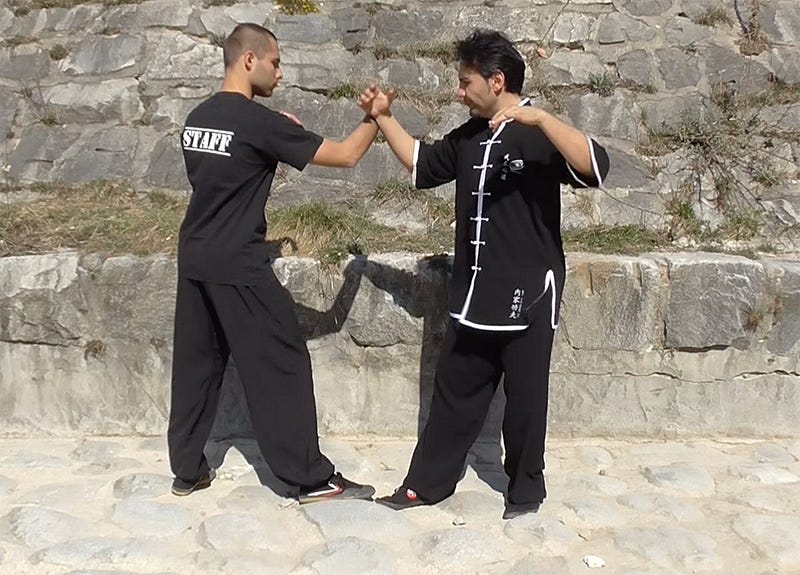

As the name suggests, the training places the greatest emphasis on the mental side, the sense of one’s own strength, movement and body. In addition to the explosive strength typical of xingyiquan, yiquan also features concepts characteristic of other internal systems. One can find there, for example, the soft neutralization of an opponent’s actions, typical of taijiquan, and dynamism and agility, characteristic of baguazhang.
Shaolin quan
Shaolin quan belongs to the group of the oldest wushu systems. As an external style, it emphasizes the use of strength, dynamics and speed in combat.
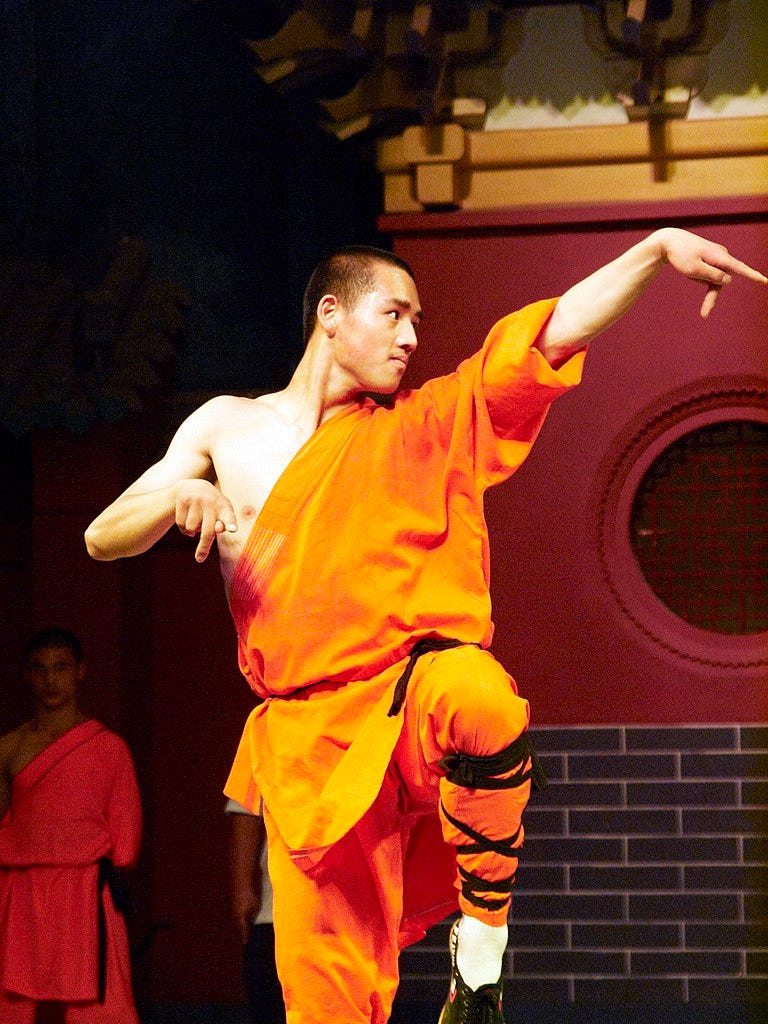

The author of the martial arts of Shaolin Monastery is most likely the Indian monk Bodhidharma, who resided at the foot of Shaoshi in the 6th century. According to researchers, it was he who developed the distinctive exercises aimed at improving the fitness and health of the monks, deteriorated in the wake of prolonged meditation. It was at this time that Shaolin monks became famous for their extraordinary skills in battle, and the monastery itself became one of the key centers for the development of martial arts.
The essence of shaolin quan can be boiled down to four qualities: speed, strength, mobility and simplicity. All movements are performed extremely dynamically and with great power, but at the same time they remain “soft” and the warrior’s body — relaxed. Typical in this case is a smooth change of directions, which confuses the opponent and prevents him from predicting his next move. At the same time, in this style there are no complicated arrangements of positions. Each movement is performed in a straight line.
Taijiquan
Taijiquan is a martial art that is supposed to be a gift of the gods to humans. According to an old legend, its creator is Zhang San Feng, a Taoist monk, to whom Emperor Xuan Wu gave the rules of the exercises in a dream. Historical sources, on the other hand, indicate that the taijiquan style was developed and spread by the Chen family.
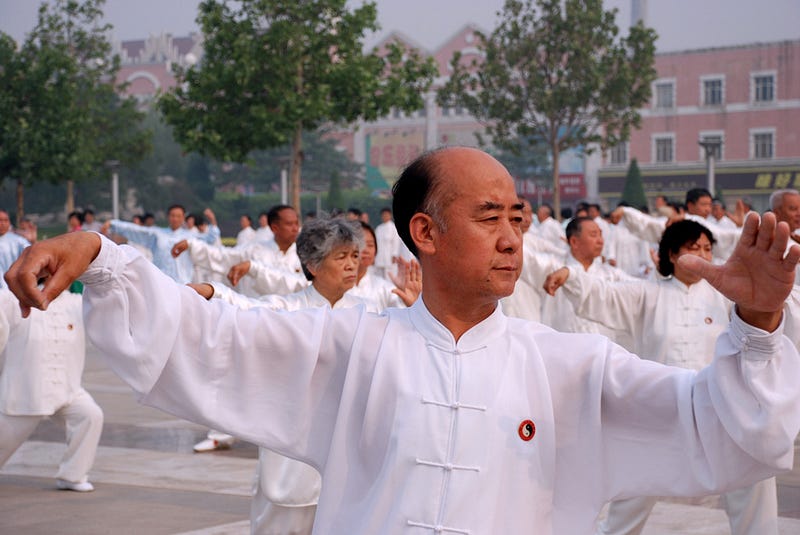

The oldest form of this technique is the chang quan, or long fist. The style, which began in the 17th century, consists of 13 basic forms — eight basic positions for the hands and five for the body. They all show great similarity to the technique developed by General Qi Ji Guang, who developed his own technique based on key elements from 16 different schools. His style contributed significantly to the development of taijiquan.
In the 19th century, most of the forceful elements were eliminated from the collection of taijiquan techniques, and the movements that make up this system gained softness and grace. In this form, this art is still taught today.
Cool that you made it to the end of this article. I will be very pleased if you appreciate the effort of creating it and leave some claps here, or maybe even start following me. It would be nice if you also left a tip! Thank you!