
Petra still manages to surprise. There was a large object buried in the sand
Petra is a famous city carved out of rock. The capital of the Nabataean kingdom is also known as the Pink and Red City because of the colorful sandstone in which its buildings were carved.
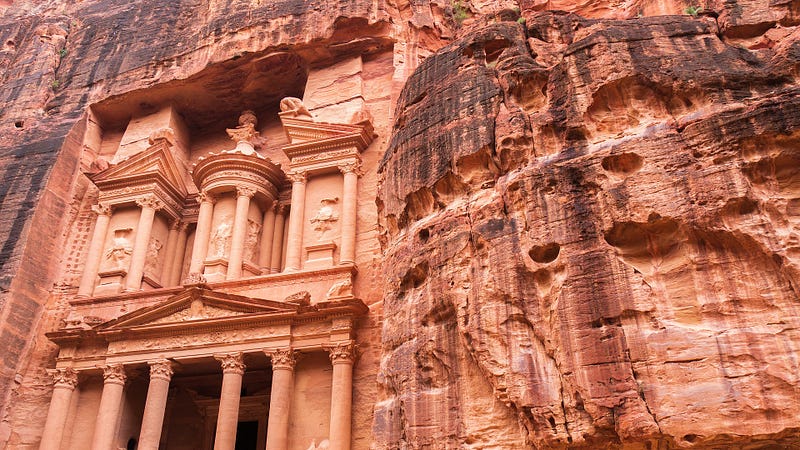
Petra is an ancient city located in southern Jordan. Its remains are one of the most popular tourist attractions in the country. The capital of the Nabatean kingdom is a UNESCO World Heritage Site and is famous for its impressive architecture carved into the rock — directly into the red sandstone cliffs. Petra was founded in the 4th century BC by the Nabataeans. They were an Arab tribe that became wealthy through trade routes, especially those connecting Arabia and Syria.
Who were the Nabataeans?
It has been speculated that the Nabataeans may have originated in Yemen, but their language, writing and names of deities have little in common with the cultures of that region. Indications have also been made for Hijaz, the northern part of the Arabian Peninsula, or Transjordan. Two mysterious desert peoples, Nabatu and Nabaiti, whose names resemble the later Nabataeans, appear in Assyrian sources. Are they really them? There is no certainty, one can only surmise. What is known, however, is what they looked like. Recent studies have reconstructed the appearance of Nabataeans living 2,000 years ago.
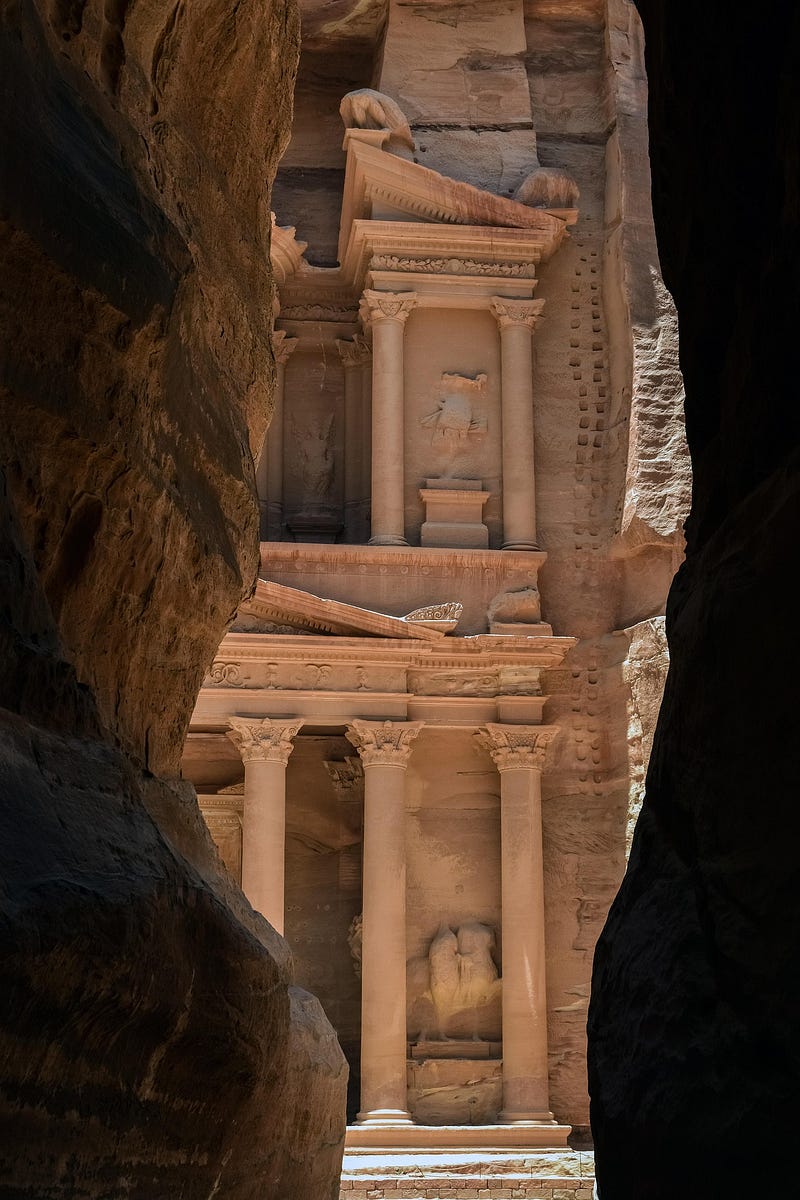
Petra was never conquered militarily, despite the attempts of the Seleukids, Hasmoneans, Romans (at the time of Pompey’s conquests) or Herod the Great and Cleopatra. The city was superbly situated in the rocky basin of the Jebal Ash-Shara massif, with only one narrow gorge leading to it (centuries later it was overcome by Burckhardt).
Discovery of Petra
The discoverer of Petra was Swiss Johann Ludwig Burckhardt (1784–1817). He learned Arabic and, introducing himself as Sheikh Ibrahim ibn Abdallah, managed to visit the ragtag Muslim world. This included the holy cities of Islam Mecca and Medina inaccessible to Western travelers.
At the end of August 1812, Burckhardt, while in what is now Jordan, decided to check out stories about the existence of an ancient city — supposedly hidden in a rocky valley near Aaron’s legendary tomb on Mount Hor. When he crossed the winding narrow gorge of As-Sik, a city indeed appeared to his eyes, all carved in reddish sandstone. He was the first modern European to see the ruins of the Nabataean capital, which the Greeks called Petra (“rock”) and the Rakmu people themselves (“multicolored”, since the color of the rocks changes depending on the time of day from red through orange to yellow). Its founders abandoned their traditional nomadic life and, taking advantage of the collapse of previous political powers, created their own kingdom in the 2nd century BC, controlling the caravan trade route linking Palestine and Syria with southern Arabia.
Building the most important Nabataean city
For centuries Petra was the most important city of the Nabataeans. People had been settling in its vicinity since at least the Neolithic period. Before the Nabateans, the Edomites probably lived there, inhabiting rocky caves (and calling the place Sela, meaning “rock”). When the Nabataeans came, they originally lived in tents made of goatskin and in caves adapted into dwellings. Probably from the 3rd century BC they began to erect the first masonry buildings. In the 1st century BC they proceeded to build a regular city.
Petra is awe-inspiring with its multitude of temples and tombs carved into the rock. It also had a sizable theater that could accommodate up to 10,000 people. This testifies not so much to the inhabitants’ fondness for Hellenistic culture, but to their desire to match in terms of luxury the well-known metropolises of the Greco-Roman world. Simply put — the theater was something to boast about, claiming a certain status.
Who inhabited the rock-cut city?
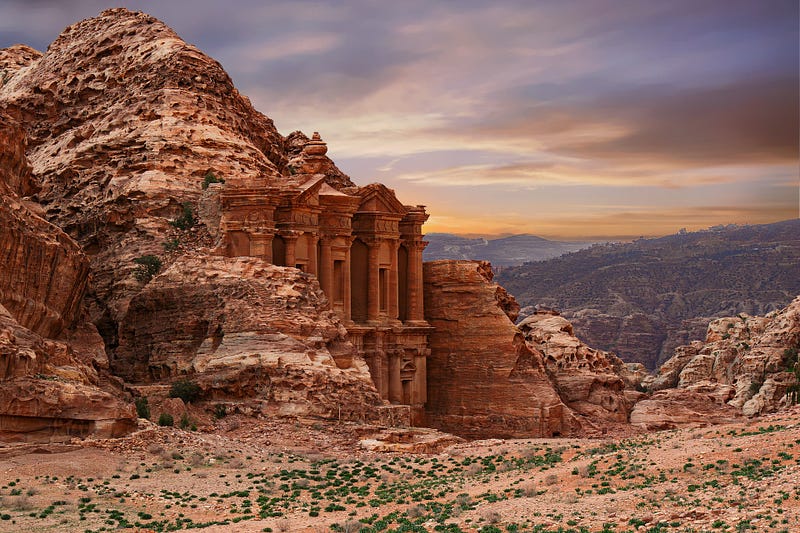
Admiring the impressive structures, however, begs the question: did anyone live here at all? Temples and mausoleums — and it was such structures that were mainly carved out — are by definition uninhabitable. Ordinary people probably lived in small houses, perhaps also in tents, or came to Petra occasionally, on holidays and on business.
The rulers of the country probably lived in the larger brick buildings in Petra. Power was exercised by the king. Strabon (who lived at the turn of the Era) reports that he made decisions after consulting his men at feasts. Middle Eastern archaeologist Warwick Ball concludes from this description that the structure of Nabataean society retained a tribal character: the king ruled like a sheikh with his elders and, in the event of war, called his subjects under arms. Besides, there must also have been some garrisons stationed in the cities. On the other hand, we don’t know whether there was an organized clerical layer at all. For that, some form of self-government should have developed in the larger settlements. And certainly, during the period of greatest expansion, a representative of the king resided in the Nabataean occupied cities (such as Damascus).
Petra: satellite images have revealed the secret
One of Petra’s most famous structures — the rock mausoleum now known as Al-Khazna (“the treasury”) — owes its fame to pop culture. It’s where Harrison Ford as Indiana Jones found the Holy Grail, which now draws crowds of tourists to the site. In turn, local Arab tradition says that it was here that Moses brought water out of the rock.
Despite the intense tourist traffic and the progress of archaeological research, Petra still manages to surprise us quite a bit. A few years ago, scientists reported that thanks to satellite images and photographs taken with drones about 800 meters from the center of the city, a large object was detected buried in the sand.
The rectangular platform with monumental stairs is the length of an Olympic swimming pool and twice as wide. What purpose did it serve? That is not yet known. Surprisingly, however, although hundreds of people have walked and ridden on the site, such a massive structure has so far escaped their attention.
Why did Petra fall?
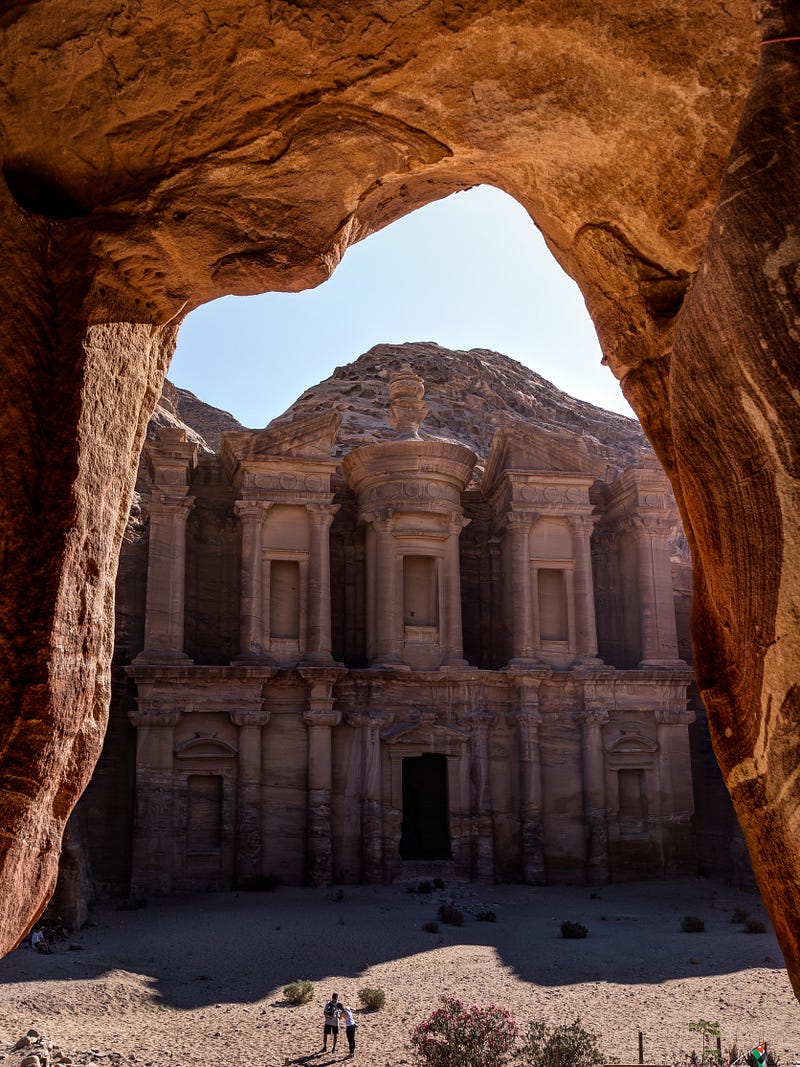
Ancient Petra — although it lost its status as a local capital to Bosra — continued to prosper until the early 3rd century. The real crisis came with the increasing role of Syria’s Palmyra (recently heavily ruined by the Islamic State), which took control of the trade routes. On top of that, earthquakes began to destroy the city’s water supply system, essential in desert conditions but impossible to fully repair in a situation of steady population decline. By 700, only a few residents remained in and around Petra.
Petra, Jordan: interesting facts
- The city is one of the New Seven Wonders of the World.
- The most important surviving structures in Petra are the treasury, the monastery, the Upper Sacrificial Site and the Great Temple complex.
- It is estimated that Petra had up to 30,000 inhabitants during its heyday at the end of the first century AD.
- The ruins of Petra have appeared in many films, including: “The Mummy Returns” and “Transformers: Revenge of the Fallen.”
- Petra is open to tourists all year round.
Cool that you made it to the end of this article. I will be very pleased if you appreciate the effort of creating it and leave some claps here, or maybe even start following me. It would be nice if you also left a tip! Thank you!


