
Part 1- Inferno
The Places We Go From Here
Looking beyond Dante’s vision at how different religions, mythologies, and cultures envision the afterlife
Curiouser and Curiouser
I was taught from a young age about the concept of hell as it was depicted in the Bible. Many of the other kids struggled to reconcile the idea of a loving God condemning people to eternal damnation but the concept made sense to me.
When my father told me about hell, he placed a strong emphasis on goodness and righteousness. He said those were the things that keep you out of hell. Be good and live righteously and you will be good.
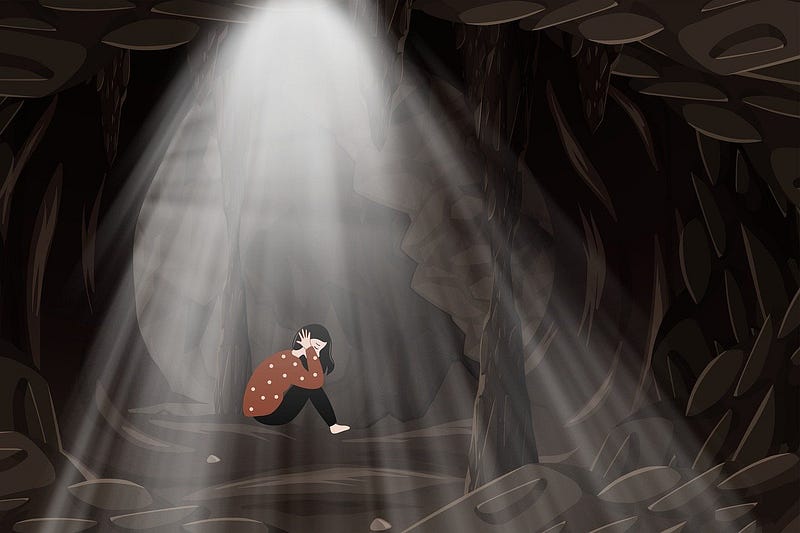
As I grow to become like a child, I’ve become more curious about the afterlife. I started to question my beliefs and began to explore different religious and spiritual traditions.
I will admit that it is difficult to imagine God condemning people to an eternity of suffering for no reason. There had to be a good reason for it and I sought to find it! So I’ve been studying many religions, mythologies, and cultures, and their beliefs about hell. But Dante’s vision of hell is the most interesting of them all.
Dante’s Inferno
The depiction of hell in Dante’s Inferno is a terrifyingly dark and twisted descent into the underworld yet it remains one of the most influential and enduring visions of the afterlife in Western literature. It is part of the epic poem “The Divine Comedy” written by Italian poet Dante Alighieri in the 14th century.
The poem was written in the context of a broader literary movement known as the Medieval Christian worldview. This worldview placed a strong emphasis on the afterlife, and Dante’s work can be seen as an attempt to explore and understand the complex theological ideas surrounding heaven and hell.
It was written in a time period that was marked by political and religious turmoil in Italy. Dante himself was an active politician and a member of the White Guelphs, a political faction that was in conflict with the Black Guelphs. The political instability of the time led to Dante’s exile from Florence, but his work Dante’s Inferno is a masterpiece worth taking another look at as I search for answers.
Dante’s Inferno is an allegorical journey through the afterlife that includes three parts: Inferno (Hell), Purgatorio (Purgatory), and Paradiso (Heaven). Inferno is the first part of the poem and is a description of Dante’s journey through the nine circles of Hell.
The depiction of hell in Dante’s Inferno is a terrifyingly dark and twisted descent into the underworld.
Journey Through Hell
As Dante and his guide, Virgil, journey through hell, they arrive at each circle representing a different level of hell and a different sin, with punishments that reflect the nature of the sin committed.
First Circle: Limbo
The first circle of hell is described as a place of ‘light sorrow’ reserved for those who lived before Christ and could not be baptized and also for virtuous pagans.
In Dante’s Inferno, a “virtuous pagan” is someone who lived a good and honorable life but did not accept Christ’s salvation. These individuals are not tormented like the sinners in the other circles of Hell, but they are still separated from God and unable to enter Heaven and so they are stuck in limbo.
As Dante and his guide Virgil journey through Limbo, they meet various famous figures from history and classical mythology such as Homer, Virgil, and Ovid, as well as Julius Caesar, Cleopatra, and Aristotle who are described as “the great ones of old who sinned not, yet lacked baptism’s grace.”
Virgil is Dante’s guide through the nine circles of Hell however Dante sees him stuck in Limbo. I believe there is a specific reason for it. Dante, who is a devout Christian, recognizes Virgil’s greatness but also acknowledges that he is pagan and thus cannot enter Heaven. When Dante meets Virgil in Limbo, he is both honored and saddened. He recognizes Virgil as a great poet and a wise guide, but he also knows that Virgil is not saved.
Dante portrays these people in limbo as being worthy of respect and admiration, even though they were not Christian. By including these people in the first circle of Hell, Dante suggests there is a hierarchy of sin and that not all sins are equally deserving of punishment.
Later, as Dante and Virgil head towards the gate of the second circle of Hell, they meet Medusa, the Gorgon from Greek mythology who is described as having “hair of serpents” and a face that turns anyone who looks at it to stone. In the context of the Inferno, Medusa serves as a warning to Dante and Virgil to be careful as they proceed deeper into Hell.
By including famous figures from history and mythology alongside ordinary sinners, Dante emphasizes the universal nature of sin and the fact that no one is immune to judgment.
Second Circle: Lust
The second circle of hell is reserved for those who gave in to lustful desires and committed sins of the flesh. Dante meets the souls of those who were swept away by passion and gave in to their carnal desires during their lifetimes being blown around by violent and fierce winds.
He encounters several famous figures in the second circle of Hell. Among them are the tragic lovers Francesca da Rimini and Paolo Malatesta. Francesca and Paolo were real historical figures who lived in the 13th century and were famously portrayed in Dante’s Inferno as doomed lovers who were swept up in a passionate affair and ultimately killed by Francesca’s jealous husband.
Dante meets Cleopatra, who he saw in the first circle, again because of her reputation for promiscuity and sexual excess, and Helen of Troy, the legendary beauty whose abduction sparked the Trojan War.
The encounters with these famous figures in the second circle of Hell serve to teach us that even the most celebrated and admired people are not exempt from hell.
Third Circle: Gluttony
The third circle of hell is for the gluttonous. Dante sees the souls of those who were consumed by excessive indulgence in food and drink during their lifetimes being punished by being forced to lie in dirty slush and being rained on by filthy hail while Cerberus, the three-headed dog, guards them.
Among the people that Dante sees in the third circle is Ciacco, a Florentine political figure who was known for his gluttony. Dante speaks with him briefly, and Ciacco prophesies about the future of Florence and the political strife that will plague the city in the years to come.
The encounters with these people in the third circle of Hell serve to show the destructive nature of gluttony and the fact that excessive eating and drinking can lead to trouble in the afterlife.
Fourth Circle: Greed
The fourth circle of hell is for those who committed the sins of greed and hoarding. It is here that Dante meets the souls of those who were consumed by a desire for wealth and material possessions during their lifetimes. They are punished by being forced to push giant weights back and forth and engage in clashes with their fellow sinners.
Among the famous figures that Dante meets in the fourth circle are Plutus, the god of wealth in Greek mythology, and the Florentine political figure Filippo Argenti, who was known for his greed and cruelty.
The encounters serve to show the destructive nature of greed and the fact that the pursuit of wealth and material possessions can have serious consequences in the afterlife.
Fifth Circe: Wrath
The fifth circle of hell is for the wrathful and sullen and those who committed sins of anger and hatred. It is filled with souls who are constantly engaged in a struggle against one another, with each soul trying to attack and harm the others in their rage and hatred.
The wrathful are constantly fighting with each other in a river of boiling blood, while the sullen are trapped beneath the surface of the river.
Among the people that Dante meets in the fifth circle are the ancient Greek hero Ajax, who was known for his anger and violence in battle, and the political figure Filippo Argenti, who Dante encountered previously in the fourth circle of hell.
These encounters serve to show the destructive nature of anger and wrath and the fact that these emotions can have spiritual consequences.
Sixth Circle: Heresy
The sixth circle of hell is for the heretics and those who held beliefs that were contrary to the teachings of God. They were trapped in flaming tombs.
Among the people that Dante meets in the sixth circle are Farinata degli Uberti, a political leader from Dante’s own city of Florence who was known for his support of the Ghibelline party and his disbelief in the afterlife, and Cavalcante de’ Cavalcanti, a fellow Florentine and father of one of Dante’s friends who was known for his disbelief in the Resurrection. Dante also meets the souls of several ancient Greek and Roman philosophers, such as Epicurus and Emperor Frederick II, who were known for their unorthodox beliefs and rejection of the idea of an afterlife.
The encounters serve to show the importance of adhering to godly doctrine and the dangers of holding beliefs that are contrary.
Seventh Circle: Violence
The seventh circle of hell is for those who committed sins of violence, and it is divided into three sub-circles, each for a different type of violence. And each sub-circle has its own unique punishment.
The first sub-circle is for those who were violent towards others, the second is for those who were violent towards themselves, and the third is for those who were violent towards God and nature.
Among the people that Dante encounters in the seventh circle are Alexander the Great, who is found in the first sub-circle for those who committed violence against their fellow humans, as well as the biblical figure Nimrod and the Trojan prince Troilus.
In the second sub-circle for those who committed violence against themselves, Dante encounters the lover’s Paolo and Francesca, who were killed by Francesca’s jealous husband and are forever condemned to be swept together in the winds of hell.
In the third and final sub-circle for those who committed violence against God, nature, or art, Dante meets the usurer Guido da Montefeltro, who was a famous political figure in Dante’s time and was known for his greed. Dante also encounters the sorceress Manto, who was believed in Greek mythology to be the founder of the city of Mantua.
These encounters in the seventh circle serve to show the destructive nature of violence and the fact that it can take many different forms, each with its own consequence and punishment.
Eighth Circle: Fraud
The eighth circle of hell is for the fraudulent, and it is divided into ten sub-circles (bolgia or ditches) for different types of fraud. Each sub-circle has its own punishment. The punishments include being immersed in boiling tar, being transformed into trees and bushes, and being trapped in ice.
Among the people that Dante sees in the eighth circle is Pope Nicholas III, who is found in the third bolgia for those who committed simony (the buying and selling of spiritual or ecclesiastical offices), and the famous military leader and traitor Ulysses, who is found in the eighth bolgia for those who committed fraud through their use of language.
Others include the biblical figure Cain and the mythical figure of Geryon, who serves as Dante and Virgil’s transportation from the seventh to the eighth circle.
The encounters in the eighth circle of hell show the dangers of fraud and the fact that it can take many different forms, each with serious consequences.
Ninth Circle: Treachery
The ninth and final circle of hell is for the treacherous. It is divided into four sub-circles, with each sub-circle reserved for a different type of treachery.
Those who betrayed family members are punished in the first sub-circle, while those who betrayed their country or political party are punished in the second. The third sub-circle is for those who betrayed their guests, and the fourth is for those who betrayed their benefactors. The punishments range from being frozen in ice to being chewed on by Satan himself.
Among the figures that Dante meets in the ninth circle are the biblical figure Judas Iscariot, who is found in the central round for those who betrayed their benefactors, and the Roman statesman Brutus and the military leader Cassius, who are found in the same round for their betrayal of Julius Caesar.
In the round for those who betrayed their country or political party, Dante encounters several other famous figures, including the Greek hero Odysseus and the Roman general and politician Lucius Junius Brutus.
In the final round for those who betrayed their guests or benefactors, Dante sees Count Ugolino, a famous political leader from Pisa who was accused of betraying his city and is forever condemned to gnaw on the head of his enemy Archbishop Ruggieri.
All of these encounters show the consequences of treachery which is considered the most heinous of sins and one that is deserving of the harshest punishments.
Just as there are consequences for our actions in the physical world, there are also consequences in the spiritual realm.
Beyond Dante’s Inferno
Many religions, mythologies, and cultures believe in the concept of hell and the afterlife but their specific beliefs and descriptions of hell vary widely.
Religions
In Christianity, hell is often described as a place of eternal punishment for those who have rejected God and lived a life of sin. The Bible describes it as a place of unquenchable fire and brimstone where the souls of sinners are tormented forever. It is depicted as a fiery underworld ruled by satan and demons.
In Islam, hell is called Jahannam and is also portrayed as a place of intense heat and fire, where the souls of sinners are punished with various forms of torture and suffering, but the duration of the punishment differ from Christianity. According to Islamic teachings, the punishment in hell is not eternal for all sinners. Instead, the duration of the punishment is determined by the severity of the person’s sins and their level of disbelief. Some sinners may be punished for a period of time and eventually be released from Hell, while others may remain there for eternity.
In Hinduism, hell is not a permanent place, but a temporary realm where souls go to receive punishment for their wrongdoings before being reborn into a new life. This concept of hell is closely tied to the idea of karma. Those who have accumulated negative karma may be reborn in a lower realm, which is often described as a hellish place of suffering.
In Buddhism, the concept of hell is similar to that of Hinduism. Those who have accumulated negative karma may be reborn in a lower realm. But according to Buddhism, hell is not a physical place, but rather a state of mind characterized by suffering and pain. Like a hell loop.
In Judaism, the concept of hell is ambiguous. Some Jewish texts describe an afterlife in which souls are purified, while others describe a place of punishment for the wicked.
Mythologies
In Chinese mythology, hell is known as Diyu and is said to be ruled by the god Yanluo. It is divided into 18 levels, each with its own unique punishments. The punishments at each level are tailored to fit the specific sins committed by the souls.
In Greek mythology, the underworld is the realm of Hades and is described as a place where the souls of the dead go. There are different sections of the underworld, including the Fields of Punishment, which is a place of torment for those who have committed evil deeds.
In Norse mythology, the underworld is called Hel and is ruled by the goddess Hel. It is a place of darkness and cold, where the souls of the dead reside.
In Japanese mythology, the underworld is called Yomi and is described as a cold and dark place where the souls of the dead go. It is said to be ruled by the god Izanami.
In Mayan mythology, the underworld is known as Xibalba and is ruled by the gods of death. It is divided into different levels, each with its own challenges and tests for the souls of the dead.
Cultures
Several African and Native American cultures hold the belief that the afterlife is a continuation of life on earth, with the spirits of the dead living in a separate realm. These beliefs vary across different cultures and regions.
The Yoruba believe in a concept called Orun, which is the spirit world where the souls of the dead reside. They believe that the afterlife is a continuation of life on earth and that the spirits of the dead can still interact with the living.
The Akan believe in ancestors. They believe that the afterlife is a continuation of life on earth and that the spirits of ancestors can still influence the living.
The Navajo believe in a concept called the Four Worlds, which are different realms of existence. They believe that the afterlife is a continuation of life on earth and that the spirits of the dead are in the fourth world.
The Hopi also believe in the concept of the fourth world, which is the realm of the ancestors. They believe that the afterlife is a continuation of life on earth and that the spirits of the dead can communicate with the living through dreams and visions.
These beliefs reflect a deep connection between the living and the dead. They also emphasize the idea that death is a natural part of life and that the afterlife is simply another phase of existence.
Back to Inferno
Dante’s Inferno is a classic epic that has had a significant impact on Western literature and theology and remains a popular work today. The idea of the nine circles of hell has become a popular reference in movies, TV shows, and other works of art.
The TV show Supernatural has featured episodes that take place in different circles of hell.
The TV show Lucifer features an episode in which Lucifer and Chloe investigate a murder at a prestigious private school, and the clues lead them to believe that the killer is inspired by Dante’s Inferno. Throughout the episode, the killer recreates various punishments from the Inferno, such as burning people alive or trapping them in ice.
The movie Se7en (1995) is not directly inspired by Dante’s Inferno, but it does feature a serial killer who is motivated by the seven deadly sins, which are similar to the categories of sin in the Inferno. Certain scenes from the movie can be compared to the ninth circle of hell, where the treacherous are punished by being trapped in ice and gnawing on each other.
The video game series Dante’s Inferno (2010) is directly inspired by Dante’s Inferno and depicts the player character Dante as he travels through the nine circles of Hell to save his wife, encountering various famous figures and facing their specific punishments. In the seventh circle, Dante encounters the shades of the violent who are trapped in a river of boiling blood, while in the eighth circle he sees the souls of the fraudulent who are trapped in various forms of torment, such as being trapped in ice or being transformed into trees.
The video game series God of War has also drawn heavily on Dante’s vision of the afterlife.
Dante’s Inferno has had a lasting impact on popular culture and has helped to shape the way that people think about the afterlife. The punishments have become shorthand for the idea of divine retribution and have helped to shape popular perceptions of what hell might look like.
Dante’s work also explores complex theological ideas in a way that is accessible to readers, making it a powerful tool for exploring questions of faith and morality. It focuses on the individual and its exploration of the human psyche, themes that continue to resonate with readers today.
His work continues to inspire artists and writers today as it has inspired me.
The idea of the nine circles of hell has become a popular reference in movies, TV shows, and other works of art.
Critiques of Dante’s Inferno
At the time of its publication, Dante’s Inferno was not universally well-received. Some religious authorities criticized the work for its portrayal of the afterlife, and others felt that it was too focused on the individual rather than on the broader spiritual concerns of the Catholic Church.
It was criticized for its heavy reliance on Christian theology and doctrine, arguing that it limits the scope of the work and makes it less accessible to readers from other religious or cultural backgrounds.
Others have argued that Dante’s Inferno is overly obsessed with punishment and lacks a sense of mercy or compassion. They say Dante’s vision of hell is too unforgiving and that it fails to take into account the complex social and historical factors that contribute to sin.
Some others have criticized Dante’s Inferno for its portrayal of certain groups, such as Jews and Muslims, as inherently sinful and deserving of punishment. In the poem, Jews and Muslims are placed in the same category of sinners, along with pagans and other non-Christians, in the first circle of Hell (Limbo). He also portrays Muhammad, the founder of Islam, as a heretic who is punished in the eighth circle of Hell (Heresy). He is depicted as being split in half, with his guts spilling out, as punishment for promoting a false religion.
In the poem, Dante himself is a devout Christian, and his beliefs are deeply ingrained in the narrative. As a result, he portrays non-Christians as being inherently sinful and incapable of salvation.
Also, Dante uses derogatory language when referring to Jews and Muslims, calling them “uncircumcised” and “accursed.” This language reinforces the idea that these groups are sinful and deserving of punishment which reflects the Christian worldview of his time, where non-Christians were often viewed as inferior and immoral. Scholars argue that Dante’s work reflects the prejudices and biases of his time and that it perpetuates harmful stereotypes and myths.
It is important to note that Dante’s views do not reflect the beliefs of all Christians, and many Christians today reject this kind of intolerance and prejudice!
But despite all these critiques, Dante’s Inferno is often praised for its intricate and imaginative depiction of hell which have inspired countless artists, writers, and filmmakers over the centuries.
Dante’s vision of hell is both a terrifying descent into the underworld and a morally instructive, showing the consequences of sin in vivid detail.
Finding The Truth
Reconciling my own beliefs with all the many mythologies, cultures, and different religions and their beliefs in hell and also with Dante’s Inferno, I have found one thing to be constant.
Sin.
Hell has to do with sin. They go hand in hand. If it wasn’t so, there would be no prisons on the earth. There would be no forms of punishment at all.
As above, so below.
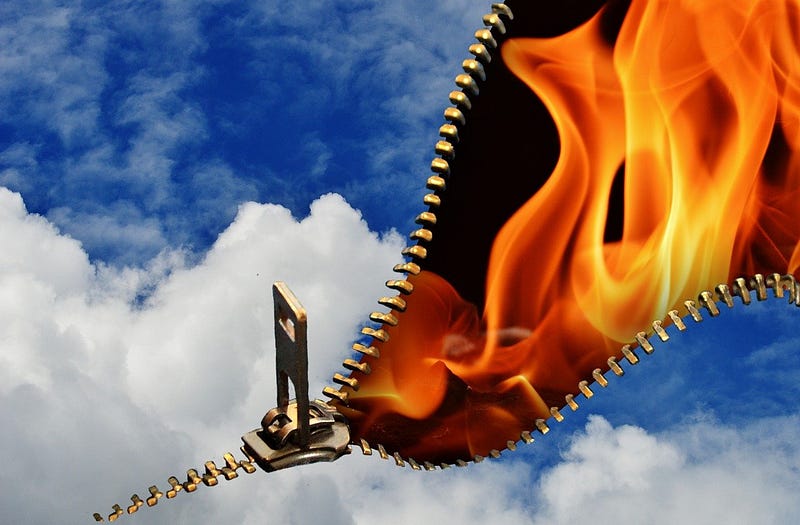
Just as there are consequences for our actions in the physical world, there are also consequences in the spiritual realm. For me, this means that there is a kind of hell, spiritual prison, or purgatory, whatever you choose to call it, where we must face the consequences of our actions and work toward redemption.
We get away with nothing.
I’ve also come to believe in the idea of “hell loops,” where we may continue to face the same challenges and obstacles until we learn the lessons.
The Truth
Finding the truth is a process that requires critical thinking, an open mind, and a willingness to engage with different perspectives. It’s a process of inquiry and investigation, gathering information and evidence from a variety of sources and perspectives. This requires a degree of humility to admit that we know nothing at all.
Another important aspect of finding the truth is to be willing to drop some of your fears and consider new information and perspectives, even if they challenge your existing beliefs and assumptions.
And also understanding that the only way to know for sure what happens in the afterlife is if you’re dead!
Dante’s Inferno describes the punishment for sin. The religions and mythologies believe sin and punishment go hand in hand. And the cultures believe death isn’t the end.
The Afterlife
I understand how uncomfortable it is living, not knowing what comes next, but we do know that death is not the end. While we may not know for sure what comes after death, that is how it was made to be.
We are not supposed to know what comes next. For as long as we have breath in our nostrils, we are not supposed to know what happens after death.
Life is a test and so we are not given all the answers. But we are expected to continue to learn.
What we can do as we wait to find out what comes after death is to cultivate patience for ourselves as we navigate the unknown and with others, as we all try to make sense of life. And most importantly, we must live our lives with this quote in mind:
Do for this life as if you live forever and do for the afterlife as if you die tomorrow — Ali Ibn.


