
Benjamin Franklin: 5 Things Smart People Understand About Life That Un-Smart People Don’t
“Life’s tragedy is that we get old too soon and wise too late”- Franklin.
Picture this:
You’re a small-town boy whose parents could only afford two years of your formal education. All your friends attend school and enjoy new school supplies (water bottles, lunch boxes) every season while your family struggles to make ends meet.
It hurts!
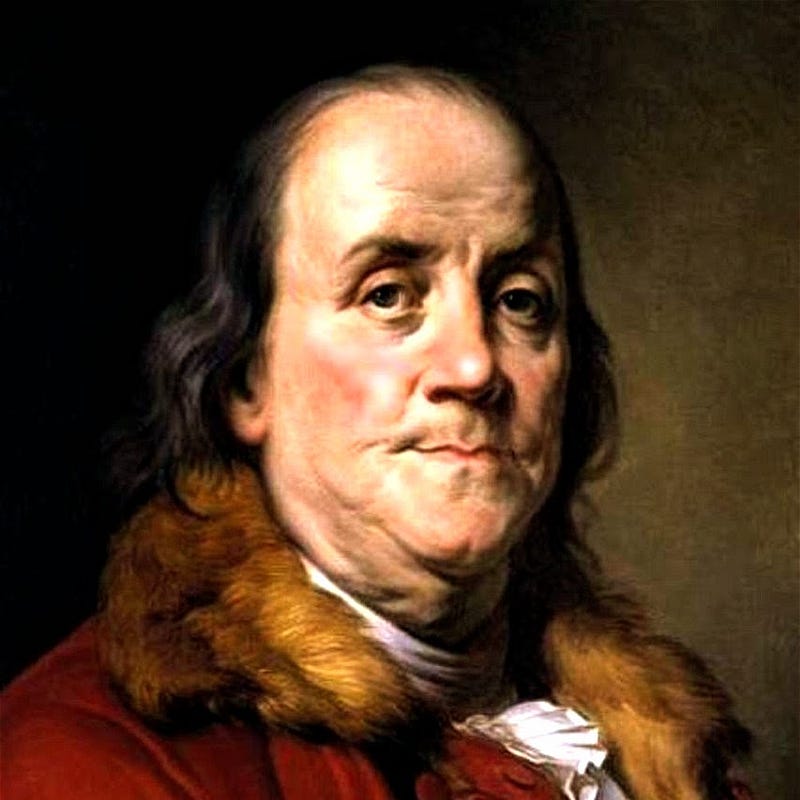
A fire burns into your heart, not because of jealousy, but because life is unfair towards you. This is the story of Benjamin Franklin- a small-town boy from Boston. Franklin was the fifteenth of his seventeenth siblings, yet he did what we can’t do now in the era of mobile phones.
G. Michael Hopf, the author of the novel Post Apocalyptic, says:
“Hard times create strong men, strong men create good times, good times create weak men, and weak men create hard times.”
Life is an endless loop — a circle. Therefore, it’s important to understand life before it’s too late.
Below are five things smart people understand about life that unsmart people don’t.
1. The best teachers are right beside you
As a young lad, Benjamin Franklin had school friends who were quite unfit for him.
As he grew up, Franklin started getting noticed for his ability to connect with people from all walks of life. His noble circle included:
- George Washington
- John Adams
- Thomas Jefferson
- James Bowdoin
Joseph Priestley and David Rittenhouse were scientists involved in politics and science, which helped them find mutual ground to connect. As per Benjamin Franklin, you are a product of your friends. Franklin also said:
“Be slow in choosing a friend, slower in changing.”
When you find good friends, make an effort to stick with them. When you find your “one,” don’t let them go, for those are your true friends.
2. Blunders can cause harm
You can make mistakes as a writer, reader, or teacher.
In politics, making mistakes is deadly, as many lives depend on you. Franklin was a political leader and wouldn’t think about making the wrong moves.
At one point, Franklin said:
“Better slip with foot than tongue”
Slipping, like on a banana peel on the floor, can result in pain in your back or, in more severe cases, your knees. But when your tongue slips, it’s recorded and can unknowingly impact many lives.
Being a leader is like being in charge of children you never made. However, any leader knows that critical thinking separates them from sentimental decision-makers.
So, think a hundred times before making a decision — not a hundred times after you make a decision.
3. Teach others without putting yourself in harm’s way
As Buddha believed, you might want to throw hot coal at other people, but where will it leave your hand?
Injured, bleeding, and in pain? As Benjamin Franklin said:
“Don’t throw stones at your neighbors if your windows are glass.”
Well, a lesson isn’t a lesson if it hurts both parties. Always go with ideas that result in minimal loss or damage, whether it’s in terms of resources, finances, or effort.
Life is tough, and be mindful of it. First, you have to save yourself against the odds in the game, and second, you can think about moving to an advanced level of playing strategies.
The first priority is always survival.
Hence, analyze your current circumstances — can you afford to throw rocks when your windows are made of glass?
4. Mastering the art of quick decision making
My father had a different measuring scale. He’d say
- If it’s a “yes,” it’s a yes
- If it’s a “no,” it’s a no
- If it’s “maybe,” it’s a no
- If it’s, “I’ll think about it,” it’s a no
Anything other than a definite “yes” is a no. If you’re in doubt and still figuring out how to decide, refrain from making a decision. As Franklin said:
“When in doubt, don’t.”
During the Constitutional Convention in 1787, delegates debated whether to ratify the newly drafted U.S. Constitution. Franklin was torn between the two decisions to see a strong federal government and reduce the abuse of power. At the time, Franklin stayed silent and paused to decide on the outcome.
For him, not making a decision was better than making impulsive decisions.
5. Plan for the long haul
Well, the days of writing biographies to commemorate one’s success are long gone.
Google quickly indexes everything we do and write, making it visible when we search for our names. As for my name, you’d see countless images of my articles. That wasn’t the case for people living before Google was first created in 1998.
In a world where everything is recorded and accessible, the quality of our actions and words is permanently etched into the digital landscape. This is a reminder that what we will do now will be documented and reflected upon in the future.
Whatever you do, think long-term. As Benjamin Franklin believed:
“Either write something worth reading or do something worth writing.”
Always think about the worthy aspect of doing something. Everything we do speaks against or about us. You may not realize the power of the web right now but remember what you do, and you must have a vital purpose behind it.
Always think about “Is it worth it?” If not, there’s no point in wasting time.
Final thoughts:
If you think you know a unique skill — monetize it.
Every five years, our world changes. There was no whim of AI five years back and hence no internet 20 years back. If you have unique talents, create a meaningful difference with them.
As Franklin said:
“Hide not your talents. They for use were made. What’s a sundial in the shade?”
Your skill might be as bad as a lightsaber to fight dinosaurs, but if you believe in it, you can convert a lightsaber into a sword.
Believe.
Join 1,260+ writers and get your next writing inspiration right now.
Or join Medium with my referral link.


