
Before Canada’s Emergencies Act, There was the War Measures Act (and the police)
Was the Emergencies Act invoked to quell freedom convoy occupations or to discipline law enforcement?
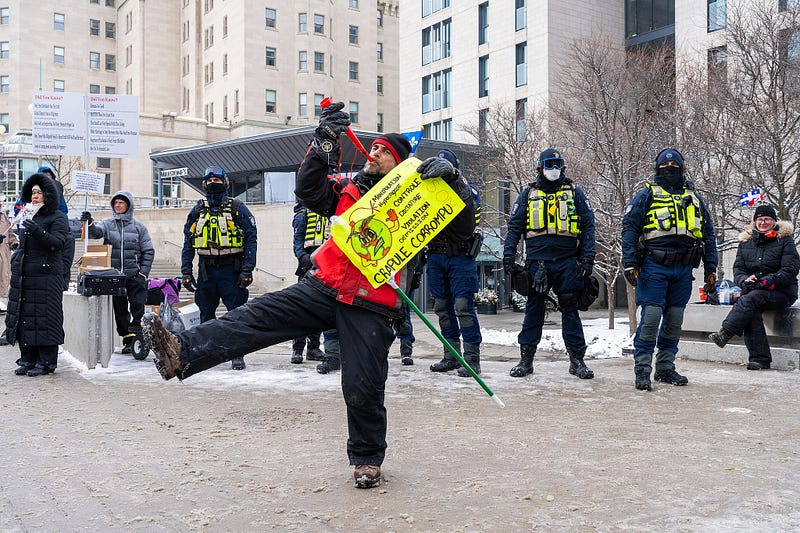
In response to the freedom convoy protests, blockades, and occupations, Canadian Prime Minister Justin Trudeau has invoked Canada’s never before used Emergencies Act. In a nutshell, this disaster and emergency legislation is meant to give the Government of Canada extraordinary powers to act quickly in urgent and critical situations of a temporary nature that
(a) seriously endangers the lives, health or safety of Canadians and is of such proportions or nature as to exceed the capacity or authority of a province to deal with it, or
(b) seriously threatens the ability of the Government of Canada to preserve the sovereignty, security and territorial integrity of Canada
and that cannot be effectively dealt with under any other law of Canada.
Since then, Trudeau has repeated that invoking the Emergencies Act has been a necessary move against the freedom convoy’s illegal blockades and in the interest of public order and public safety. Yet, critics have been quick to highlight a wide range of concerns associated with these measures, including important questions about state blurring of the lines between criminals and protesters, the types of precedent that these practices set, and the types of powers that such legislation makes available to the state.
These are worries that are very much ingrained in recent Canadian history, which saw, on three separate occasions, the implementation of the Emergencies Act’s predecessor, the War Measures Act, and the ways in which such measures can be mobilized by the state against certain civil liberties and racialized and marginalized groups, often overlooking the social origin of these crises.
War Measures Act
WWI
The War Measures Act was quickly passed in 1914 and in force until 10 January 1920. The Act authorized governments to take a wide range of measures to protect and defend the nation and its democratic institutions, as well as identify and quell any signs of invasion, sabotage, treason, espionage, or insurrection. Such measures included the suspension of typical civil liberties across Canada, the censoring and suppression of communications, and increased surveillance, arrests, detentions, and deportations — many of which were aimed specifically at those believed to be ‘enemy aliens’ (including some Canadian-born individuals) which had to carry identity papers and report regularly to the police. Interned enemy aliens, on the other hand, had their property confiscated and were forced to work on various projects.
The swift passing of the War Measures Act was deemed necessary not only because of a series of threats associated with wartime but also because police forces within Canada had themselves been significantly depleted as officers volunteered to fight in the war. A weakened police force meant rising concerns about the maintenance of social order, public safety, and the stability of all levels of government. What was left of the police needed increased powers to minimize these risks while cracking down on groups inspired by the Bolshevik Revolution in Russia and other left-leaning organizations.
WWII
The War Measures Act was once again invoked in 1939 — one week before Canada declared war — and would remain in effect until 1945. Once again, police forces and resources were depleted by the war effort, urging the Canadian government to enhance policing and other government powers to maintain social order, protect private property, domestic industry, quell acts of insurrection and track down individuals violating conscription laws. As such, many of the tactics that had been used during the First World War were once again enacted to protect and govern the nation’s internal affairs during wartime.
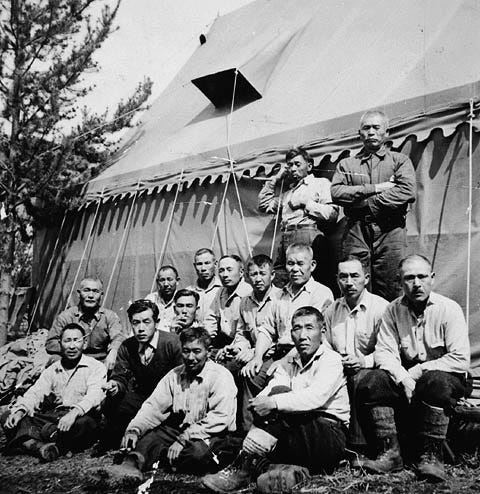
As expected, the enactment of the War Measures Act came to have especially harmful effects on groups considered ‘enemy aliens, with Japanese- Canadians, often cited as key targets of these measures. Especially after the Japanese attack on Pearl Harbor, the Act was used to confiscate Japanese Canadians’ property, remove them from their homes, and either deport them or send them to internment camps under the supervision of Canada’s federal police, the RCMP. It is estimated that nearly 22,000 Japanese Canadians living in British Columbia were forced to leave their homes as families were split up, detained, deported, or moved to Alberta or Manitoba to work on sugar-beet farms.
October Crisis
The War Measures Act was enacted a third (and last) time in 1970 by Prime Minister Pierre Trudeau in response to the French-Canadian nationalism of Front du Libération du Québec (FLQ) which, throughout the ’60s, had engaged in various forms of terrorist activity, leading up to the kidnapping in 1970 of British diplomat James Cross and the kidnapping and murder of Quebec’s Minister of Labour, Pierre Laporte. What was different about this use of the War Measures Act was that it was not used during a period of wartime, and its goal was to help contain a domestic crisis.
Similar to the times in which the Act was previously invoked, this was a period in which police forces were struggling to maintain a semblance of social order. Although the ’60s were not as politically explosive in Canada as they were in the US, this was still a volatile period in Canadian history, with the FLQ being one of the many challenges to the established order faced by Canadian authorities. The Act, as a response to these terrorist attacks, criminalized membership in the FLQ, suspended various civil liberties in Quebec, and — once again — gave police substantial powers to arrest and detain people (with or without evidence of involvement with the FLQ), re-establish social order, and track down potential threats.
Though the Act was only in effect for the months of October and November and was sworn to be modified by Trudeau, it was not modified until 1988, when it was replaced by the Emergencies Act.
Emergencies Act
The Emergencies Act of 1988 introduced some limitations on the Canadian government’s use of emergency powers in times of crisis, such as requiring emergency actions to be consistent with the provisions of the Canadian Charter of Rights and Freedoms. The purpose of this legislation was also slightly different from that of the War Measures Act in that it was expected to be used in both peacetime and wartimes to grant authorities additional extraordinary powers to deal with extreme circumstances that posed a real threat to the nation, such as natural disasters and public order and civil disorder emergencies. As one commentator puts it, under the Emergencies Act, additional layers of security become available for specific locations and critical infrastructure, “people can be compelled to render essential services with compensation and the RCMP — Canada’s national police force — can be used to enforce municipal laws.”
Why was the Act invoked this time?
The history of the War Measures Act and its use by Canadian authorities during WWI, WWII, and the October Crisis reveal a major difference between these and Prime Minister Justin Trudeau’s declaration of a state of emergency under the Emergencies Act: the role of the police.
Historically, we have seen such emergency measures being used to aid police in their efforts to quell growing acts of rebellion, treason, terrorism, and sabotage within the nation. The War Measures Act seems to have been invoked during times in which police forces were having difficulties maintaining public welfare and order (either because a significant portion of police forces were fighting a war overseas or because concurring waves of civil disorder and terrorist attacks were proving extremely difficult to manage all at once). But the freedom convoy’s situation is different.
Freedom convoy demonstrations and blockades have not amounted to a type of crisis akin to those of WWI, WWII, and the October Crisis. Protests, blockades, and occupations have not been large enough to effectively overwhelm police and other authorities across the nation either. Canada is not facing a shortage of law enforcement personnel and resources the way it did in the past when the War Measures Act was invoked. So why invoke the Emergencies Act now? How does the freedom convoy pose a national threat so great and real that the Canadian government felt the need to invoke emergency powers typically reserved for natural disasters, wartime, and widespread civil unrest? Why do Canadian authorities need such extraordinary powers to act quickly against what Trudeau called a “small fringe minority”?
A common answer to these questions has been that Trudeau is trying to send the message that the convoy’s views and activities are unacceptable and will be treated accordingly. Yet, such accounts of the Act’s enactment do not quite answer questions about the necessity of emergency powers in this specific situation. My take on this is that this is because the Emergencies Act was not meant to give authorities additional powers to crack down on freedom convoy supporters in a genuine time of crisis but to force law enforcement to do something about them in the first place.
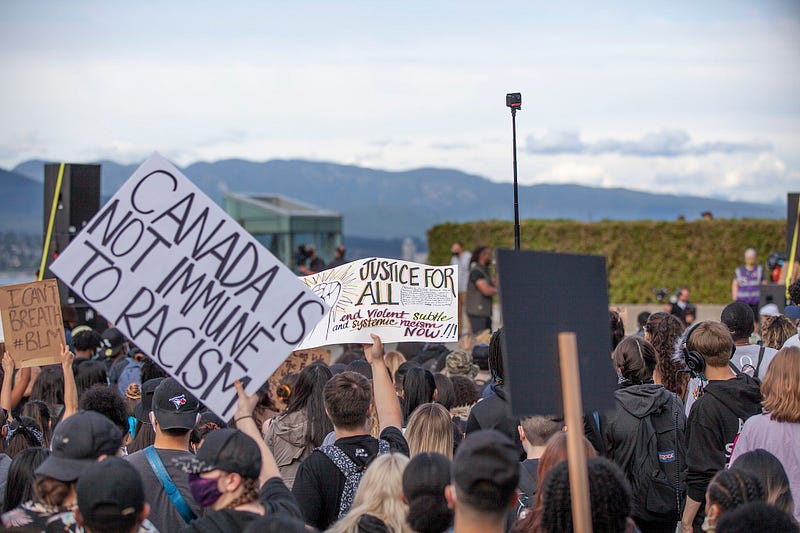
Since the beginning of the Ottawa occupation, commentators have been quick to point out stark differences in the way law enforcement deals with different types of social movements, with Black and Indigenous protesters being especially targeted by violent and immediate forms of police action. Meanwhile, police actions against convoy supporters have been severely lacking, with former chief of police, Peter Sloly, expressing openly his reluctance to make a move against convoy supporters on the grounds that there “might not be a policing solution” to the protests. We have also seen the videos of police officers greeting and hugging truckers blocking the US-Canada border. Moreover, reports are now shedding a light on donations to the freedom convoy made by police officers themselves.
In light of this, it is not unreasonable to question the extent to which the Emergencies Act was invoked to quell convoy protests. Historically speaking, such measures have been enacted in times of crisis in which authorities and law enforcement personnel found themselves overwhelmed and too under-resourced to effectively maintain social order. But this has not been the case with the freedom convoy. What we saw here (until the Act was invoked) was a reluctance of law enforcement to move against protesters, blockades, and occupations, which makes me wonder: was the Emergencies Act invoked to help law enforcement contain these white nationalist and authoritarian right-wing populist demonstrations or to force law enforcement to treat them like they do movements led by racialized and marginalized populations?
Questions about systemic racism are unavoidable in this situation. If the police is, in fact, the embodiment of the violence needed to maintain the established order, what does their reluctance to act against these groups tell us about racism in Canada? The answer: nothing we didn’t already know.


