avatarNikolaos Skordilis

Free AI web copilot to create summaries, insights and extended knowledge, download it at here

2744

Abstract

ly the coins themselves were used as commodities </b>based on the value of their metals. This was done in areas lacking such metals, where it was cheaper to melt the coins to retrieve their metals than seek raw metal from elsewhere.</p><p id="bab3">Bankers also often sold coins in cash poor areas in exchange for <b>land and other valuable property</b>, which they usually resold for profit. Sound familiar?</p><figure id="6b79"><img src="https://cdn-images-1.readmedium.com/v2/resize:fit:800/1*3H_r4yhdNbCylHA-GeN9hQ.jpeg"><figcaption>Athenian coin with the goddess Athena, 510–490 BC | <a href="http://www.cngcoins.com/">Classical Numismatic Group, CNG coins</a>, <a href="http://creativecommons.org/licenses/by-sa/3.0/">CC BY-SA 3.0</a></figcaption></figure><p id="5fc5">To sum up these were the main bank activities in ancient Greece:</p><p id="166f" type="7">testing and exchange of coins</p><p id="491a" type="7">deposits</p><p id="595f" type="7">loans</p><p id="890f" type="7">money orders to third parties</p><p id="925e">Soon bankers took on even more activities though. Among others those were:</p><p id="48fc" type="7">management of various assets, including estates</p><p id="1088" type="7">loan consent agreements and consignments</p><p id="cdb9" type="7">letters of credit, meant as a preliminary form of inter-banking credit between clients and banks in different city-states</p><p id="7787"><b>Reportedly Cicero used letters of credit to cover his son’s expenses when the latter was in Athens.</b></p><p id="7655">The fee of the aforementioned ‘αργυραμοιβοί’ was 5% to 6% for coins made of the same metal, but usually higher for coins made of different metals.</p><p id="56b3"><b>The so called ‘sacred banks’ did not charge a fee</b> for securing valuables and for consignments, but they did not pay any interest on short-term deposits either. The interest on long-term deposits in Athens during 4th century BC was ~10%.</p><p id="1cfb"><b>Some temples and other holy places also served as banks,</b> and in fact they competed with private banks. But the interest of private banks was far higher than those of sacred banks, for both deposits and loans.</p><p id="1f0a"><b>Interests for so called ‘sail loans’ reached up to 100%</b> since those were the highest risk loans. Ships were often lost along with all their cargo, and the ship-owner would go bankrupt. This is similar to modern era high risk bonds.</p><p id="8733">Gradually private banks became wealthy enough to be able to cover the loan requirements of entire city-states. But <b>ancient Greek city-states during peace time rarely required loans.</b> They spent on infrastructure and other internal needs, and if any money was left they saved it for rainy days.</p>

Options

<p id="217c" type="7">This meant far less business for banks though.</p><p id="8f0c"><b>The revenue and profits of banks slumped during peace times </b>and soared during war times, so they had a strong incentive to use their increasing influence to start up wars and local conflicts.</p><p id="b758"><b>Furthermore they could influence the outcome of wars </b>depending on what city-state they would fund and at what interest. Exactly what the <b>Iron Bank of Braavos</b> did in <b>Game of Thrones</b>. Eventually bankers managed via their control of money to influence the financial, social and political affairs of ancient Greece.</p><p id="2b14"><b>This influence is clear in ancient Greek art. </b>Many artworks depict Greeks who went bankrupt and destitute due to their debts to bankers. Ancient Greece flourished in real trade, shipping, culture and the arts, and was a major financial and military power for centuries.</p><p id="7f11"><b>However Greece never played a major role in the business of money</b>, presumably because it was contrary to the ideas of most Greeks about interest-bearing loans. As a result that gap was filled by often shady and amoral bankers.</p><p id="e406">sources: <a href="https://www.jstor.org/stable/639677">The Private Banks in Fourth-Century B. C. Athens: A Reappraisal | JSTOR</a> <a href="https://kosmossociety.chs.harvard.edu/debt-in-ancient-athens-and-solons-reforms/">Debt in Ancient Athens and Solon’s Reforms | Harvard</a> <a href="https://www.jstor.org/stable/23601882">The origins of money in Ancient Greece: the political economy of coinage and exchange | JSTOR</a> <a href="https://plato.stanford.edu/entries/plato-utopia/">Plato on Utopia | Stanford Encyclopedia of Philosophy</a></p><p id="2861">It took <a href="undefined">Nikolaos Skordilis</a> a long time to write this article. I hope you like it. He covered economics, modern ones, in this article too:</p><div id="19b8" class="link-block"> <a href="https://readmedium.com/inflation-and-stagflation-101-52df42fa8b7f"> <div> <div> <h2>Inflation and Stagflation 101</h2> <div><h3>And why should you care</h3></div> <div><p>medium.com</p></div> </div> <div> <div style="background-image: url(https://miro.readmedium.com/v2/resize:fit:320/1*5TEqbtY8ol9qGszKhpyigQ.jpeg)"></div> </div> </div> </a> </div><p id="4bfa"><a href="https://skordilis.medium.com/subscribe">Get my stories in your inbox 📬</a></p><figure id="69b6"><img src="https://cdn-images-1.readmedium.com/v2/resize:fit:800/1*1JBR-Kk0N1TM4nenrKCyPg.jpeg"><figcaption></figcaption></figure></article></body>

GEEKY | HISTORY | BANKING | FINANCE | ANCIENT GREECE

Banks and Bankers in Ancient Greece

Let’s examine how banks worked in ancient Greece
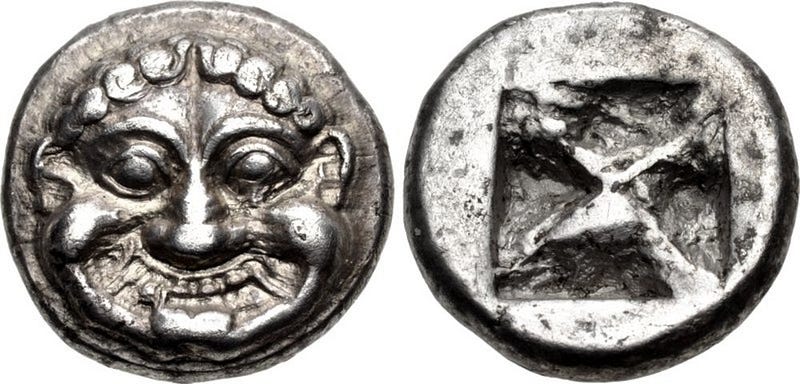
The earliest coinage of Athens, 545–525 BC | Classical Numismatic Group, CNG Coins, CC BY-SA 3.0

Bankers in 5th century BC Greece were regarded as worse than present day loan sharks. Banks were associated with loans, and per sayings of the era “where there is a loan there is no friend” since “a friend does not lend, they give.”

Interests were considered a hollow gratitude of the borrower to the lender. Plato in Laws explicitly asks for interest-bearing loans to be outlawed.

The ancient Greek culture was not wealth-centered but human-centered. The Greek philosophers treated money as a means of acquiring goods, nothing more.

Since the Greek philosophy focused on humans and loan sharking often led to humiliation it made sense to be considered unethical.

The practice of charging interest was renounced by other Greek and foreign thinkers, such as Aristotle, Plutarch, Cicero, Muhammad etc

When the Roman senator Cato was asked “What do you think about interest-bearing loans?” he replied “What do you think about murder?”

Ancient Greece consisted of city-states. Many of them minted their own coins, which varied in real, nominal and commercial value. The circulation of so many coins of uneven value frustrated trade. To smooth things out an early form of forex market emerged.

At its center was a new profession: that of the ‘αργυραμοιβός’ (literally ‘paid in silver’). Their job was to exchange coins for a fee. They needed to know the value and weight of all ‘foreign’ coins compared to the local coin. They were trained to recognize fake and worn out coins.

The Greeks however were not interested in doing forex trading, as is done today. So forex activities were limited to money handlers. In other words money itself did not become a tradeable commodity.

With the exception of those ‘αργυραμοιβούς’ money remained a means to an end. Private bankers though expanded into this early forex market too, and added it into their activities.

Occasionally the coins themselves were used as commodities based on the value of their metals. This was done in areas lacking such metals, where it was cheaper to melt the coins to retrieve their metals than seek raw metal from elsewhere.

Bankers also often sold coins in cash poor areas in exchange for land and other valuable property, which they usually resold for profit. Sound familiar?
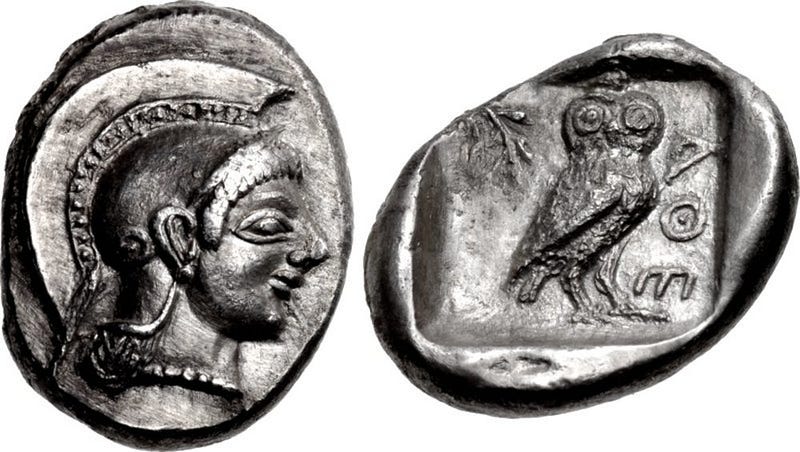
Athenian coin with the goddess Athena, 510–490 BC | Classical Numismatic Group, CNG coins, CC BY-SA 3.0

To sum up these were the main bank activities in ancient Greece:

testing and exchange of coins

deposits

loans

money orders to third parties

Soon bankers took on even more activities though. Among others those were:

management of various assets, including estates

loan consent agreements and consignments

letters of credit, meant as a preliminary form of inter-banking credit between clients and banks in different city-states

Reportedly Cicero used letters of credit to cover his son’s expenses when the latter was in Athens.

The fee of the aforementioned ‘αργυραμοιβοί’ was 5% to 6% for coins made of the same metal, but usually higher for coins made of different metals.

The so called ‘sacred banks’ did not charge a fee for securing valuables and for consignments, but they did not pay any interest on short-term deposits either. The interest on long-term deposits in Athens during 4th century BC was ~10%.

Some temples and other holy places also served as banks, and in fact they competed with private banks. But the interest of private banks was far higher than those of sacred banks, for both deposits and loans.

Interests for so called ‘sail loans’ reached up to 100% since those were the highest risk loans. Ships were often lost along with all their cargo, and the ship-owner would go bankrupt. This is similar to modern era high risk bonds.

Gradually private banks became wealthy enough to be able to cover the loan requirements of entire city-states. But ancient Greek city-states during peace time rarely required loans. They spent on infrastructure and other internal needs, and if any money was left they saved it for rainy days.

This meant far less business for banks though.

The revenue and profits of banks slumped during peace times and soared during war times, so they had a strong incentive to use their increasing influence to start up wars and local conflicts.

Furthermore they could influence the outcome of wars depending on what city-state they would fund and at what interest. Exactly what the Iron Bank of Braavos did in Game of Thrones. Eventually bankers managed via their control of money to influence the financial, social and political affairs of ancient Greece.

This influence is clear in ancient Greek art. Many artworks depict Greeks who went bankrupt and destitute due to their debts to bankers. Ancient Greece flourished in real trade, shipping, culture and the arts, and was a major financial and military power for centuries.

However Greece never played a major role in the business of money, presumably because it was contrary to the ideas of most Greeks about interest-bearing loans. As a result that gap was filled by often shady and amoral bankers.

sources: The Private Banks in Fourth-Century B. C. Athens: A Reappraisal | JSTOR Debt in Ancient Athens and Solon’s Reforms | Harvard The origins of money in Ancient Greece: the political economy of coinage and exchange | JSTOR Plato on Utopia | Stanford Encyclopedia of Philosophy

It took Nikolaos Skordilis a long time to write this article. I hope you like it. He covered economics, modern ones, in this article too:

Get my stories in your inbox 📬

History
Economics
Banking
Science
Geeky
Recommended from ReadMedium