
LITERATURE
Ballads of Britannica: Medieval Masculinity in Tennyson’s Poetry
What did Medieval Britain consider an “ideal man”?
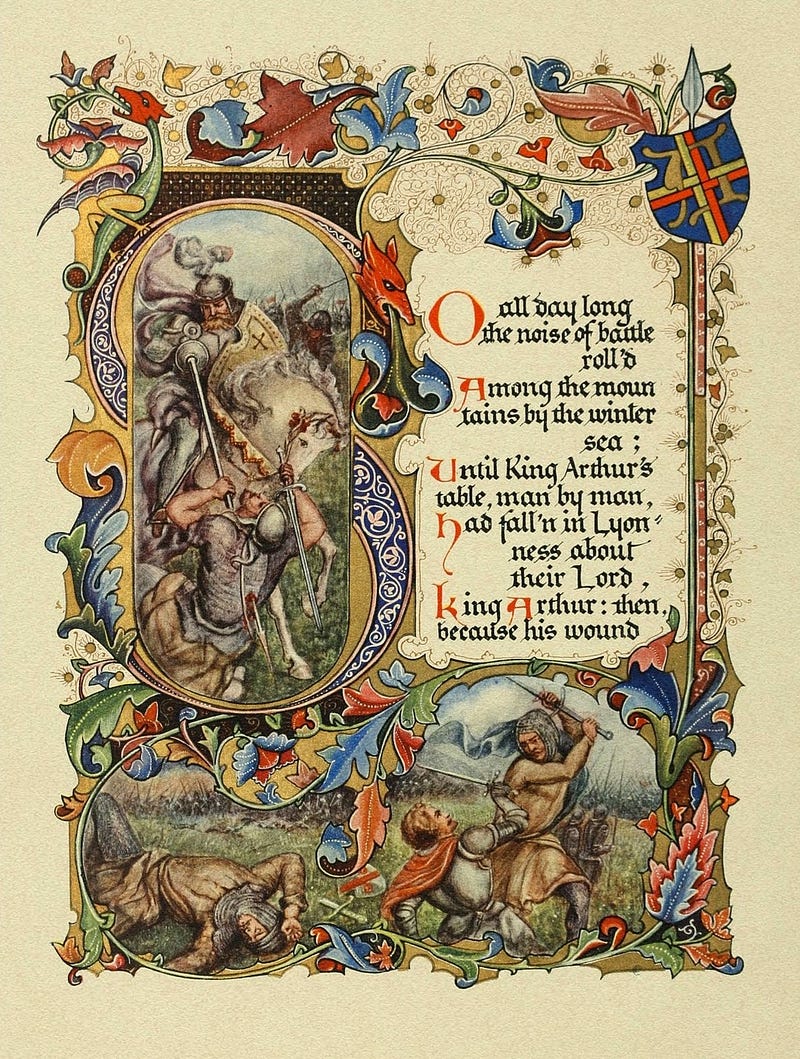
“There’s no glory like those who save their country.” — Alfred Tennyson
Alfred Tennyson’s ‘The Coming of Arthur’ is an Epic poem from his collection, Idylls of the King (1859). It retells the legend of King Arthur, his knights, his love for Guinevere, and the rise and fall of his kingdom.
As a poem written during the Victorian era, ‘The Coming of Arthur’ explores Medieval male identities that often mirror many Victorian male identities. Be it a father, a son, a knight, or a king, Tennyson focuses on dominant — and often stereotypical — images of masculinity in both Medieval and Victorian Britain. For instance, the men presented in the poem all play stereotypical gender roles such as a “warrior” (L257), a “king” (L249), or a “knight” (L262).
Elliot Gilbert remarks on how Arthur is seen as the ultimate “father figure” of Britain; he symbolizes Victorian Britain’s need for the safety and security that could only be provided by a male authority figure. In this way, Tennyson sticks to Victorian ideals of what men should aspire to be like.
In his own analysis, Donald Hair notes the “univocal” voice of Arthur which “holds” the knights together. Arthur’s presence embodies the authority and power of a king which essentially unites everyone at equal value at the Round Table.
For one, his sister, Bellicent, informs the reader that “beyond my tongue to tell thee — I beheld” (L268). The power of his “large, divine, and comfortable” words are felt by all. (L267). Occupying the highest seat in the hierarchy — the king — he becomes an example for all those beneath him to follow.
.jpg)
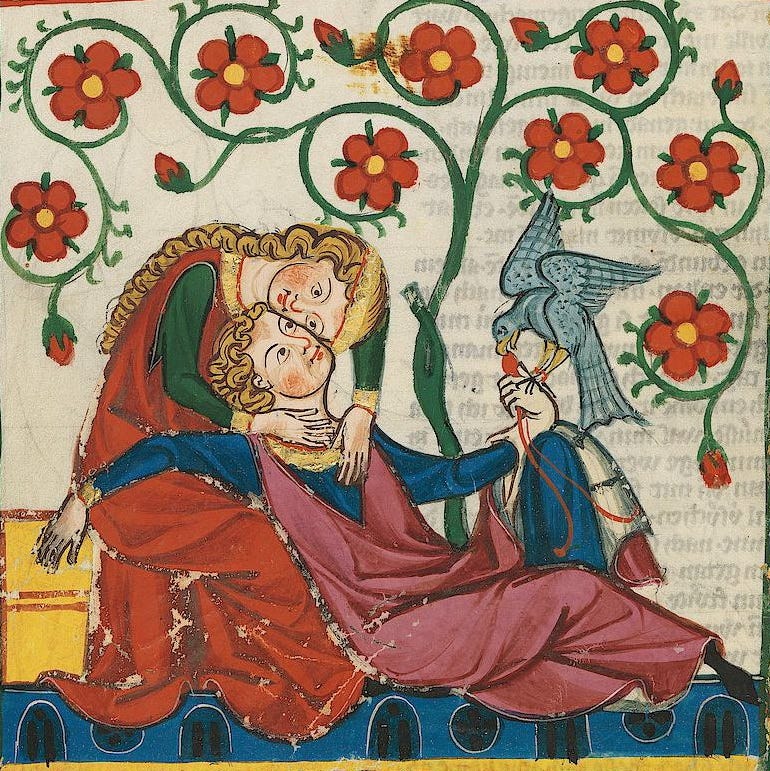
The identities of the men in the poem are also shaped by their female companions.
Chivalry defines a man, but one cannot be considered chivalrous without a woman to be chivalrous towards. Where the knights are “warriors” (L257) and associated with strength and power, the queens are “fair” with “sweet faces” (L278). Such images reinforce what men ought to be.
Female praise, loyalty, and admiration further play a significant role in defining what a man ought to be. Towards the end of the poem, the queens stand in “silence”, “gazing” upon Arthur as he concludes his famous speech (L276). Their loyalty to Arthur and the court illustrates how they are ultimately there to serve him.
Some critics claim that Tennyson merely reinforces gender ideologies within his poetry. However, other critics argue that the poem only serves to depict — rather than reinforce — the problems of both Medieval and Victorian Britain.
What do you think? Is this a case of Art imitating life, or life imitating Art?
Works Cited
Gilbert, Elliot L., ‘The Female King: Tennyson’s Arthurian Apocalypse’, PMLA 98, 5 (1983), 863–78.
Hair, Donald S., Tennyson’s Language, (University of Toronto Press, 1991).
Tennyson, Alfred, Idylls of the King, (United Kingdom, 1894).
If you enjoy my work, I’d love a tip of appreciation from you! Thank you ♡
The Fine Writer Of This Piece:
Marches Of Gold; Write For Our Publication:
Another Piece by our Writer:
#Marchesofgold — #TheFineRabble