
Backspin: Lil’ Kim — Hard Core (1996)
Lil’ Kim wielded sex like a weapon and fired shots heard for generations to come. (86/100)
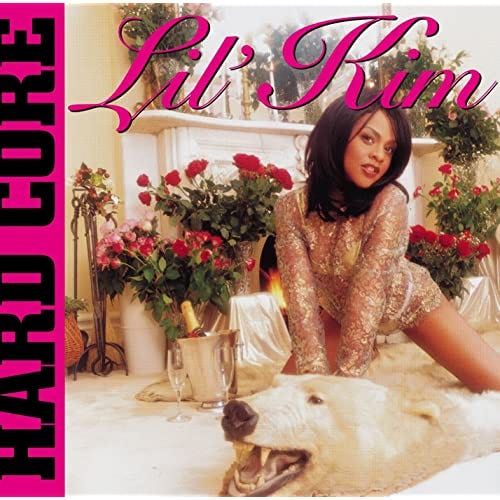
If sex is a weapon, no rapper had a deeper arsenal than Lil’ Kim. Biggie Smalls’ petite protégé wielded her feminine wiles the way her mean mugging male counterparts flexed Glocks and TECs — as a means of survival, a source of empowerment, and a conduit to some spine-tingling thrills along the way. Released in November, 1996 (one week before Foxy Brown’s similarly situated Ill Na Na), Kim’s solo debut, Hard Core landed like the cheat code female mic-rockers had been searching for to maneuver the coarsened world of late-Renaissance era hip-hop.
Lest there was any question what type of “hard core” the title is referencing, the intro skit spells it out. A nervously titillated young man enters an adult theater, requesting “one for Lil’ Kim, Hard Core.”
“That’ll be $10,” the disinterested female cashier responds. We are introduced to Kim via her ecstatic moaning, which is quickly accompanied by the sound of the overeager customer unzipping his fly and loudly “indulging” himself to her performance. It’s a testament to the anticipation Kim generated with her eye-opening appearances on Junior M.A.F.I.A.’s hits from the prior year that hyper masculine listeners sat through a full minute of another man’s self-pleasure to get to the feature presentation.
But the skit, while uncomfortable, establishes the album’s themes and Kim’s raison d’être clearly and concisely. The male listener, having eagerly pressed play, is the man in the theater. Simply by flashing a little skin, not only has she gotten our money, but she has put us in a position of complete supplication, all by embracing something that brings her pleasure. The man in the theater doesn’t even get to reach his own climax before the stabbing horns of “Big Momma Thang” shove him to the side and Kim proceeds to get hers:
I used to be scared of the d*** Now I throw lips to the s*** Handle it like a real b**** Heather Hunter, Janet Jacme Take it in the butt, yah, yazz what? I got land in Switzerland, even got sand in the Marylands Bahamas in the spring, baby, it’s a Big Momma thing Can’t tell by the diamonds in my rings That’s how many times I wanna c**, twenty-one And another one, and another one, and another one 24-karats, n**** That’s when I’m f***in’ with the average n**** Work the shaft, brothers be battin’ me, and oh Don’tcha like the way I roll And play with my bushy Tell me what’s on your mind when your tongue’s in the p**** Is it marriage? (Damn, this b**** is bad) Baby carriage? (Damn, I love that ass) S*** no, on a dime s*** is mine Got to keep ’em c**in’ all the time
Are the rhymes X-rated? Of course. Is Kim being exploited? Clearly not. Her rhymes lay bare that she knows the game and is playing it by her rules. No longer scared of the “weapons” wielded by the alpha males who ran both the streets and the music industry, she now unabashedly uses them for her own pleasure and profit. True, Jay-Z’s guest verse, in which he seemingly speaks directly to Biggie about Kim as a possession to be claimed, somewhat undermines the empowerment ethos. But Kim delivers her raw rhymes with such confidence that even the future Hova’s cocksure charisma can’t flip the table she has set for the rest of the album.
The lead single, “No Time,” is a timeless banger still capable of making a dance floor erupt. While Kim was not signed to Sean “Puffy” Combs’ record label, it’s a quintessential Bad Boy anthem. With Puffy providing the hook and Hitmen producer Stevie J lacing the track with the label’s signature swagger, “No Time” bounced effortlessly at the intersection of the street, the club, and the radio. Kim’s rhymes coast in the same lane, celebrating the luxury life and the hustler’s lifestyle in equal measures. But it’s the non-single album tracks that truly solidified her femme fatale persona and “Queen Bee” status.
Biggie’s potent pen shines through on “Spend a Little Doe,” a cinematic story that Kim delivers with a modulated menace characteristic of her superstar ghostwriter himself. It’s a masterclass in narrative structure. The first verse thrusts us into the center of the action, with Kim, fresh out of prison, seducing and robbing a former lover who ghosted during her bid. The second fleshes out the backstory, shedding light on the betrayal. In the final verse, we get missing pieces of the puzzle and a closing bit of introspection in which Kim sums up the lesson learned: “it don’t pay to be nice, but it’s nice to pay.”
“Drugs” subverts the implications of its title, positioning Kim herself as the narcotic: dizzyingly addictive and able to bend even the strongest men to her intoxicating will. The Fabian Hamilton produced track compliments the seductively murderous rhymes with a brooding guitar sample over persistent drums that convey sex and violence in equal measures.
“Queen B****” is equally effective with a more heavy handed approach to asserting dominance. Over Carlos Broady and Nashiem Myrick’s anthemic beat Kim unleashes her hardest flow and strongest swagger. In perhaps the strongest flex of all, she even puts her mentor onto game:
If Peter Piper pecked ‘em, I betcha Biggie bust ‘em He probably tried to f*** ‘em, I told him not to trust ‘em
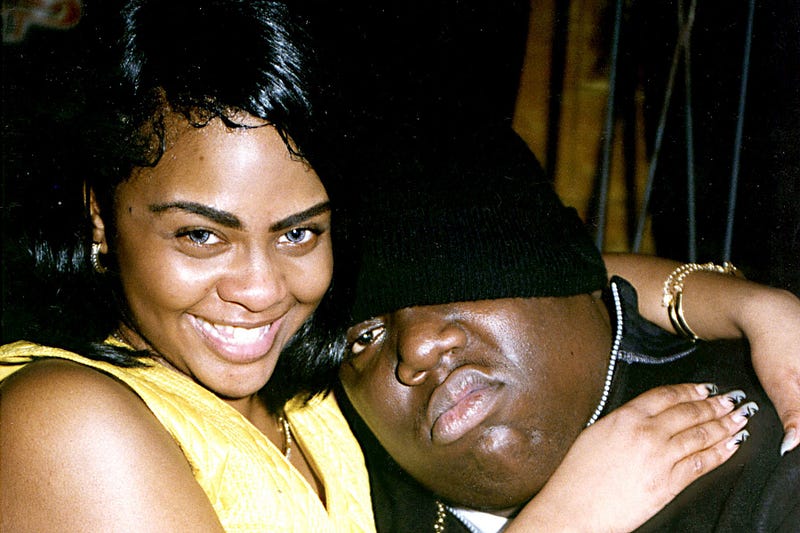
Even in the most powerful men, we are reminded, sex is a weakness. That’s what makes it a woman’s most powerful weapon if she wields it right. Kim sprays her sexuality like an AR-15 on “Dreams,” a raunchily rendered re-imagining of Biggie’s mixtape classic of the same name. Showing the world that women can give just as good as they get, the Queen B proceeds to objectify the male R&B stars of the day with the same roguish irreverence that made Big Poppa’s original such an irresistible guilty pleasure. While her boast that Babyface “can pay the rent and cook me five meals, lil’ mama got that whip appeal” has aged like the imported wine the chivalrous balladeer is likely serving up, references to Tevin Campbell and R. Kelly take on an unintentionally dark layer of humor given the turns their careers (and lives) eventually took.
Behind it’s infectiously X-rated hook, “We Don’t Need It” is a female empowerment anthem, with Kim demanding satisfaction in terms every bit as frank as her male Junior M.A.F.I.A. counterparts. “Not Tonight” builds on the theme, with Kim laying out exactly what she does and doesn’t want from a series of selfish lovers. The mellow minimalism of Jermaine Dupri’s ’80s R&B tinged track give Kim’s vocals room to breath. As a result, her delivery feels more relaxed, her inflections and deflections taking on a persona all their own rather than simply mimicking Biggie’s impeccable cadences as she does on many of the previous tracks.
In the process, it also highlights the double edged sword of the Notorious one’s omnipresence on the album. While the guiding hand of one of rap’s most masterful lyrical craftsmen gives Hard Core a polish and direction rare for a debut outing, it also undermines the album’s themes of female self-sufficiency.
By failing to vary his singular phrasing and rhyme structures, Biggie fails to fully assume the role of “ghost” writer. His presence is at the forefront of nearly every track, making it difficult to truly hear Kim. Too often, you’re acutely aware that you’re simply hearing Biggie’s rhymes delivered in a female voice. “M.A.F.I.A. Life,” for example, while one of the album’s most captivating tracks, is such a textbook Biggie offering that it’s hard not to imagine the rhymes said in his thick baritone, which inherently pulls you out of the song’s meticulously constructed narrative.
Similarly, the inclusion of “Crush On You” is equally distracting. While the remix,, which stands as a classic, highlights the easy vocal chemistry between Kim and Lil’ Cease, it’s easy to forget that the original version included here is inexplicably a Cease solo track. On an album so intent upon establishing an alpha female persona, it slows the momentum built by the first quarter of the record.
Still, Hard Core is a resounding success by any measure. It solidified the Queen Bee brand that sustained Lil’ Kim as an A-List artist long after Biggie’s passing. It also fundamentally expanded the realm of what a female rapper could be, its influence still felt today in the sex-positive boss bangers of Nicki Minaj, Cardi B, and Megan Thee Stallion. It not only forged sex into a weapon far more powerful than the artillery lyrically brandished by countless male MCs, it placed that weapon firmly in the hands of female rappers and listeners alike for generations to come. And for only $10, we all got a front row seat to the show.
By the Numbers
Production: 8.5 Lyrics (how the words are put together): 8.5 Delivery & Flow: 7.5 Content (Substance): 8 Cohesiveness: 9 Consistency: 9 Originality: 9 Listenability: 8.5 Impact/Influence: 10 Longevity: 8
Total — 86
Next
Previous
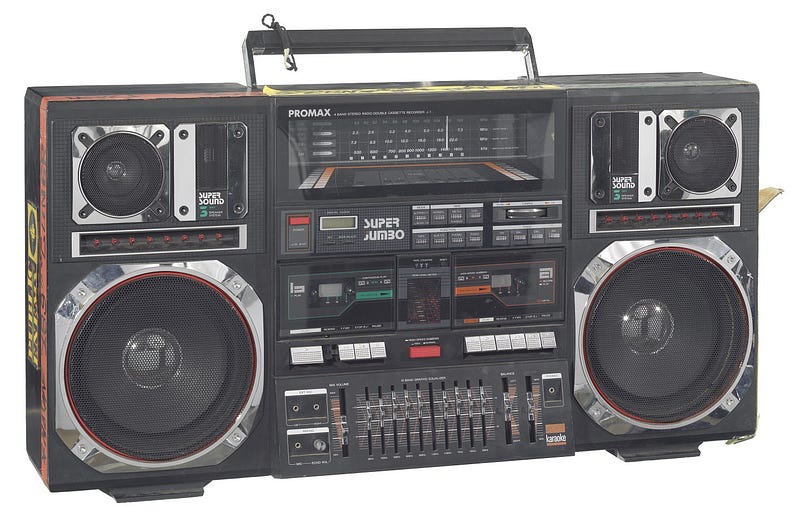
Backspin is a look back at the albums that shaped and defined hip-hop. It explores what made them resonate, the impact they had on the culture, and where they fit in today’s ever-expanding hip-hop canon.


