avatarKrasi Shapkarova

Free AI web copilot to create summaries, insights and extended knowledge, download it at here

2446

Abstract

the twisted red and white threads, I admire the variety of martenitsi available today.</p><p id="8a2f">It’s been years since I last was in Bulgaria on March 1st, so I’ve thoroughly been enjoying perusing the stalls along Glavnata in Plovdiv, taking note of how many more options for martenitsi there are.</p><p id="ebce">The vendors who committed to their displays brought smiles to my face.</p><figure id="7e26"><img src="https://cdn-images-1.readmedium.com/v2/resize:fit:800/1*FACvT50ucq5-9a-0RoaGfA.jpeg"><figcaption><a href="undefined">Krasi Shapkarova</a></figcaption></figure><p id="f4f2">The holiday dates back to the establishment of Bulgaria and though the legends as to how it got started are many, I grew up associating the holiday with the coming of spring and the bounty it brings.</p><p id="417a">I now know that a similar custom exists in other Balkan nations and even in Bulgaria, it is celebrated differently across regions. In the village where I grew up, people would wear the martenitsi until they saw the first stork — a harbinger of spring — returning from its migration south for the winter.</p><p id="dd3e">After spotting the stork, a person would do one of two things: 1) tie the martenitsa to the branch of a fruit-bearing tree; or 2) put it under a stone. Both actions signify how important a good harvest was for a people whose livelihood depended on agriculture and husbandry.</p><figure id="a1f4"><img src="https://cdn-images-1.readmedium.com/v2/resize:fit:800/1*MWOVPLJbmmyLpUqVLdZBSA.jpeg"><figcaption><a href="undefined">Krasi Shapkarova</a></figcaption></figure><p id="0ea0">Tying the martenitsi to a tree represented hope for a bountiful harvest in the summer and fall. And when we put it under a stone, we’d monitor it so that if the area started swarming with insects, usually ants, it meant that there’d be plenty of crops and animals to sustain the villagers another year.</p><p id="8ed1">The Baba Marta holiday is all about change, but as with every other human custom, the holiday itself changes and evolves as the circumstances of the people practicing the custom change and evolve.</p><p id="1cc6">Not many rely solely on whatever their gardens produce anymore, and the connection between the holiday and the land that feeds us seems lost on the younger generations. I’m glad the custom is still around, however, because no matter how much the human world changes, health and happiness will never go ou

Options

t of style.</p><p id="e857">So with that in mind:</p><p id="0721">Chestita Baba Marta! Happy Baba Marta! Честита Баба Марта!</p><p id="2503">I’d already worked on this article to submit for publication on March 1st and then I saw this month’s challenge — introduced by <a href="undefined">Allisonn Church</a> — and I realized this may be a perfect opportunity to contribute on the first day of the challenge. I’m sure this is never happening again :)</p><div id="0302" class="link-block"> <a href="https://readmedium.com/march-2024-monthly-challenge-change-5f974f328de4"> <div> <div> <h2>March 2024 Monthly Challenge: Change</h2> <div><h3>Life’s only constant</h3></div> <div><p>medium.com</p></div> </div> <div> <div style="background-image: url(https://miro.readmedium.com/v2/resize:fit:320/1*TAQC-ESg_8kGJ2jLUL3rgg.jpeg)"></div> </div> </div> </a> </div><p id="a3c6">If you, like me, are ready for spring, check out these lovely posts and images by <a href="undefined">Erika Burkhalter</a> and <a href="undefined">Mystical Aries</a>:</p><div id="2a21" class="link-block"> <a href="https://readmedium.com/southern-california-spring-wildflowers-7d8a8334a255"> <div> <div> <h2>Southern California Spring Wildflowers</h2> <div><h3>After the rains, Mother Nature is putting on quite a show</h3></div> <div><p>medium.com</p></div> </div> <div> <div style="background-image: url(https://miro.readmedium.com/v2/resize:fit:320/1*xKKsaHN2qfID0JHEWdXeEA.jpeg)"></div> </div> </div> </a> </div><div id="3b9b" class="link-block"> <a href="https://readmedium.com/yearning-for-tulip-filled-springs-14fda3b3d17d"> <div> <div> <h2>Yearning for Tulip-filled Springs</h2> <div><h3>Longing for the delicate beauty and vibrant colors</h3></div> <div><p>medium.com</p></div> </div> <div> <div style="background-image: url(https://miro.readmedium.com/v2/resize:fit:320/1*WjLEPIAvVFBv8P79lPuXLw.jpeg)"></div> </div> </div> </a> </div></article></body>

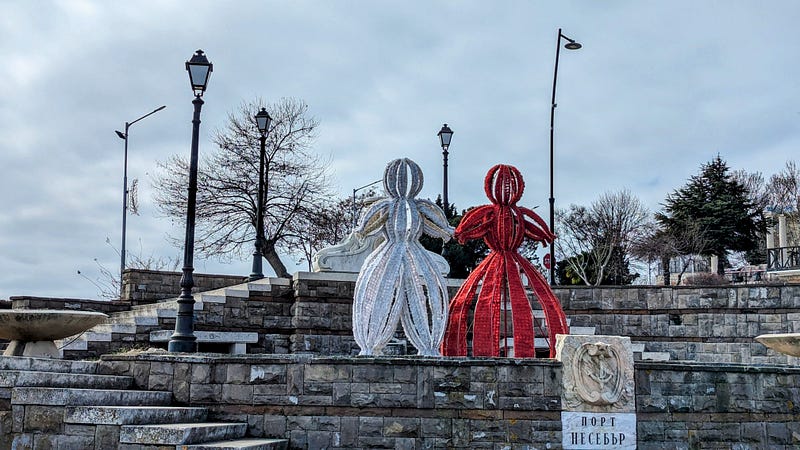
Martenitsa Display in Nessebar | Krasi Shapkarova

Baba Marta Has Arrived in Bulgaria

Which means, spring is just around the corner

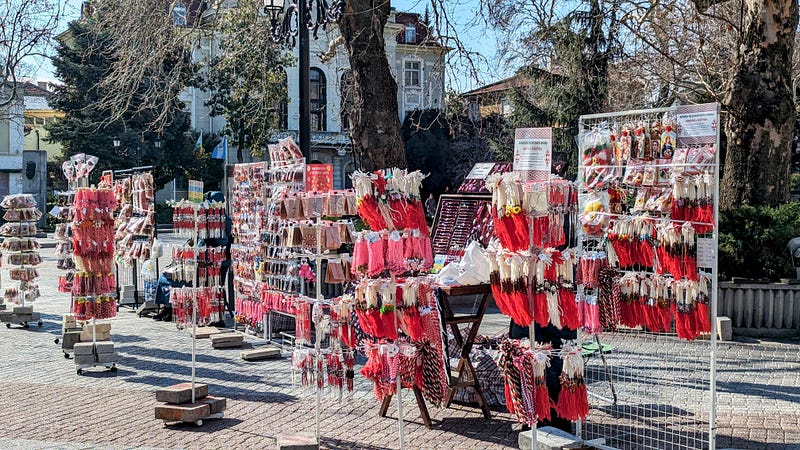
If you find yourself in Bulgaria during the month of February, you will inevitably notice lines of street vendors selling multiple variations of what look like trinkets made from mostly red and white yarn.

We call these martenitsi [plural; martenitsa (singular)], and even in the smallest village, the local store will put them up.
Krasi Shapkarova

The martenitsi indicate that Baba Marta Day, celebrated on March 1st, is fast approaching. On that day, Bulgarians exchange martenitsi, wishing each other health and happiness.

Martenitsi can be gifted as bracelets, tied around one’s wrist, or pinned to one’s clothing as a type of brooch. In recent years, I’ve noticed martenitsi as necklaces becoming popular, and I even spotted a couple of earrings during my recent travel to seaside city of Burgas.
Krasi Shapkarova

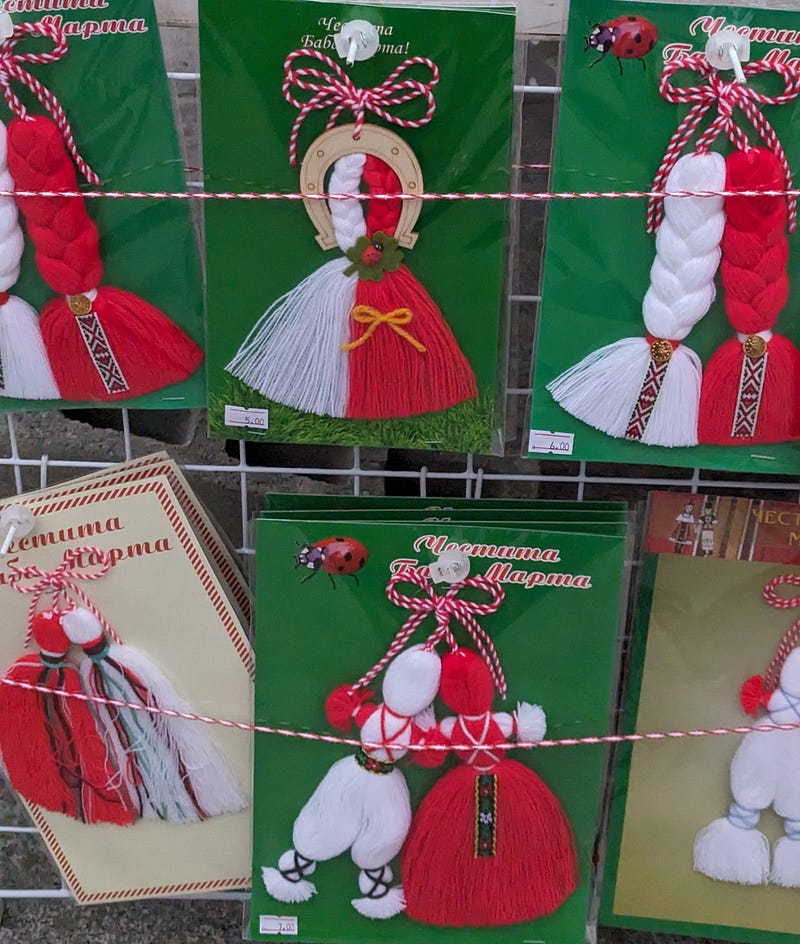
The most traditional martenitsa includes two dolls — Pizho (white) and Penda (red), the color white symbolizing purity/clarity and the color red symbolizing vitality/new life. They come together to mark the seasonal transition from winter to spring, the coming of a new beginning as life returns to fields and gardens across the country.

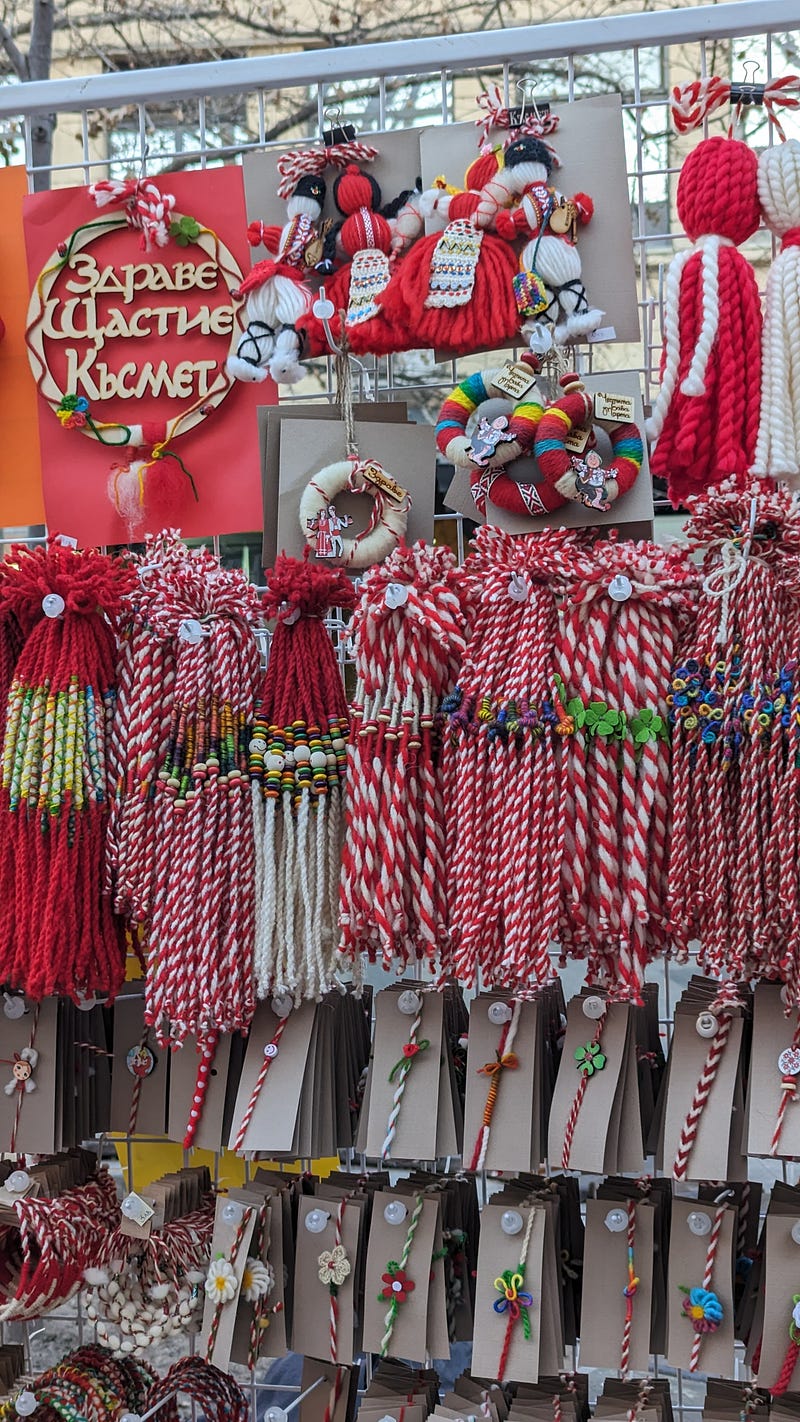
The most commonly exchanged martenitsi, though, are the bracelets and as a kid, my wrists would be covered in them as my friends and I wished each other Happy Baba Marta.
Krasi Shapkarova

In fact, as a kid, we’d make our own martenitsi to exchange with friends and family. Though I miss the simplicity of the twisted red and white threads, I admire the variety of martenitsi available today.

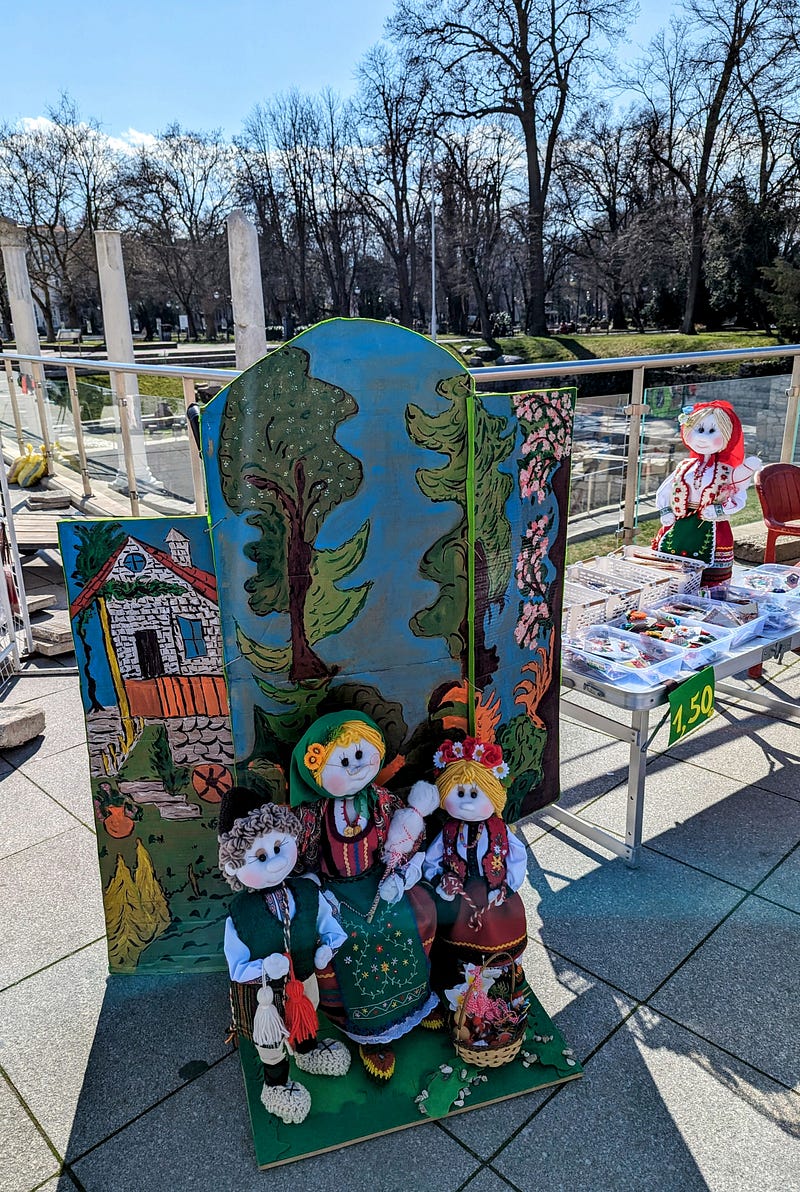
It’s been years since I last was in Bulgaria on March 1st, so I’ve thoroughly been enjoying perusing the stalls along Glavnata in Plovdiv, taking note of how many more options for martenitsi there are.

The vendors who committed to their displays brought smiles to my face.
Krasi Shapkarova

The holiday dates back to the establishment of Bulgaria and though the legends as to how it got started are many, I grew up associating the holiday with the coming of spring and the bounty it brings.

I now know that a similar custom exists in other Balkan nations and even in Bulgaria, it is celebrated differently across regions. In the village where I grew up, people would wear the martenitsi until they saw the first stork — a harbinger of spring — returning from its migration south for the winter.

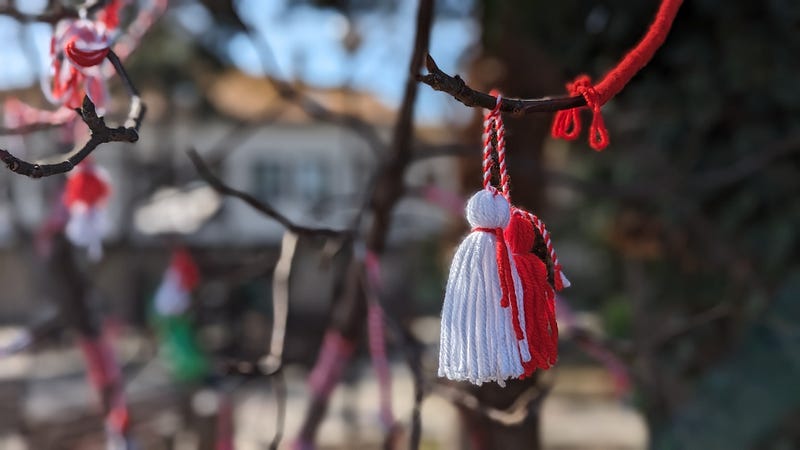
After spotting the stork, a person would do one of two things: 1) tie the martenitsa to the branch of a fruit-bearing tree; or 2) put it under a stone. Both actions signify how important a good harvest was for a people whose livelihood depended on agriculture and husbandry.
Krasi Shapkarova

Tying the martenitsi to a tree represented hope for a bountiful harvest in the summer and fall. And when we put it under a stone, we’d monitor it so that if the area started swarming with insects, usually ants, it meant that there’d be plenty of crops and animals to sustain the villagers another year.

The Baba Marta holiday is all about change, but as with every other human custom, the holiday itself changes and evolves as the circumstances of the people practicing the custom change and evolve.

Not many rely solely on whatever their gardens produce anymore, and the connection between the holiday and the land that feeds us seems lost on the younger generations. I’m glad the custom is still around, however, because no matter how much the human world changes, health and happiness will never go out of style.

So with that in mind:

Chestita Baba Marta! Happy Baba Marta! Честита Баба Марта!

I’d already worked on this article to submit for publication on March 1st and then I saw this month’s challenge — introduced by Allisonn Church — and I realized this may be a perfect opportunity to contribute on the first day of the challenge. I’m sure this is never happening again :)

If you, like me, are ready for spring, check out these lovely posts and images by Erika Burkhalter and Mystical Aries:

Bulgaria
Photography
Monthly Challenge
Change
Traditions
Recommended from ReadMedium