
Karl Barth had two wives
A legendary 20th century Christian was a polygamist — and his religion concealed it
For years, the Protestant world whispered about a shocking possibility. Did Karl Barth, the religion’s favorite living theologian, live with two women?
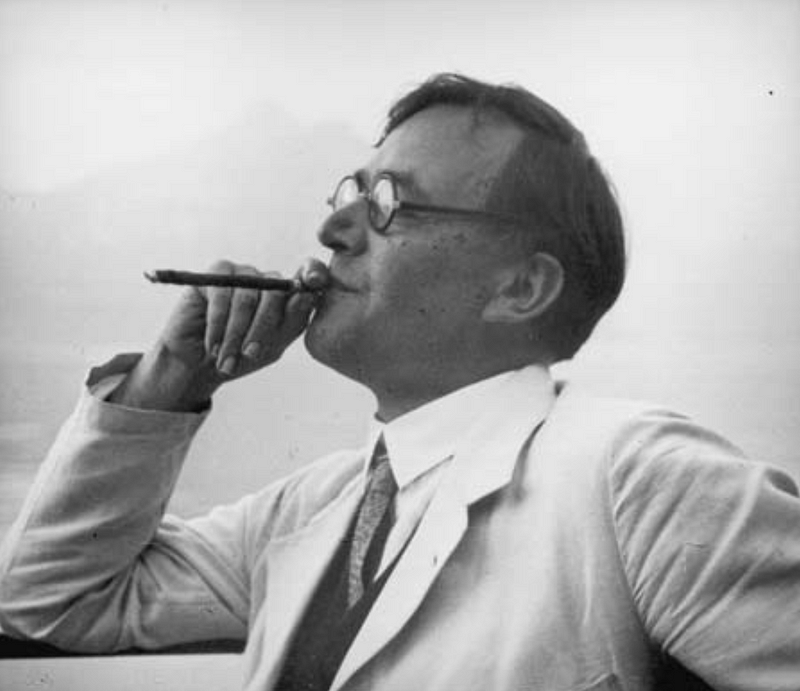
He’d be called the “father of evangelical Protestantism.” He died in 1968, working to keep his secret until the end. In 2017, it finally came to light. He had been a polygamist.
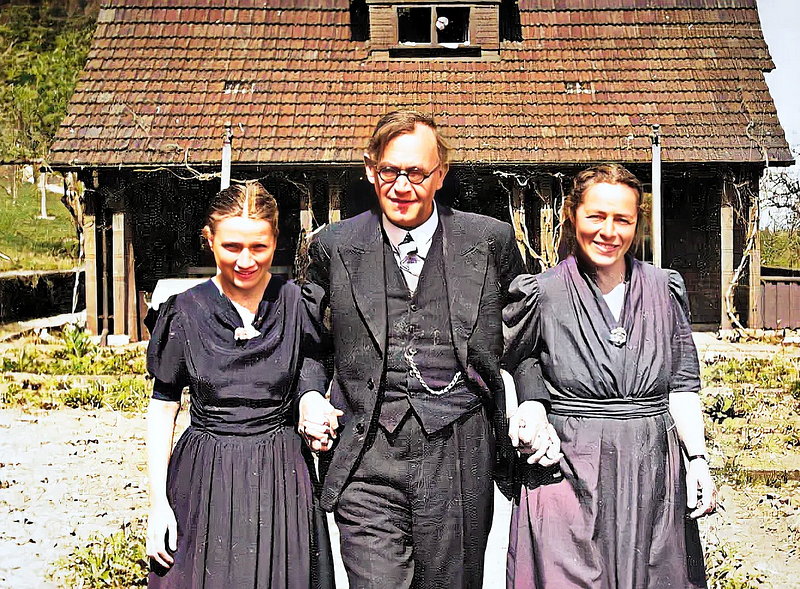
He married Nelly in 1913.
She’d been a 17-year-old girl in a church he was working. He liked another girl, but his parents like Nelly. He’d never loved her, he’d later say.
Nelly’s dream was to be a small-town pastor’s wife. She had the skills and temperament. But she watched her husband pivot to academic theology, and become a professor—leaving her increasingly sidelined.
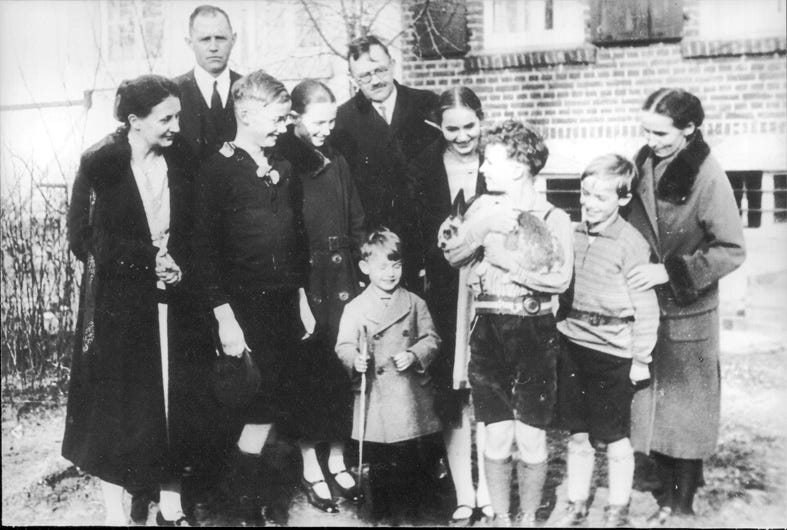
What they did together was make kids. By 1925, they had five.
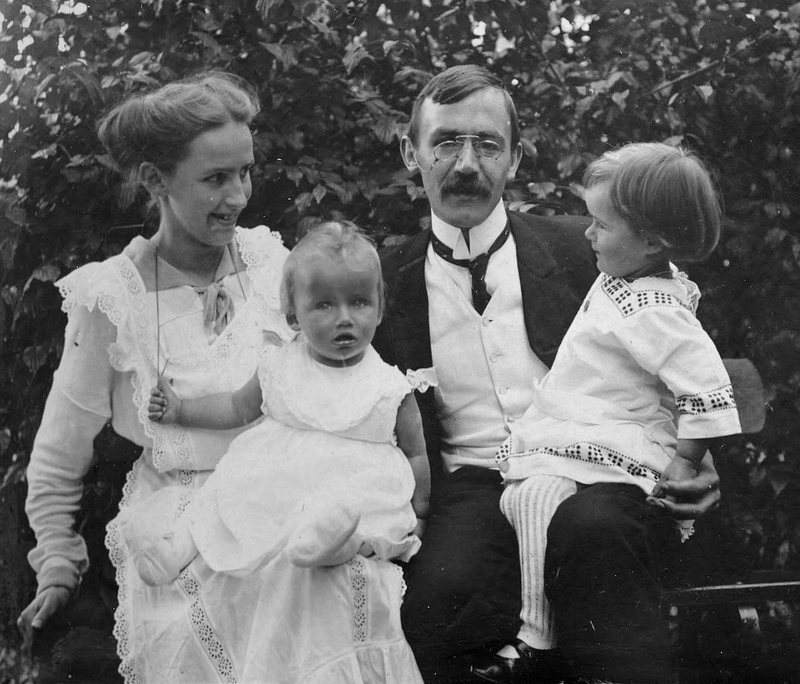
Barth was little interested in his family—and even less his life.
In 1924, Nelly went to a sanatorium, deeply anxious about her marriage. In 1925, she gave birth to their last child. With that, her sexual relationship with her husband ended.
Barth left for the summer, in his usual practice of spending months away from them to focus on work. He met a woman named Charlotte von Kirschbaum, and focused on her.
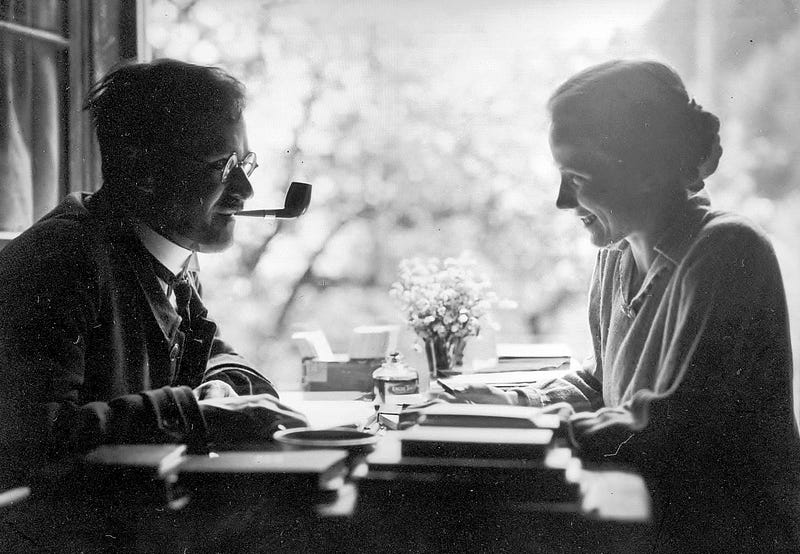
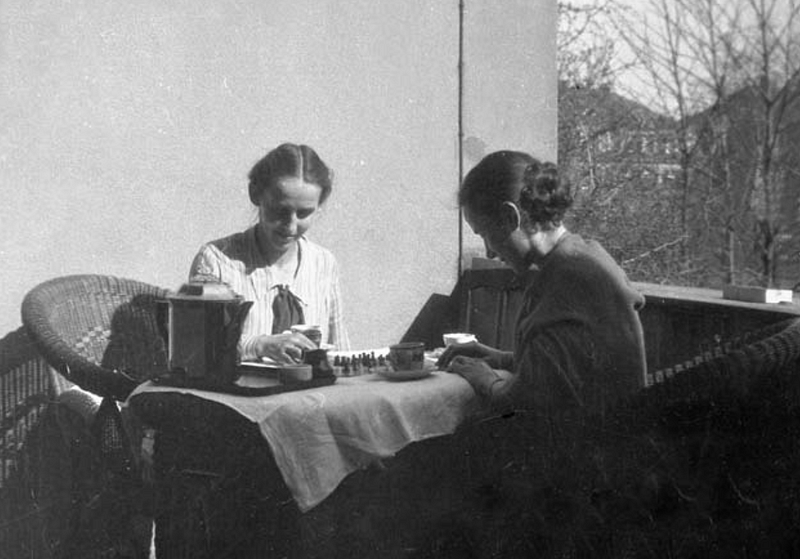
‘Lollo,’ as he took to calling her, was then 26, six years younger than his Nelly. The two women resembled each other, and can be difficult to tell apart in photos, though Lollo was considered prettier.
She’d worked as a secretary, and was currently as a nurse, but had a keen mind, and an interest in Christian theology — and Karl Barth.
He felt a desire he’d never felt before.
Then age 40, Barth began writing letters like he’d never written his wife:
“I was unable to find sleep that night, again and again I had to look to the corner of my desk where you were sitting and kept struggling with the great mystery which you mean to me.”
Some letters have been published and some haven’t. A scholar says that in one, Barth writes to Lollo of “a sadness which he experiences in the very depth of his psyche — and which he also senses in her.”
They kept seeing each other. In 1926, Lollo writes to him:
“I have known, quite simply since last Wednesday, that I love you more dearly than you can imagine.”
He replied that he loved her too. “Despite all the grave and bitter things which are to come,” he adds, he’d have her.
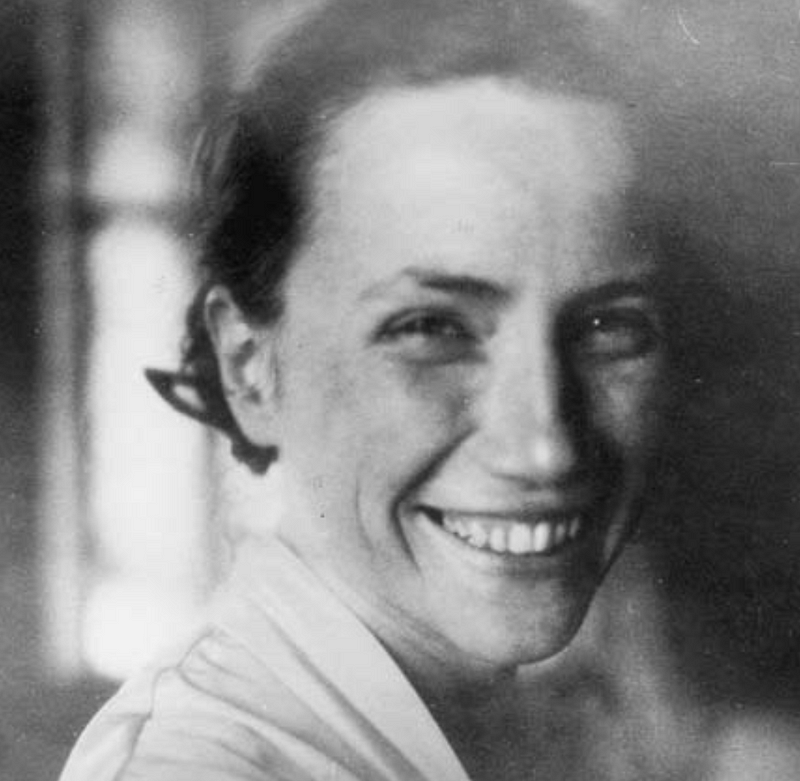
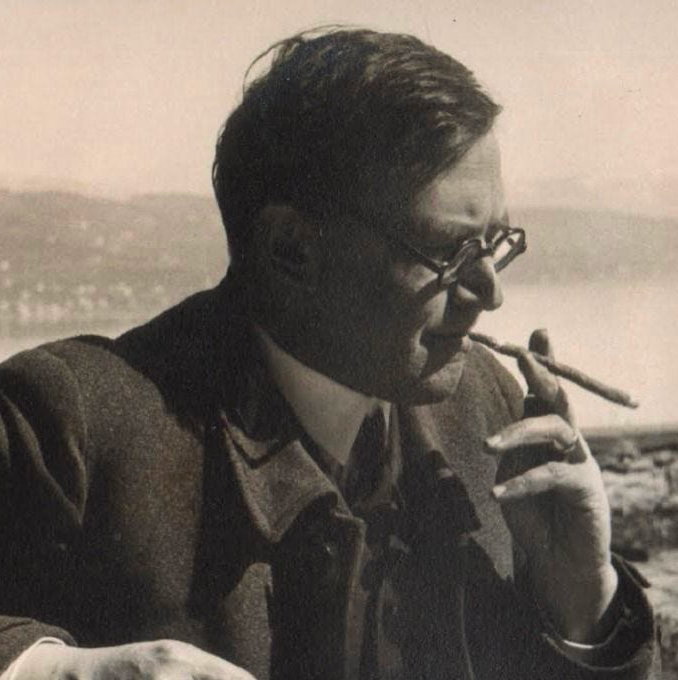
He told his wife that he had a girlfriend.
In May 1926, Barth writes to a male friend about how that’s going:
“…what strikes Nelly is the thought that above all, I’m looking for a substitute with a third party for some gap in our marriage, a remedy that would better be found in fixing our marriage. But I replied that I didn’t seek a substitute, it found me and by accident made me conscious of a gap.”
The friend, sympathetic to Barth, summed up the situation: “Love without honour or honour without love.”
On December 28, 1926, Barth sent the friend a poem that updates the story:
“And then it broke over us, Declaring itself full of guilt, full of joy, full of suffering”
Barth repeatedly asked Nelly for a divorce.
It threw the family into a furor. His own mother rebuked him. As she put it: “What’s the point of the very sharpest theology if it suffers shipwreck in your own home?”
Contemplating his divorce, Lollo writes that she’d stick with him, despite religious objections: “I would prefer going only with you into the wilderness than with the others in crowded churches.”
In letters to Lollo, Barth works through the theological problems. Their relationship, he writes, “cannot just be the devil’s work, it must have some meaning and a right to live…”
Nelly tried to process her own situation through Christian theology. She called herself “God’s prisoner,” bound to a husband who didn’t want her, bound to vows that had been shredded.
Her mother urged her to divorce, but Nelly resolved that she couldn’t separate their children from their father. If punishment was required, she would bear it herself. Lollo moved in, and that was their new family.
Nelly would give ultimatums, and back down.
Rules were laid down and strictly enforced. Nelly oversaw the house. Lollo worked on Barth’s theological projects. Her mother disowned her.
When he gave public lectures, Nelly sat on display as his wife, Lollo hovering as his assistant. At dinner, Barth sat at the head of the table, Lollo and Nelly on each side of him, then the children, guests and the housekeeper in their places.
He called it a “double life” that he took to living. He seems to have viewed it as “adultery.” But then he also believed, as he wrote in a letter, that God had given him ‘‘the two who are ordained to me.”
There is reluctance to notice this, but the reference is clear: Barth saw himself religiously married to two women simultaneously.
Were Barth and Lollo having sex?
There is no overt statement of it. Lollo seems never to have became pregnant. But she and Barth seem very like lovers. They were seen holding hands, with arms around each other, looking into each other’s eyes.
He called her “my little Lollo.” He and Lollo travelled together. Even when lodged by seminaries, they requested one room.
DId his theology soften around the edges?
In a letter to a friend in 1947, Barth writes: “I have been forbidden in a very concrete manner to become the legalist that under different circumstances I might have become.”
His Christian writings reference polygamy, both forbidding it and allowing for it—if not perhaps “true marriage,” then still divine.
But he never breathed a word publicly of his private life.
Lollo wrote theological texts of her own.
She lectured, and kept up causes, like helping Jews leave Nazi Germany. Barth’s own record on that score, in retrospect, was mixed. He’d sworn an oath of allegiance to Hitler, and was still fired.
Later on he became more of a vocal critic of Nazism, trying to stoke Christian opposition. A difficult task.
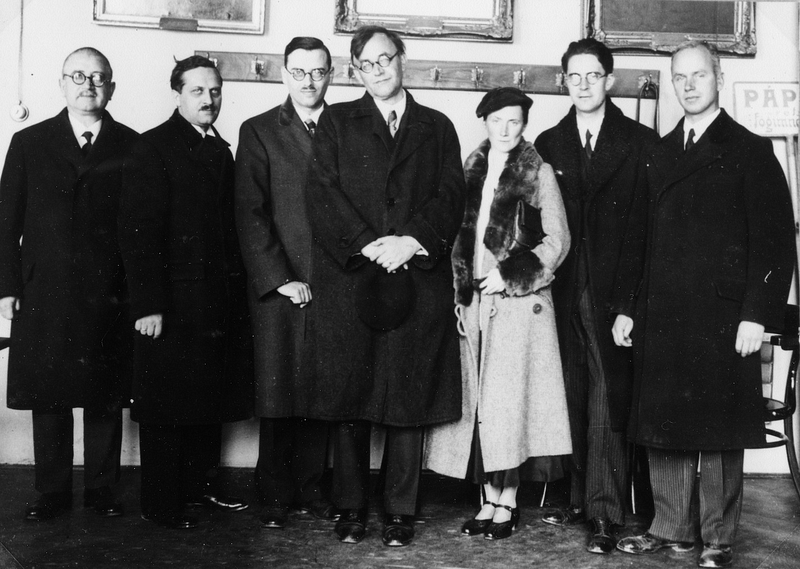
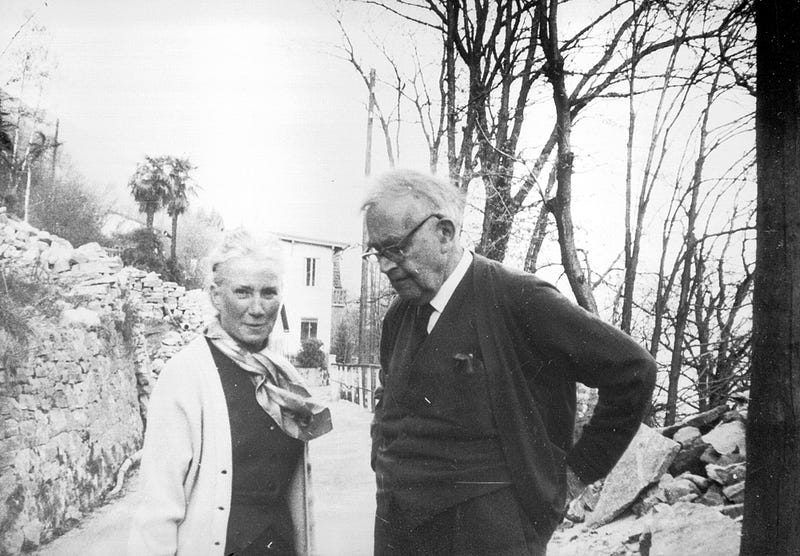
In the early 1960s, Lollo developed dementia.
In 1966 she was put into a care facility. Barth and Nelly visited weekly. At home, Nelly found the “other woman” gone. She had her family back, as she’d always wanted it.
Barth began an autobiography, and abandoned it. Days before he died in 1968, he wrote to one of his sons what seems an effort to sum up his history. It’s not published, but is paraphrased.
Barth had said that Nelly “is someone who has never, really, come to terms with the realities of the world, preferring to live in her imagination and in a brittle, old-fashioned morality.”
He says he’s fallen short as a husband and father, and with everyone he’s loved. He speaks of Lollo’s acute mind, and his memory of her beauty. What will God make of it all?
“He knows His own,” Barth writes.
He died in 1968, as Lollo followed in 1975.
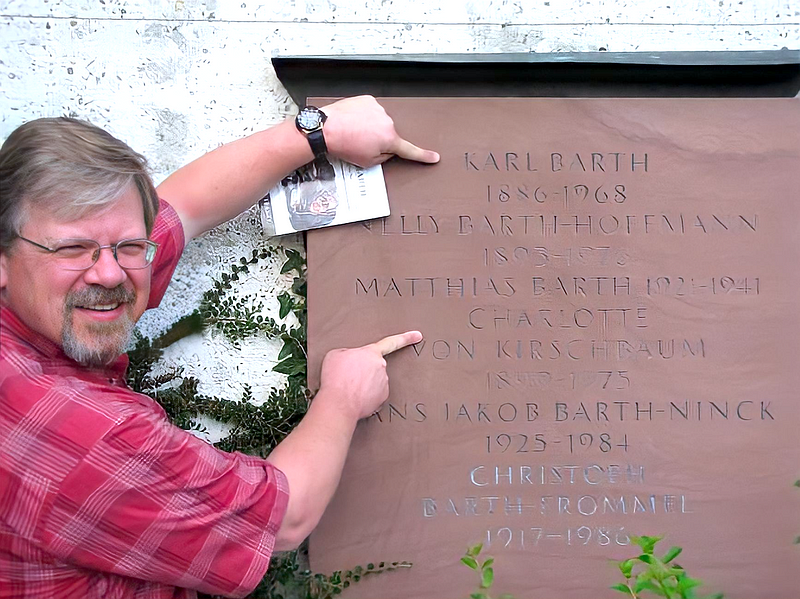
Per her husband’s wishes, Nelly had Lollo buried beside Barth, as she’d follow. And so it remained a monument to the man with two wives.
A 2011 guide to finding his grave suggests the Christian traveller ignore the woman buried next to the religious hero, adding: “it’s really not worth your mental energies to think about it.”
There seems to have been ongoing conflict among Barth’s children.
In one report, two groups of children formed over the Nelly-Lollo rivalry, with “some calling her Auntie but others felt they had to side with Nelly and be estranged from their dad.”
Barth had tried to stop publication of personal letters as might touch on the home situation, writing it into his will. In 1991, his remaining children voted to overrule it. In 2008, a few more letters were published, as the estate affirmed its hope was “putting vicious rumors to rest.”
In 2016, a scholar delivered a paper on the matter.
Saying she didn’t intend to discuss it in a “moralistic manner,” Christine Tietz played up the romance between Barth and Lollo as a love story, describing the relationship as a “deep, intense, overwhelming love between those two human beings.”
Theologians were unwilling to get into the details. But the news went viral in the Christian world: the great Karth Barth was an adulterer?
The religion faced a “cancelling” drama, but couldn’t pull the trigger.
After all, they agreed, isn’t everyone a sinner? 🔶


