avatarDavid Bowles

Free AI web copilot to create summaries, insights and extended knowledge, download it at here

2533

Abstract

But why?</p><p id="b429">Book 10 of the <i>Florentine Codex</i> reports the council’s reasoning:</p><p id="db98">“Ahmo monequi mochi tlācatl quimatiz in tlīlli, in tlapalli. In tlatcōni, in tlamāmālōni āhuīlquīzaz: auh inin, zan nāhualmaniz in tlālli, ic miyec mopīc iztlacahuitl.”</p><p id="be92">Here’s my translation:</p><p id="61f4">“It’s not necessary for all people to know the red and the black [i.e., the writings]. That which must be taken, that which must be borne [i.e., government power & responsibility] will fall in disgrace, and they will bewitch this country, for many lies are sealed up within them.”</p><p id="c8e2">The new huēyi tlahtoāni (emperor) burned the painted books of his people & had that history written anew.</p><p id="e063">It is likely that this new history lifted the Mexica from nomads wandering out of Aztlān to the heirs of the Toltec Way. That would explain things like the following:</p><p id="db3f">1. Toltecs are from Aztlan in some versions. 2. A group of Toltecs return to Aztlan and helping the Mexihtin get free. 3. The Mexica emerge from Aztlan to then settle briefly in Chicomoztoc before emerging again. 4. The wild inconsistency in lists of other groups that lived in Chicomoztoc.</p><p id="631b">I can’t wrap up without dealing with one more intriguing tidbit.</p><p id="310a">Emperor Itzcōātl was succeeded by his nephew Motēuczōma I (Ilhuicamīna), half-brother of Tlācaellel. The new emperor made a move that seems connected to his uncle’s creation of an official history.</p><p id="5758">Now, the following was reported by Dominican friar Diego Durán in his massive “Historia de las Indias de Nueva España e islas de Tierra Firme,” written in the mid-1500s in Spanish, drawing from native texts. It’s also known as the Durán Codex. It sat unpublished for 300 years in the Biblioteca Nacional de Madrid.</p><p id="5cc3">Durán relates a story from a Nahuatl history about an expedition sent by Motēuczōma I: a group of 60 wizards and magicians, searching for Chicomoztoc and Aztlan.</p><p id="8279">Here’s Wayne Elzey’s retelling from <i>History of Religions</i>, Vol. 31.</p><figure id="911a"><img src="https://cdn-images-1.readmedium.com/v2/resize:fit:800/0*ZQlY7CPqBuxY_G_H.png"><figcaption></figcaption></figure><figure id="3146"><img src="https://cdn-images-1.readmedium.com/v2/resize:fit:800/0*-QC7Xq4Qc4gVA1bN.png"><figcaption></figcaption></figure><figure id="f379"><img src="https://cdn-images-1.readmedium.com/v2/resize:fit:800/0*UIx9jcN6MzF5SA2f.png"><figcaption><

Options

/figcaption></figure><figure id="2ca0"><img src="https://cdn-images-1.readmedium.com/v2/resize:fit:800/0*mNMkKLStLSG7HKSR.png"><figcaption></figcaption></figure><p id="4979">After traveling to Coatepec, the wizards transported themselves magically to Aztlān, where they learned the Aztēcah who had remained were alive, immortal. They met Cōātlīcue, mother of Huitzilopochtli, still waiting for her son to return. He would, once Tenōchtitlan fell.</p><figure id="4268"><img src="https://cdn-images-1.readmedium.com/v2/resize:fit:800/0*zQdAkdo3fvOySnoz.png"><figcaption></figcaption></figure><figure id="6c36"><img src="https://cdn-images-1.readmedium.com/v2/resize:fit:800/0*WYd8pINUvsYqz7jl.png"><figcaption></figcaption></figure><figure id="404f"><img src="https://cdn-images-1.readmedium.com/v2/resize:fit:800/0*YFZHYr4ytGtTcpRD.png"><figcaption></figcaption></figure><p id="23fa">(That part seems awfully convenient for the Spaniards.)</p><p id="2705">The Mēxihcah were not immortal, it was revealed, because they longed for material things and indulged their palates too much.</p><p id="b334">Interestingly, Motēuczōma and Tlācaellel would go on to restrict what commoners could legally wear and eat.</p><p id="e276">Analyzed carefully, there appear to be 3 layers to Durán’s narrative:</p><p id="7bd5">1. Original story about Aztlān. 2. Manipulation of that story by the second emperor of the Triple Alliance, meant to reinforce the new version of history and impose new restrictions on the poor. 3. A retroactive justification of Conquest.</p><p id="fc81">UP NEXT:</p><p id="9a36">We turn to modern linguistics, archaeology, and anthropology.</p><p id="f908"><i>Read the rest of the series — <a href="https://readmedium.com/aztlan-affirmed-i-pictorial-sources-1e2b4a08d937"></a></i><a href="https://readmedium.com/aztlan-affirmed-i-pictorial-sources-1e2b4a08d937">Part I: Pictorial Sources</a> <a href="https://readmedium.com/aztlan-affirmed-part-ii-nahua-historians-bea11b82af75">Part II: Nahua Historians </a><a href="https://readmedium.com/aztlan-affirmed-part-iii-indigenous-informants-3bab3fee19ca">Part III: Indigenous Informants</a> <a href="https://readmedium.com/aztlan-affirmed-part-iv-other-cities-other-tongues-66587b0bac66">Part IV: Other Cities, Other Tongues</a> <a href="https://readmedium.com/aztlan-affirmed-part-v-commentary-fe8295254bb1">Part V: Commentary</a> <a href="https://readmedium.com/aztlan-affirmed-part-vi-uto-aztecan-homeland-2a3d84149412">Part VI: Uto-Aztecan Homeland?</a></p></article></body>

Aztlan Affirmed, Part V: Commentary

In previous articles in this series, I’ve shared what indigenous sources say about the legendary land of Aztlan, from which the Mexica claimed to have emerged. Now I’m going to do a sort of quick exegesis or commentary on what we’ve seen.

First, a synthesis of the story:

To the northwest of Tenōchtitlan, the kingdom of Aztlān sat on an island. Many clans of people lived there. When the king died, his sons ruled jointly, but the older wanted all power. The younger took his people on a supposed pilgrimage.

They crossed the water to the mountain of Colhuahcān, which contained the seven cave complex of Chicomoztoc, where many groups of Chīchīmēcah still lived. Centuries before, the Tōltēcah had left that mountain, heading south.

After a while, the god Huitzilopochtli spoke. He told the escaped Aztēcah to call themselves Mexihtin (to honor the prince who had freed them). They led the remaining Chīchīmēcah out of Chicomoztoc.

Centuries later, the Mexihtin reached Anahuac and finally settled on another island, becoming Mēxihcah, people of Mexico.

Okay.

Now, from the non-Mexica sources, it seems clear that the Chicomoztoc story was one the former Aztecs heard *after* they reached Anahuac (the Valley of Mexico). It was the origin story of the Toltecs first, so groups wanting some Toltec glory would appropriate it.

The idea of a distant Aztlān, however, is more likely to be a tribal tradition of the Mexica, 1 they kept alive as they wandered for centuries through Chichimeca lands & finally reached Nahua territory.

When did these two emergence tales (from Aztlan vs. Chicomoztoc) blend?

A strong possibility is the year 1430.

That’s pretty specific, isn’t it?

That’s three years after Tenōchtitlan, Tetzcohco and Tlacōpan came together to defeat the Tepanēcah and form the Triple Alliance (aka, Aztec Empire).

The Tenōchca (Mexica) king was Itzcōātl. According to Sahagún’s Nahua informants, Itzcōātl and his governing council (which included his mastermind nephew, General Tlācaellel, who would co-rule Tenōchtitlan for half a century) decided they needed to destroy most of their tribe’s recorded history.

But why?

Book 10 of the Florentine Codex reports the council’s reasoning:

“Ahmo monequi mochi tlācatl quimatiz in tlīlli, in tlapalli. In tlatcōni, in tlamāmālōni āhuīlquīzaz: auh inin, zan nāhualmaniz in tlālli, ic miyec mopīc iztlacahuitl.”

Here’s my translation:

“It’s not necessary for all people to know the red and the black [i.e., the writings]. That which must be taken, that which must be borne [i.e., government power & responsibility] will fall in disgrace, and they will bewitch this country, for many lies are sealed up within them.”

The new huēyi tlahtoāni (emperor) burned the painted books of his people & had that history written anew.

It is likely that this new history lifted the Mexica from nomads wandering out of Aztlān to the heirs of the Toltec Way. That would explain things like the following:

1. Toltecs are from Aztlan in some versions. 2. A group of Toltecs return to Aztlan and helping the Mexihtin get free. 3. The Mexica emerge from Aztlan to then settle briefly in Chicomoztoc before emerging again. 4. The wild inconsistency in lists of other groups that lived in Chicomoztoc.

I can’t wrap up without dealing with one more intriguing tidbit.

Emperor Itzcōātl was succeeded by his nephew Motēuczōma I (Ilhuicamīna), half-brother of Tlācaellel. The new emperor made a move that seems connected to his uncle’s creation of an official history.

Now, the following was reported by Dominican friar Diego Durán in his massive “Historia de las Indias de Nueva España e islas de Tierra Firme,” written in the mid-1500s in Spanish, drawing from native texts. It’s also known as the Durán Codex. It sat unpublished for 300 years in the Biblioteca Nacional de Madrid.

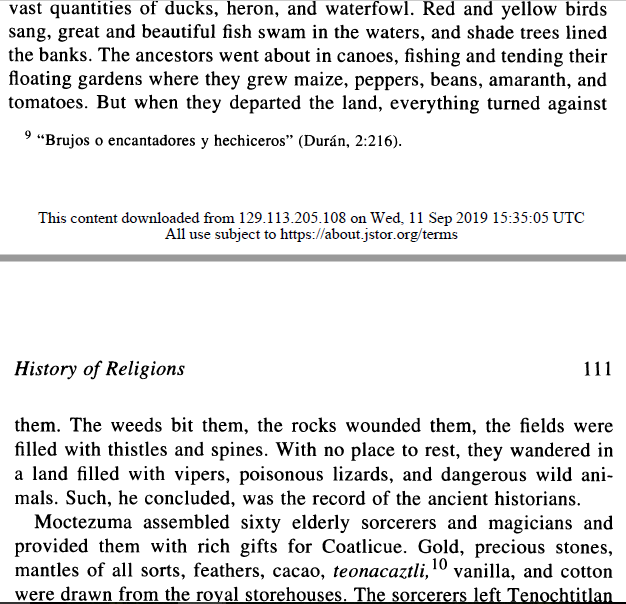
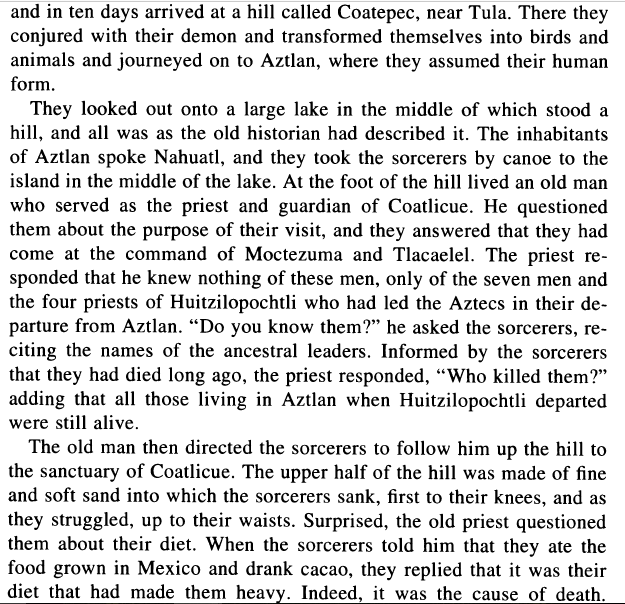
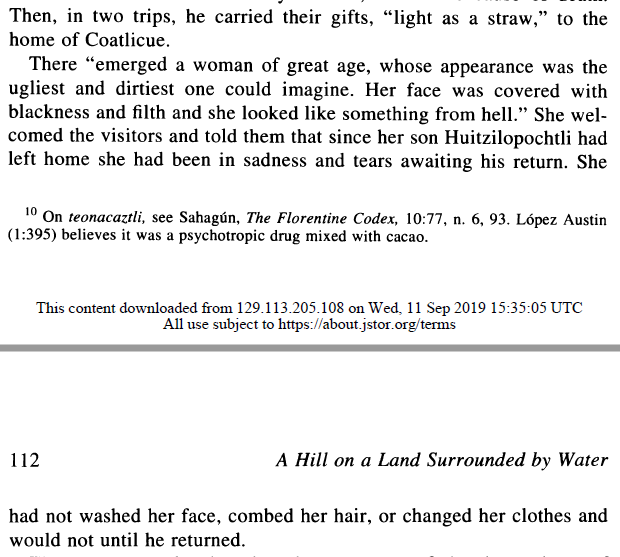
Durán relates a story from a Nahuatl history about an expedition sent by Motēuczōma I: a group of 60 wizards and magicians, searching for Chicomoztoc and Aztlan.

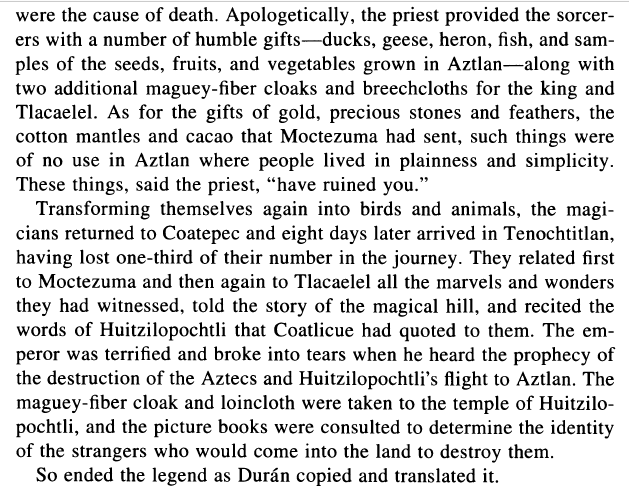
Here’s Wayne Elzey’s retelling from History of Religions, Vol. 31.
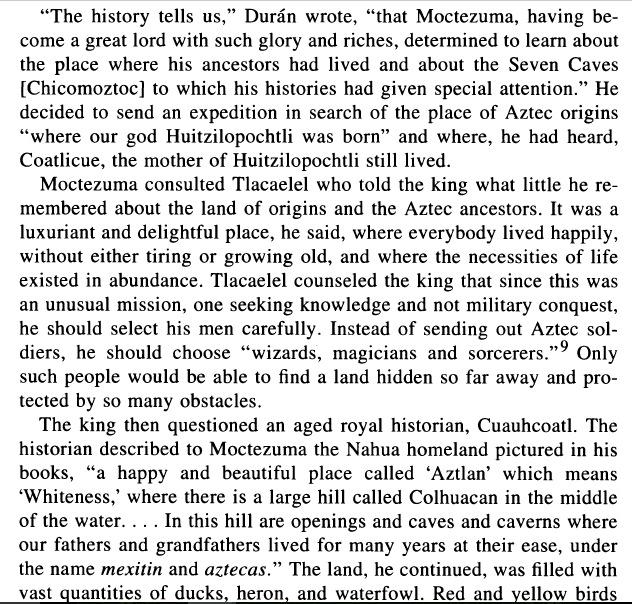
After traveling to Coatepec, the wizards transported themselves magically to Aztlān, where they learned the Aztēcah who had remained were alive, immortal. They met Cōātlīcue, mother of Huitzilopochtli, still waiting for her son to return. He would, once Tenōchtitlan fell.
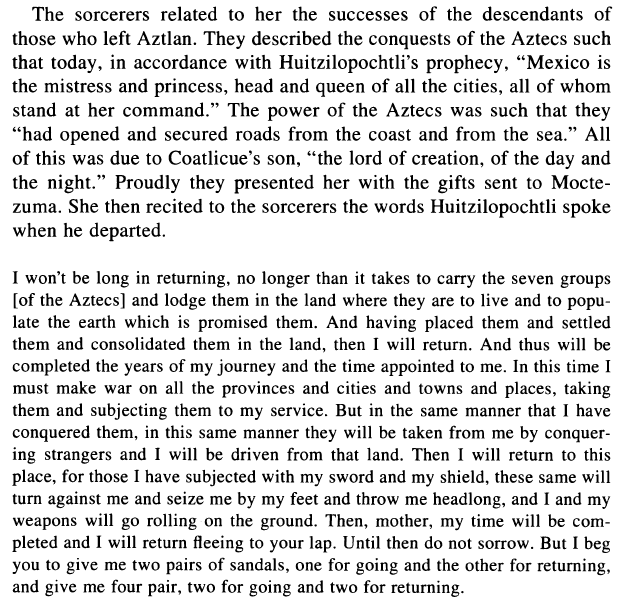
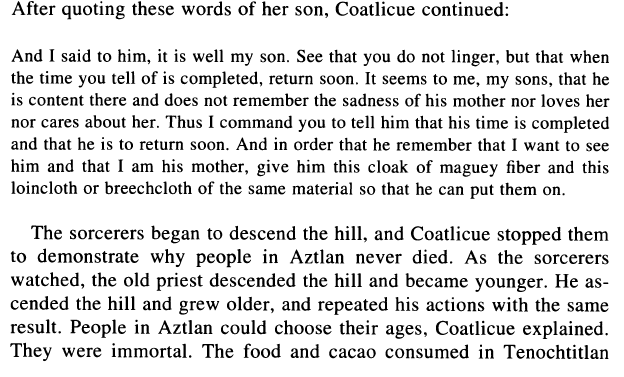
(That part seems awfully convenient for the Spaniards.)

The Mēxihcah were not immortal, it was revealed, because they longed for material things and indulged their palates too much.

Interestingly, Motēuczōma and Tlācaellel would go on to restrict what commoners could legally wear and eat.

Analyzed carefully, there appear to be 3 layers to Durán’s narrative:

1. Original story about Aztlān. 2. Manipulation of that story by the second emperor of the Triple Alliance, meant to reinforce the new version of history and impose new restrictions on the poor. 3. A retroactive justification of Conquest.

UP NEXT:

We turn to modern linguistics, archaeology, and anthropology.

Read the rest of the series — Part I: Pictorial Sources Part II: Nahua Historians Part III: Indigenous Informants Part IV: Other Cities, Other Tongues Part V: Commentary Part VI: Uto-Aztecan Homeland?

History
Language
Nahuatl
Mexica
Aztec
Recommended from ReadMedium